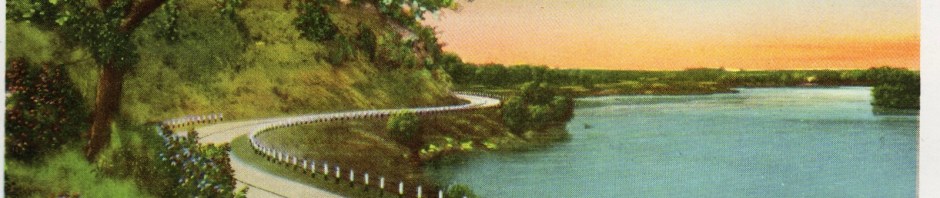
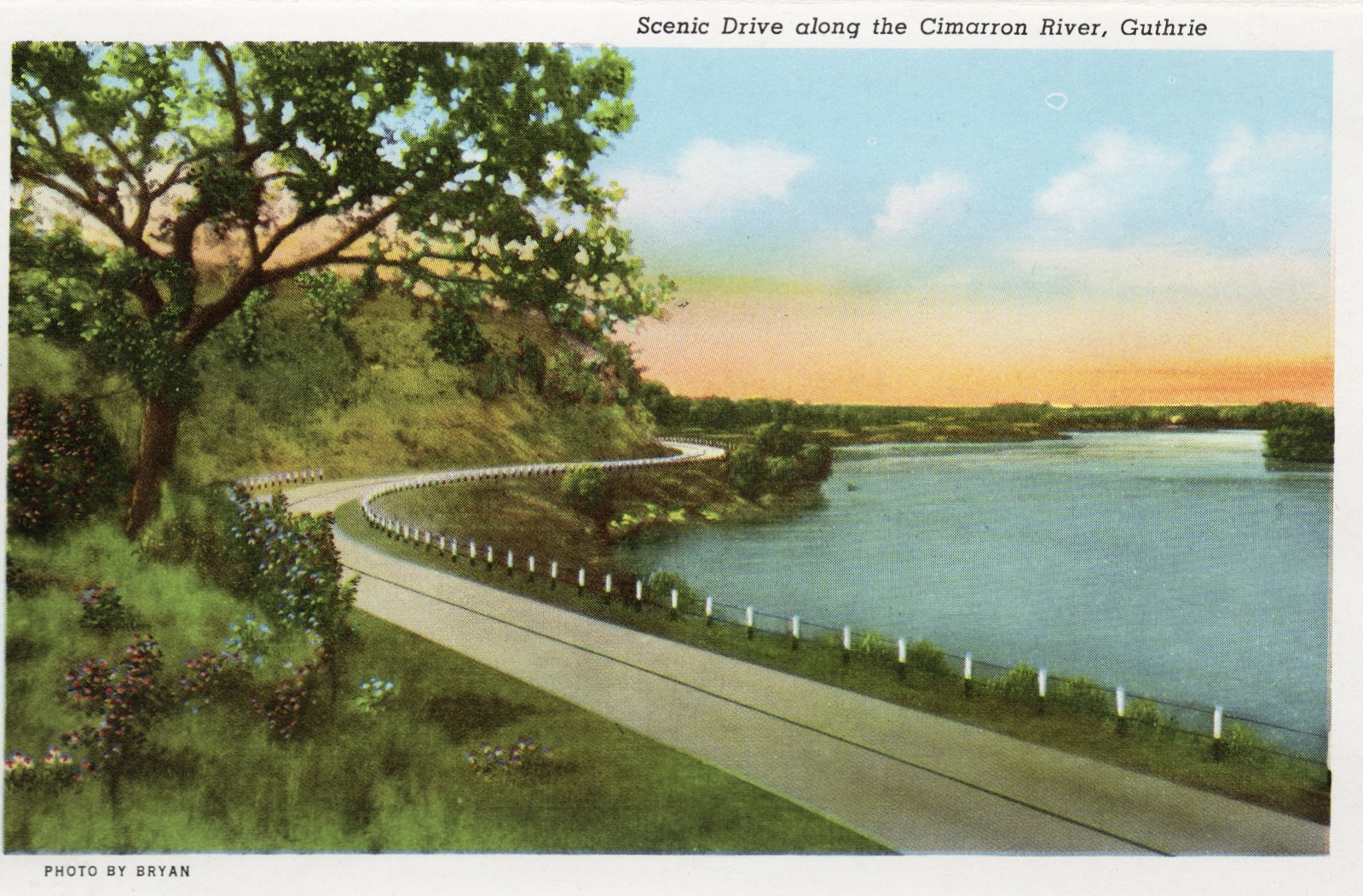
Today’s postcard from a 1940 Oklahoma souvenir pack is of a scenic drive along the Cimarron River at Guthrie. What do you think of when you hear the word Cimarron?
I tend to think of the Edna Ferber novel that entered the public domain this year, but you might think of the Academy Award-winning film of 1931 or the 1960 remake with Glenn Ford, Maria Schell, and Anne Baxter.
I doubt you’d think of this view, especially if you’ve ever seen the actual Cimarron River, which is infamous for picking up lots of dissolved minerals and red soil, so I’m thinking the postcard artists might have taken some liberty with the water’s coloration.
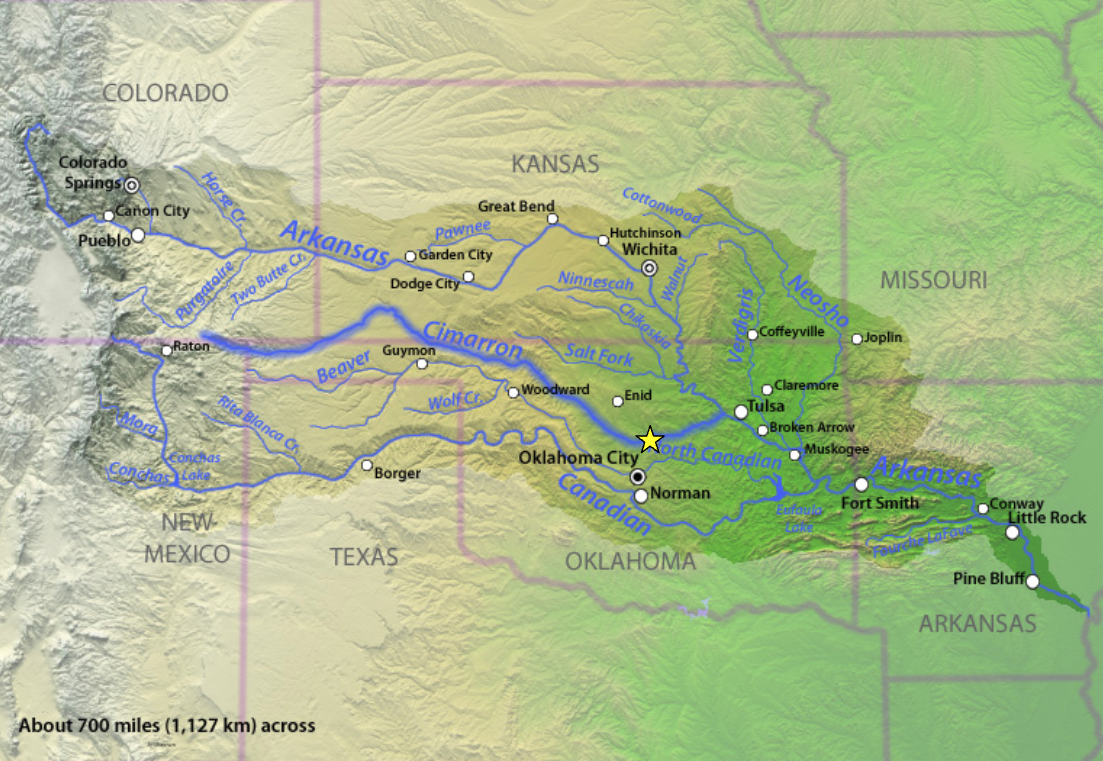
There are three different Cimarron Rivers. The one pictured is a tributary of the Arkansas River that extends 698 miles across New Mexico, Oklahoma, Colorado, and Kansas.
Back in 2012, I was at the Cimarron at the very edge of the Oklahoma Panhandle, but it was bone dry. I wouldn’t expect that to make it onto a postcard.

My guess for the location of the 1940 postcard shot is Doolin’s Fishing Hole along US 77 seven miles north of Guthrie. The original photograph was taken by Guthrie photographer Al Bryan, while my shot is from Google Street View.
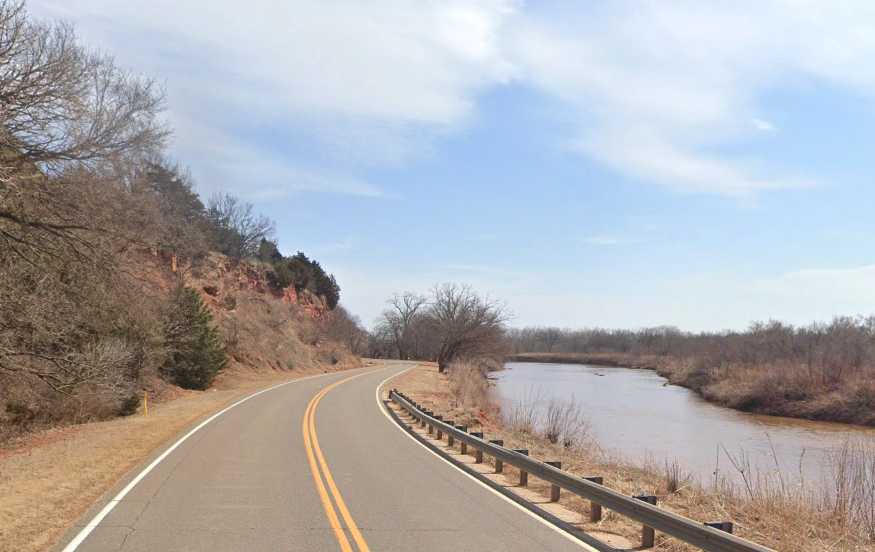
Back in 1930, The Daily Oklahoman had a shot from nearly the same vantage point:
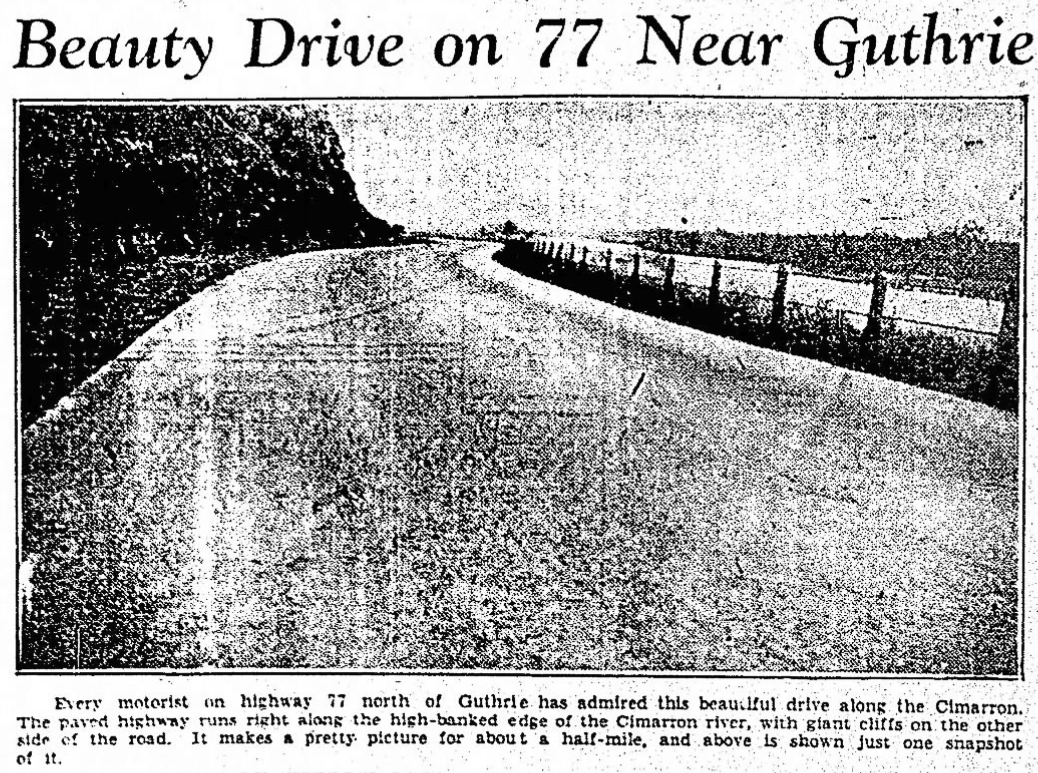
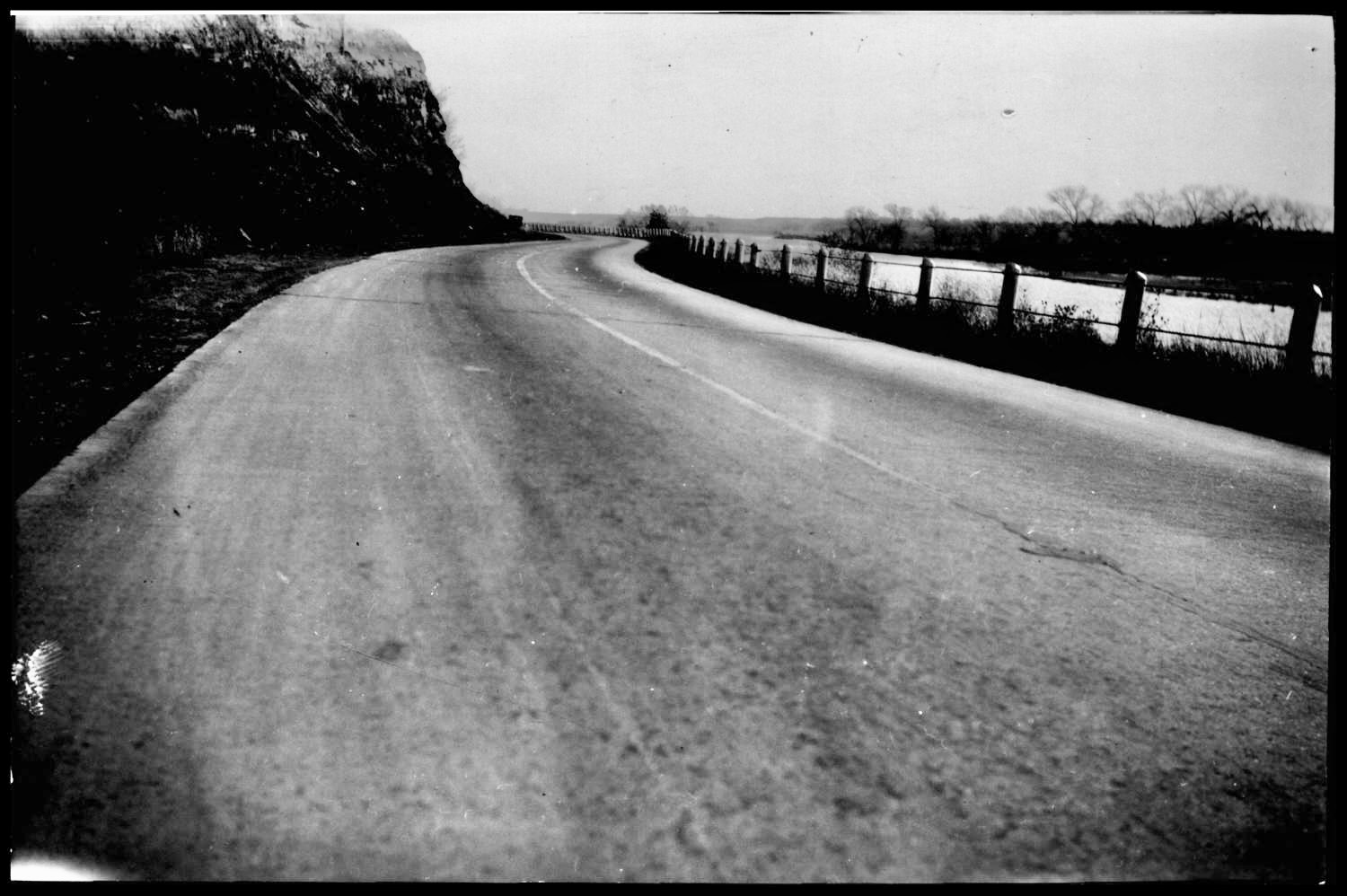
Here’s a better version of the Oklahoman’s 1930 photograph:
Doolin’s Fishing Hole reminds me of 1952’s The Cimarron Kid starring Audie Murphy as real-life outlaw Bill Doolin. Doolin was a founder of the Wild Bunch, or Doolin-Dalton Gang, which specialized in bank, train, and stagecoach robberies in the early 1890s. Some speculate that Doolin was the sixth man in the disastrous attempt by the Dalton Gang to rob two banks simultaneously up in Coffeyville. He was killed by Deputy U.S. Marshal Heck Thomas in Oklahoma Territory on July 5, 1895, and he is buried in the Boot Hill section of Summit View Cemetery in Guthrie.
A Bartlesville Connection
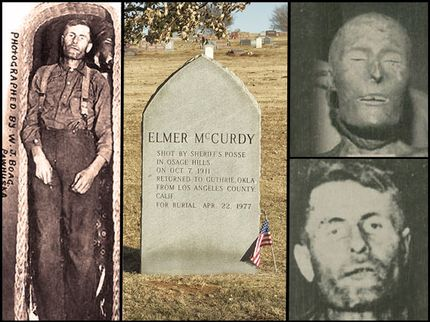
Buried next to Bill is poor Elmer McCurdy, an alcoholic and outlaw. He tried to rob a train near Okesa, just west of Bartlesville, in 1911. However, instead of stopping the train carrying $400,000 in cash for the Osage Indians, he stopped a passenger train and got very little for his trouble.
He holed up in a hay shed on a ranch near Bartlesville, but a posse with bloodhounds tracked him down. He died in a shootout.
No one claimed his body, so the undertaker in Pawhuska embalmed it and charged people a nickel to view it. The body eventually was bought and sold to many different circus side shows. People eventually forgot it was a real body, and in 1976 it was on display in an amusement park in California. The television show The Six Million Dollar Man was shooting an episode there, and when a crew member moved what he thought was a mannequin, an appendage snapped off. The L.A. coroner’s office was contacted, the body was identified, and the remains were finally interred in Guthrie, 66 years after his death.
Guthrie is famous for being the original state capital in 1907. Oklahoma City business leaders soon campaigned to shift the seat of government, and an old saw is that in 1910 Oklahoma’s first post-territorial governor stole the state seal in the dead of night, drove from Guthrie to Oklahoma City, and stashed the seal under his hotel bed.
The reality is that by 1910 OKC had grown by 94% since statehood to over 64,000 people while Guthrie was stuck at less than 12,000. A special election was called in June of that year to choose between Oklahoma City, Guthrie, and Shawnee. OKC won easily, and it was actually W.B. Anthony, the first governor’s secretary, who smuggled the seal out of town. The governor came in to OKC by train from his home in Muskogee, and he declared OKC the new capital with the Lee-Huckins Hotel acting as a temporary capitol building.
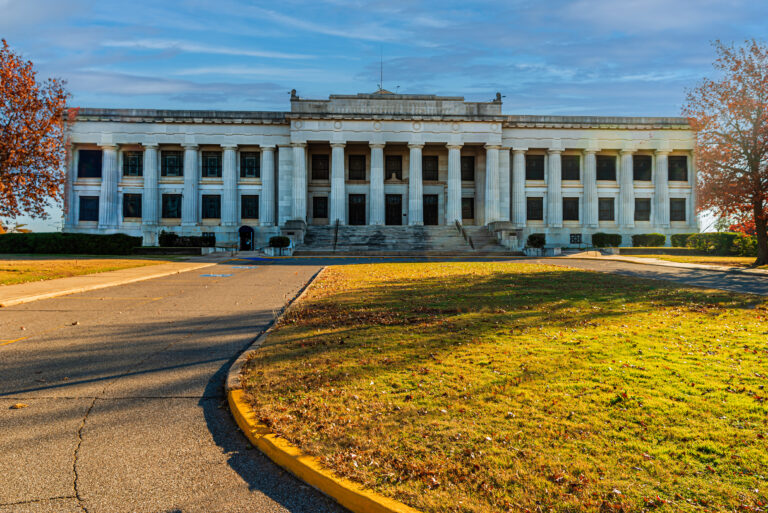
Guthrie these days has an immense Scottish Rite Masonic temple. It was built in the 1920s on the 11 acres originally platted as Capitol Park. You can take a virtual tour, and if it is summertime, that might be best, given that the main rooms of the huge old building are not air conditioned. I was a DeMolay when I was in junior high, and my initiation was at the big temple.
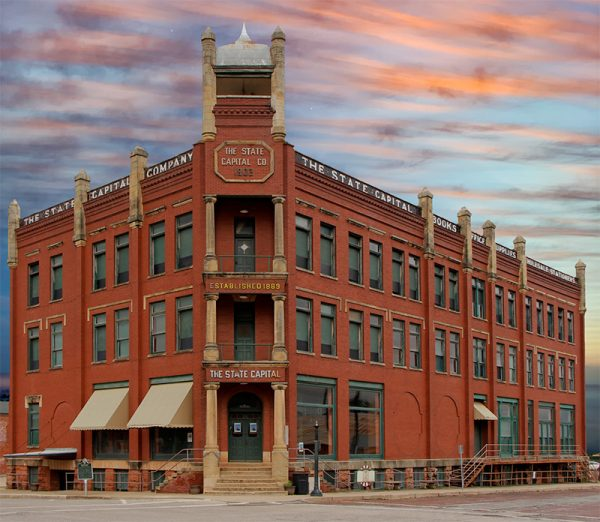
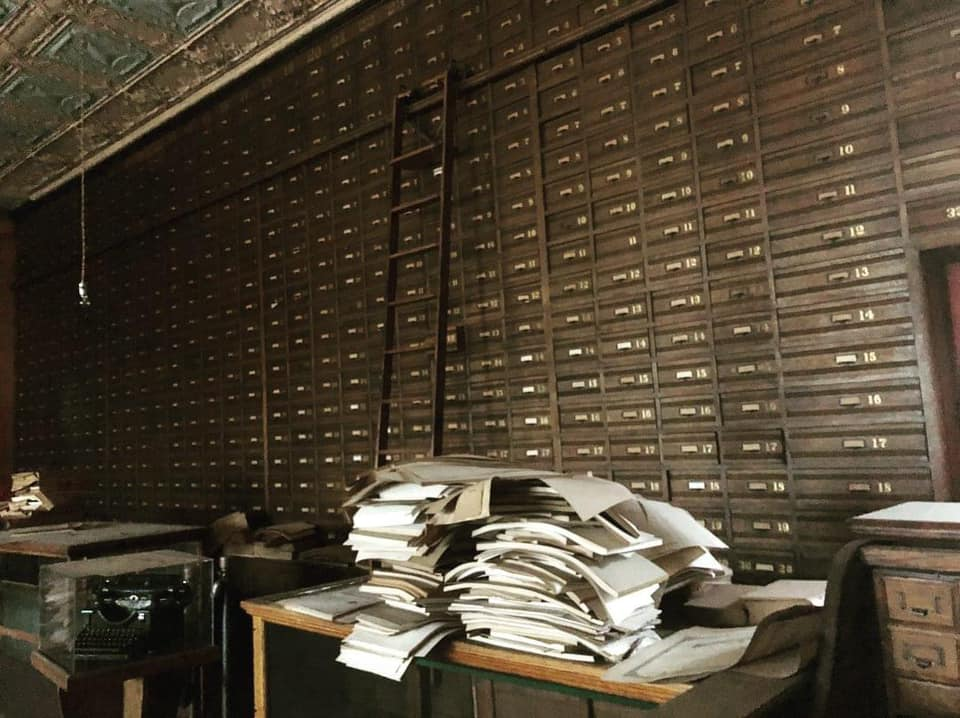
The State Capital Publishing Museum downtown is a memorable structure that was once the largest dedicated printing facility west of the Mississippi. It was home to a newspaper and virtually all of the preprinted forms used by courts and county clerks throughout Oklahoma were once printed in that building. To this day, the first floor lobby has 620 drawers on its south wall that still hold many of the preprinted forms.
Well, Oklahoma City came up in this post, and that is where the next postcard will take us.





#/media/File:Arkansasbasincimarron.jpg)