
Philips products have been a part of my daily life for decades. I have used their Norelco rotary shavers for 45 years or so, and their Sonicare toothbrushes since 2011. They were once part of my media environment, since in the early 21st century, I bought an MP3 CD boombox, a combination DVD/VCR, and a recordable DVD unit from the Dutch firm. However, all of those consumer electronics became obsolete and were given away.

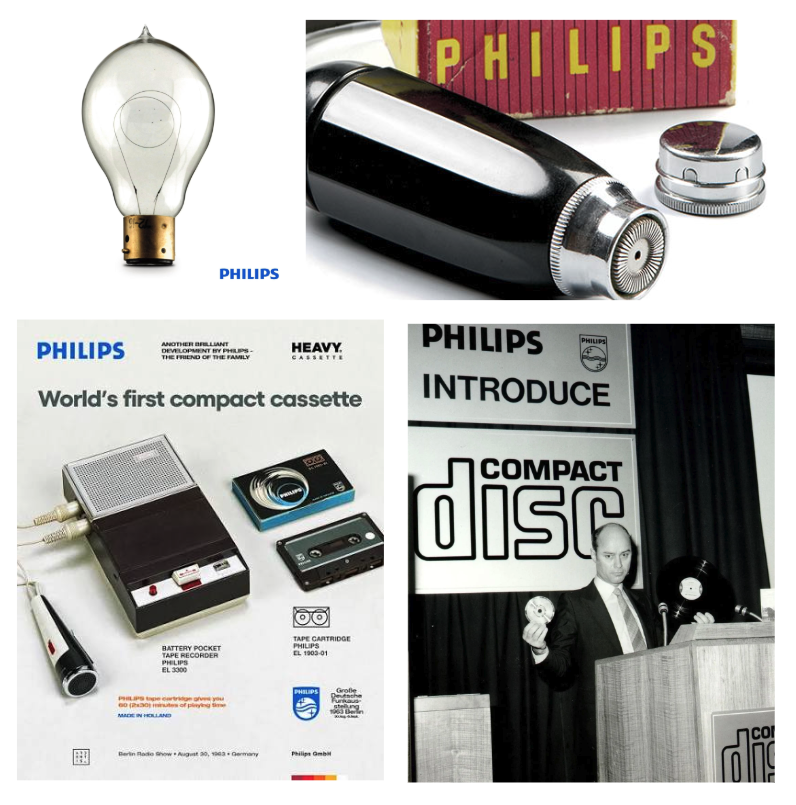
The company was founded in 1891 in the Netherlands by engineer Gerard Philips and his father, Frederik. They began as a small manufacturer of carbon-filament incandescent light bulbs, but they expanded into vacuum tube radios in the 1920s. Philips engineer Alexandre Horovitz developed the rotary-blade electric shaver, which launched in the US in 1939. After World War II, the company produced televisions and other household appliances. It introduced the compact audio cassette in 1963 and co-developed the compact disc with Sony in the late 1970s and the 1980s.
Philips LED Light Bulbs
Philips products eventually illuminated my daily life at Meador Manor. In October 2012, I bought my first LED light bulbs from them, as light emitting diodes spread from indicator lights on electronic devices to home light sources designed to replace traditional incandescent bulbs. The old bulbs output about 13 lumens per watt and lasted about 1,000 hours. The early Philips LED bulbs output about 59 lumens per watt and might last 25,000 hours.
My first LED bulbs were dimmable, meant to replace a 40 watt incandescent bulb with 470 lumens of output, and the packaging explained their 25,000 hour rated life as them lasting 22.8 years if used for three hours on a daily basis. Those early bulbs cost $21 each at the time, and Philips fought the sticker shock by noting that they could reduce a typical electricity bill by $88 over their long life when compared to an inefficient incandescent bulb. However, they were quite odd looking compared to modern LED bulbs.
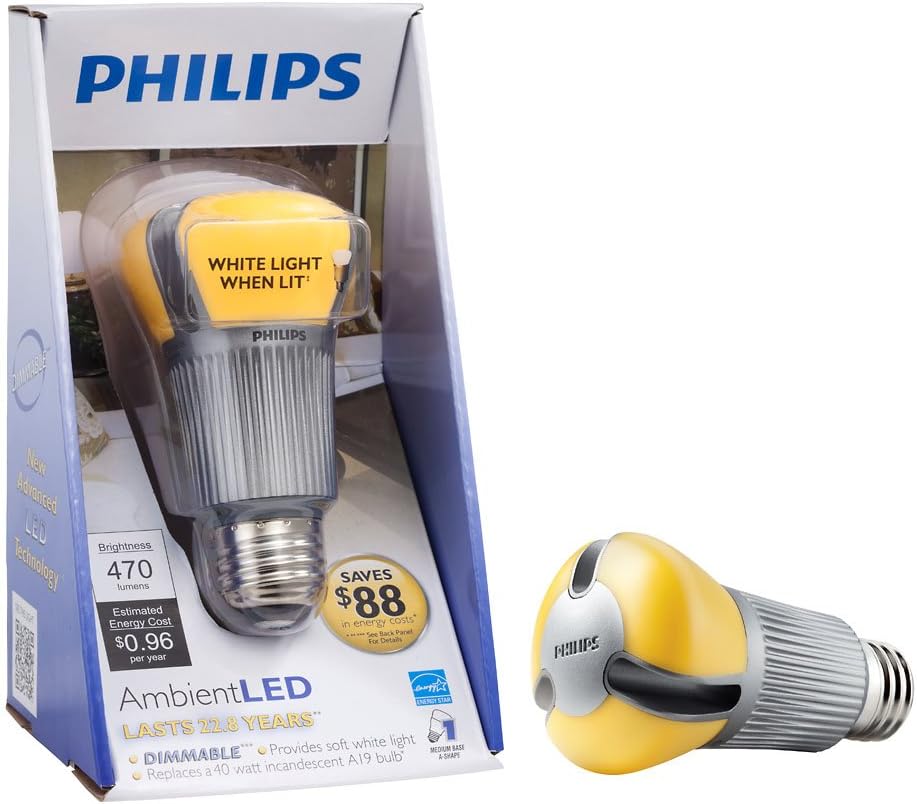
Light bulb gallium nitride LEDs emit a harsh, high-intensity blue light. So Philips placed yellow phosphor plates near the outer surface of the bulb, mixing the light into a warm and comfortable white light.
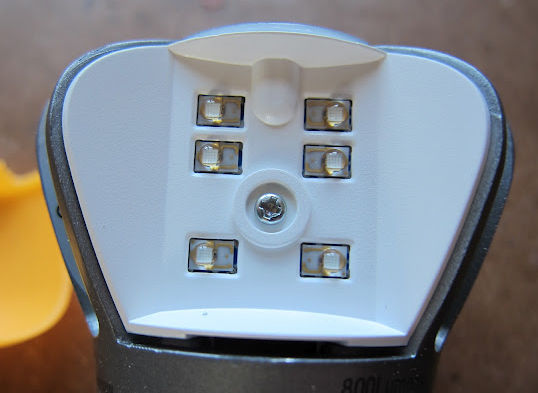
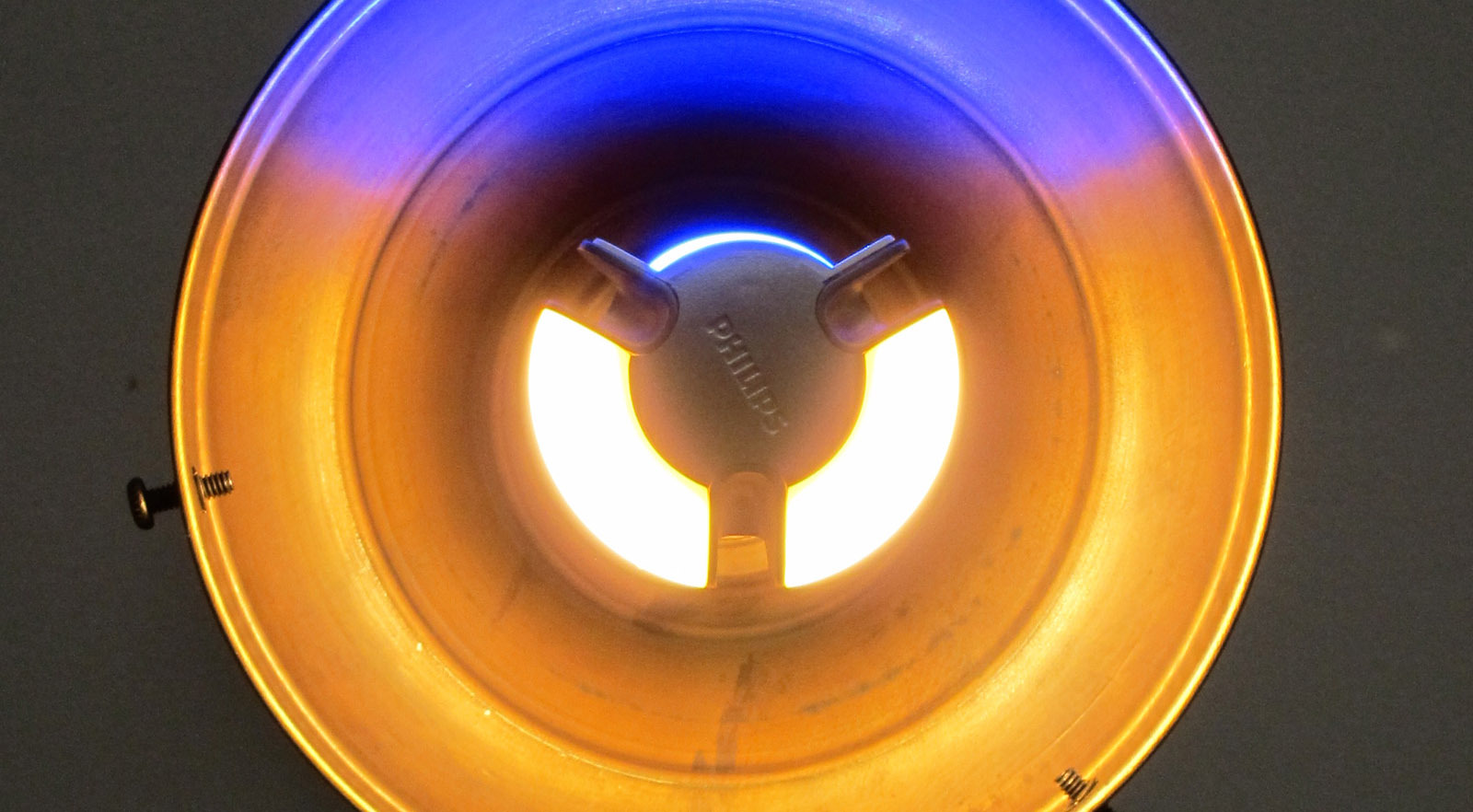
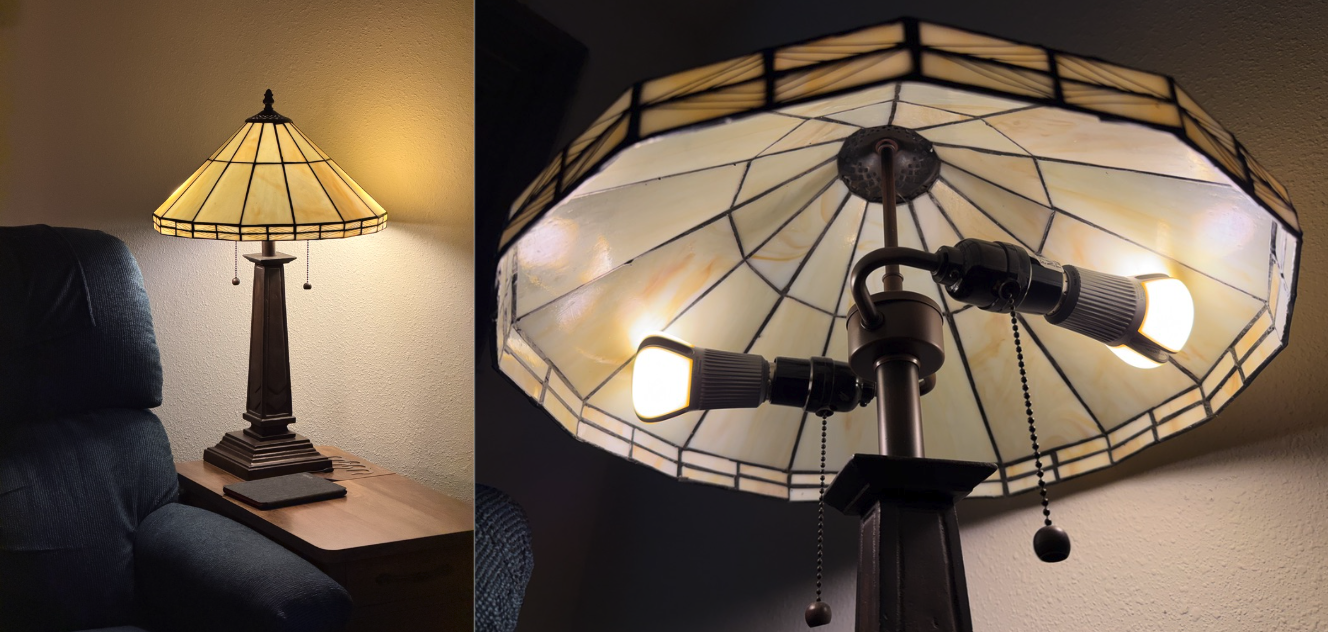
The bulbs also had massive metal heat sinks to help protect their internal electronics. I screwed the two bulbs into a lamp on a table beside my recliner, and they have been in daily use, for roughly eight hours on weekdays and maybe twice that on weekends, for the past fourteen years.
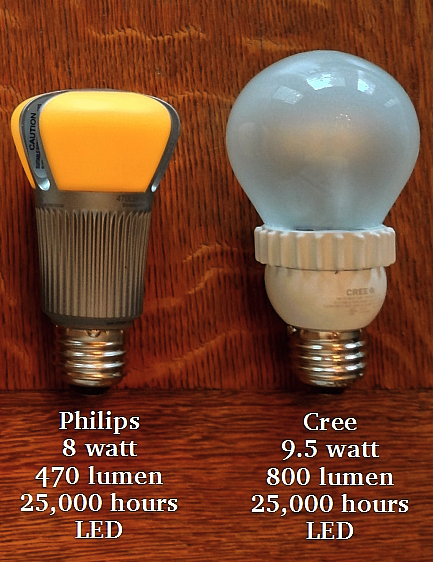
By May 2015, my stash of incandescent bulbs was thinning, and I decided to start replacing other incandescent bulbs around the house with LED bulbs. However, I couldn’t find Philips ones rated for enclosed fixtures. Consumer Reports led me to purchase 9.5 watt Cree bulbs for $12 each that output 800 lumens and thus were considered replacements for 60-watt incandescent bulbs. They had a glass dome, a heavy cast base and heat sink, and claimed the same 25,000-hour life as my earlier Philips bulbs, or about 25 times that of an incandescent bulb.
However, in both my enclosed and unenclosed fixtures around the house, the Cree bulbs did not live up to that claim. They lasted longer than incandescents but still burned out after a few thousand hours of use. The LEDs had not worn out, being far from their L70 lifetime at which point their light output would drop below 70% of the original rating. Instead, the bulbs’ internal circuitry, which converted alternating to direct current, had failed thanks to components like electrolytic capacitors which degrade with heat exposure.
By 2016, Philips had spun off its lighting division, which became Signify N.V. in 2018 but continues to license the Philips brand. Their later bulbs did away with the yellow hood and massive metal heat sink. The bulbs I purchased in 2016 and 2019 had a partial plastic globe over LEDs with the phosphor coating applied directly to them, along with a sleek white plastic housing that allowed them to mimic the appearance of classic incandescent bulbs. They were dimmable and rated for enclosed fixtures, and as the Cree bulbs gave out, I replaced them with the refined Philips ones.
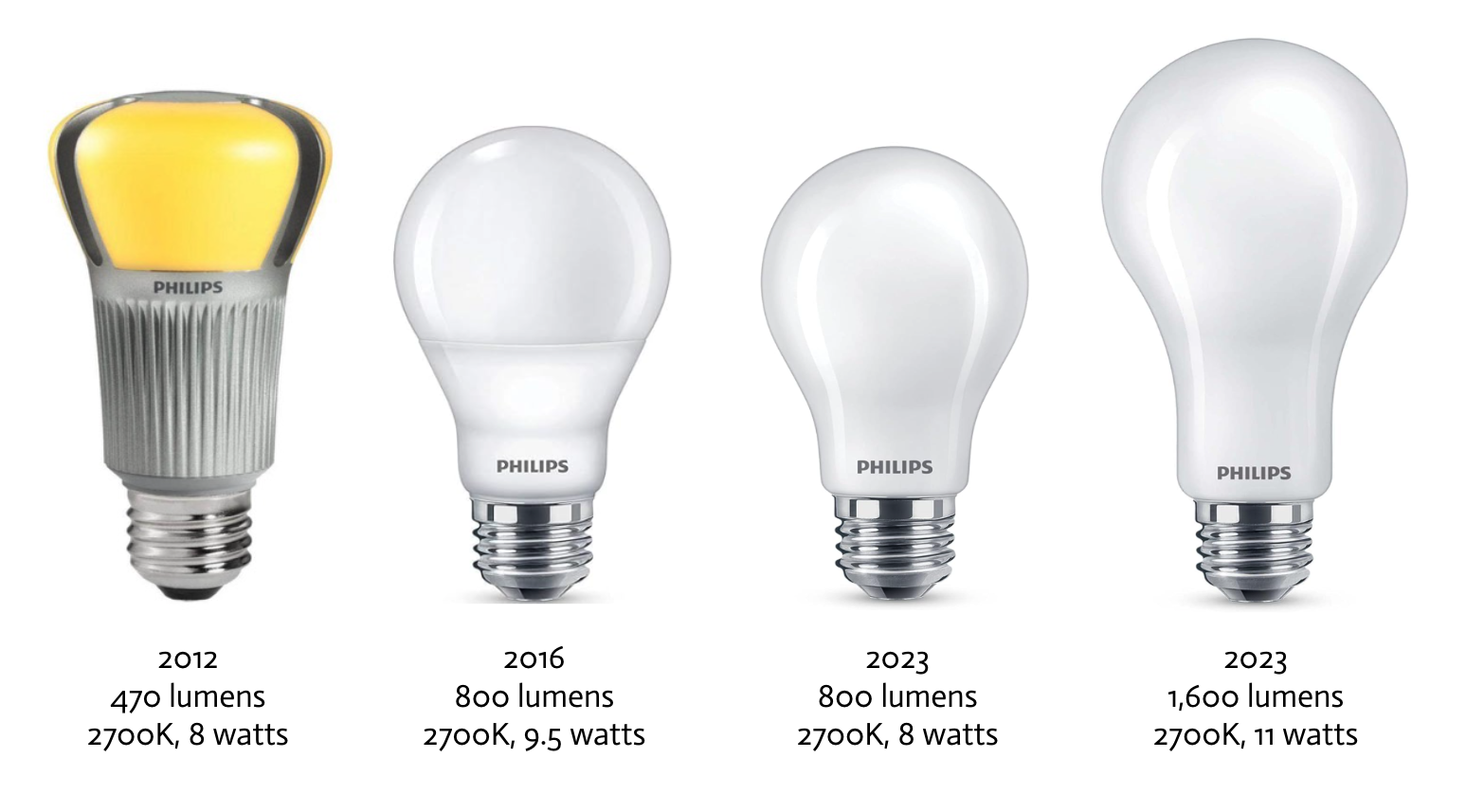
By 2023, some Philips LED bulbs had become full glass globes. I didn’t find an online glimpse into the workings of the heavy metal 2012 bulbs, and I like them too much to sacrifice one. However, I pulled out of storage a remaining old Cree bulb, a Philips plastic one, and a Philips all-glass one to illustrate their differences.
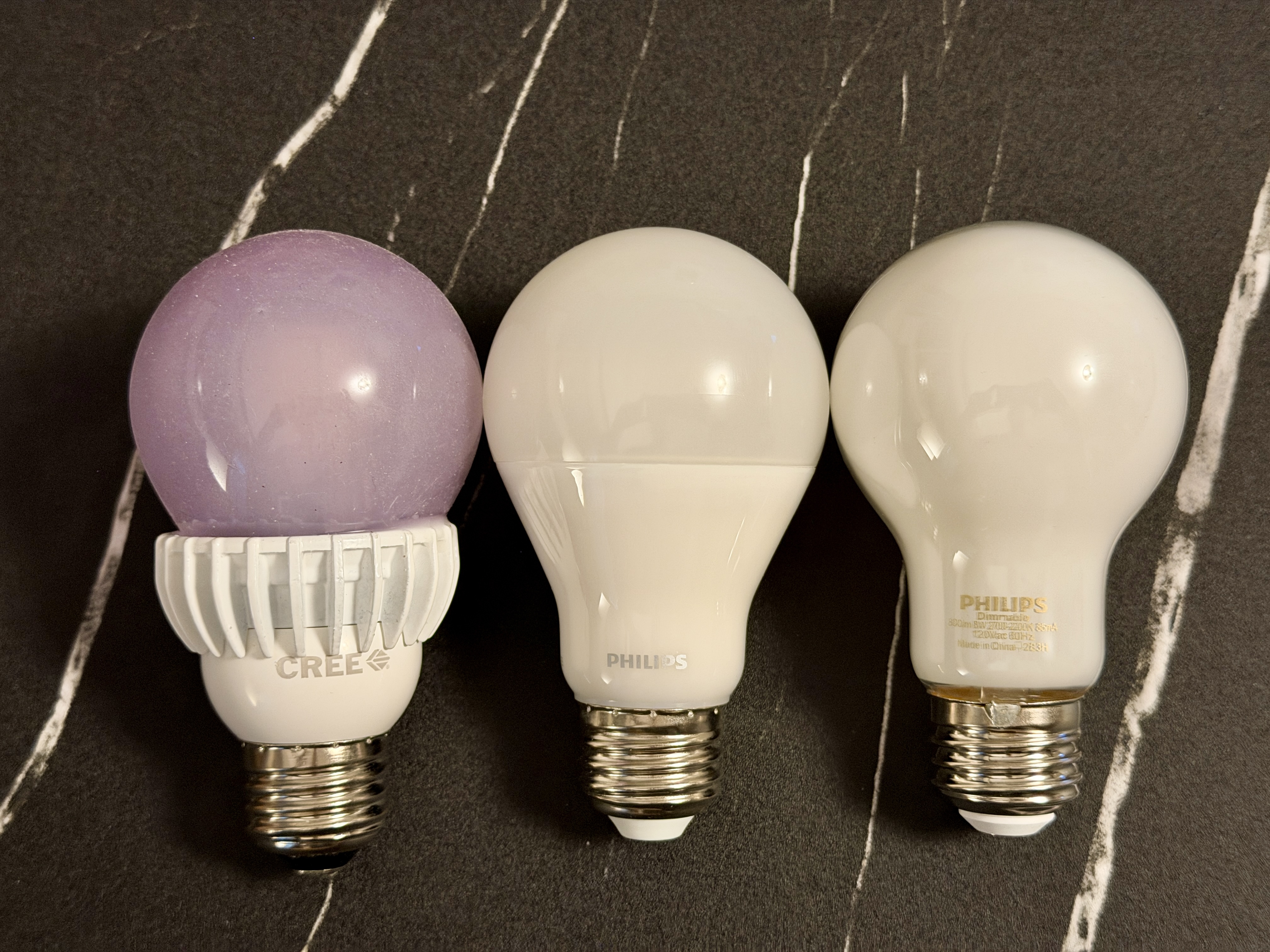
2015 Cree Bulb
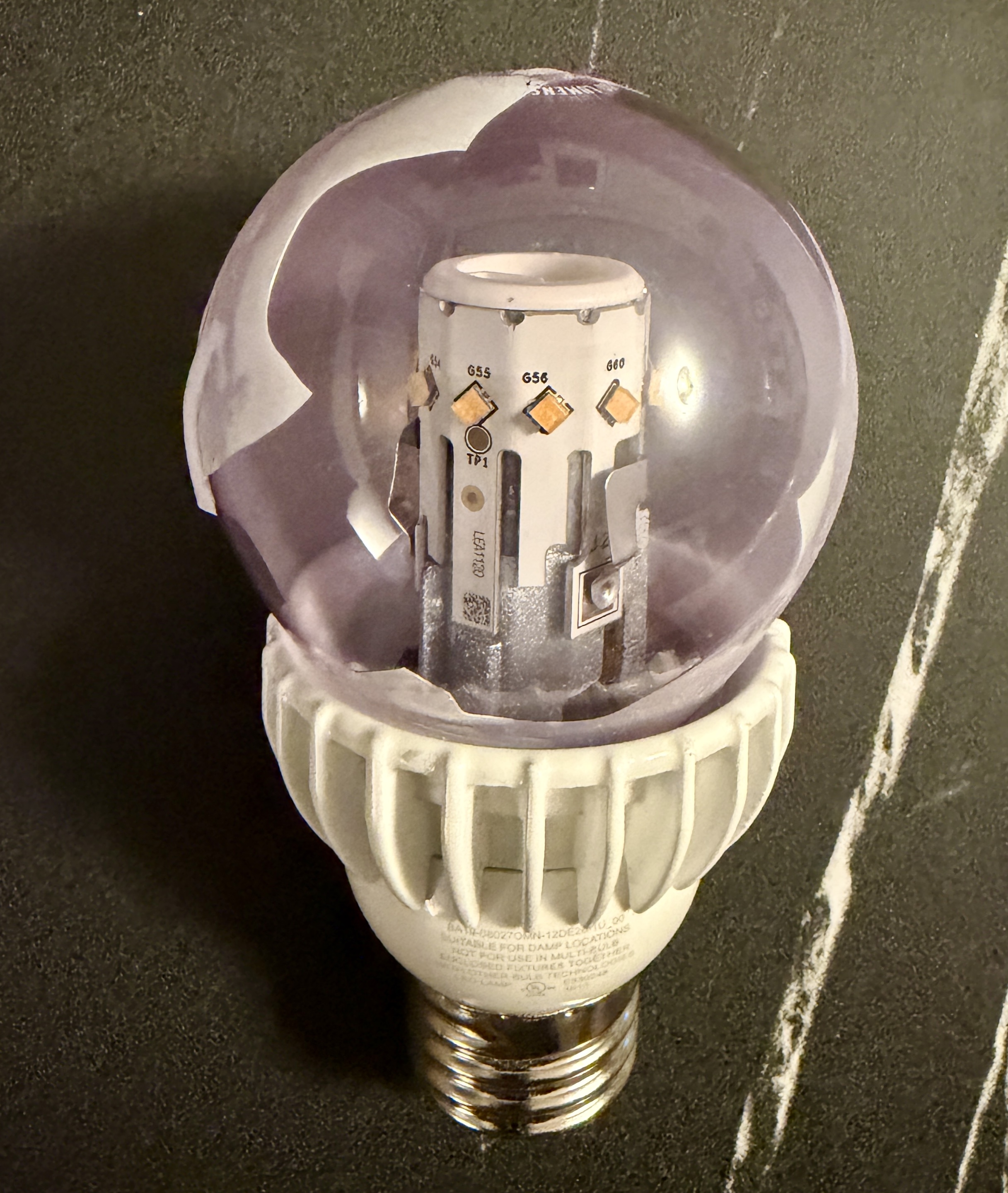
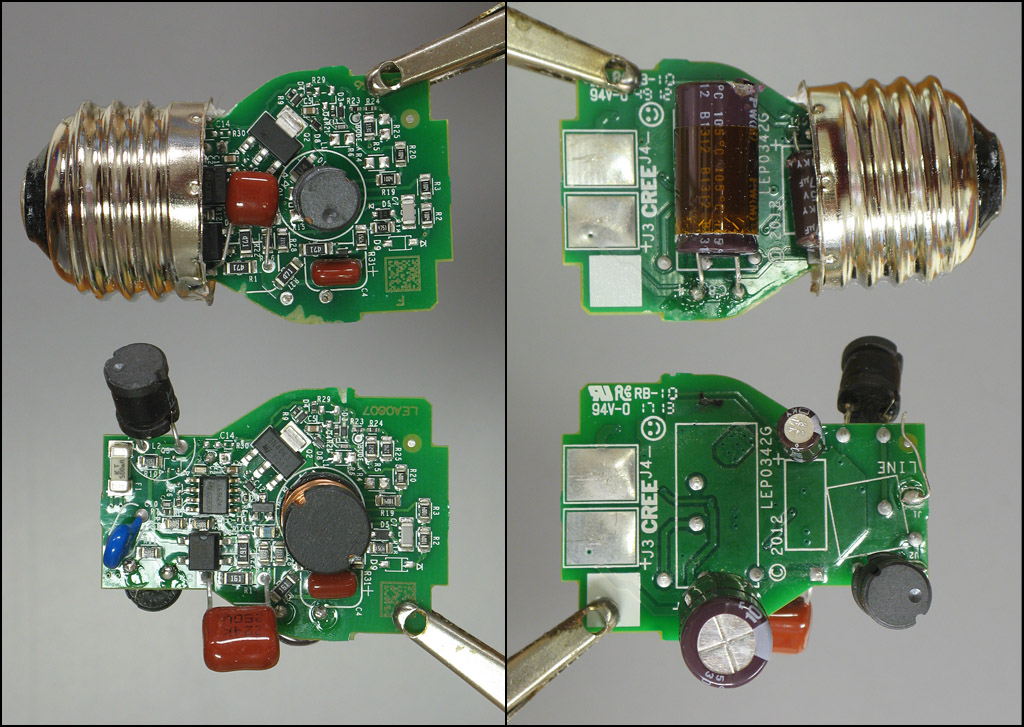
The Cree bulb had a silicone rubber coating on its glass globe for shatter-resistance. Over time, it had changed color to now appear pink or purplish. I tore some of it off to reveal it had LED chips with yellow phosphor coatings arranged around a column.
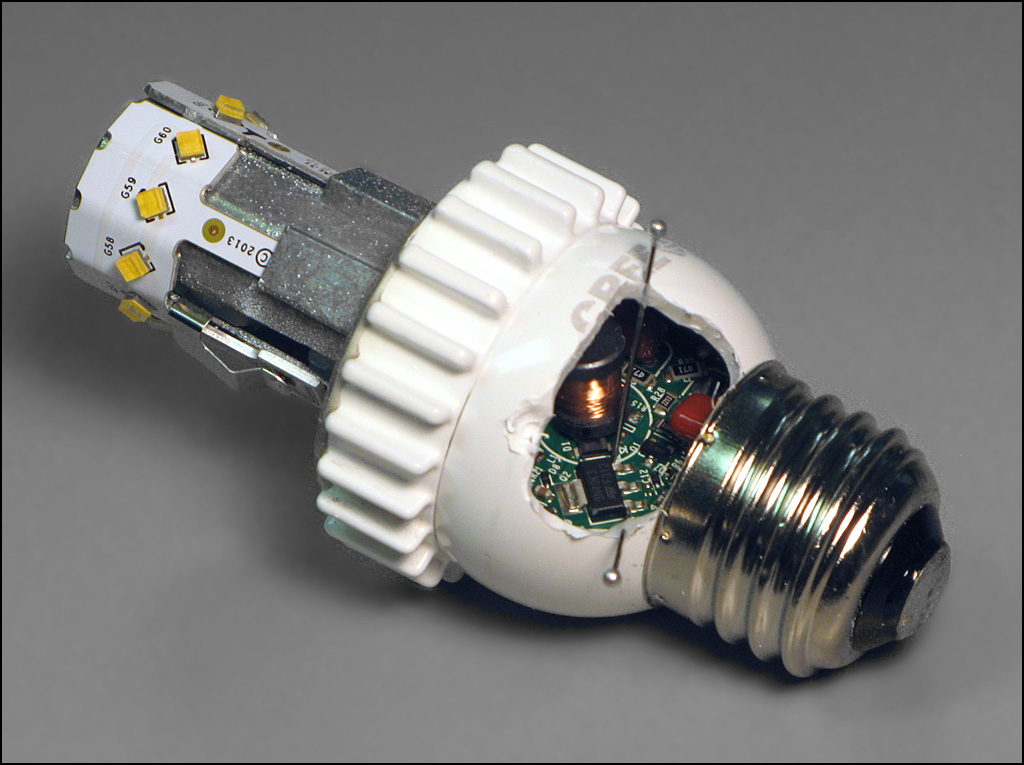
The old bulbs were quite beefy, so I am glad that back in 2013, R.J. Littlefield dissected some of them, revealing the power supplies in the bases with their inductors, capacitors, resistors, bridge rectifiers and other chips.
2016/2019 Philips Plastic Bulb
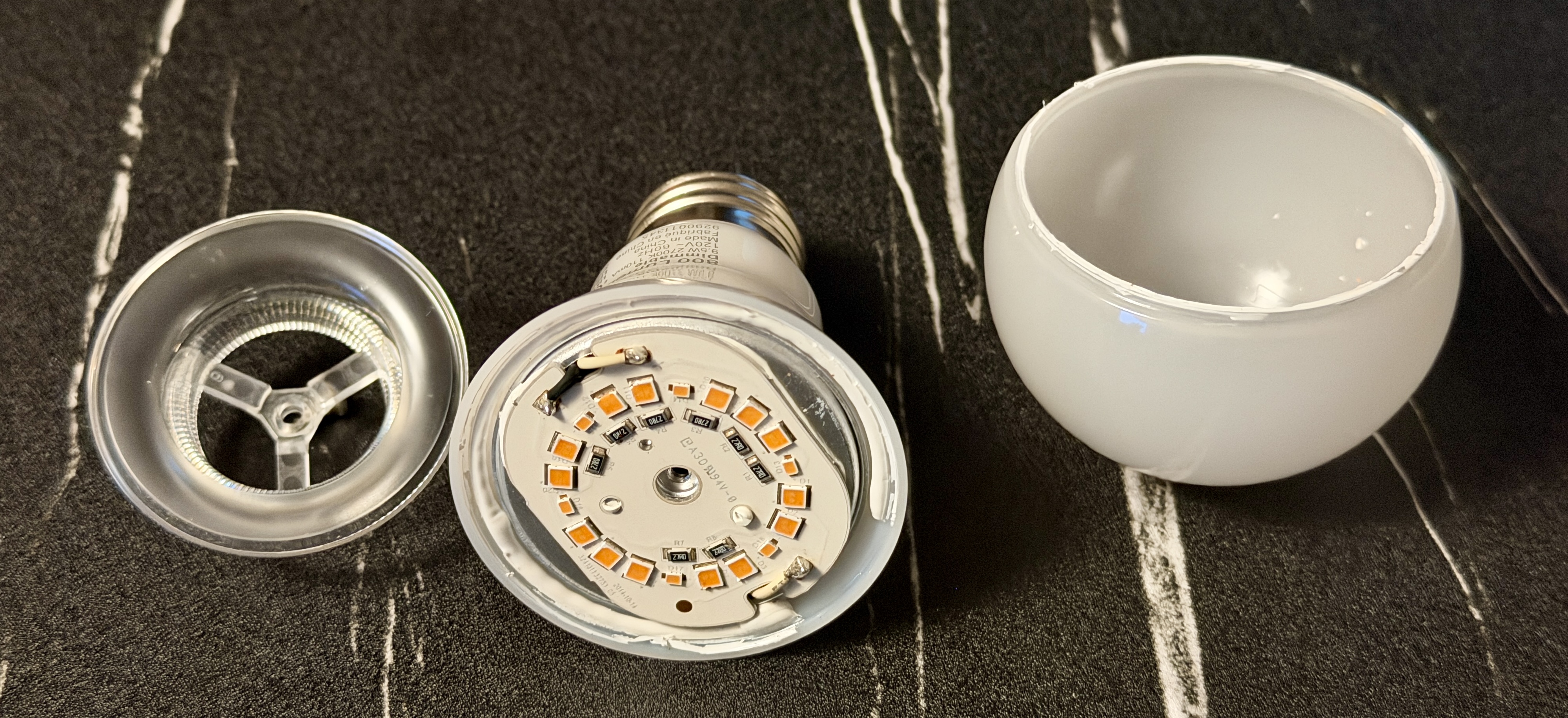
My old Cree bulb weighted 5.7 ounces, while the 2016/2019 Philips plastic bulb was only 2.5 ounces. I placed it in a towel and whacked it with a hammer to pop off the top, revealing a plastic diffuser that I unscrewed to reveal it had sat atop 14 larger and 6 smaller LEDs.
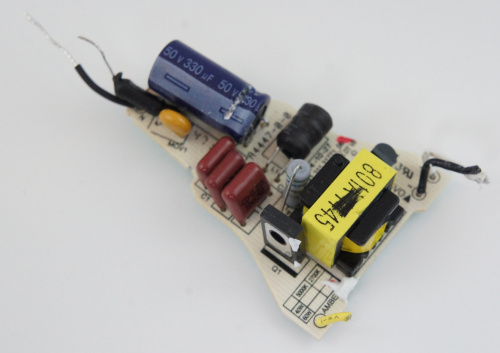
Back in 2015, Nate at Sparkfun Electronics dissected a similar bulb. He showed how the metal LED printed circuit board was bonded by thermal grease to a metal heatsink. Prying off the top of that revealed a ballast tucked into the base of the bulb with capacitors, an inline fuse, transformer, inductor, and transistors.
2023 Philips Glass Bulb
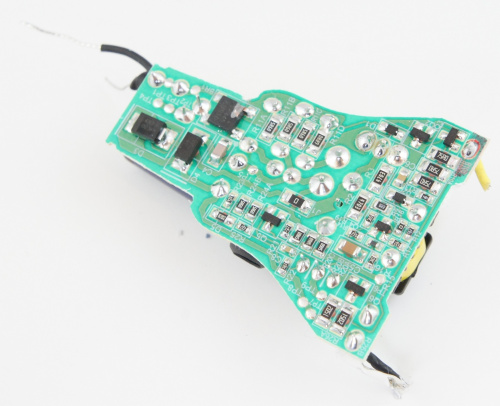
My latest Philips bulb weighed only one ounce. I placed it in a towel and struck that with a hammer to burst the glass globe, revealing four LED filaments instead of the big chips used in the earlier bulbs. Multiple microscopic LED dies are wired together in a long sequence on a transparent substrate made of glass, sapphire, or metal. They give off less heat, and back in 2019 Pulverrostmannen cut open the phosphor bar and extracted one of the tiny LEDs and got it to emit.
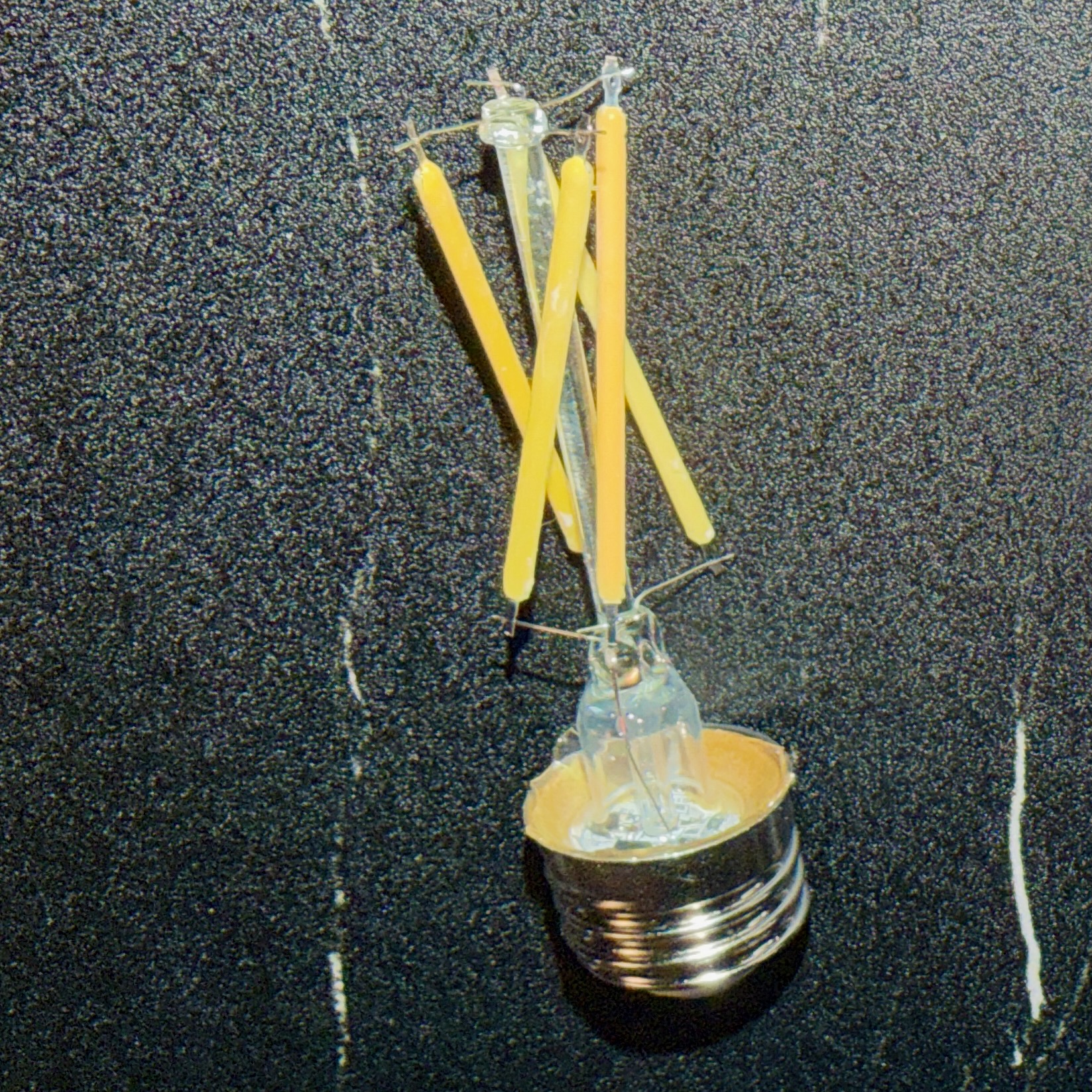
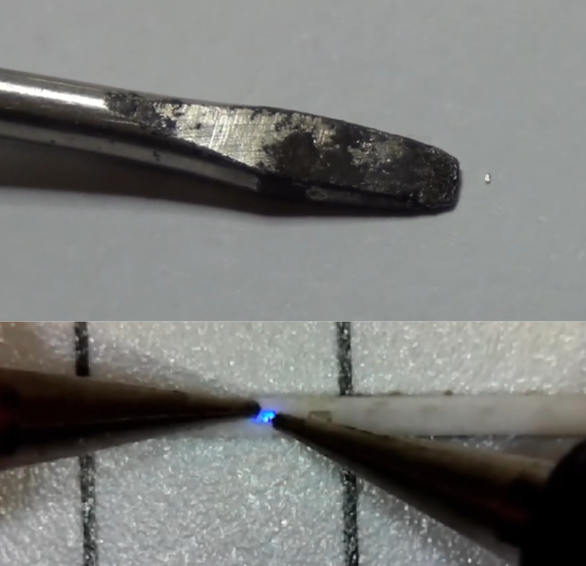
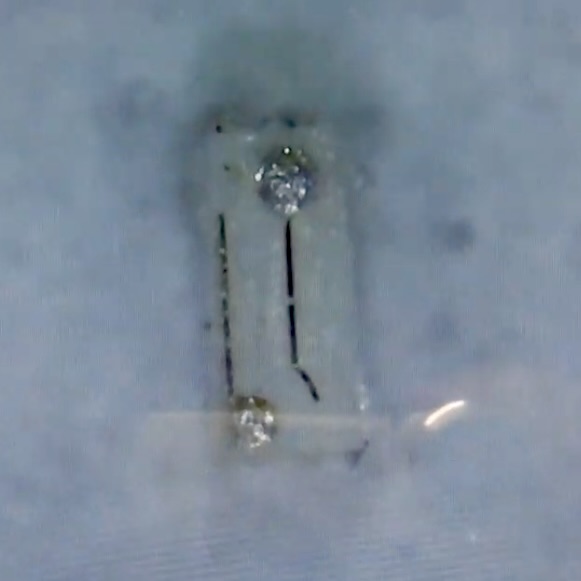
Left photograph by Granger Meador; others by Pulverrostmannen
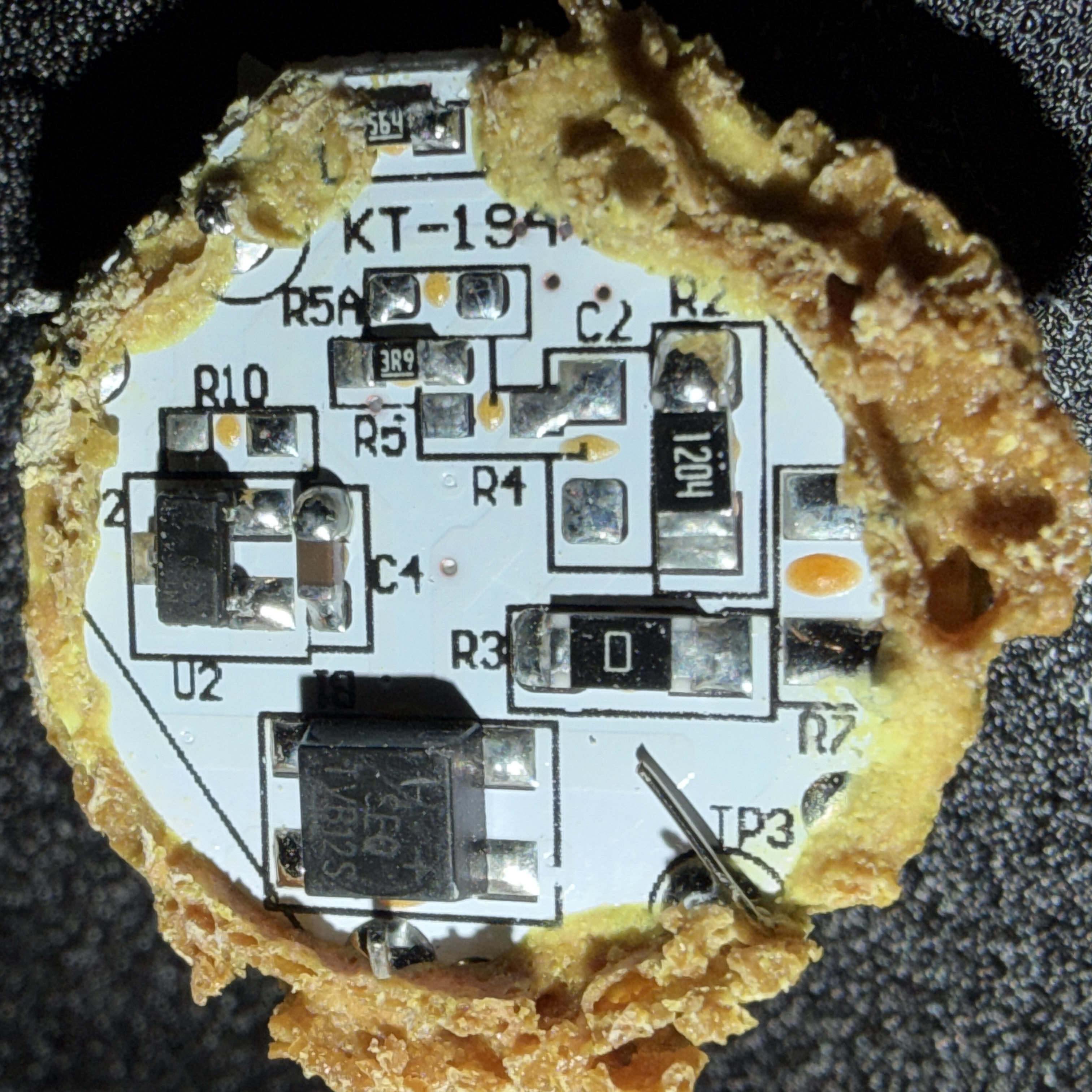
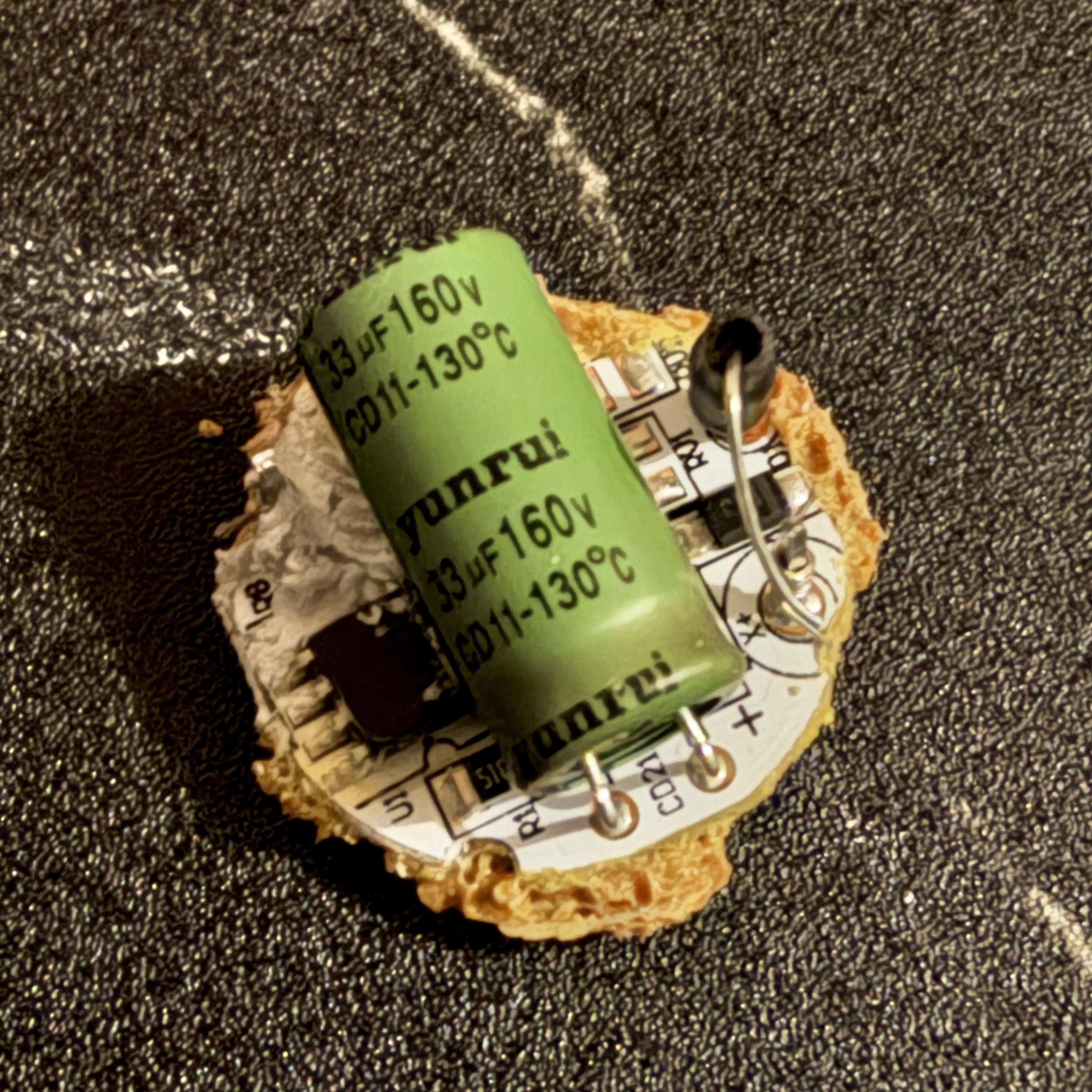
Those tiny LEDs are fed via a single circuit board tucked into the metal screw base. On the underside of that is a cylindrical capacitor along with a chip originally covered in thermal paste.
A 4,000-Lumen Bulb
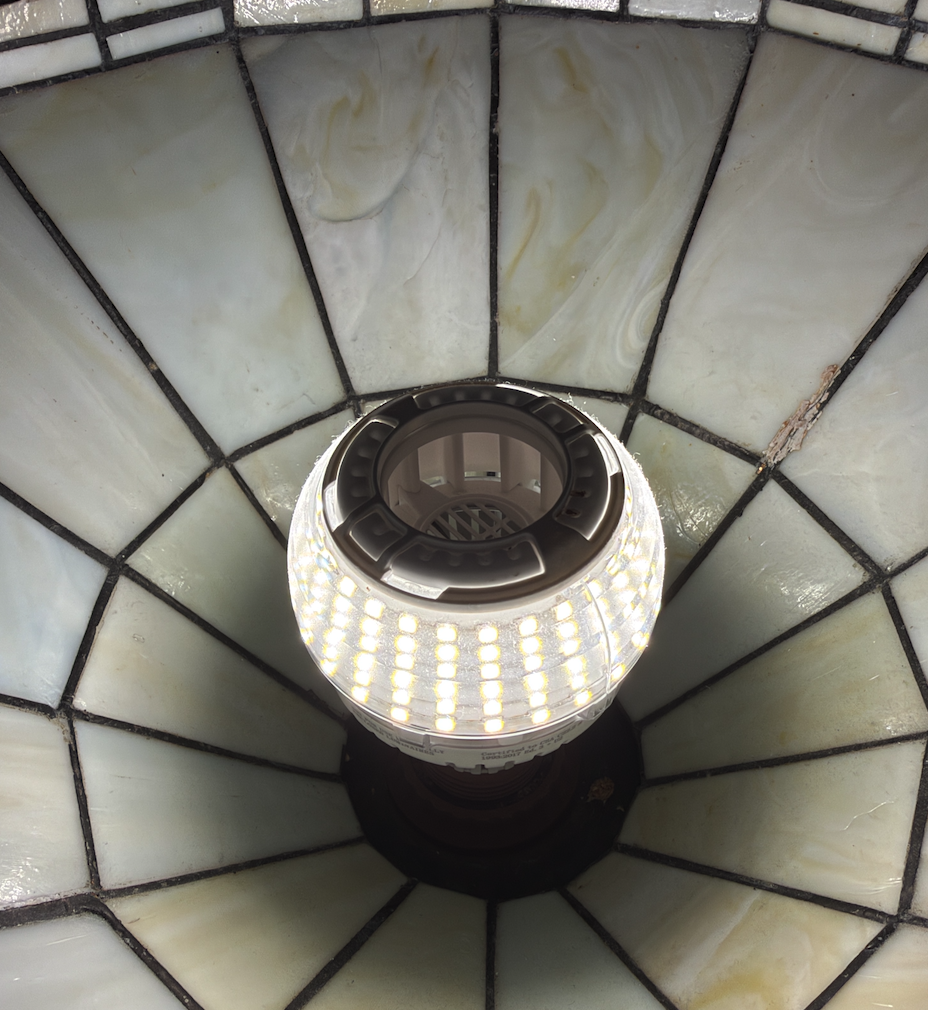
While there was immense progress on 800 and 1,600 lumen LED bulbs to replace traditional 60 and 100 watt incandescent bulbs, it took awhile for me to acquire a dimmable LED bulb bright enough for the torchiere floor lamp in the living room, which is on the same dimming circuit as the lamp beside my recliner. As the primary light source for the largest room in our home, for decades it had steadily consumed a series of General Electric 3-way 50-200-250 watt incandescent bulbs. They could output almost 4,000 lumens but only lasted about 1,200 hours at best, with the 200-watt tungsten filament inside them usually failing before the 50-watt one.
In 2022, I was finally able to order a SANSI bulb with 156 LED chips consuming 27 watts and outputting 4,000 lumens. That lasted about 3.5 years, and a year ago I spent $40 on a replacement. So far I’m breaking even on the parts cost of those LED bulbs versus their incandescent cousins, but I don’t have to replace them nearly as often and they use about 11% as much electricity.
Smart Hue Bulbs
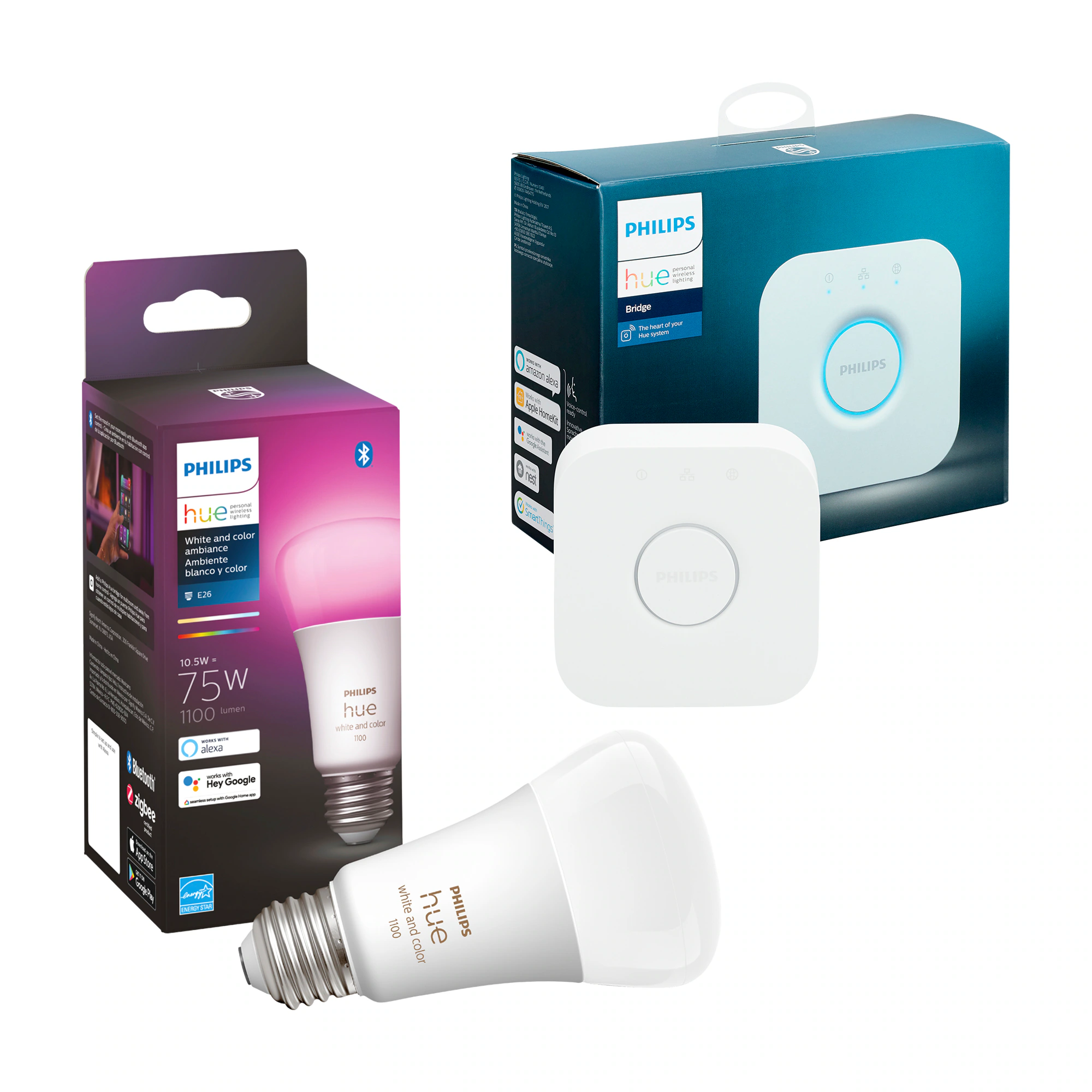
In 2017, I invested in a Philips Hue Bridge and pricey Hue LED smart bulbs. They can emit a variety of colors and can be individually controlled with a smartphone app, Google Home, etc. For awhile, I had three of them in my bedroom ceiling fixture, but a couple of them burned out after a year or two. I switched to less expensive simple Philips bulbs for that fixture and used the remaining Hue bulb in a nightstand lamp that I included in some bedtime routines programmed into Google Home, as well as my morning alarm. However, I found that I seldom adjusted the brightness or color of that bulb, so eventually I got rid of the Hue Bridge and bulb and put a regular bulb in the nightstand lamp, which I then hooked into a smart plug programmed into my routines.
Divestitures & Licensing
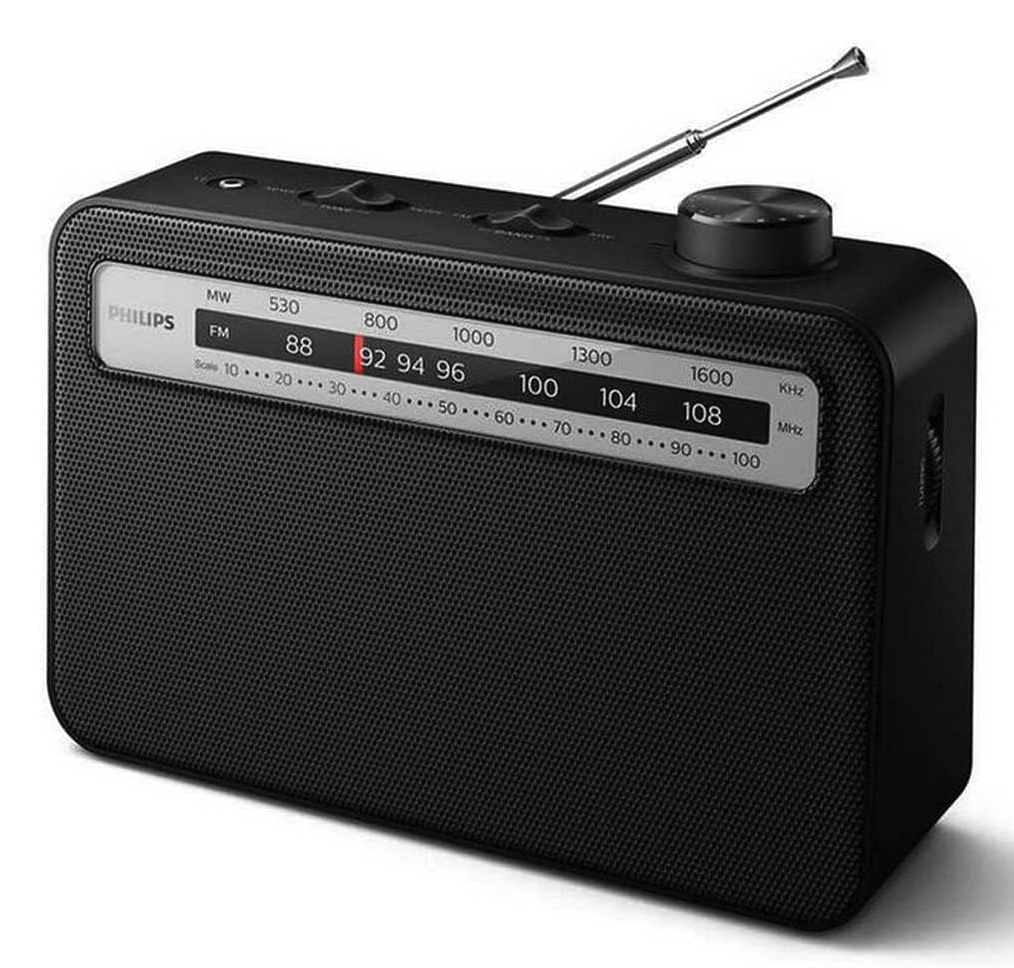
A few years ago, I noticed some products with Philips branding that looked cheap and crummy. Here’s a video on a terrible Philips-branded radio. The internet told me that in the 21st century Philips had struggled to compete in the home electronics market, which was gutted by smartphones. In addition to spinning off its lighting business, the company transferred most of its television business to TP Vision and in 2021 it sold its domestic appliances business to Hillhouse Investment, again with a licensing agreement for use of the Philips brand.
So the Philips airfryer I bought in late 2022 was produced under the auspices of an asset management firm headquartered in Singapore. By 2025, Philips itself had only three remaining primary business segments, all in health technology. Diagnosis & Treatment includes imaging technologies, Connected Care includes patient monitoring as well as sleep and respiratory care, while Personal Health includes its toothbrushes, shavers, and the like.
So my Philips razor and toothbrush still have the same corporate parent, but the Philips branding on my light bulbs and airfryer was just licensing. That led me to ponder my first LED bulbs which have served me so well for fourteen years. They were rated to last for 25,000 hours, but I’ve used mine for over 41,000 hours, and they still look great. My $42 investment back in 2012 worked out quite well.
I’ve grown fond of those old bulbs, with their now-antiquated phosphor hoods, immense heat sinks, and durable internal components. So I went onto eBay and bought a couple more of them, new old stock. Coincidentally, that cost me $42 after shipping, sales tax, and a coupon. Not bad, given that the $42 I spent on two of the bulbs back in October 2012 would be over $61 in 2026 when adjusted for inflation. Those early over-engineered bulbs could be the last bulbs I ever buy for that lamp, and it will be fun to see if and when I have to put them to use.