Can you spot the error in this funny internet meme? I only noticed it thanks to personal experience with two forms of this once-popular antiseptic which was banned in the USA a quarter-century ago.
There is a subtle error in this funny internet meme
The “fiery spit of Satan” form of Mercurochrome was a tincture of alcohol
I won’t keep you in suspense: that is a bottle of the aqueous solution of Mercurochrome. Crazy Mr. Morgan, my high school chemistry teacher, taught me that aqueous solutions have water as the solvent, and since the active ingredient, merbromin, was dissolved in water in that bottle instead of alcohol, the pictured antiseptic didn’t actually sting. The “fiery spit of Satan” was earlier forms of Mercurochrome that were tinctures of alcohol or acetone.
When as I child I cut myself badly enough, my father would open the first aid kit he had received in the army during World War II and apply an alcohol tincture of Mercurochrome. It certainly stung and also left a bright red stain. Some kids called it “monkey blood”, but I just knew it as painful protection against infection.
A World War II army first aid kit with a little bottle of Mercurochrome
I remember later getting cut while at our vacation cabin in Missouri, and my father getting a bottle of Mercurochrome out of the bathroom medicine cabinet, which still had items left behind by the previous owners. I tearfully submitted to its application, prepared for a sting. He smeared the red stuff on, but the sting didn’t come.
I was baffled and asked him why it didn’t hurt. He shrugged, speculating that maybe it was too old and had lost its efficacy. What he didn’t realize was that the newer formulation was an aqueous solution. Being water-based, it lacked the alcohol that made his old kit form pack a punch. Alcohol contains ethanol and hydrogen peroxide, which activate receptors in the body that trigger a burning sensation. That burning sensation is a valid warning: such solutions kill germs, but they also harm the surrounding tissue of the wound, which can delay healing.
Another subtle error: the Mercurochrome in this photo was an aqueous solution, so it didn’t actually sting, while the 50% alcohol tincture of Merthiolate packed a wallop
Another point of confusion is Merthiolate versus Mercurochrome. Mercurochrome was a trade name for a solution of merbromin, a compound of mercury and bromine. Merthiolate (which my parents pronounced without its “r”) was a trade name for thimerosal, a compound of mercury and sodium. Both kill some disease-causing microbes by breaking chemical bonds in proteins. Merthiolate was a tincture of alcohol or acetone, so it always stung when applied to open wounds.
In 1998, the Food & Drug Administration, concerned about the mercury in it, reclassified merbromin from “generally recognized as safe” to “untested” and that effectively banned it in the USA. To put it back on the market here in its original form would require testing and approval. Drug companies won’t pursue that expense since the drug is too old to be patented…they couldn’t recoup the testing and approval costs, since if it were eventually approved, cheap generic forms would immediately flood the market.
Thimerosal was also banned in over-the-counter products, but it is still commonly used as a preservative in various substances. Something branded as Merthiolate is still around, but it no longer contains thimerosal. Mercurochrome with merbromin is still widely available in other countries, but if you need a topical antiseptic I advise using Neosporin.
Another antiseptic of old
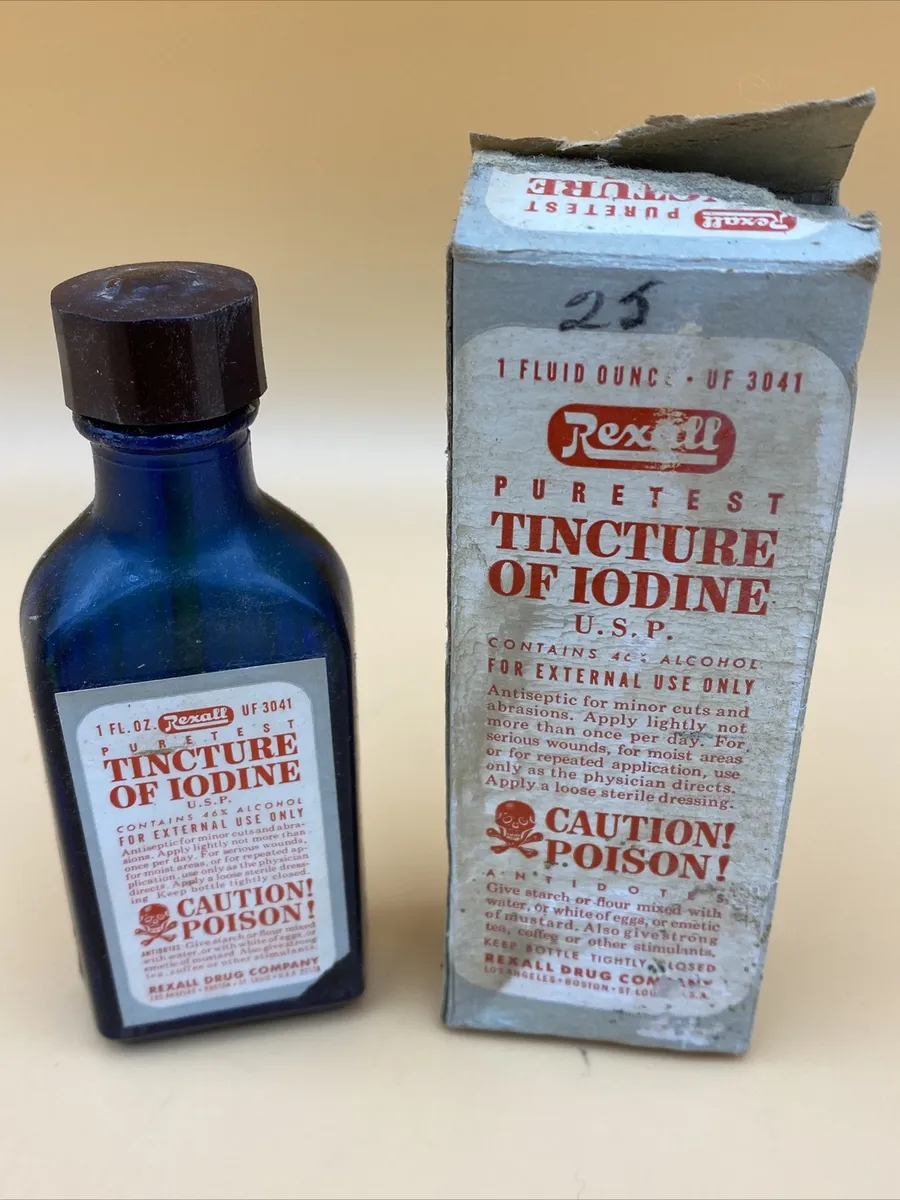
Another painful antiseptic of old, which my mother once kept on hand, was iodine. My father’s World War II first aid kit had also included some iodine swabs, but they had dried out, while Mom kept a blue bottle of iodine up in a high cabinet. It was a tincture using ethanol, so it stung when applied to a wound.
The inaccuracies in most of the internet memes I have seen about Mercurochrome brings to mind how consumers wasted over a billion dollars each year on oral phenylephrine, which some scientists and many pharamacists have known for decades was ineffective. Phenylephrine works fine in a nasal spray, but it is no better than a placebo when taken orally.
Thankfully I long ago had figured out that taking phenylephrine orally did not work for me and learned to rely on pseudoephedrine instead, despite the annoying restrictions on procuring it which were intended to fight methamphetamine addiction.
I was also quick to catch on that loratidine (aka Claratin) isn’t an effective decongestant, although it can help with other allergy symptoms. Thankfully I figured out that cetirizine (aka Zyrtec) works well for my particular allergy symptoms. However, I was much slower to acknowledge that guaifenesin did little for me to relieve chest congestion.
Back in 2006, the American College of Chest Physicians advised consumers with acute coughs from colds to ignore over-the-counter drugs with dextromethorphan or guaifenesin. If you think drugs with those ingredients are helpful, it’s your money and maybe they help with your symptoms and not mine, but you also might just be paying for placebo effects. As for homeopathic medicines, I’ll let James Randi address that quackery.
In my youth, similar nonsense was spread about vitamins. There is no substantial evidence of a health benefit for most of the adult population from taking a daily multivitamin. Yet I, like over 40% of the adults in the USA, still take one. Why is that?
For me, it is a combination of the halo effect, a lack of standards, and, most importantly, that prescription is far more convenient than proscription. The halo effect arises because we know that vitamins could indeed prevent pellagra, rickets, and scurvy back when nutritional deficiencies were common. The truth, however, is that few of us now have such poor diets that we might succumb to a disease caused by a vitamin deficit.
A lot of people enrich their urine with this stuff
My innate skepticism and reading of James Randi and Martin Gardner protected me from trusting Linus Pauling, a two-time Nobel Laureate and famous chemist, who believed that Vitamin C could prevent cancer and increase the life expectancy of cancer patients. Realizing that chemistry is not medicine and that science is more than scientists, I was not surprised to find that three subsequent double-blind placebo-controlled randomized trials, sponsored by the National Cancer Institute and conducted in the Mayo Clinic, found no benefit. It sure looks like vitamin C doesn’t help much with the common cold, either. As the old saying goes, “If something is too good to be true, it probably is.”
However, few seek out rigorous research, instead relying on advertising and anecdotes or falling victim to pseudoscience. It doesn’t help that the USA does not require human research to prove that supplements are safe or effective. The FDA can stop the distribution of unsafe supplements, but they do not subject them to the scrutiny they apply to pharmaceuticals, so they escape even belated corrective actions like what is finally happening with oral phenylephrine. Throughout my lifetime the pharmacy counters have swollen with bottles of vitamins and supplements, and nowadays we have a flood of “essential oils” in the marketplace.
So why, then, do I still take a daily multivitamin? Because I know that one vitamin won’t hurt me, and my diet is far from ideal. I’d rather prescribe myself a useless vitamin than proscribe unhealthy foods I enjoy like pizza and hamburgers, and I fail to make the effort to consume more fruits and vegetables. Like you, I tend to be illogical at times, and I often prefer balms of comfort over the sting of truth.
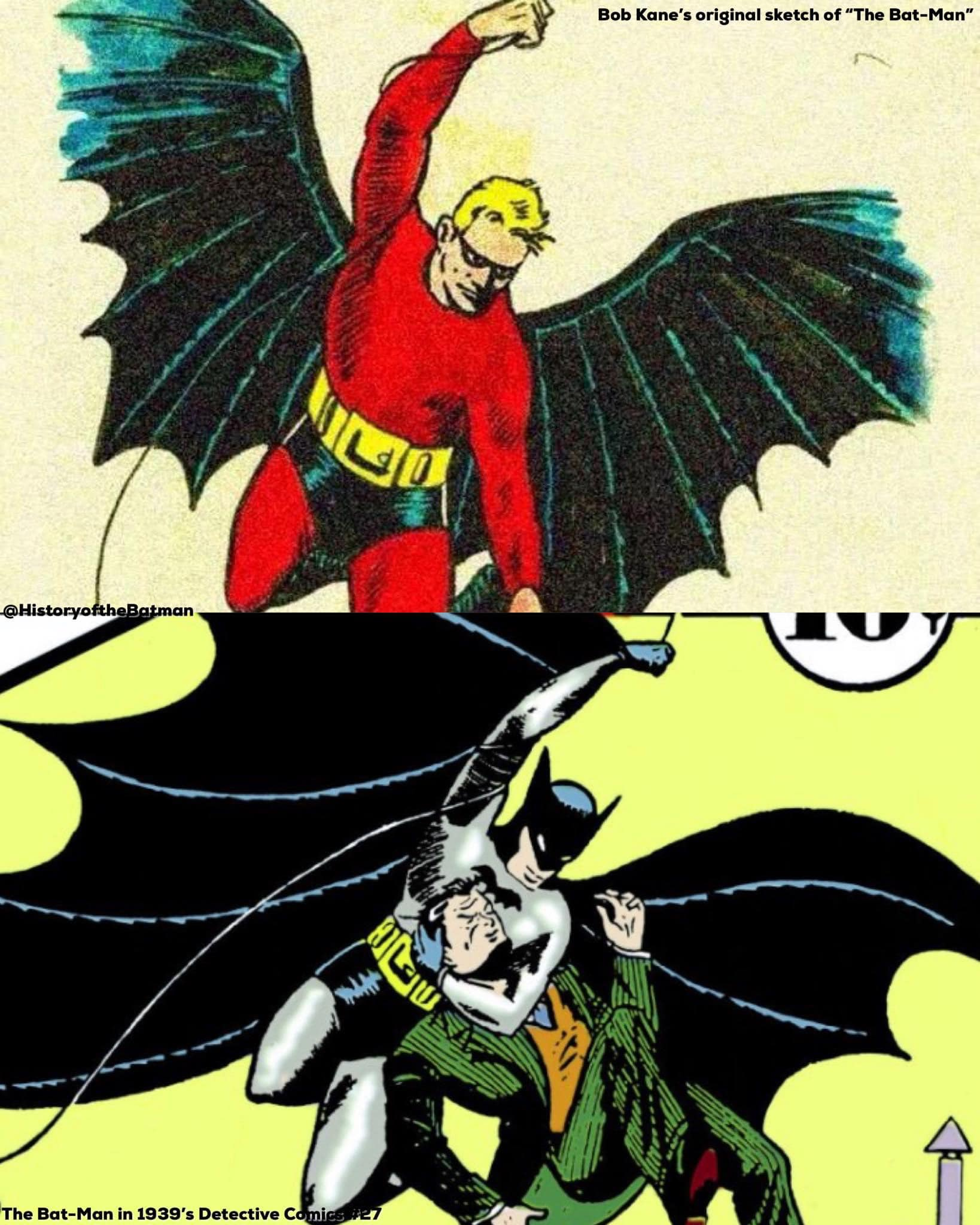
Bob Kane and Bill Finger introduced Batman in the May 1939 issue of Detective Comics. Kane had the initial idea of The Bat-Man, but his version wore a red jumpsuit, domino mask, and had two wings attached to his back. Writer Bill Finger is responsible for the revised costume, the gadgets, the conception of Bruce Wayne and Gotham City, and much more.
Bob Kane’s original sketch compared to the published version
Bob Kane and Bill Finger
Sadly, Kane made sure that Finger got little credit for his contributions. Perhaps it is fitting that one of Batman’s co-creators was himself a bit of a villain, and that it took some detective work for folks to belatedly realize how important Bill Finger had been.
Batman started out pretty dark, killing people and using a gun. But then DC decided to lose the gun and had him stop killing people. His sidekick Robin was introduced, transforming Batman into a lighthearted father figure who traded wisecracks with Robin.
In the 1950s, the Batman comics became rather bizarre, with stories involving aliens, visiting other planets, and various gimmicks. Of course, the villains had long been bizarre, but so were the ones that Oklahoma’s own Chester Gould used in his Dick Tracy comics.
After the scare from Seduction of the Innocent, Batman gained a Bat-Family and the Catwoman villain, who first appeared in Batman #1 in 1940, disappeared. The comic book eventually was in danger of cancellation, but a 1966 television show revived its prospects and led to the Catwoman character being revived in the comics.
The Bright Knight
Bill Dozier, who was asked by ABC to produce the 1960s television show about Batman, had never read comic books. After reading several Batman issues, he decided the show could only work as a pop-art campy comedy. He hired Lorenzo Semple Jr. as head scriptwriter, and thankfully they cast Adam West in the title role.
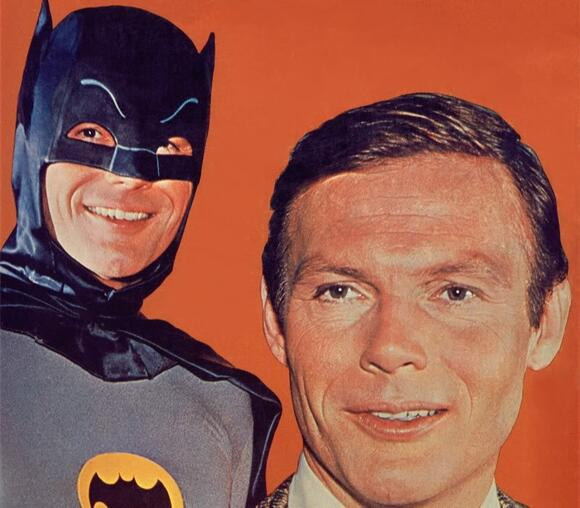
Adam West‘s straight-faced portrayal of the absurd character, with the energetic Burt Ward as his sidekick Robin, was so much fun.
The silly fight scenes were a highlight, with plenty of Wham!Zap! Boff! and the like, and actors portraying the outrageous villains gleefully chewed up the scenery, including regulars Burgess Meredith as The Penguin and Cesar Romero as The Joker.
What many might not realize is that the narrator of the show, including the famous “Same Bat-time, same Bat-channel!”, was Bill Dozier himself.
Recently I showed Wendy the 1966 Batman movie that featured Meredith and Romero, as well as Frank Gorshin as The Riddler and Lee Meriwether as Catwoman. Years ago, I got to see Adam West at a Tulsa convention, along with Julie Newmar. She played Catwoman in the first two seasons of the show, while Eartha Kitt took over the role for the final third season.
Adam West outlined the difference of the show from the comic books and his earnest, sincere, and unsubtle approach to the character:
I was born in the mid-1960s, so I was too young to watch the campy Batman television series of 1966-1968 until it was in syndicated reruns. In the 1970s, one of the Oklahoma City television stations ran it on weekday afternoons, and I found it hilarious.
I also saw Batman and Robin on the long-running Saturday morning cartoon Super Friends. There they weren’t played for laughs, but the show was still pretty lighthearted.
The Dark Knight
The Dark Knight of the 1970s comic books did not appeal to me
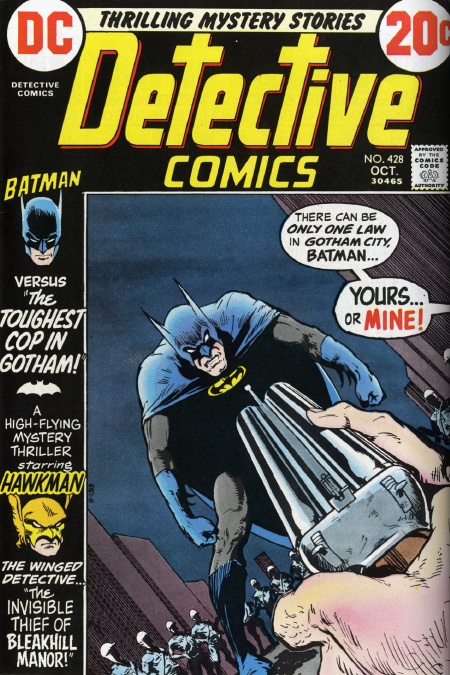
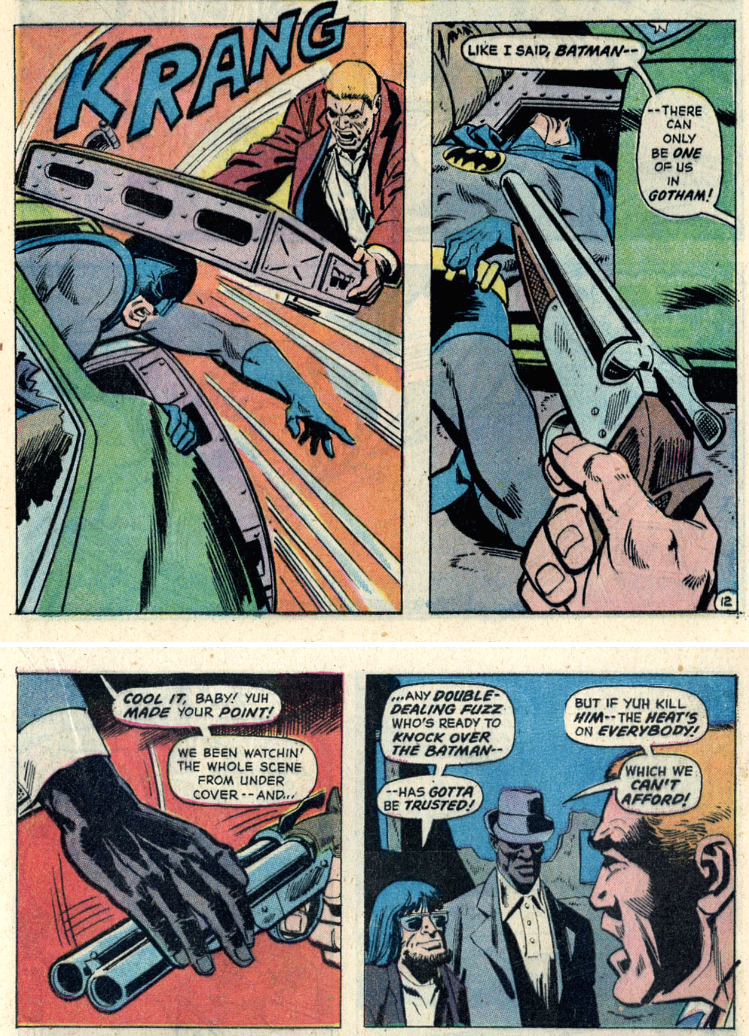
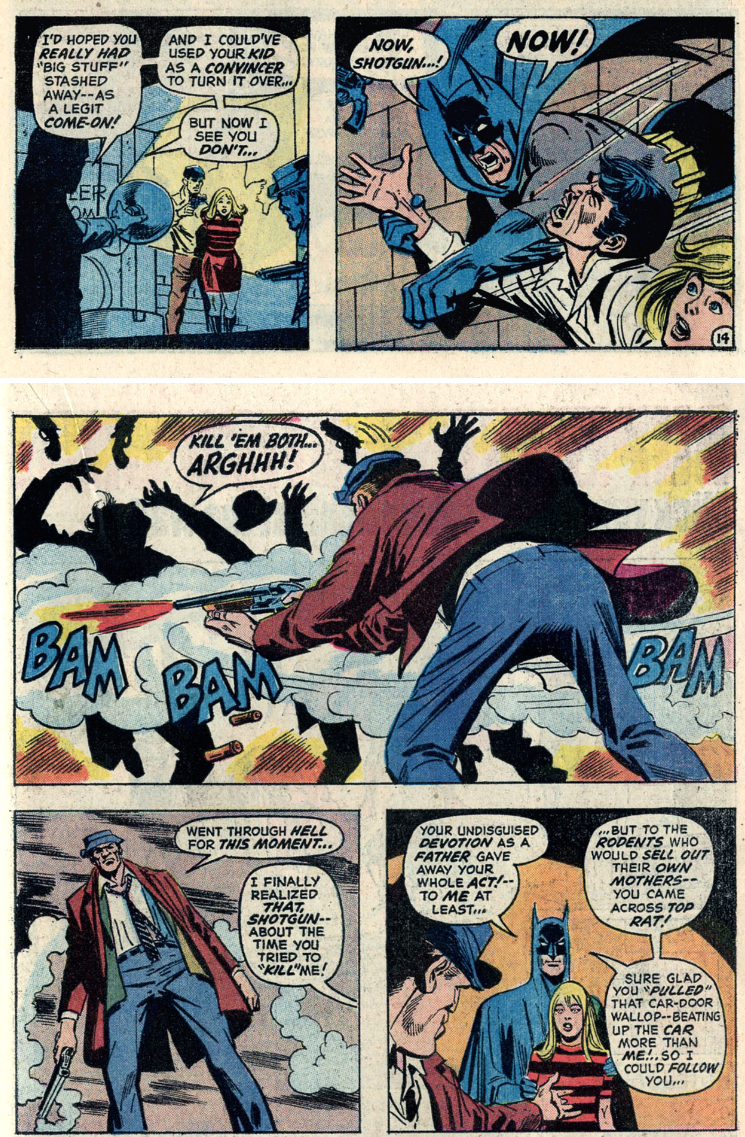
Detective Comics Volume 1 #428 had what appeared to be a corrupt cop involved in a dope ring. It included quite violent scenes of the cop seemingly about to kill the caped crusader, only to be stopped by the drug dealers who didn’t want the heat that act would bring.
This 1972 comic was a far cry from the silly television series of a few years earlier
I was particularly shocked to see Batman unconcerned when the cop gunned down the dealers.
Just a couple of rodents died, so nothing to worry about? Egad.
This was far more to my liking as a kid
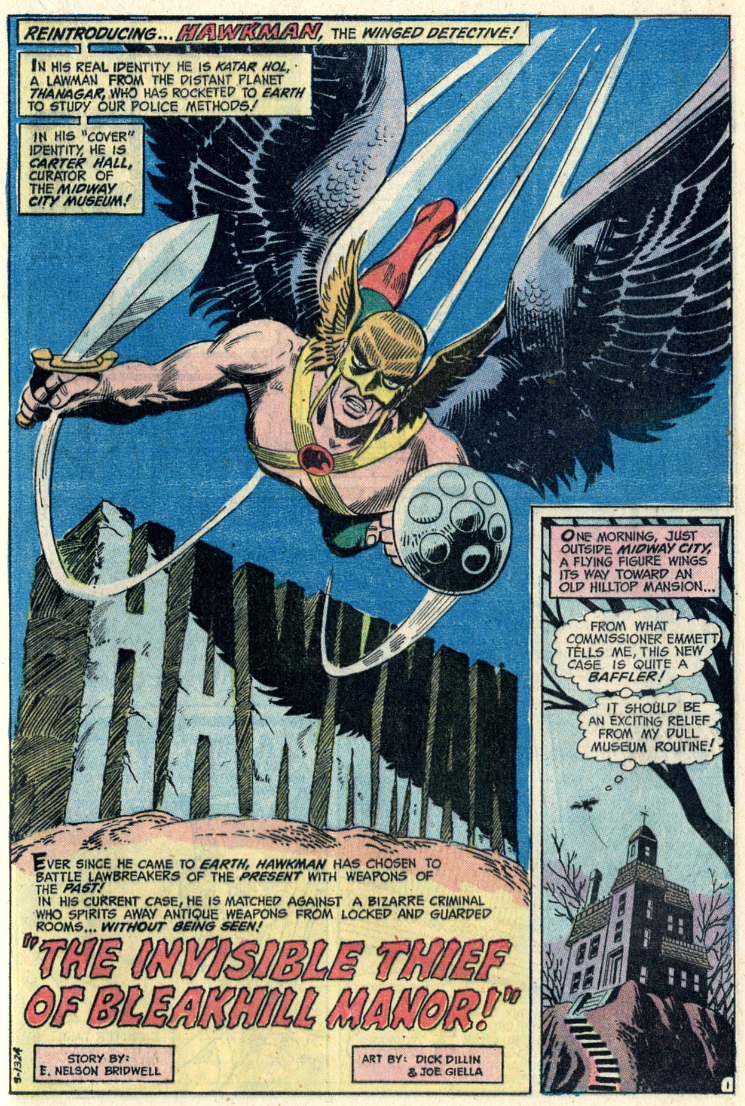
There was no way to reconcile that portrayal with what I enjoyed on TV. The comic book wasn’t a total loss, however, as I did like the haunting atmosphere of the Hawkman story in that same issue, which at least had some clues and detective work.
Whenever my parents took me to our vacation cabin in Missouri, Mom would buy me a three-pack of comic books at a grocery store. That introduced me to the satellite-era Justice League of America, Superman, Green Lantern, and the like. Batman was in the Justice League, but I don’t recall many Batman comics in those 3-packs.
By junior high, I had stopped reading comics, but I still watched reruns of the Batman television show. One summer a neighborhood tomboy and I had great giggly fun making up our own Batgirl & Robin stories that we recorded on cassette tapes. How I wish I had saved them!
Cinematic Batmen
After junior high I didn’t think much about Batman until the late 1980s, after I had completed my undergraduate degree. Tim Burton’s 1989 Batman film, with its dark and menacing Gotham City, serious portrayal of Batman by Michael Keaton, and Jack Nicholson’s over-the-top Joker, was a smash hit. As a young adult, I didn’t mind the darker tone and enjoyed Jack Nicholson’s Joker, but I hated the sequel’s disgusting Penguin and found the later Schumacher entries in that series of movies rather ridiculous. Bat-nipples were the least of their problems.
Christopher Nolan brought Batman back to cinemas with his Dark Knight trilogy from 2005-2012. They were blockbusters that I saw in theaters, but the only reason I would watch any of those dark tales again would be to relish Heath Ledger’s standout portrayal of The Joker.
I liked each of these unique portrayals of The Joker
One final Batman experience came about a decade ago, when Rifftrax released their takes on the 1949 Batman and Robin serial. That 15-chapter sequel to another serial from 1943 was of course ridiculous, with the dynamic duo confronted by the Wizard, a hooded villain who had a device to remotely control vehicles. What made it great fun was having Mystery Science 3000 veterans Mike Nelson, Bill Corbett, and Kevin Murphy making wisecracks throughout the episodes.
I haven’t seen the Zack Snyder movies where Ben Affleck played Batman. While I liked Snyder’s 2009 Watchmen movie, suffering through 2013’s Man of Steel made it clear that the Snyderverse was not for me. I’ve also not been tempted to sample Jared Leto’s or Joaquin Phoenix’s portrayals of the Joker.
If I’m going to watch a superhero movie, give me something with lower stakes and a strong sense of humor, such as when Billy Batson tests his powers in the 2019 Shazam!
My Bright Knight
I have no idea what the reboot of the DC Extended Universe will mean for Batman. Maybe the character will eventually evolve into something I would like to see, but superheroes are such absurd characters that for me camp is the best way to go. We lost Adam West in 2017, but long live the Bright Knight.
This is a look back at the key shifts in how I listened to recorded music over my lifetime, with examples of what I was listening to at the time.
1960s vinyl record albums
I was born in the mid-1960s, and at first the only recorded music stored in our home was on vinyl long-playing records that my mother could play on her phonograph, a Sears model from the late 1950s.
My mother taught me to play records on my own, cleaning and handling them carefully. My favorites were a 1957 performance of Peter and the Wolf by the Philadelphia Orchestra with Eugene Ormandy conducting and Cyril Ritchard narrating, the 1955 Songs of the West album by the Norman Luboff Choir, and 1962’s Pianos in Paradise by Ferrante & Teicher.
1970s vinyl record albums
By the mid-1970s, 46% of U.S. recorded music sales were still on long-playing 33-rpm vinyl records, 32% on vinyl 45-rpm singles, 18% on 8-track tape cartridges, and 4% on compact cassettes. I was nine years old when I acquired the first album of my own: 1975’s Goofy Greats by K-tel. I had received a blue plastic fishing tackle box as a gift but didn’t like fishing, so my best friend Gene Freeman, who owned Goofy Greats, traded it for my tackle box.
The records I encountered were either long-playing (LP) 12-inch diameter albums you were supposed to play at 33 1/3 rpm or 7-inch diameter singles you were to play at 45 rpm. But 78 rpm records were produced until 1958, and Mom’s player could also handle rare 16 2/3 rpm records, which were typically talking books for the blind. So Gene and I had fun even with the songs we didn’t care for, adjusting the speed on the 1950s record player from 33 1/3 rpm to 45 or 78 to make it sound like the Chipmunks were performing or to 16 rpm to slow a song way down.
That ready ability to change speeds on record players allowed for great discoveries to be made. This included transforming Dolly Parton into what we imagined to be a black male singer by playing her song Jolene on a 45 rpm single at the reduced speed of 33 1/3:
Physical media dominated U.S. recorded music sales until the mid-2000s. The RIAA chart below shows how they then faded away. As of 2022, sales of physical media were only 11% of U.S. recorded music revenues, while 58% of revenues were via paid subscription services and most of the rest via various types of ad-supported streaming services. The light blue bars in the graph show the rise and then disappearance of cassette tapes.
Reel-to-reel, 8-track, and compact cassette tapes
For those too young to recall tape formats, the first audio tapes I remember seeing were reel-to-reel units that some audiophiles would purchase for home use. Our family never had one, but the father of a friend of mine in junior high did, although we didn’t mess with it. Reel-to-reel units were mostly discontinued by the 1980s.
Techmoan, a YouTuber I have supported via Patreon since 2016, with a classic reel-to-reel tape unit
The first tape formats to gain widespread popularity were the 8-track cartridge and the compact cassette, driven (pun intended) by their use in automobiles. Lear Jet designed a version of the 8-track that was quite popular, peaking at over 18% of U.S. recorded music sales in 1978.
Me looking at my parents’ stereo in the 1970s
In the 1970s, my father purchased an inexpensive Soundesign stereo system with a turntable to play vinyl records, an AM/FM radio, and 8-track recorder. He liked playing 8-tracks in his station wagon and accumulated quite a few, some purchased new and others at garage sales. He never used the recording feature much.
8-tracks had drawbacks, including how as an endless loop they couldn’t be rewound and had to be split into four “programs” with two tracks in each program for stereo sound. That led to songs sometimes being split across two programs. Such songs would fade out, you would hear a clunk as the tape head shifted to two new tracks, and then the song faded back in.
In the early 1970s, my parents purchased a compact cassette recorder from Radio Shack for use with my piano lessons. That was a significant purchase at the time, with $74.50 in 1971 equivalent to $563 in 2023. We used it for years, and I had a lot of fun one summer in junior high with a neighborhood tomboy recording our own “Batgirl and Robin” adventures on it. I wish I had saved those tapes!
My parents bought this expensive cassette recorder for my piano lessons
Compact cassette tape ran at a slower speed than 8-track tapes, so originally 8-tracks had better sound quality. Cassettes, however, were less bulky, could have a longer run time, could be rewound, and only had a side A and side B.
So gradually cassettes edged out 8-tracks, and eventually noise reduction technology reduced their tape hiss and different tape formulations improved their sound. 8-track sales volumes started plummeting in 1979, when I was still in junior high school, and the format was essentially dead by 1983 before I graduated from high school.
I had another cassette recorder in 1981, a Radio Shack CTR-80A we purchased to link to my TRS-80 Color Computer so it could save and retrieve programs as a 1500 baud audio signal. It worked, but I was very glad to eventually replace it with some 160 kilobyte 5.25″ floppy disk drives.
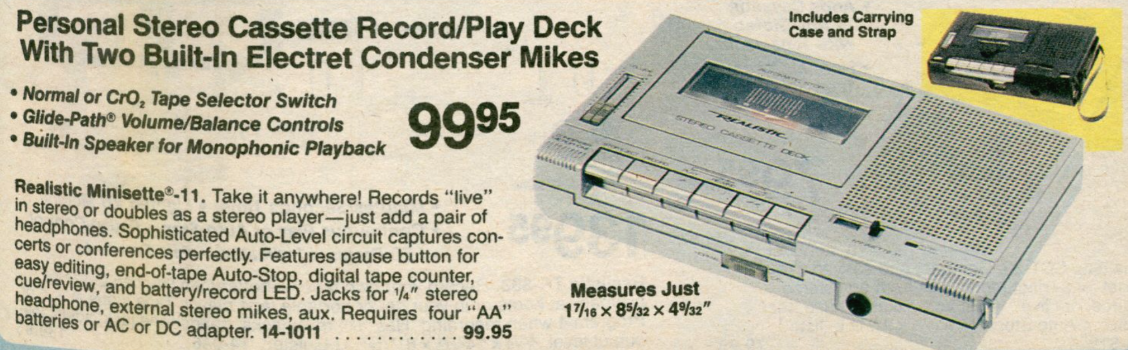
In 1983, I purchased a Radio Shack Realistic Minisette-11 for the equivalent of over $300 in 2023 when adjusted for inflation. I wanted something more functional than a typical Sony Walkman portable cassette player, although I eventually had one of those too…which I almost never used.
Vinyl with cassettes
In junior high I began purchasing some vinyl long-playing records from Columbia House, which let me acquire a bunch of albums in the mail for next-to-nothing so long as I agreed that I would pay for another album they sent me each month unless I remembered to reject it in advance.
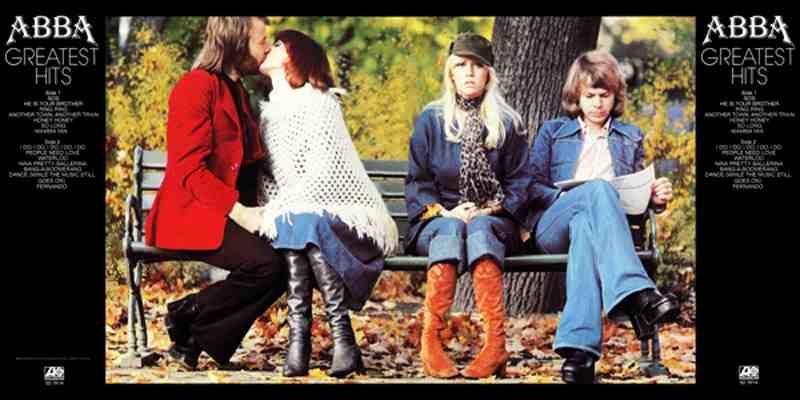
My favorite album from my initial purchase was ABBA’s Greatest Hits, so I bought their Greatest Hits Vol. 2, and eventually all of their albums from Columbia House, and remained a customer of theirs for several years until I could drive myself to a record store.
I purchased 45-rpm vinyl singles in high school
In high school I would hear songs on the radio and see music videos on the MTV cable channel. I would purchase my favorite songs as 45-revolution-per-minute vinyl singles, usually at the Sound Warehouse in the Cornerstone Plaza shopping center at 39th Expressway and McAlester Boulevard in Warr Acres.
My first car, a 1976 Toyota Corolla, originally just had an AM radio and no way to play recorded music. So I saved up money to address that issue, which required a new home stereo and a new unit in the car.
My 1976 Toyota Corolla came with just a crummy AM radio
In high school I had a checking account with a debit card. I remember nervously making what was then an immense withdrawal of about $200 at an automated teller machine to purchase my own stereo system at a Service Merchandise.
Service Merchandise was an interesting retailer. It had an extensive catalog of items along with “catalog showrooms” where you could see a working demonstration model of an item. If you wanted to purchase an item at the showroom, you grabbed a clipboard and pencil and filled out the item number, description, and price in pencil on an order form, which you submitted at a cash register to pay for it.
You then went to the pick-up area where items would come in on a conveyor belt from their warehouse area. I remember being impressed when they updated to computer terminals where shoppers could enter an item directly into their system, immediately letting you know if it was in stock.
My first stereo was a Soundesign Model 6827
My stereo, like my parents’, had an AM/FM radio and a turntable, but while theirs had an 8-track recorder, mine had an 8-track player and a compact cassette recorder.
For the car, I had a new AM/FM radio unit with a cassette deck installed. That allowed me to play my vinyl albums and singles on my home stereo, record the playback onto compact cassette tapes, and then play my “mix tapes” in the car.
Would you go cruising on the strip in this thing?
By then it was the early 1980s and one of my friends had fixed up an old muscle car and would go “cruising” in it along 39th Expressway/US 66 in Warr Acres and Oklahoma City. My girlfriend and I once had fun cruising the strip in my pathetic green 1976 Corolla, blasting I Love Rock and Roll by Joan Jett and the Blackhearts on my cassette deck. We would provoke the muscle cars to go tearing off at stoplights, leaving us laughing and choking on their exhaust.
I was nerdy enough, and my handwriting poor enough, that I actually used a typewriter for the cassette labels and the track listings on the case inserts. Soon I had a briefcase in the backseat filled with cassettes, almost all being ones I had recorded off vinyl records, not commercial cassette tapes, since I liked being able to listen to my songs on vinyl records at home and on cassette tapes in the car.
In 1986 I updated my stereo system from an all-in-one to components when I was mid-way through my undergraduate work at The University of Oklahoma. I spent about $100 each on a Technics tuner, phonograph, and cassette player. By then, U.S music sales by volume were 20% vinyl albums, 15% vinyl singles, and 56% cassettes. Compact discs had appeared, but were still less than 9% of sales volume.
I bought a Technics SL-QD3 direct-drive turntable. I liked how it had quartz lock and a stroboscope to help ensure it was turning at the correct number of revolutions per minute, whereas my cheap Soundesign phonograph had some noticeable wow and flutter.
My phonograph, tuner, and cassette deck in 1986, with a record sleeve and cleaning cloth to one side
But that nicer turntable needed a dedicated tuner to amplify its phonograph output, and I needed a compatible cassette recorder. So I also purchased a Technics SA-150 tuner and a cassette deck. The tuner provided AM/FM radio and allowed me to switch between the phonograph and the cassette tape monitor.
So what sort of albums was I purchasing in college? Favorites would be Paul Simon’s Graceland, U2’s The Joshua Tree, and Promiseby Sade. I had them all on vinyl, and would eventually buy them on compact disc as well.
Compact discs
Compact discs were wonderful, being digital and having anti-skip error correction. I was so glad to be rid of the distracting pops and crackles and jumped grooves of aging vinyl records, and I embraced the greater dynamic range and simpler handling of CDs.
I remain bemused that some people prefer vinyl. If they say a vinyl record sounds better than a compact disc, they might also be the type who like the “cinematic look” of 24-frames-per-second movies and are not annoyed by flicker or motion blur.
As I was completing my undergraduate degree, I finally purchased my first compact disc player in 1988, almost six years after the first players became available. It was a Technics SL-P1, which was quite expensive and was 13.1 inches deep, while my tuner was only 9.5 inches deep and the cassette deck was 8.66 inches deep. I put my new CD player on the bottom of the stack and was grateful that the cassette deck and tuner did not block its top rear vents.
My first compact disc player
My first CD
Compact discs were originally specified to support indices within a track, which allowed you to jump to different parts of a given track. My SL-P1 could display the index during a track, and I could jump to an index. My first compact disc was Stravinsky’s Le Sacre du Printemps (The Rite of Spring) by the Montréal Symphony Orchestra conducted by Charles Dutoit. Like many early classical compact discs, it supported the index feature, but I don’t recall ever using the index function on another disc, and none of my later players supported them.
I also spent $60 in 1988 on a Sony CFS-1000 AM/FM Cassette portable stereo with speakers that could be detached and extended on wires. I never used it much.
My first “boombox”
1989: phonograph on top (with a landline phone sitting on the lid), then the receiver/tuner/amplifier, the cassette recorder, and the compact disc player with compact discs, vinyl records and cassettes below that
Looking at a photograph of my stereo system taken in an Oklahoma City apartment in early 1989, I see that by then I had 24 compact discs as well as the various vinyl record albums, vinyl singles, and a few cassette tapes – with a bunch more out in the car. I see that the system was still hooked up to some old Zenith speakers that each had a tweeter and a woofer.
Although I had updated from the 1976 Corolla to a 1978 Chevrolet Monte Carlo and then a 1981 Toyota Celica Supra, I was still using cassettes in the car, since I didn’t have a car with a compact disc player until I bought a new Honda Accord in 1991.
When I moved into a rental house in 1990, I could finally play music as loud as I wanted to. I found I enjoyed turning off all the lights at night and lying on the couch, listening to a compact disc. But there were times I wanted a mix of songs, and CDs sounded much better than cassette mix tapes. So in 1992 I replaced the original compact disc player with a Technics SL-PD827 carousel unit that could play five discs at a time. I could program it to jump to a particular track on any of the five discs.
1992 compact disc changer
That setup was stable for over a decade. The CDs I purchased during my early teaching career included various ones by Basia, Pet Shop Boys, Sinéad O’Connor, Sting, and U2. At a Science Club Christmas party at my rental house in the early 1990s, I remember some students were impressed that I had about 40 CDs…that would grow to over 400 by 2010.
My stereo in 2001 before I finally upgraded my television; notice that an old lyrics sleeve is out, and by then the telephone handset was wireless, but not cellular
Television brings an audio update
My music system evolved again in 2003 when I upgraded my television. By then the stereo in the living room was hooked up to the big old speakers my parents had purchased with their 1970s Soundesign system and there were also wires tucked under baseboards leading back to my office where my old Zenith speakers were available as remotes.
My 2003 Onkyo speaker system
I decided to purchase a new 30″ high-definition cathode-ray-tube television to replace my 19″ television from 1982. In addition to the high-resolution 16:9 screen, I wanted surround sound for movies. So I upgraded to a Panasonic SAHE100S receiver with Onkyo surround sound speakers to use with a VCR and DVD player, which could also play CDs.
Those 2003 speakers are still what we use twenty years later in the living room, albeit with a different tuner/receiver/amplifier that could support a 7.1 system if we wanted that. 5.1 systems have a center speaker, left and right front, and left and right back plus a subwoofer for low-frequency sounds. That’s plenty for us, but some folks splurge on 7.1 systems that add side left and right speakers, and a few folks add in-ceiling or up-firing speakers for Dolby Atmos.
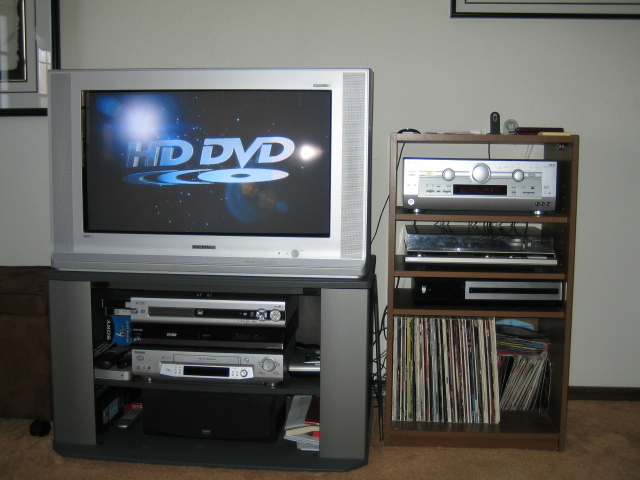
My system in 2008 shows several added devices for video playback, while music was either from playing a compact disc in a DVD player or from the phonograph
2003 was when I abandoned playing cassettes in the house, and that was also the last year cassette recordings had a measurable amount of sales volume in the U.S. Soon I would make the switch to downloading music as MP3 files.
MP3 files
My first iPod in 2004
The MP3 compression format for digital audio files came along in 1993. That eventually allowed the Napster file sharing network to make pirated music readily available. I refused to use Napster or LimeWire to steal music…I was never a Boy Scout, but my wife says I might as well have been one. I continued to purchase compact discs, although once I had an iPod, I did begin “ripping” them on my home computer into the MP3 format so I could load them onto it.
In 2004 I purchased a 4th-generation Apple iPod for $500 (equivalent to $819 in 2023). It was exhilarating to carry so many songs in high quality around in my pocket on its tiny 40 gigabyte spinning hard drive. The click wheel was a great interface for the time.
I will never forget taking my iPod with me on a hike on Mount Rainier in Washington State in the summer of 2005. I was hiking on a snowy trail in short sleeves listening to my iPod on shuffle play. Just as I came to a tremendous vista, Hanson’s MMMBop of 1997 started playing, and I couldn’t resist singing along as I bounded down the snowy mountainside.
One of the happiest days of my life, in which my new iPod played a key role
Since I was building up MP3 music files, I also purchased an Philips AZ 115517 MP3-CD player boombox for my home office. You had to burn MP3 files on a recordable compact disc to play them; the unit didn’t support USB flash drives. It survived until the great Meador Manor cleanout in 2016.
My first iPod still used a spinning hard drive, but it was replaced by solid-state iPod Nanos in 2005 and 2007 and then my first iPhone in 2008. I had so many music files, all of which I had paid for in one form or another, that I had to buy iPhones with larger storage capacities to handle them, and for several years still couldn’t fit my entire collection on the devices. My 2008 iPhone 3G only had 16 gigabytes of memory, while my 2022 iPhone 14 Pro has 16 times more.
MP3 killed the CD star
Compact discs were less attractive once I had an iPod, since I could connect it to a cheap cassette adapter to play songs in my 2001 Toyota Camry and dispense with having to create cassette tapes or playing CDs in the car. So sometime after 2004 I shifted from purchasing CDs to purchasing music as digital files via the iTunes Store. That led me to upgrade the computer speakers in my home office for awhile since I found myself playing songs there on iTunes instead of on CDs in the living room.
For awhile I was fascinated by the iTunes Visualizer, and I would playback songs like Fatboy Slim’s Praise You with the room lights off, watching the Visualizer.
I found it fascinating to see how Fatboy Slim created his remixes back in the day:
I still love his remix of Brimful of Asha, which really amped up the original song. And of course I identify with how Tjinder Singh was singing and writing about listening to Bollywood cinema star Asha Bhonsle “on the 45”, referring to the vinyl record singles I listened to back in high school.
I managed to get paid $631 for 364 compact discs in 2010. By then, downloads accounted for most U.S. recorded music sales, with compact discs accounting for only 16% of the sales volumes and vinyl for a paltry 0.2%. I crammed all of my old phonograph records and cassette tapes into a bedroom closet, where they sat until Wendy and I got rid of them in 2016.
Car surgery
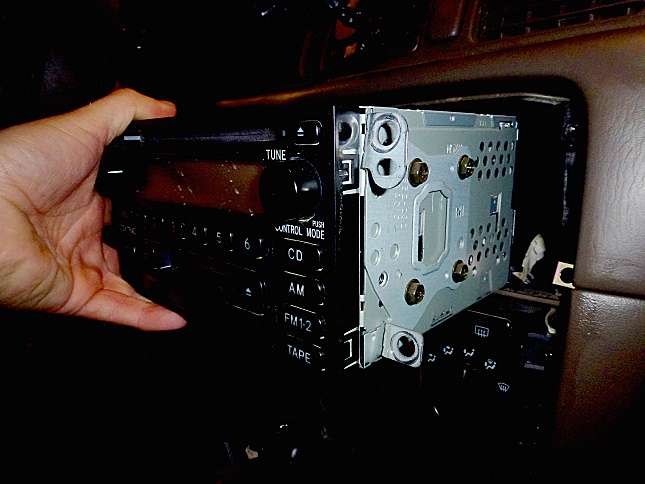
2010 was also when the cassette player in my 2001 Toyota Camry automobile wore out, forcing me to switch to FM transmitters to get the music on my Apple devices into the car’s amplifier. In 2012 I pulled the stereo from my car so I could wire in an FM modulator. That provided a line-in port from my devices to the stereo. It was quite a task for someone like me, but it gave me much better sound in the car for a couple of years until I finally sold the Camry in 2014 when it had over 236,000 miles on it.
Sliding the stereo out of my 2001 Camry to install an FM modulator for my iPhones
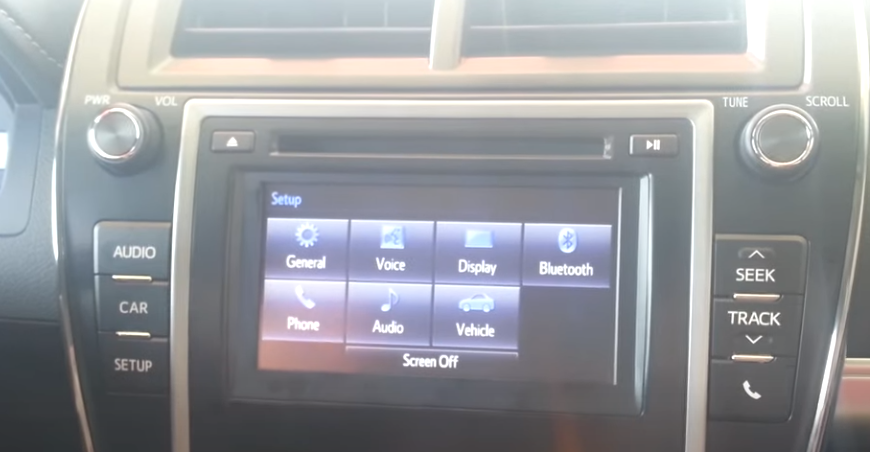
Thankfully my 2014.5 Toyota Camry XLE sedan, which I am still driving in 2023, has Bluetooth allowing me to easily use my iPhones in it for music playback. Wendy’s 2018 minivan is new enough to support CarPlay.
My 2014.5 Camry’s Entune Audio has Bluetooth, but not CarPlay
Modern music
So how do I acquire and listen to music in 2023? Wendy and I have access to three different services which each provide access to over 100 million songs. I pay $33 per month for Apple One Premier, which provides 2 terabytes of iCloud+ storage along with Apple TV+, Music, Arcade, Fitness+, and News+ which I can share with up to five people. The Apple Music component lets me stream over 100 million songs, and I actually purchase very few songs these days — only rarities which are so precious to me that I would never want to lose access to them should they disappear from the streaming platforms.
I also still pay $25 per year for iTunes Match, which is an older service that provides high-quality versions of songs I ripped many years ago into my iTunes library and syncs all of my music across devices. I could probably cancel that, but I fear that might cause weird glitches for my Apple music library, which I began building in 2004 and now includes over 17,800 songs on 2,154 albums from 1,336 artists across 138 genres. So I just keep paying for iTunes Match as a form of insurance.
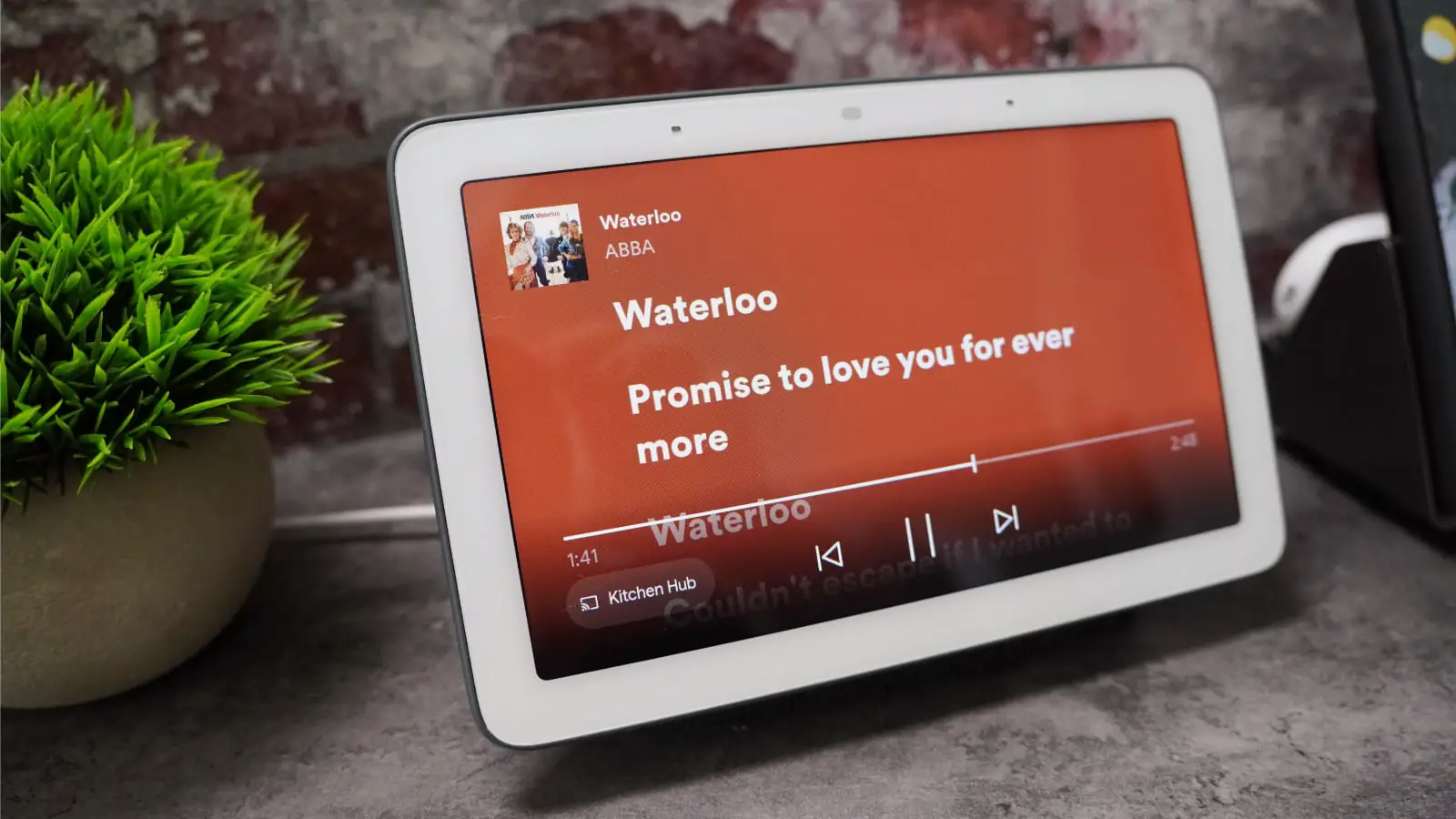
There are two other music streaming services available to us. I pay $23 per month for YouTube Premium, which gives Wendy and me ad-free YouTube videos. It happens to include access to over 100 million songs via YouTube Music, but I rarely use that service, although Wendy uses it often via the Google Home Hubs around the house. I also pay $139 annually for Amazon Prime, mostly for free Amazon deliveries and renting streaming movies, but it is a third streaming music option that now also includes over 100 million songs, but it has skip limits on playlists.
Across the U.S. in 2022, recorded music sales volume was about half of what it was in the 1970s, about one-fourth of what it was in the 1990s, and about one-sixth of its peak in 2008. People mostly just stream their music these days.
Personal music
Much of my music listening is in my 2014.5 Toyota Camry, which connects via Bluetooth to my iPhone 14 Pro. I rarely play music on speakers in the home. Wendy’s hearing is far more acute than mine; I have high-frequency loss and tinnitus. So around the house, I usually wear headphones of some sort.
For music and audiobooks on the trail, I use wired Apple earbuds with my iPhone, while around the house I sometimes listen to music on my iPad using AfterShokz Aeropex bone conduction Bluetooth headphones, but I mostly listen to videos with them. If I want to listen to high-quality music in the house, I connect my Tribit XFree Tune Bluetooth headphones to my iPhone or iPad. When working at my home office desktop computer, I wear Mpow HC6 USB headphones. The bone conduction headphones are so comfortable I can wear them for hours, while headphones with cups get annoying after awhile.
When Wendy and I want to listen to a song together in the home, we usually just tell one of our Google Home Hubs to play it. We could also pull up a song on the Apple TV to play through the living room speaker system, but we never bother with that.
Nostalgia only gets you so far
I certainly don’t miss messing around with the vintage technology of vinyl, 8-tracks, cassettes, and compact discs. But I do get a kick out of the many obscure formats and players that Mat Taylor of Techmoan has explored, and I have supported him on Patreon since 2016. A great example is the Tefifon, which had a needle playing music on cartridges of endless loop plastic tape.
Nowadays, Wendy and I can stream whatever we want, whenever we want. Recorded music has come a long way in the past half-century…we have no use for record stores or most physical media.
What comes next? I don’t have a vision for much more innovation in our audiovisual technology at home, just occasional updates of aging devices with new ones that operate similarly; virtual or augmented reality headsets have never appealed to me. Having navigated the transitions from vinyl records to 8-track cartridges to compact cassette tape to compact discs to MP3 files to online streaming services, I’m pretty happy that physical media have mostly disappeared from my life.
#17 for me was #79 on their list: A Room with a View by E.M. Forster. Since it was published in 1908, it was a free download from Project Gutenberg. Forster has two other novels ranked higher in their list: A Passage to India at #25 and Howards End at #38. So what prompted me to read my first Forster novel and make it A Room with a View?
The Machine Stops, Merchant Ivory, and Julian Sands
Director James Ivory, his business and life partner Ismail Merchant, and screenwriter Ruth Prawer Jhabvala gave us movie versions of Forster’s A Room with a View in 1985, Maurice in 1987, and Howards End in 1992. I saw each of them years ago, but I hadn’t considered reading the Forster novels they were based on.
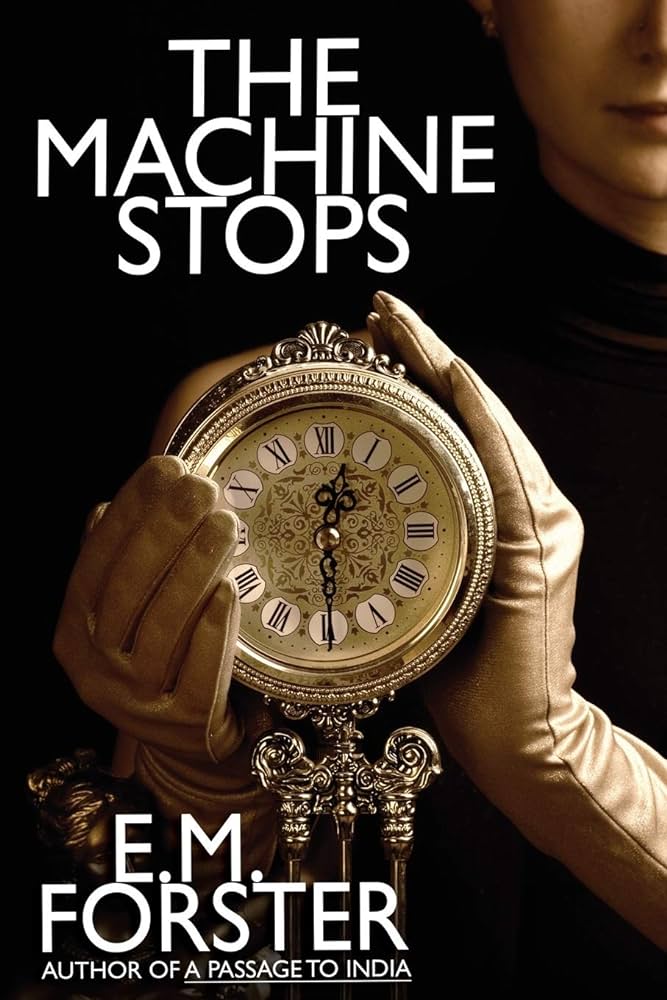
Years later I came across Forster’s science fiction short story of 1909, The Machine Stops. The story is set in a time when humanity lives underground and relies on a giant machine to provide its needs. It predicted technologies similar to instant messaging and the Internet, and I found the prescient and chilling tale quite stunning. While that primed me to consider reading one of his novels, I took no action.
Julian Sands played George Emerson in the 1985 version of A Room with a View
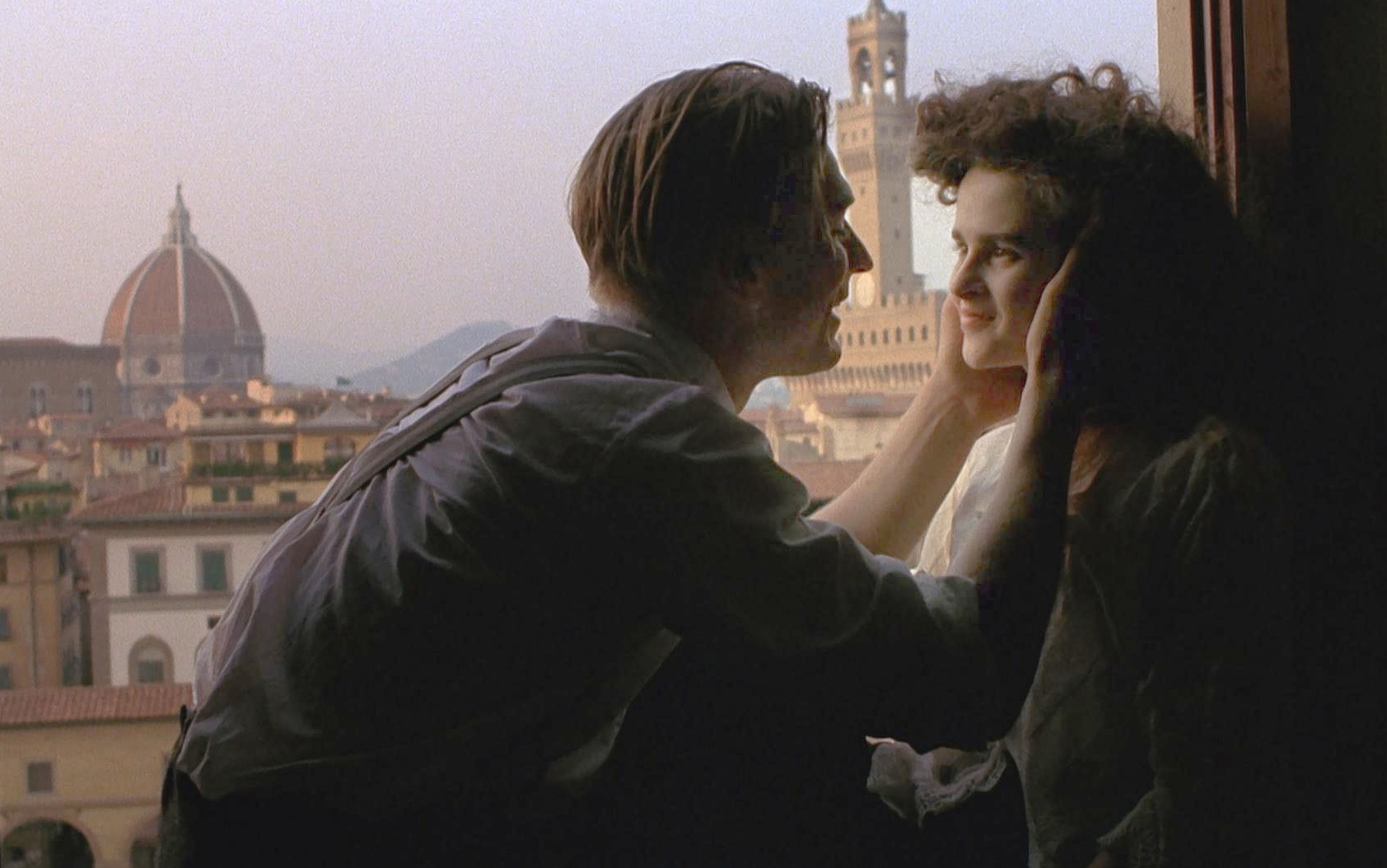
Back in 1985, at age 27, Julian Sands starred as George Emerson in Merchant Ivory’s A Room with a View. He shared the screen with a bevy of talented actors, including Helena Bonham Carter, Maggie Smith, Denholm Elliott, Daniel Day-Lewis, Judi Dench, Simon Callow, and Rupert Graves. In January 2023, at age 65, Sands went hiking in the San Gabriel Mountains near Los Angeles and disappeared. In June his remains were finally discovered.
When I read about his death, I realized that I remembered little from the movie, which I hadn’t seen in almost 40 years. Thus a seed was planted in my subconscious.
Skip ahead a few months to when I finish reading Mercury Pictures Presents on my Kindle. As I had encountered with The Lincoln Highway a year earlier, the prose was truly impressive, but the plot failed to engage me, and I found myself distracted by other pursuits after each chapter. I knew there were books waiting on my Kindle with more gripping plots, but less skilled prose. I yearned for something that would excel on both fronts.
That gave my subconscious the opportunity to surface A Room with a View. It whispered, “You liked the plot of A Room with a View when you saw the movie adaptation in 1985. Why not download the book, read it, and then rewatch the movie?” So I downloaded the novel, used Send to Kindle to load it onto my devices, and sampled the first chapter.
Highlights
I was immediately struck by how rapidly and skillfully Forster created a milieu for female characters whose repressed manners were happily reminiscent of the best of Jane Austen’s work. The tone reminded me of the humor I found in Emma, which I read in 2012 after enjoying the 1996 movie version with Gwyneth Paltrow. So I read on.
Chapter 2 rewarded me with this:
The chapel was already filled with an earnest congregation, and out of them rose the voice of a lecturer, directing them how to worship Giotto, not by tactful valuations, but by the standards of the spirit.
“Remember,” he was saying, “the facts about this church of Santa Croce; how it was built by faith in the full fervour of medievalism, before any taint of the Renaissance had appeared. Observe how Giotto in these frescoes—now, unhappily, ruined by restoration—is untroubled by the snares of anatomy and perspective. Could anything be more majestic, more pathetic, beautiful, true? How little, we feel, avails knowledge and technical cleverness against a man who truly feels!”
“No!” exclaimed Mr. Emerson, in much too loud a voice for church. “Remember nothing of the sort! Built by faith indeed! That simply means the workmen weren’t paid properly. And as for the frescoes, I see no truth in them. Look at that fat man in blue! He must weigh as much as I do, and he is shooting into the sky like an air balloon.”
He was referring to the fresco of the “Ascension of St. John.” Inside, the lecturer’s voice faltered, as well it might. The audience shifted uneasily, and so did Lucy. She was sure that she ought not to be with these men; but they had cast a spell over her. They were so serious and so strange that she could not remember how to behave.
At that point, I knew I was in good hands and would happily read multiple chapters at a sitting.
Forster’s Novels
E.M. Forster only produced six novels. Although he lived from 1879 to 1970, all of them were published by 1924, except for one which he held back for posthumous publication since it was a tale of homosexual love. Forster lived in the closet, since homosexual acts were still grounds for imprisonment in Britain until 1967. I wonder how many who enjoyed the romantic tale of heterosexual love in A Room with a View without realizing it was written by a gay man. Probably a similar proportion to those who see and hear the songs of Curly and Laurey in Oklahoma!without knowing the story of Lynn Riggs.
Forster’s novels repeatedly address issues of class in Edwardian England, with Howards End notably revolving around social conventions, codes of conduct, and relationships among three families representing the upper, middle, and working classes. I am certain that I shall read it some day, but first I must revel in A Room with a View.
The character of Mr. Emerson, the liberal father of George, provides some of the best lines. Early on, he remarks:
We know that we come from the winds, and that we shall return to them; that all life is perhaps a knot, a tangle, a blemish in the eternal smoothness. But why should this make us unhappy? Let us rather love one another, and work and rejoice. I don’t believe in this world sorrow.
Forster also wonderfully evoked what playing the piano once meant for me:
It so happened that Lucy, who found daily life rather chaotic, entered a more solid world when she opened the piano. She was then no longer either deferential or patronizing; no longer either a rebel or a slave. The kingdom of music is not the kingdom of this world; it will accept those whom breeding and intellect and culture have alike rejected. The commonplace person begins to play, and shoots into the empyrean without effort, whilst we look up, marvelling how he has escaped us, and thinking how we could worship him and love him, would he but translate his visions into human words, and his experiences into human actions. Perhaps he cannot; certainly he does not, or does so very seldom. Lucy had done so never.
I particularly enjoyed the character development of Lucy, the protagonist, who matures through the book from a confused girl into a self-directed woman. Here is an adept passage about her struggle in which I have emphasized a key insight Forster had about human foibles:
The contest lay not between love and duty. Perhaps there never is such a contest. It lay between the real and the pretended, and Lucy’s first aim was to defeat herself. As her brain clouded over, as the memory of the views grew dim and the words of the book died away, she returned to her old shibboleth of nerves. She “conquered her breakdown.” Tampering with the truth, she forgot that the truth had ever been. Remembering that she was engaged to Cecil, she compelled herself to confused remembrances of George; he was nothing to her; he never had been anything; he had behaved abominably; she had never encouraged him. The armour of falsehood is subtly wrought out of darkness, and hides a man not only from others, but from his own soul. In a few moments Lucy was equipped for battle.
And that is soon followed by:
She disliked confidences, for they might lead to self-knowledge and to that king of terrors—Light.
My highlighted passages conclude with two, again from the character of Mr. Emerson as he prods Lucy to stop lying to the world and to herself about her love for his son, George:
It isn’t possible to love and to part. You will wish that it was. You can transmute love, ignore it, muddle it, but you can never pull it out of you. I know by experience that the poets are right: love is eternal.
When I think what life is, and how seldom love is answered by love—Marry him; it is one of the moments for which the world was made.
Forster embues his novel with such humanity, such tender understanding and forgiving regard for human nature even as he points out our failings. It helps me understand what Lord Annan meant when he spoke about the novelist after his death:
…his friendship was one of the things that one could never forget, because he was both very loyal to his friends and also very critical, and you had to keep up the mark. You were frequently deflated if you appeared to be insensitive, because that was the thing that he cared about so much…he had a greater sensitivity to the complexities of life and the complexities of morality, and that is why I think he will live as a great force in our literature.
I was touched by how the novelist, playwright, and screenwriter Christopher Isherwood spoke about his late friend:
Forster once said, “I have only got down on to paper, really, three types of people: the person I think I am, the people who irritate me, and the people I’d like to be.” My guess is that Mr. Emerson is a person Forster would have liked to be, that Lucy’s fiancé, Cecil, represents Forster in some ways, and cousin Charlotte would have irritated him. Yet a careful reading shows Charlotte to have been instrumental in eventually uniting Lucy and George. There is something profound in that.
A Beautiful Adaptation
After finishing the novel, I immediately rented and watched the movie on my iPad. It was delightful. Here is a glimpse of the start, which illustrates screenwriter Jhabvala’s skill at adapting the book:
It is a beautiful film:
Hence I am grateful to Merchant, Ivory, Jhabvala, and the other talented professionals, including the poor late Julian Sands, for helping me find Forster. More treasures await.
Manitou Springs, Colorado is a two-hour drive north on Interstate 25 from Trinidad. Our journey was enlivened by storms.
Stormy weather
We zipped through Walsenburg, where we have stopped and stayed a few times over the years, and on past the Huerfano Butte. We stopped for a pit stop at Colorado City, where the helpful clerk alerted us to hail on the road ahead. So we delayed there for awhile to let the storm sweep eastward, texting our friends up in Manitou Springs that we would be delayed.
A tornado warning came up on our phones, so we were glad to have missed the excitement to the north. Soon enough the radar app on my phone showed me the storm had cleared the interstate highway, and we drove on through and beyond Pueblo. The clouds were still unsettled, and we spotted piles of hail on the roadside terrain.
Friends at the melodrama
We reached the hotel before 4 p.m. and that evening joined our friends, John and Betty, and their grandson Max, for the melodrama at the Iron Springs Chateau. It once offered a three-course meal with the show, but had devolved to snacks, so we dined on popcorn and nachos. The show was “All Trains Lead to Home…or…Training Spaces” and we dutifully cheered the heroes and booed the villains.
The next day, while our friends took Max on adventures in the area, Wendy and I had breakfast at Uncle Sam’s Pancake House…it wasn’t worth the long wait, and she was much happier with the pancakes and sausage she bought the next morning at a McDonald’s.
Manitou Springs and Old Colorado City locations
Miramont Castle
We drove up to Miramont Castle, which I had been wanting to see since our previous visit with John and Betty in Manitou Springs in 2019. The rambling mansion was built on the side of a mountain from 1895-1897 for Father Francolon, a French Catholic priest, and his wealthy aristocratic mother. It is a weird mix of nine styles of architecture with four levels, each with at least one exit to level ground along the mountainside, with the front door on the first level and the back door up on the fourth.
Miramont Castle
The mansion is over 14,000 square feet with over 40 rooms, including octagonal rooms, a 16-sided room, and various oddities. It has been lovingly restored, with a fire department museum in the lowest level, various odd rooms outfitted to remember different aspects of life in Manitou Springs, a gift shop, tea room, etc.
Miramont Castle Interior
Father Francolon had moved to Manitou Springs for his health after drinking from a poisoned chalice during Mass in New Mexico. Perhaps that was because of his conflicts with Spanish priests, or because of his own misbehavior. He first built a home above the later castle, and after the castle was completed, his original home became a sanitarium for tuberculosis patients run by the Sisters of Mercy. A tunnel connected the castle to the sanitarium, through which the nuns delivered meals for the Francolons.
Francolon and his mother didn’t enjoy their castle for long, as in 1900 a lynch mob came for him after the mother superior of the Sisters of Mercy accused him of pedophilia. He hid under the seat of a buggy and was whisked away to refuge at a Catholic church in Colorado Springs, and he and his mother later returned to Europe.
The sanitarium moved into the castle when its original home burned, and it was sold off in 1946 and converted into apartments. It was purchased by the Manitou Springs Historical Society in 1975.
My impression is that overblown mansions, such as the Marland Mansion of Ponca City and La Quinta of Bartlesville, seldom stay in families for more than a generation or two. Their long-term survival, due to tax and maintenance issues, often depends on them being repurposed by tax-free religious or academic institutions. Eventually historical societies get hold of some of them, raise funds for restoration, and we get to tour them. Miramont stands out for having shifted from a sanitarium run by nuns into private apartments before finally becoming a museum.
When I was younger, I would fantasize about what it would be like to live in such a mansion. Now I’m grateful that our home is only about a tenth of the size of Miramont and is 27 times smaller than the Marland Mansion. I now appreciate having a home that is small enough that we can operate our machine for living without additional staff, and I realize that we are introverts who don’t need space to host gatherings.
Red Rock Canyon Open Space
After climbing through the castle, Wendy and I enjoyed a tasty lunch at Savelli’s, which was next door to our hotel, before driving down the highway to the Red Rock Canyon Open Space in Colorado Springs.
Wendy at the Red Rock Canyon Open Space
Almost a century ago, John George Bock accumulated land parcels south of the famous Garden of the Gods area, which is where Wendy and I stayed in 2015. The city acquired 789 acres of Bock’s parcels in 2003, which had previously been used for quarries, gravel pits, a gold refining mill, and a 53-acre landfill. The former industrial sites have been transformed into a rugged and beautiful landscape with miles of trails for hikers, joggers, and mountain bikers. The city has now expanded the park to 1,474 acres.
Granger at the Red Rock Canyon Open Space
We only had the time and endurance to explore a few trails on the northwestern edge. The trails led past ridges of red sandstone. Those formed from sand and gravel washed down from the ancestral Rocky Mountains which spent millions of years near the edge of a sea, then formed the bottom of a shallow sea, and were slowly buried under a mile of new sediments. Eventually, when the Rocky Mountains were uplifted to the west, the mile-deep Red Rock Canyon strata were lifted up, deformed, and bent onto their ends to be eroded into what we enjoy today.
There were quite a few people out enjoying the area on a Sunday afternoon, but the size of the park kept it from feeling crowded. I hope to explore more of the Open Space on a future visit.
Old Colorado City
That evening we regrouped with our friends and drove into Old Colorado City for a Father’s Day dinner. Old Colorado City is a tiny 8-acre area on the western edge of modern Colorado Springs, which is over 125,000 acres. In 1859, it was a small settlement of El Dorado at the eastern entrance to the pass through the mountains to the west. Renamed Colorado City by four founders, it became the first permanent town in the Pikes Peak region.
Colorado Springs was a “dry” town, while Colorado City was “wet” with over 20 saloons, gaming parlors, and brothels serving gold miners after gold was discovered in 1891 at Cripple Creek. Prohibition arrived in 1914, and the town was annexed by Colorado Springs in 1917. It is now an arts district.
We dined at the Trails End Taproom and Eatery, which had been the Mason Jar when we were there in 2019 before the pandemic. Now there was a wall of beer taps, but we ordered items like peach cobber, macaroni and cheese, a salad and patty melt, and fried mushrooms.
Ad astra per aspera
The next day we began our journey home. That meant a long drive along rough Highway 24 from Colorado Springs to intersect Interstate 70 at Limon. Then it was a long roll along the interstate to Hays, Kansas, where we stopped to rest overnight.
That helped pass the time, along with a train and wind farms. At Burlington, just west of the Colorado-Kansas state line, we stopped at The Farm Grill & Restaurant where Wendy enjoyed corn dogs and pecan pie while I had another French dip.
A train and some windfarms in Kansas
It was windy and hot driving through Kansas, which has the state motto “Ad astra per aspera” or “To the stars through hardships”. Their tourist board has condensed that down to just the first three words. Oklahoma has a similar issue with its motto of “Labor omnia vincit” or “Work conquers all”, which is another saying from Virgil, this time from his Georgics, a poem supporting Augustus Caesar’s back-to-the-land policy encouraging Romans to farm. Our tourist board gave up and uses, “Imagine that”, which is pretty awful, but perhaps better than its predecessor during my childhood: “Oklahoma is OK”.
At Hays, we loved JD’s Country Style Chicken, which featured all fresh food with chicken tenders, rolls, spicy and delicious potato salad, green beans, corn, and more.
Four roundabouts in Hays, KS
I was surprised at having to navigate four roundabouts on Highway 183 from our hotel to drive into Hays. It reminded me of encountering a long chain of them in Bend, Oregon. I like the lone and often busy roundabout we have in Bartlesville, which is both faster and safer than the stoplight it replaced, but find that a series of them gets old pretty quickly, especially if there isn’t much intersecting traffic to highlight their functionality.
The next day we dashed home. We roused to enjoy fresh hash browns, good pancakes, and French toast at the Pheasant Run. Then we drove along the interstate to Salina, stopping at the Kansas Originals Market & Gallery outside Wilson for a nice shopping break.
I like the historical map on the wall of the one of the rest stops in Kansas. It included the Great Osage or Black Dog Trail across southeastern Kansas near where we live, which was a 200-mile trail leading east from Baxter Springs, Kansas to the Great Salt Plains in Oklahoma. Black Dog lived from approximately 1780 to 1848. He was born near St. Louis, Missouri and his village, Pasuga (Big Cedar), was located at present-day Claremore, Oklahoma. He was a huge fellow, almost seven feet tall and weighing about 300 pounds.
On the wall of an interstate rest stop
Next was a windy drive south to Wichita, where we had lunch at the Old Mill Tasty Shop, a feature of the Old Town there since 1932. Wendy had tasty crab salad on white bread, while I enjoyed a turkey sandwich and a delicious chocolate shake. We wrapped it all up with a 2.5-hour zigzag drive from Wichita through Derby, Winfield, Cedar Vale, and Caney to finally head south into Oklahoma and little Bartlesville, concluding our latest westward expedition.


























 Meador Manor