Wendy wanted to see the redwoods. So for our annual June vacation, I looked into returning to northernmost coastal California, where 18 years earlier I had walked among the tallest trees on Earth.
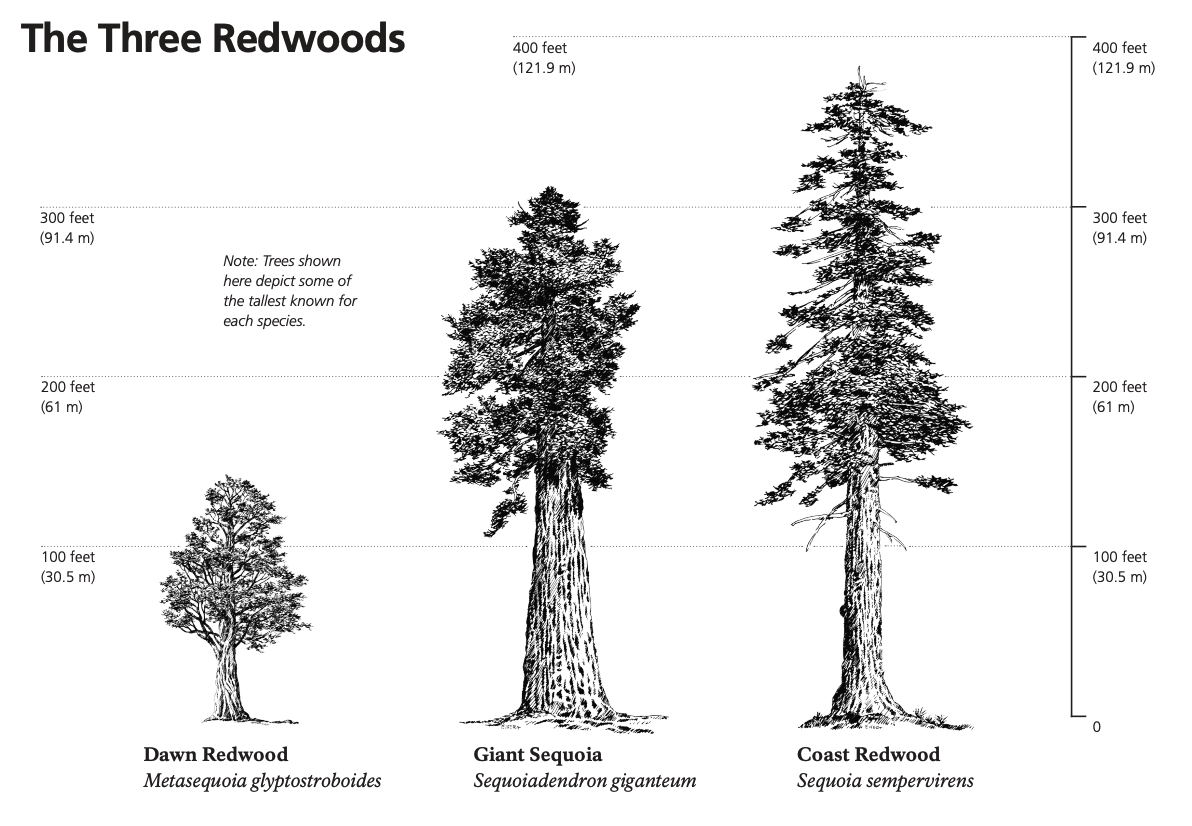
There are actually three distinct redwood species: the Dawn Redwood Metasequoia glyptostroboides, the Giant Sequoia Sequoiadendron giganteum, and the Coast Redwood Sequoia sempervirens.
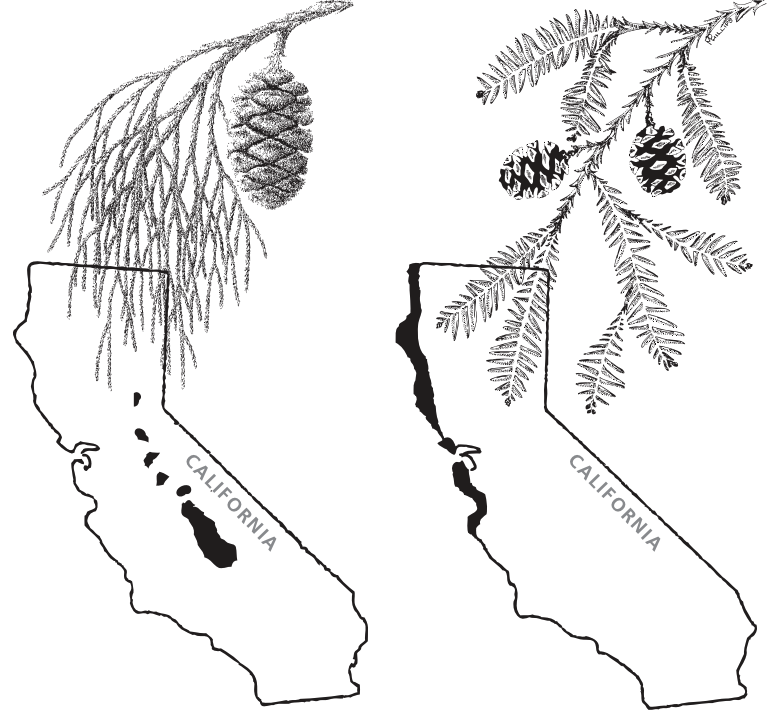
The Dawn Redwood was thought to have been extinct for millions of years until it was rediscovered in 1944 by a forester in the Sichuan-Hubei region of China. The Giant Sequoias can grow to be truly massive, reaching up to 314 feet high and 30 feet in diameter. They are found in over 70 groves along the western slopes of California’s Sierra Nevada mountain range.
The groves of Giant Sequoias are on the western slope of the Sierra Nevadas in central California, while the Coastal Redwoods are found along its northern coastline
I focused on the Coast Redwoods, which are the tallest in the world, reaching up to 379 feet in height and 26 feet or more in diameter. They are kept continually damp by heavy winter rains and fog from the Pacific Ocean, but June and July are often sunny and pleasant in the Pacific Northwest.
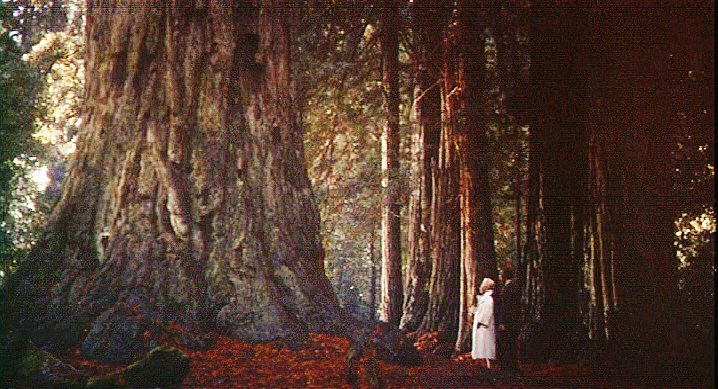
Since Wendy hates crowds, I immediately discarded visiting Muir Woods near San Francisco or Big Basin 70 miles north of the metropolis, a location used in one of my favorite films, Hitchcock’s Vertigo.
In Vertigo, Kim Novak and Jimmy Stewart were dwarfed by the Father of the Forest, a Giant Sequoia at Big Basin; Source
We needed something far more remote, yet still impressive, so I figured I should take her to Jedediah Smith Redwoods State Park near Crescent City, California and the Prairie Creek Redwoods State Park farther south, which I had visited in July 2006.
Taken in July 2006 on a hike in Jedediah Smith Redwoods State Park; Flickr
However, back in 2006 I was on my own, happily bouncing down the coast of Oregon and into northern California, staying in 10 different hotels over two full weeks. Wendy wouldn’t enjoy that sort of trip. Instead, we needed to fly in close to the trees and spend most of our time in a rental cabin near the state parks.
So I booked us plane tickets from Tulsa to Medford, Oregon and booked a hotel in nearby Rogue River, from which we could drive to Jedediah Smith to see its Stout Grove and then spend a night in nearby Crescent City. I had fond memories of the beautiful Battery Point lighthouse there.
Battery Point lighthouse in Crescent City, California in July 2006
Then we could drive south to stay a few days at Elk Meadow Cabins and enjoy walks at Prairie Creek, before returning to Medford to fly home.
Knowing that flying to the Pacific Northwest from Oklahoma can be tiring, inevitably having to switch planes in Denver and always having the possibility of flight delays for mechanical issues or weather, I opted to bookend the trip with stays near the airport in Medford. To decrease the cost of the plane tickets, I extended our stay by one day in Medford to get a cheaper return flight on a Monday rather than a Sunday. So our vacation would consist of a week in the Pacific Northwest with flight days tacked onto each end.
As for transportation out west, I searched the rental possibilities at Medford and settled on the cheapest option of requesting a mini-van from Budget. We actually ended up with a full-size luxury SUV, as described in a previous post.
I have my 2006 trip budget for reference, so I thought I would compare the costs then, adjusted for inflation, to what I paid this time around. My solo coach-class round-trip plane tickets back in 2006 had cost $1,640 in 2024 dollars, so I didn’t mind paying $3,378 for two first-class tickets for this vacation. Our 8-day vehicle rental was $667 compared to $881 in 2024 dollars to rent a Ford Taurus for two weeks back in 2006. My hotel rooms back in 2006 had averaged $185 per night in 2024 dollars, while the multi-bedroom cabin and some hotel suites for our 2024 trip would boost our average nightly lodging to just over $250.
It was all good value for the money, as we had no issues on our flights, which were comfortable, I enjoyed driving the vehicle, and we had no problematic hotel rooms, with the cabin at Elk Meadow and then a Hilton Homewood suite we stayed at for a couple of nights in Medford being particularly peaceful and comfortable.
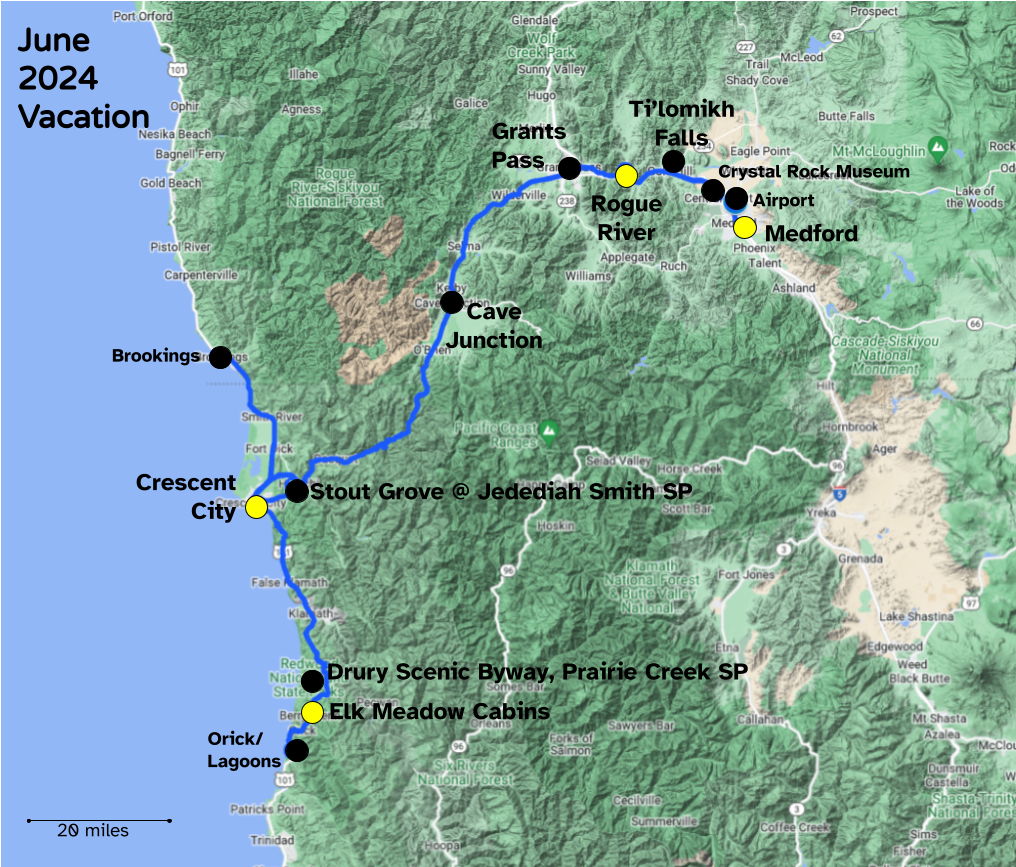
I will close with a map of our vacation, with details of the trip to follow in six subsequent posts over the coming week.
I have long subscribed to my “Law of Conservation of Happiness” where good news is balanced by bad news to keep things on an even keel.
We had a great vacation in early June 2024 to southwestern Oregon and the northern coast of California to see the redwoods. A trip that far away meant flying, and the previous time I had flown on a plane, in June 2023 for a conference in Philadelphia, I sat in coach on a return flight by a big guy with an obvious respiratory infection. I had no mask handy, so I endured it and unsurprisingly fell ill and was sick for the following week. It didn’t test as COVID, but it wasn’t fun.
Almost a year later, Wendy and I were flying first class, so I wouldn’t be crammed up against someone who was sick, but of course COVID aerosols could still spread through the plane and the airport restrooms, security checkpoints, and gate areas were high-risk. Since we were visiting more progressive areas of the country, we did see some folks in the airports and hotels, servers at restaurants, etc. who chose to mask up to reduce their risk of infection.
A properly fitted N95, KN95, or KF94 mask is indeed worthwhile if you want to significantly reduce your chance of infection in high-risk environments. If you want all of the nuances about masks, read this.
Anyway, we took our chances, enjoyed our trip, and returned on a Monday night. I felt fine until Wednesday afternoon, when I started getting a stuffy nose and clogged sinuses.
Wednesday night I was feverish and slept quite poorly. On Thursday I took ibuprofen for a headache and body aches, and I began periodic nasal irrigation with my NeilMed Sinus Rinse bottle to clear my sinuses. I had continued thermal regulation issues, stuffy sinuses, both nasal congestion and a runny nose, aches, and fatigue on Thursday and Friday, which I treated with ibuprofen, sinus rinses, pseudoephedrine by day, and diphenhydramine at night. A cough developed on Saturday.
Since on Sunday I was planning to take my 87-year-old mother out for lunch, on Saturday I pulled out one of our remaining COVID tests and ran it, even though it expired in February. In less than a minute, it showed my sample as positive.
So I sure do wish I had masked up throughout our times in the airports and on the planes, although I can’t be certain those environments were where I was infected.
Now what?
The CDC’s COVID infection protocol was originally to isolate for ten days, with quarantines for close contacts. By the time I contracted COVID in November 2022, that had been shortened to five days , if no fever for 24 hours without fever-reducing medications, to be followed by distancing and masking precautions for another five days.
Back in 2022, my isolation overlapped into a week of vacation days. I chose the conservative route, isolating until I no longer tested positive on a rapid test. That was not until 14 days after my symptoms began, and 8 days after first testing positive.
These days, the CDC has simplified its recommendation to be the same for any respiratory illness:
I may or may not be at the Go about normal activities, taking adding precautions phase by Tuesday, six days after my symptoms began. I hope to work remotely, but later in the week I will have to go in to do a few things that require my physical presence. I’ll be wearing a KF94 mask whenever I am around others, and I’ll be running the air purifier in my office at top speed.
COVID hospitalizations peaked with the Omicron surge in the winter of 2021-2022, but are now at an all-time low thanks to seasonal factors and protection via vaccines and prior infection; Source
The changes in the CDC guidance reflected how the hospitalization and mortality rates for COVID plummeted once vaccines were available, and particularly after the Omicron surge in the winter of 2021-2022. I had received the Pfizer vaccine in February and March 2021 with an October 2021 booster, and a Moderna vaccine in April and October 2022. I had an updated Moderna booster in October 2023.
The virus continues to mutate, so vaccine protection against infection wanes after a few months, while it still defends well against hospitalization and death. Actual infection with COVID usually protects you against reinfection for a few months.
I likely had the Omicron BA.4 or BA.5 variant back in November 2022, and currently the widely circulating variants include KP.3, KP.2, and LB.1. My symptoms this time are slightly less severe than with my first COVID infection, but the experience is another reminder for me of the consequences when I let down my guard in high-risk environments, even when the seasonal infection rate is low.
I’ll be flying again near the end of the month to attend a conference in Denver. My chance of getting reinfected by COVID will be very low for about four months, so I won’t be worried. But I do plan on wearing a KF94 mask while in the airports and on board the planes. And on future trips involving air travel, I plan to do the same. Masking while in those high-risk environments is a minor inconvenience compared to a week or more of unpleasant symptoms from various respiratory infections, including nasty old COVID.
Wendy and I flew to southwestern Oregon in early June. We needed a rental vehicle I could drive over to the coast and down to the Redwoods in northwestern California, and when I went hunting online, the cheapest rental at the Medford airport was what Budget described as a “Dodge Grand Caravan or similar”. That was fine by me, since I have enjoyed driving Wendy’s Honda Odyssey mini-van on our vacations.
Renting a vehicle on a vacation is an opportunity to experience something different than my 2014.5 Toyota Camry or Wendy’s 2019 mini-van. The most unusual rental for me was way back in the late 1980s when a girlfriend arranged for me to drive a Firebird Trans Am in Baltimore and Atlantic City. That was a hoot until the hood latch malfunctioned. We had to trade it in, and the replacement was a Chevrolet Celebrity Eurosport station wagon, which was quite a contrast!
The last time Wendy and I rented a car was on our trip through Utah in 2018. We ended up with a Ford Fusion hybrid. While I loved its 45+ miles per gallon efficiency, the large battery reduced the trunk space so much that our largest piece of luggage had to be transported in the back seat, and the car could be sluggish. But it was interesting to drive a car that sometimes relied entirely on its electric motors and had regenerative braking.
Car rental agencies understandably can only approximate what you will get for their cheapest rates, and a mini-van is not what we ended up with in Medford. We were assigned a GMC Yukon Denali, which is a luxury full-size sport utility vehicle that sells for over $80,000.
Our 2024 GMC Yukon Denali rental SUV
We walked out of the airport to find a jet black vehicle that was 17’6” long, 6’9” wide, 6’4.5” high, and weighed over 5,500 pounds. That’s almost two feet longer, 9 inches wider, over 18 inches taller, and over a ton heavier than my own 2014.5 Toyota Camry.
I’ve driven full-size SUVs before; I’ve driven the Chevy Suburbans the school district has to transport small groups, a “People Mover” mini-bus, and I once rented a 15-passenger van to haul people around while at a conference. So I knew I could handle the big Denali, although parking it might be a challenge. One of the surprises of the trip was how easy it was to park the beast, thanks to one of its many luxury features.
The vehicle had many of the high-end features one finds on a Cadillac Escalade, and it was fun to discover them as I wheeled the beast along interstates, narrow winding mountain highways, gravel logging roads, and city streets.
Favorite Features
One of my favorite features was apparent once I pressed the Start button: a heads-up display (HUD) appeared on the driver’s windshield.
The heads-up display
I loved being able to see my speed without glancing down, although I had no use for the off-road elements in the display showing 4-wheel drive mode and vehicle pitch angle, steering angle, and roll angle. The HUD also displayed the cruise control settings, and there were convenient controls on the dash allowing me to adjust the height and brightness of the HUD.
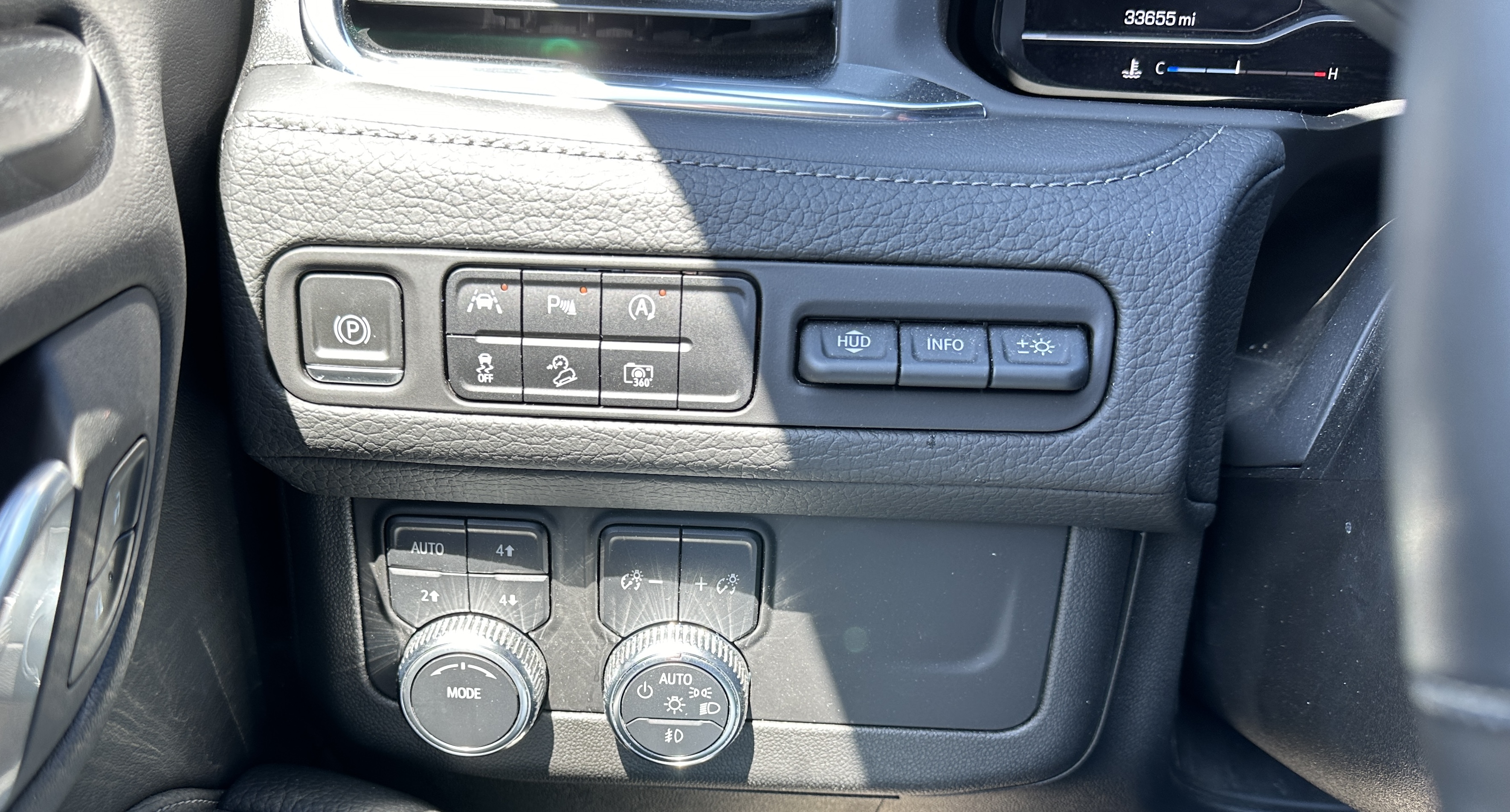
The three toggle switches on the right controlled the HUD
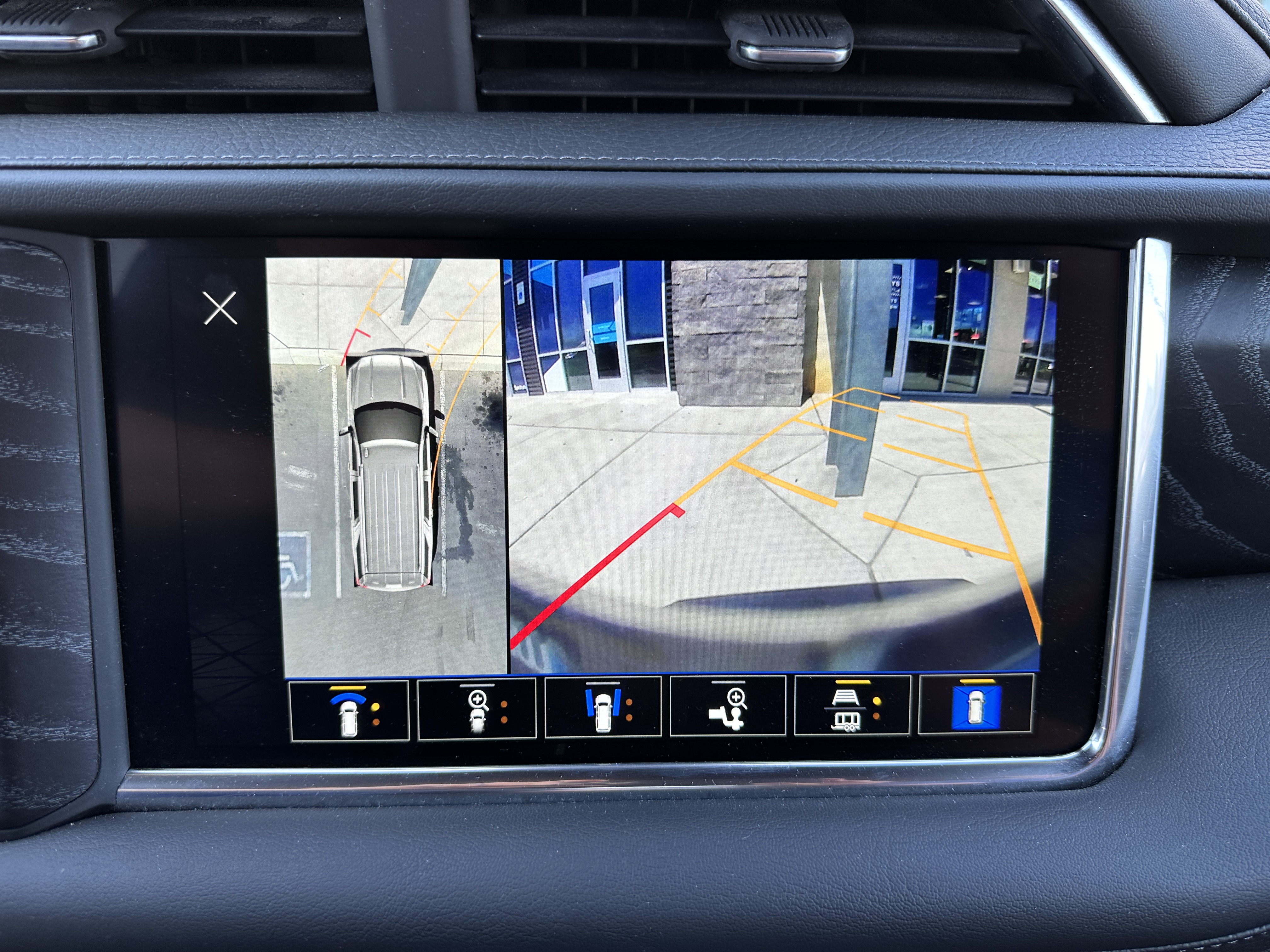
I discovered that other buttons on the dash left of the steering wheel were for the parking brake, lane assist, park assist, stop engine feature, traction control, hill descent control, and 360-degree surround vision system. That latter feature was splendid, showing on the large central display a 360-degree overhead view of the vehicle and its surroundings, with a larger view from any of the cameras, with both views showing guidance overlays.
The Surround Vision System made parking easy
It was wonderful how the cameras on the front, rear, and the two side mirrors were used to create the overhead view, making it easy for me to steer the beast into marked parking spots. Our vehicle didn’t have the additional Automatic Parking Assist feature for parallel parking, but we never needed it, either.
The other feature I appreciated was the power liftgate in the back, with a button you could press to lift it, another would lower it, and a sensor allowed you to wave a foot under the bumper to lift the gate.
Other Surprises
I was surprised by the heated steering wheel and how the seats not only had heat but also a fan that could push air through them for ventilation.
The steering wheel had the controls for the cruise control, heated steering wheel, voice calls, and infotainment system cursor
I wasn’t surprised to find that the vehicle had adaptive cruise control that would adjust its speed when following a slower vehicle, as I’ve grown used to that on Wendy’s mini-van. My older Camry just has old-fashioned cruise control, something I have to bear in mind when switching cars: my Camry would happily plow into a slower vehicle in front of me if I let it.
I also appreciated the lane assist feature, given the vehicle’s imposing size, while I deliberately de-activate that feature on Wendy’s mini-van as it is more annoying than helpful on it.
One can’t get good gasoline mileage on a behemoth like this, but it did manage to average over 20 miles per gallon. My 1978 Chevrolet Monte Carlo I drove for a couple of years in college could only get 17 miles per gallon in city driving and the low 20s on the highway, while my 2014.5 Camry averages about 28 mpg. One feature to save gas was the auto-stop function, which I first heard about a few years back. The engine would usually cut out when you stopped, restarting once you released the brake. Sometimes it would also start the engine in order to run the air conditioning compressor. There was a button to disable the auto-stop feature, but while it took awhile for me to grow accustomed to it, I left it on to save a bit of gasoline.
I see in the owner’s manual that the vehicle also has navigation on its center screen that can include guidance in the HUD, but I never tried using that feature. Instead, I just plugged in my Apple iPhone 14 Pro into the console and used CarPlay to access guidance from my TomTom GO app, which I routinely pre-program with various destinations before a vacation. One nice thing about the Denali was that it could do wireless CarPlay as well, while Wendy’s mini-van requires that you plug in the phone, although I always plugged in the phone to ensure it would stay charged.
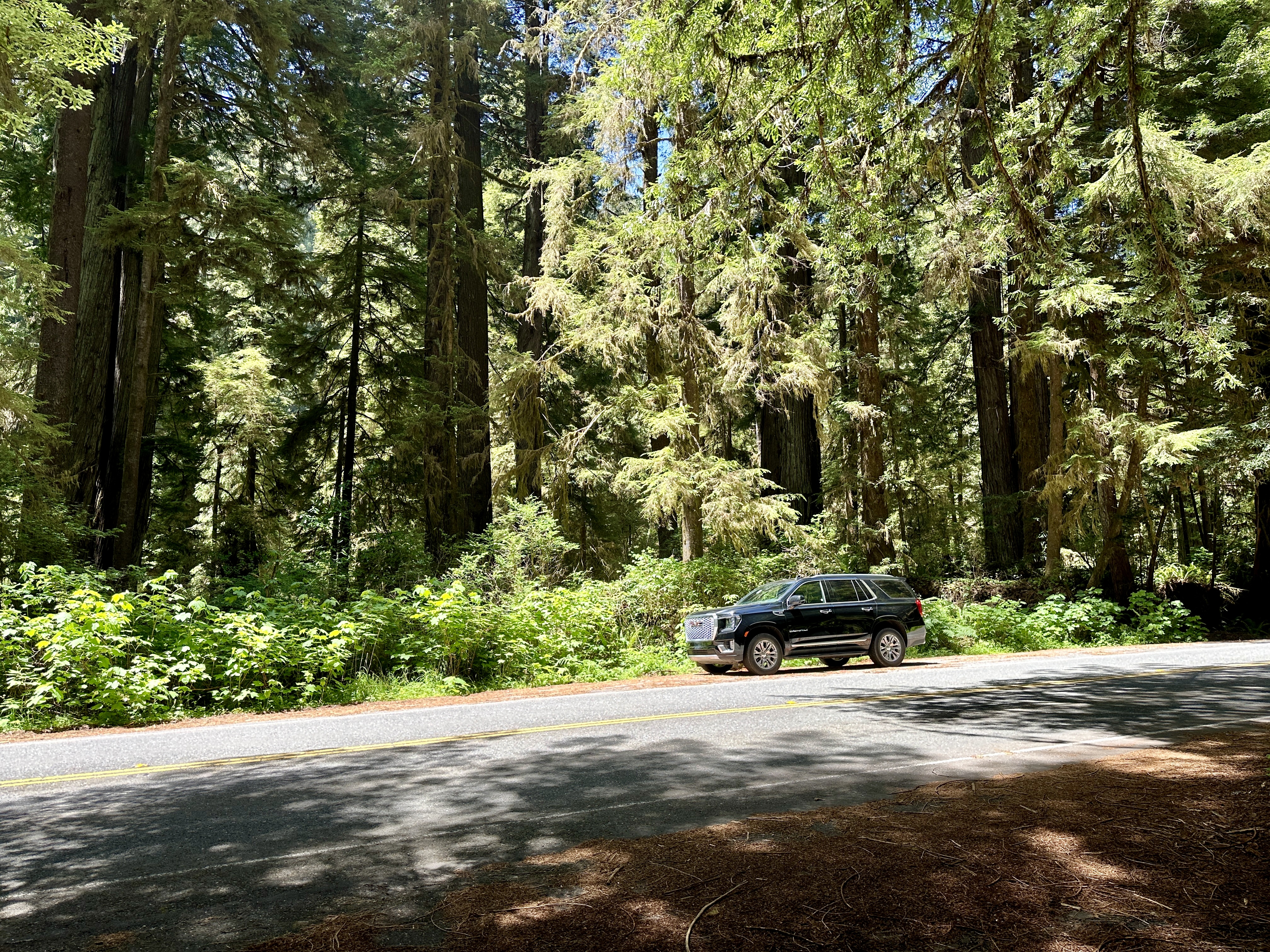
Redwoods are so large they can even dwarf a GMC Yukon Denali
I had fun trying out the various features on the vehicle. Although at first I wasn’t thrilled about having such a large rental vehicle, its features made it less annoying to maneuver than I had expected. I did feel a bit silly clambering up and down from the beast, and with just Wendy and me and our airplane luggage on board, the third row seats sat up and empty most of the time.
I would never contemplate buying such a vehicle; Wendy’s mini-van is all I would ever need for travel or cargo, and I was very glad to be back driving my Camry from the Tulsa airport back home. While I will avoid renting such a large vehicle in the future, it was a worthwhile experience.
Math was usually my most difficult academic subject. That surprises people who know that I was an award-winning high school physics teacher. I think that having to work to earn As in math improved my teaching. I related to students who struggled with algebra and calculus, and the only reason I earned 19 credits in undergraduate math was because I wanted to apply math to model the world via physics. I was all about applied mathematics.
Earliest memories
One of my first math papers
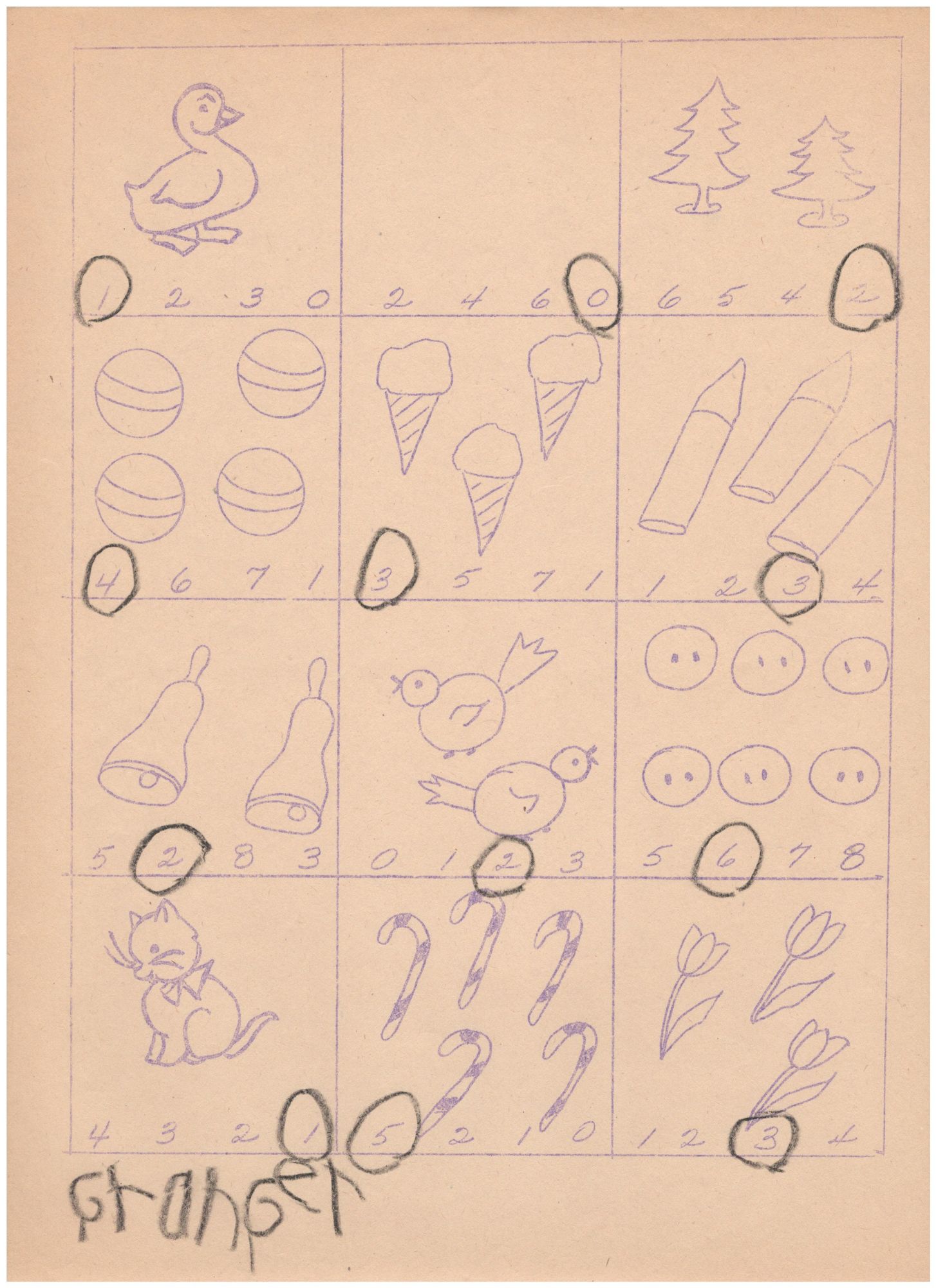
My parents saved a few of my kindergarten papers, including one where I used a black crayon to identify how many objects I saw.
My earliest memory of school math was learning about sets in first grade, drawing big circles around things. That was a consequence of the “New Math” that was a dramatic but temporary change in how math was taught in American grade schools after the Sputnik crisis.
I also recall addition and subtraction in a consumable workbook with an addition problem on a page with a subtraction problem on the facing page. I immediately noticed that the answer to the addition problem was the same as the answer to the accompanying subtraction problem, over and over. I figured it had to be a sneaky trick: they were trying to lure me into complacency, skipping doing the subtraction problem and just writing in the answer. I figured at some point the pattern would break.
I wasn’t about to fall for that, so I diligently did every subtraction problem. The pattern never broke, all the way to the end. I remember turning the last page and heaving a big sigh. All that wasted mental effort!
Flashback to flash cards
I used rote memorization, not tricks, for my times tables
In second or third grade, my mother said I had to learn the multiplication tables. She bought a set of flash cards, and I remember stretching out on the smelly green shag carpet in the hallway outside my bedroom. My mother sat cross-legged, flash cards in hand, and proceeded to torture teach me.
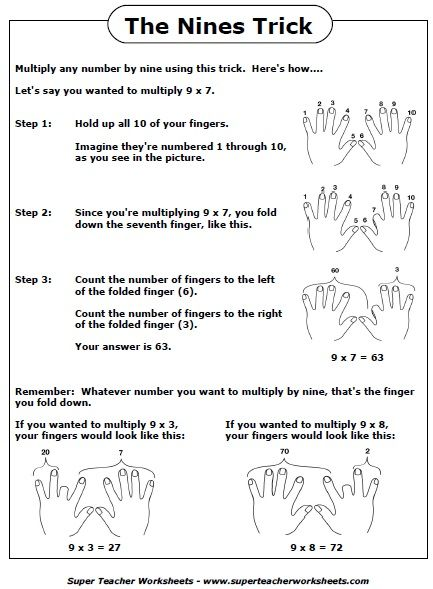
Oh, how I hated it! The only thing I liked was realizing that the sum of the digits in the answers to all of the nines added to nine. 9×3=27 and 2+7=9, 9×6=54 and 5+4=9, and so forth.
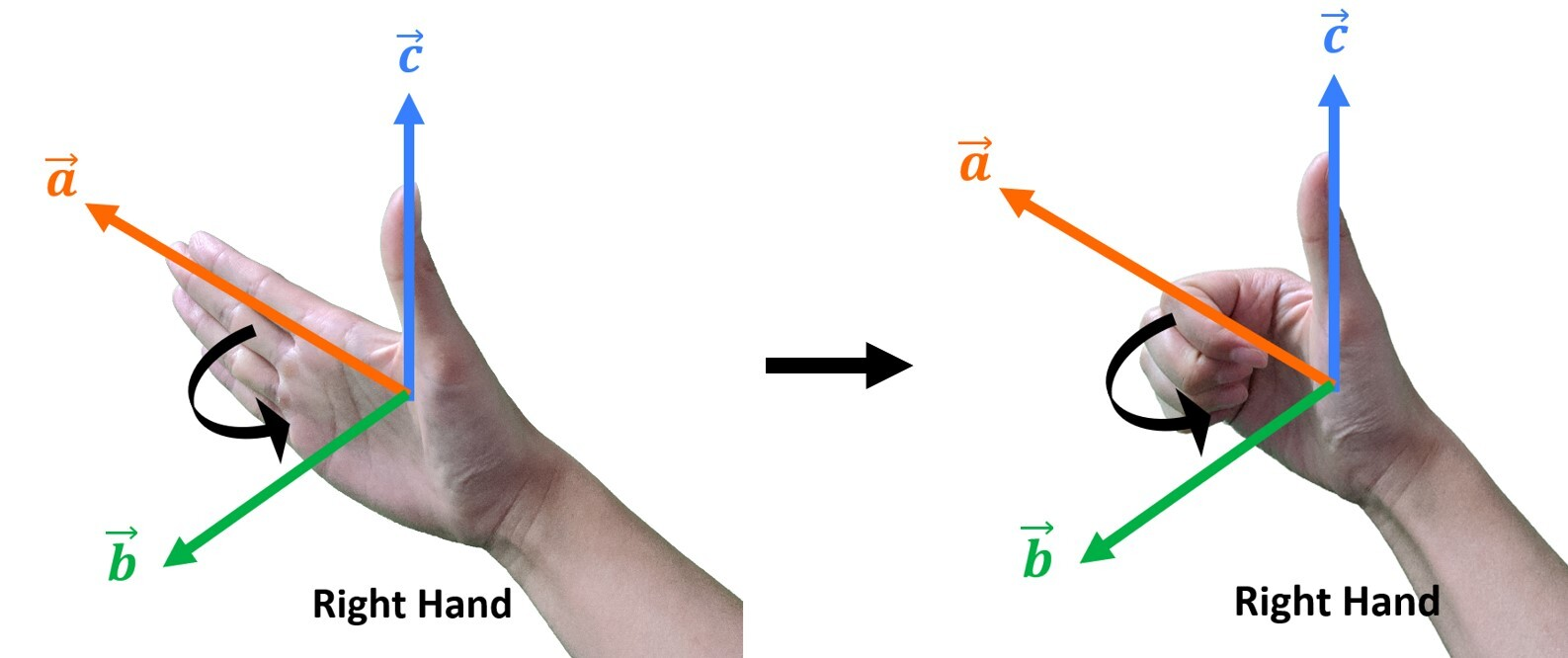
I intuitively realized that had something to do with nine being the final of the Arabic numerals and carrying, but I just used the factoid as a double-check, rather than adapting it into a hand trick. The only hand tricks I ever learned for math were for vector cross products.
I did use hand tricks for vector cross products and electromagnetic fields
Discounts
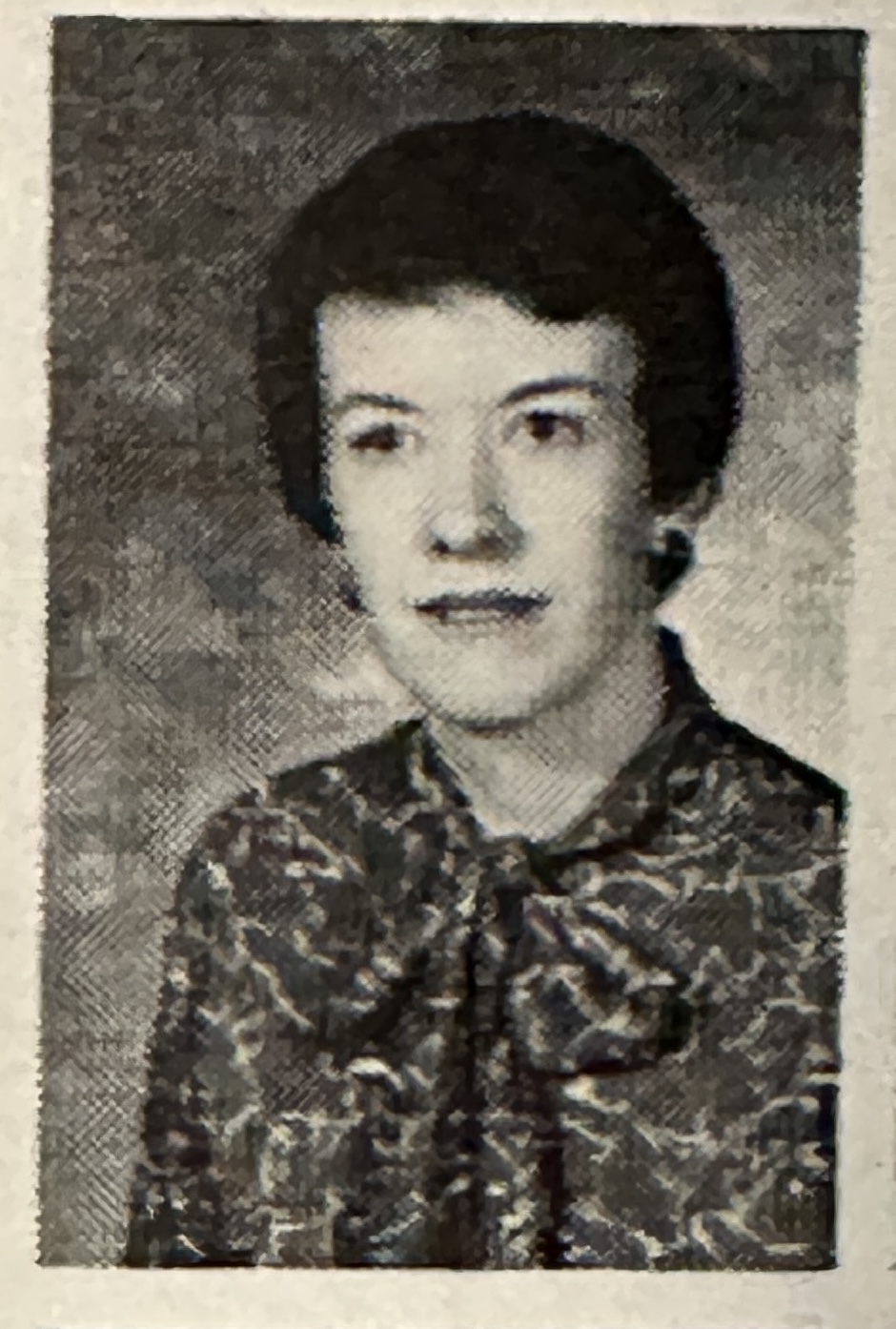
Olga Zaffos
Difficulty with math was what led me to try and cheat for the only time in school. Mrs. Zaffos was my math teacher in sixth grade, and she could be demanding. I remember her ruler coming out if you said, “one hundred and four” rather than the correct “one hundred four” when you meant 104.
When she taught us discounts, I couldn’t grasp it, and I was too intimidated to ask for help. So the night before the quiz, I took my white vest and used a ballpoint pen to write each discount problem along the inside. My scheme was to learn forward during the test and gaze down inside my vest.
When Mrs. Zaffos started passing out the papers, I felt terribly guilty about my impending behavior and began to sweat profusely. She reached me and exclaimed, “What is wrong with your shirt?”
Illustration created by Copilot Designer
I looked down to see blue ink stains spreading across my sweaty shirt. I looked up and confessed, “I’m cheating. The answers are written in my vest.”
Mrs. Zaffos pulled open one panel of my vest, revealing an illegible blue stain. She grinned and said, “I don’t think you’re much of a cheater, Granger. Do your best, and I’ll help you later.”
I don’t remember the grade I received on that quiz, but I do recall Olga Lorraine Zaffos giving me extra help until I figured out discounts, God bless her. I was never tempted to cheat in school again.
Regular math was not for me
Mr. Jennings was my math teacher in 7th grade
Our family moved as I finished elementary school, and although we were in the same school district, I was shifted to a different junior high than everyone I had known since first grade. For whatever reason, my records didn’t transfer properly, and my parents had never even heard of Honors classes. So while I got to pick a couple of electives, including Photography, I was enrolled in the regular track for all of the required subjects.
After a week at my new school, my mother asked me how it was going. I said everyone was nice enough, but they seemed rather slow. Even junior high math had been incredibly easy…so easy that it was quite dull.
A week later, the school called my mother. They had finally received my records, and I was to be immediately shifted to Honors English, Honors Science, and Honors Math. I was nonplussed, not realizing that there were classes of differing difficulties. I showed up in the new classes, where I was told that none of my grades from the regular classes would come over, and I needed to quickly make up a couple of weeks of work. I wasn’t at all worried about English or science, but could I handle Honors Math?
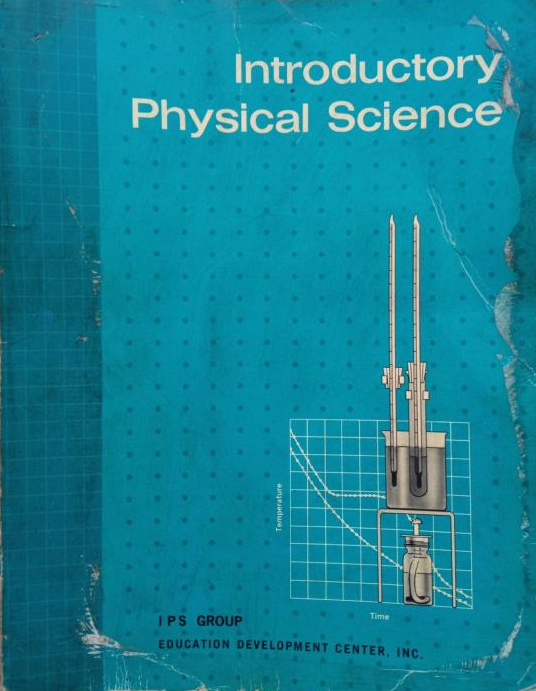
The answer was yes, and it was my seventh grade science class that motivated me to value mathematics. It used the old Introductory Physical Science curriculum developed in the 1960s by the Sputnik-era Physical Science Study Committee. That featured lots of hands-on laboratory work, including us constructing wet cells to power some basic electrical circuits. I decided to read about physics.
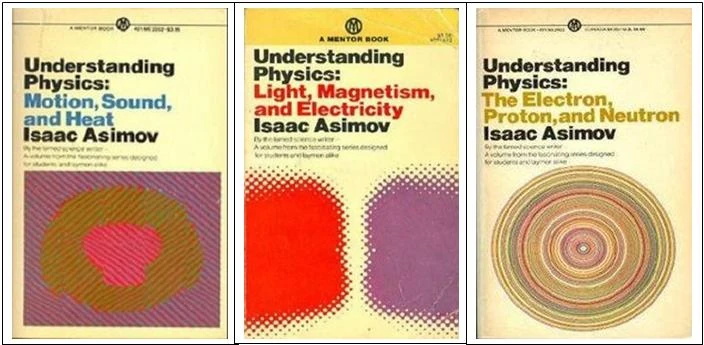
Since I had enjoyed his science fiction novels, I bought and devoured Isaac Asimov’s Understanding Physics books. They were conversational, but chock-full of equations.
Isaac Asimov also introduced me to physics
The bus would drop me off at school each morning, long before they lifted the metal gates that sealed off the classroom wing. I would traipse over to the choir room, climb the risers, plop down in a seat, and read about physics. I remember how a bored eighth grader one morning spotted me up there reading and came bounding up.
“You’re always reading. What’s so interesting, sevvie?”
At the time, I was a 4’8″ prepubescent seventh grader who weighed 72 pounds. I was known as the worst performer in Physical Education class, except on rules tests, until an even smaller and scrawnier Vietnamese refugee enrolled. So I was quite intimidated by this big eighth grader. I nervously showed him the cover of the book, and his face broke into a wide grin. “Physics?!? Wow! That’s a deep subject for a little guy like you! You must be pretty smart!”
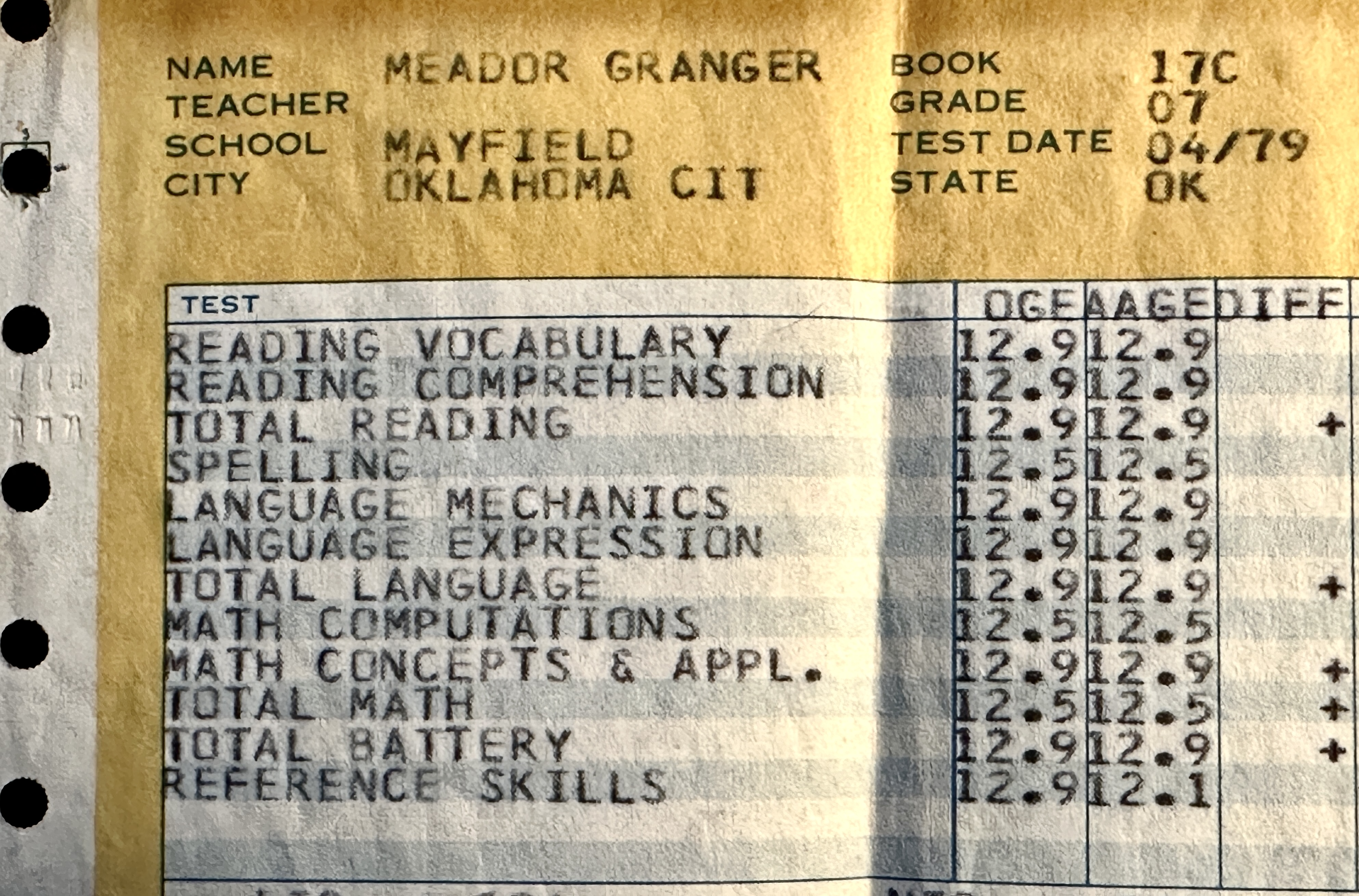
Well, yeah, I was an outlier on one end in PE and on the other end in academics. In April, we all had to take the California Achievement Test. My Obtained Grade Equivalencies were all grade 12…even in math.
A concrete thinker in Algebra
I liked Mrs. Epperley, even though Algebra was a bear at first
That didn’t make my introduction to algebra the next year any easier. I had to work hard to earn an A, despite the able efforts of my kind teacher, Betty Epperley.
I remember spending hours on the phone some nights with classmate Susan Plant, helping each other through the homework. Once I was trained in Piagetian learning theory in college, I realized that Susan and I were still concrete operational at the start of eighth grade; our minds had not yet matured enough to handle formal operations. Thankfully it began to click mid-way through. As we became formal operational, abstract algebra finally began to make sense.
Mrs. Epperley had to be out for some weeks, and we had Ms. Moon, a long-term substitute. She had a British accent, and I was taken by how she wrote her sevens with a strike-through. I adopted the habit to ensure my sevens and ones were distinct. That habit has persisted for 44 years.
What did the little acorn say when he grew up?
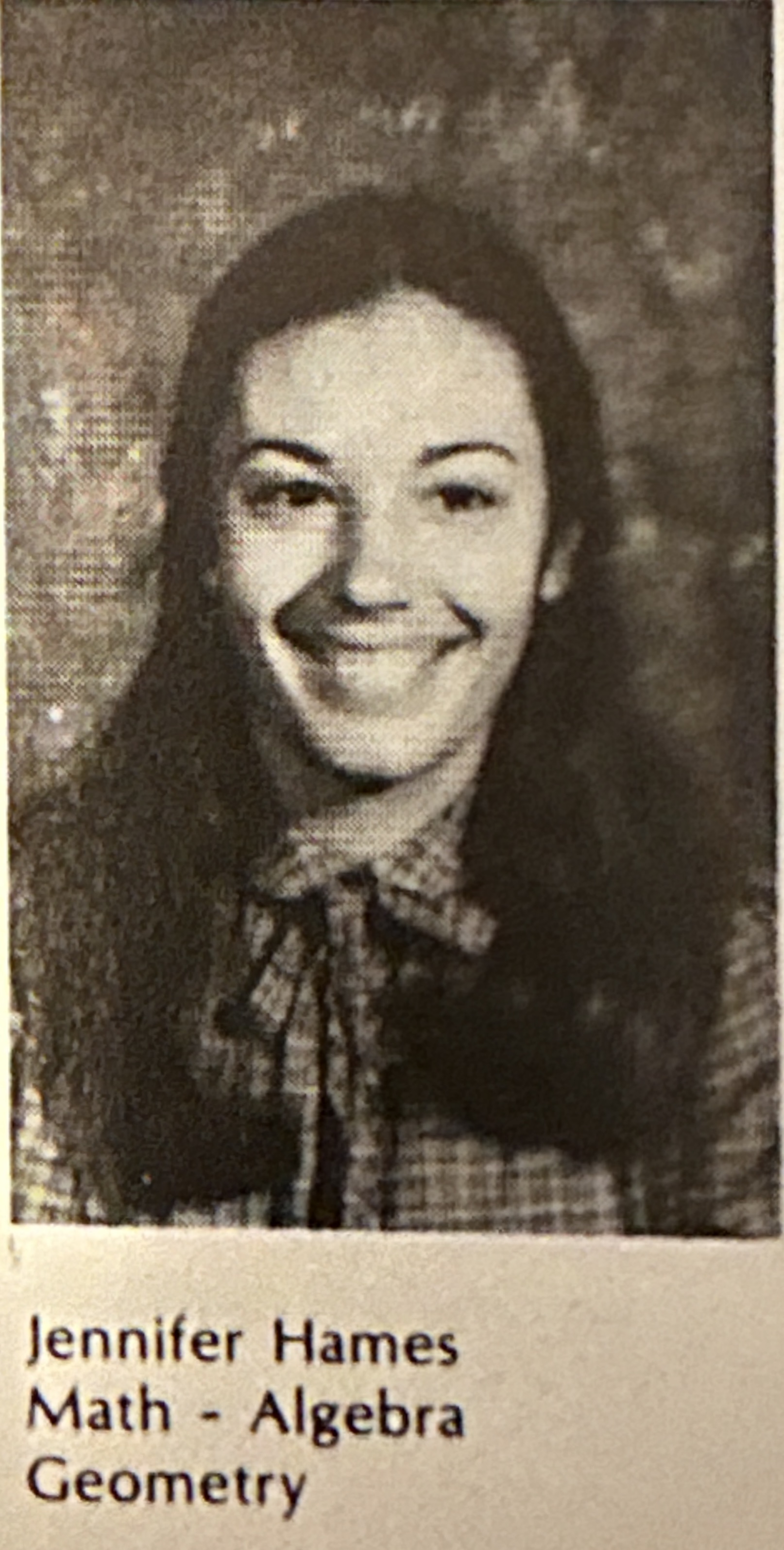
I took Honors Geometry in ninth grade with Mrs. Hames, and I was smitten.
Geometry was so elegant and sensible, and I could visualize everything. I actually enjoyed constructing mathematical proofs and ending them with quod erat demonstrandum, while many of my classmates groaned about the subject.
Speaking of groans, the answer to the above question is, “Gee, I’m a tree!” I have a whole series of geometry jokes, but I’ll spare you more misery.
Algebra II and Math Analysis
In grade school, when asked what I wanted to be, I had always responded, “Music teacher.” However, my father always wanted me to become a writer, and he paid for a writing tutor one summer and ensured that I had my own Science Research Associates Laboratory writing kit at home. When I was enrolling in high school, which was grades 10-12 at the time, Honors and later AP English were inevitable, but I had more freedom in choosing courses than in junior high. I asked my mother for advice on what electives to take. She responded, “You like science and you are actually good at math. So take all the science and math courses you can.”
Beth Thompson
Beth Thompson was a pale and precise woman who trained her Honors Algebra II students to fold our quiz papers in half length-wise after completing them, writing our name and period on the top of the folded paper. That left a tempting blank space below, and I always finished early. So rather than turn in my paper, I would write a trivia question on it.
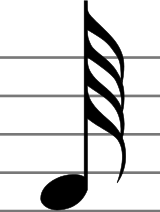
A 64th note is a hemidemisemiquaver
Mrs. Thompson would gamely try to answer my questions when she graded my quizzes. I remember stumping her with, “What is a hemidemisemiquaver?
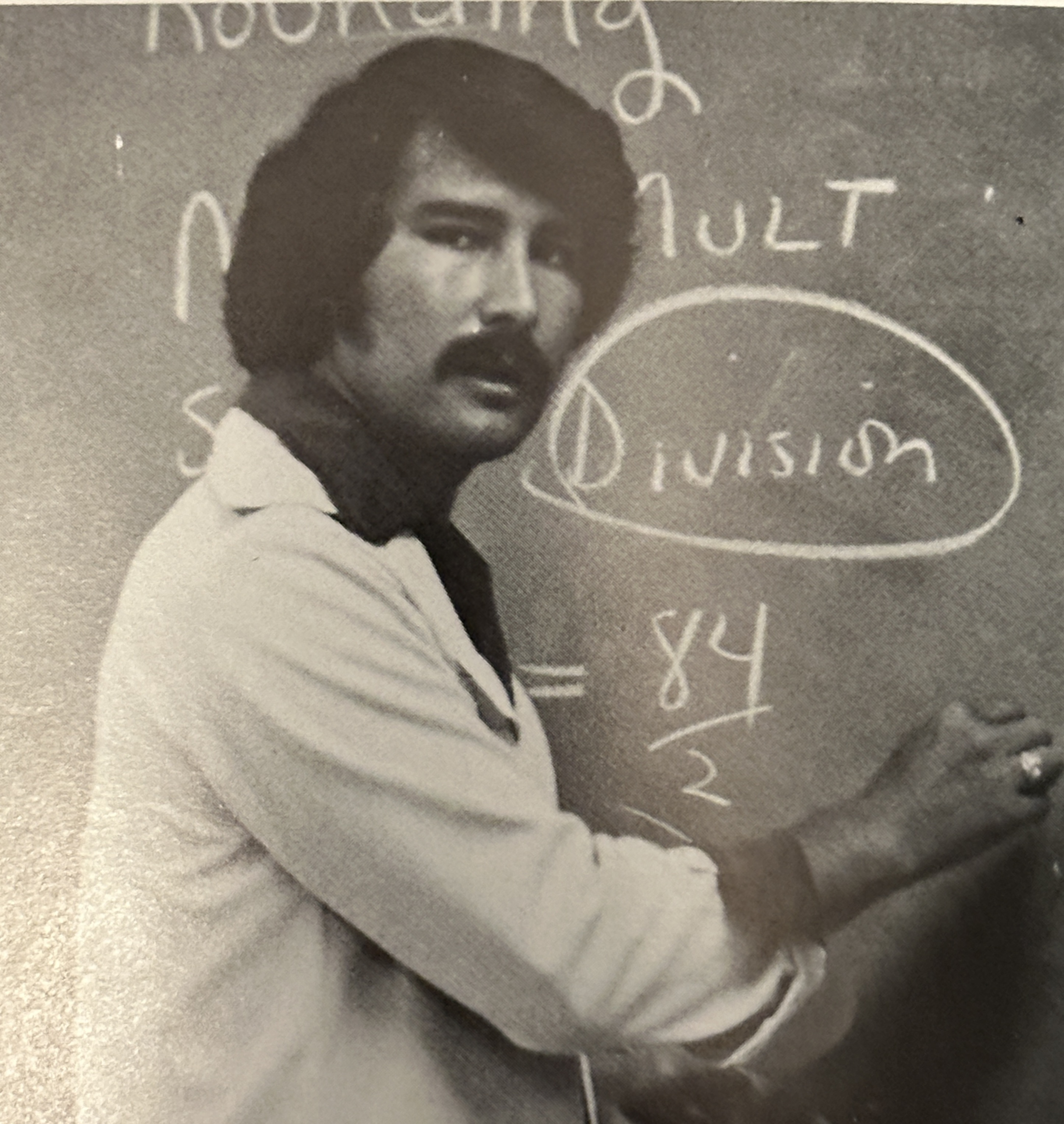
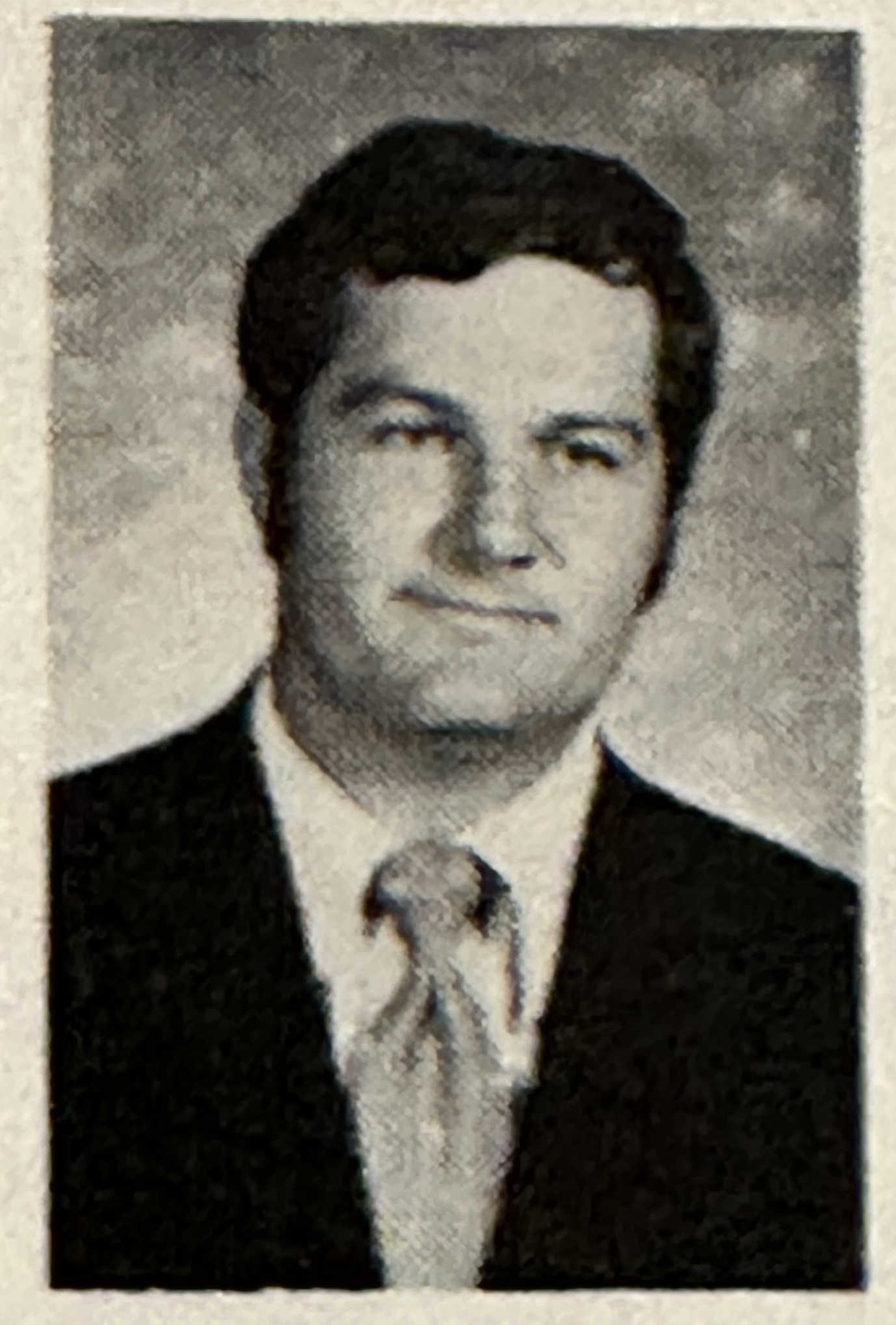
Jay Reagan was the baseball coach and Honors Math Analysis teacher. I enjoyed his class a lot, and throughout my life when people diss coaches with the stereotype that they can’t teach, I always point out that one of my best math teachers was a coach. Baseball, of course, is a sport drowning in statistics, and Coach Reagan could hold his own.
Coach Reagan
At the end of the academic year, we had actually made it through most of the textbook, a rare feat, and he had us do a fun unit on construction. Geometric construction, that is, with a straight edge, compass, and other devices. I ate that up, and years later, when I taught my own students about Kepler’s First Law of orbits, I made sure to show how an ellipse can be formed by taping the ends of a piece of string at the foci, pulling the string taught with a marker, and moving the marker while keeping the string taut to form an ellipse. That was a valuable way of making the foci more relevant to students, and the object being orbited is always located at one focus of the elliptical orbit.
Mu Alpha Theta
In 10th grade, I had been elected homeroom representative for our Honors Algebra II class in the Student Council, but I didn’t start actively running for offices in student organizations until I went steady with a girl starting in 11th grade. She was more extroverted and motivated me to become the Vice-President of the Honor Society, Parliamentarian of the Junior Classical League, Secretary of the Science Club, and, of all things, Vice-President of the rather large Mu Alpha Theta club…Mu Alpha Theta…MATH.
I was Vice-President of the Mu Alpha Theta math club
Our club initiation was at a buffet restaurant, something I had not experienced. The lighting was dim, and I remember going down the buffet line and what I thought was a big pan of mashed potatoes. I scooped a big glob out onto my plate. When we sat down to eat, my girlfriend eyed my plate and asked, “Why did you get so much butter?” Oops!
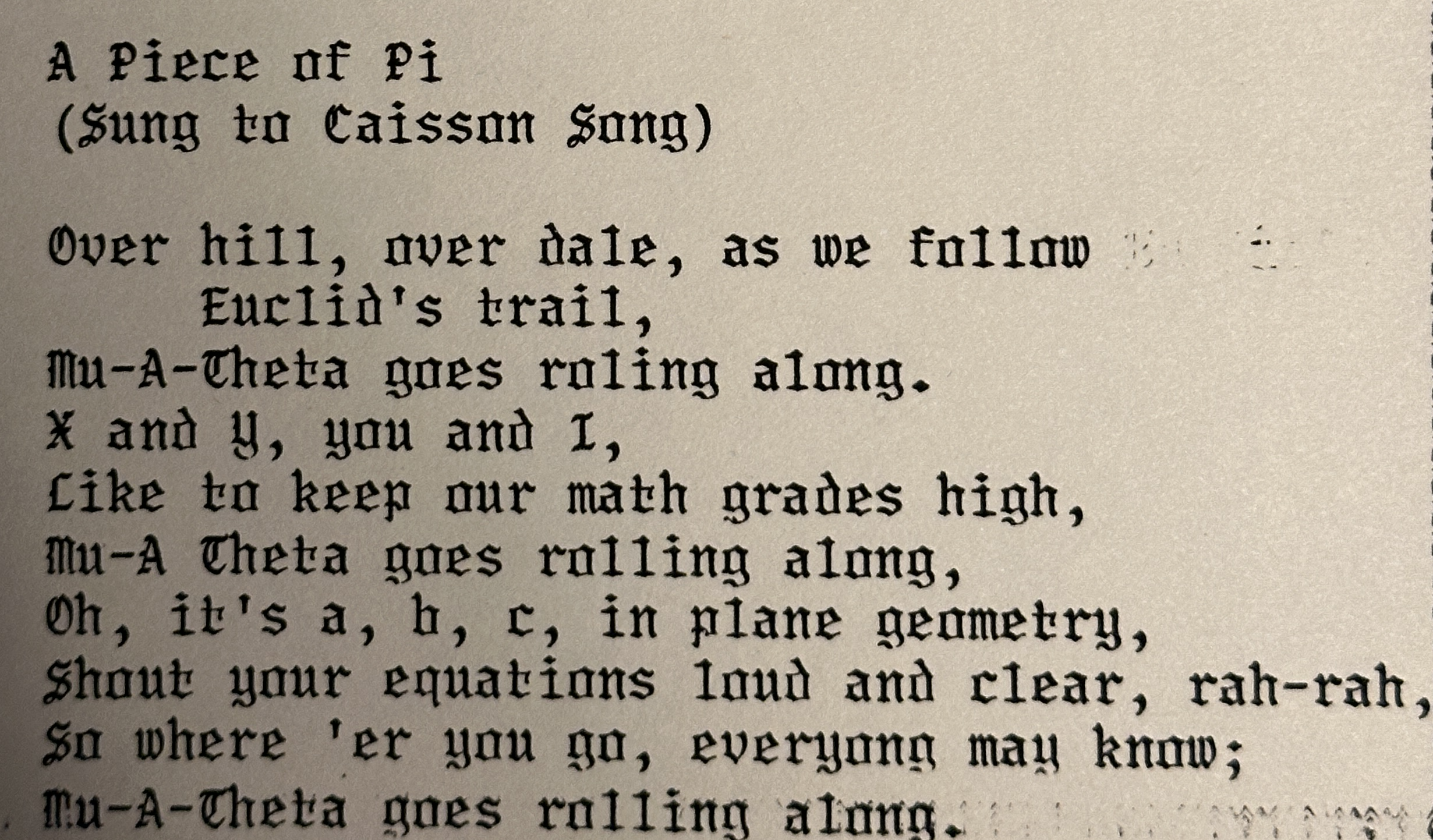
We sang a hokey song at our initiation which was a parody of the original Caisson song once sung by the U.S. Army. Here it is, as printed in the initiation program, complete with typographical errors:
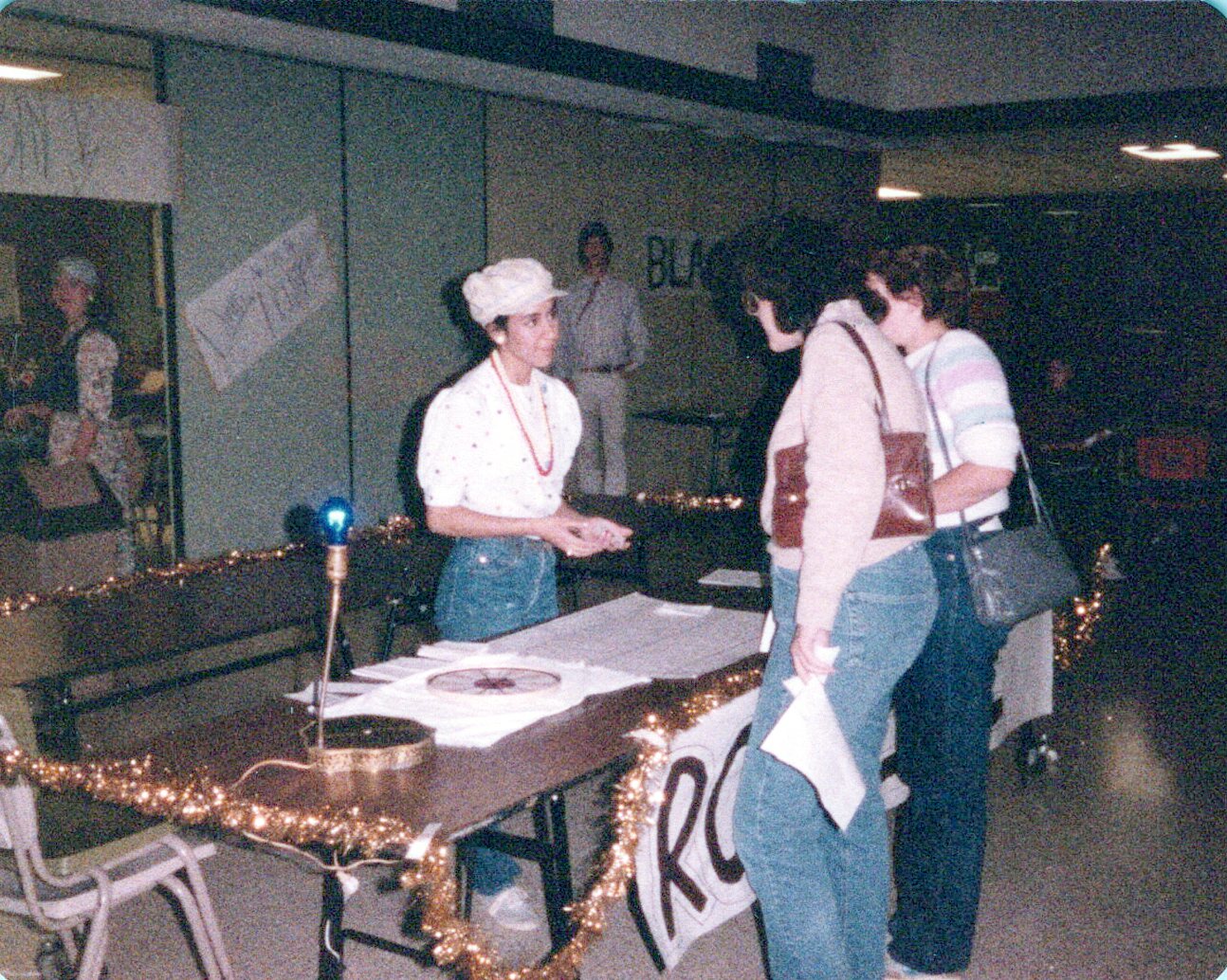
Our Roulette booth at Cosino Casino
Our club’s fundraiser was Cosino Casino, where people bought tickets in the school cafeteria one evening to use in playing games of chance. We included math lessons with each game, and my girlfriend and I were charged with running a roulette table. We bought a cheap lazy Susan turntable at the T.G.&Y. and my girlfriend decorated it and ran the table.
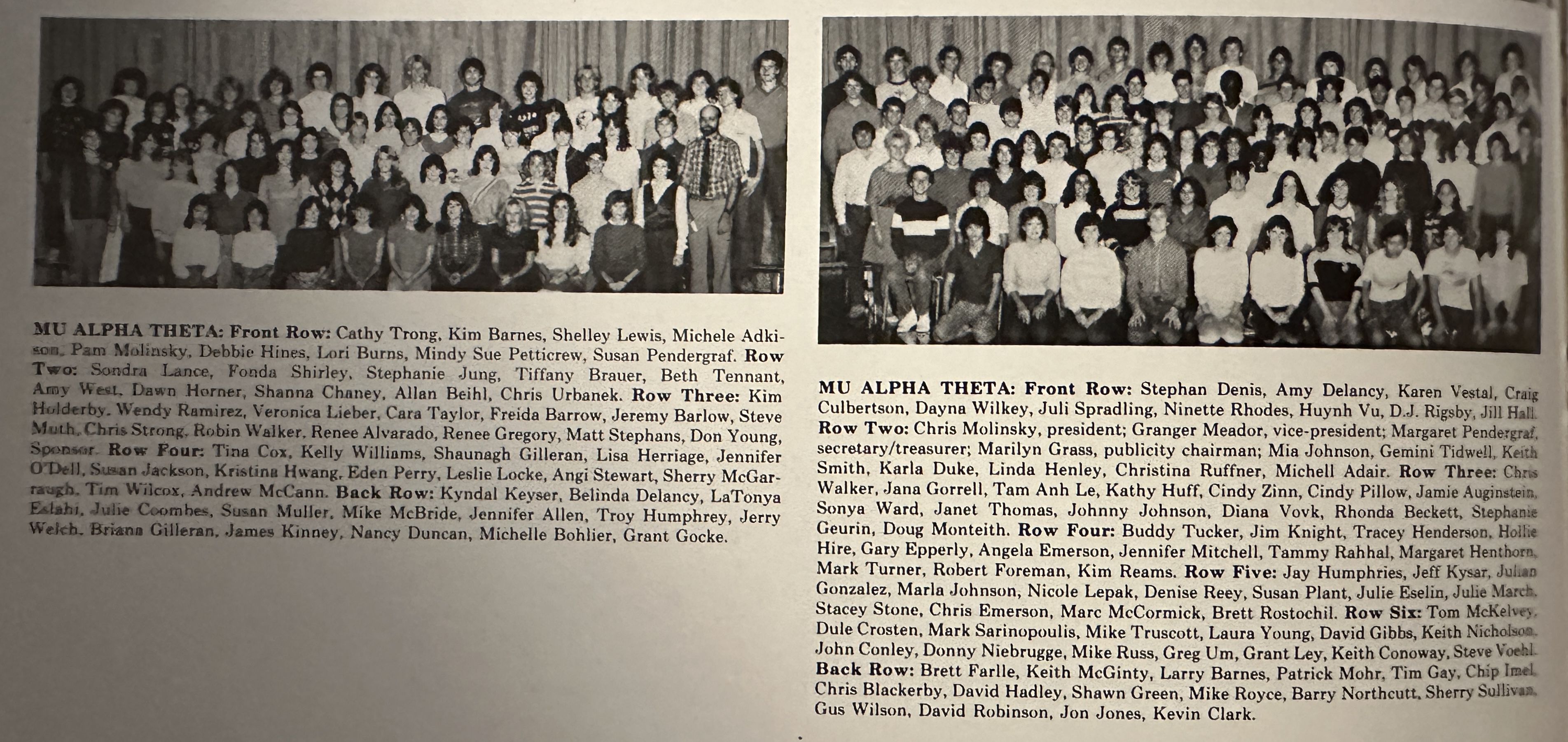
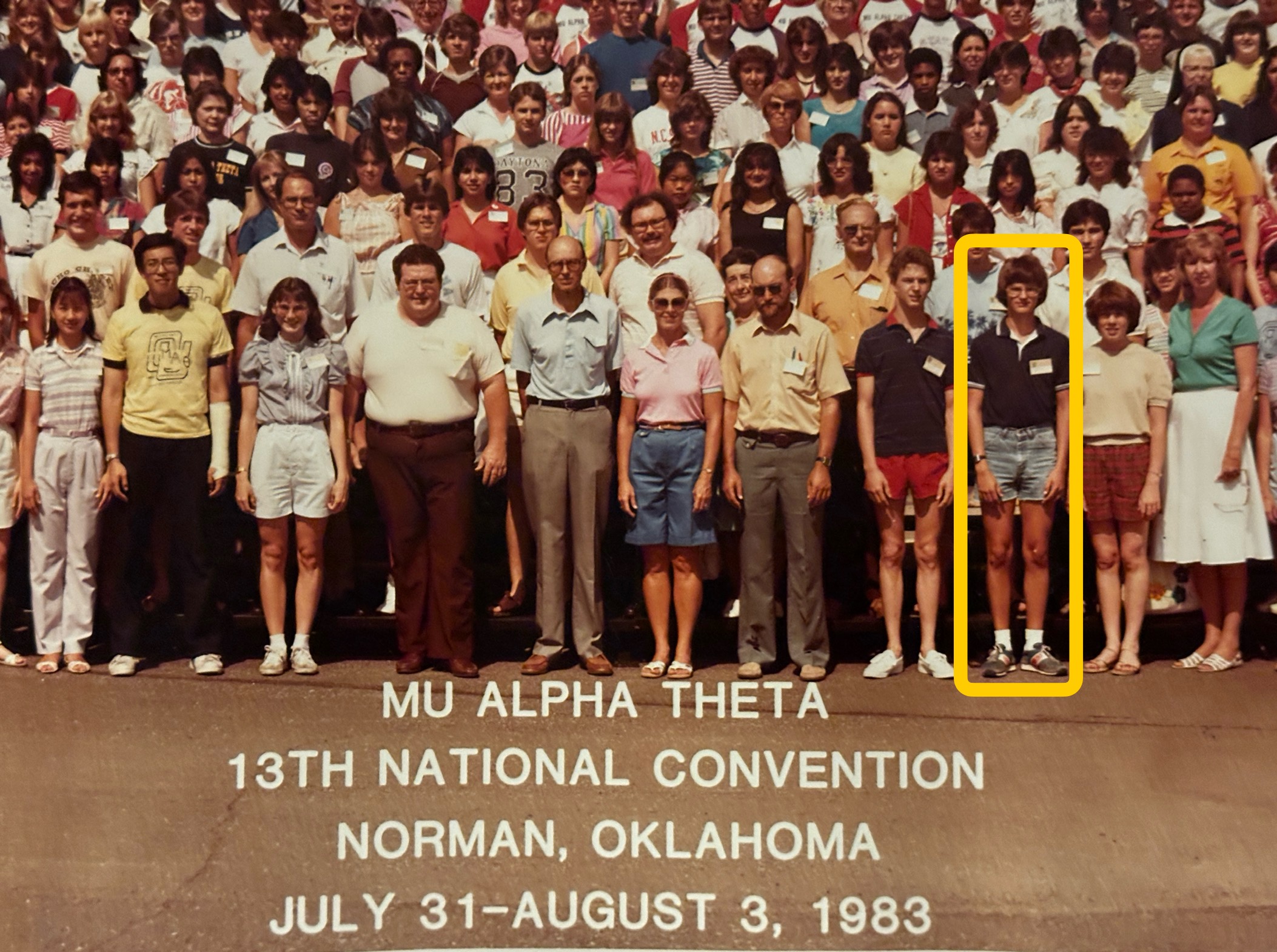
Our school co-hosted with Norman High the national Mu Alpha Theta convention in the summer of 1983. Hundreds of kids from all over the country converged at the University of Oklahoma for activities, including plenty of math contests. I remember staying in one of the high-rise dorms. I would end up spending my freshman year in college living in one of them.
I was an officer when we co-hosted the Mu Alpha Theta national convention
After graduating from high school, I attended the 1984 national convention in New Orleans. We went to the World’s Fair, where I remember seeing the space shuttle Enterprise and visiting Sea World. My other memory is of dining at a restaurant in the French Quarter and ordering a steak. When they asked how I wanted it, I didn’t know what they meant. The waitress prompted me, “Rare? Medium? Well done?”
I figured “well done” sounded good. When my steak came out, it was blackened, but not in the Cajun fashion. Someone across from me noticed it and asked me how I’d ordered my steak. The math teacher seated next to me looked over and responded, “Cremated.”
Math Bowl & the ASVAB
In addition to Mu Alpha Theta, I was on our high school’s Math Bowl team. Great…a math competition with top students from other schools, all with time pressure! I was actually surprised at how well I performed, having been cajoled into joining and figuring I might be a huge flop.
I did well enough on the PSAT and SAT to earn a College-Board-sponsored National Merit Scholarship, and I took the ASVAB, the Armed Services Vocational Aptitude Battery. Part of the results identified recommended roles we might fill in the military. The chief recommendation it gave for me was Nuclear submarine engineer.
Calculus
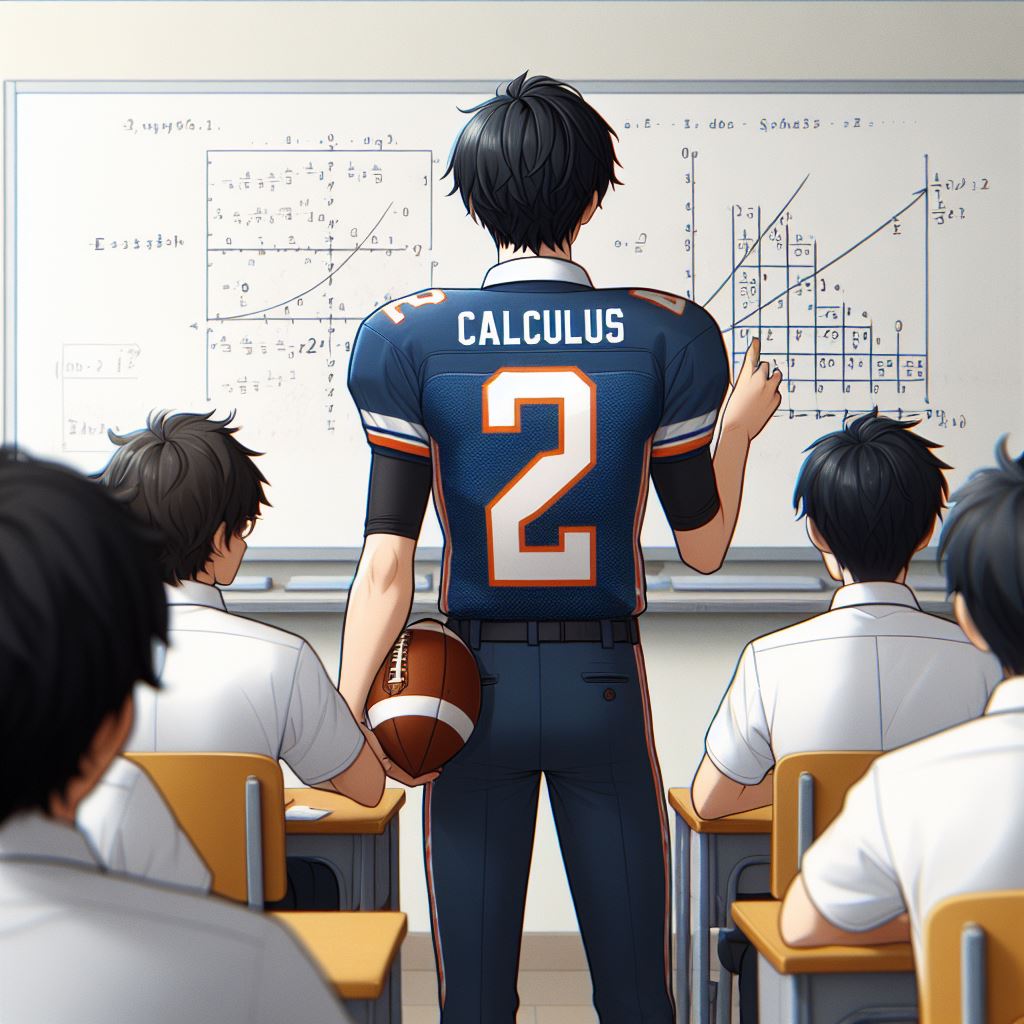
Quarterback calculus by Copilot Designer
I took Calculus in high school from Judy Jolliff; she is in a pink shirt three down from me in the above convention photo. She was spirited, but I found Calculus quite difficult. I remember our class sometimes looking to Barry Northcutt, the school quarterback, for help, as he was a Calculus whiz. Yet another stereotype smasher.
For both semesters of Calculus, although I was exempt from mandatory finals thanks to my attendance, I had to take those tests and score well, including acing the second one, to earn an A in the course. I studied hard and pulled it off.
It is telling that the only high school Calculus paper I saved was one in which I was writing, not calculating.
My top student awards in upper school were in English for three out of four years, Biology, Physiology, and Physics. I won state scholastic meets in Spelling and English, and my writing earned me some awards and was instrumental in my being named a U.S. Presidential Scholar by President Reagan, which took me, my parents, and a favorite teacher to the White House and a week in Washington, DC. The only time I was the top math student was in Honors Geometry, but I wanted to learn more physics in college, despite my ambivalence about pure mathematics.
When I enrolled at university, I avoided pursuing a Physics major, given its theoretical emphasis and demanding mathematics. Instead, I tried Engineering Physics, which was more practical-minded. My ACT English scores were so high that the University of Oklahoma (OU) gave me free advanced standing credits in English, but I had to take tests at the university to earn advanced standing credits in math. (The only Advanced Placement course at my high school was in English, and while I was the top student in the course, I didn’t take the AP test for college credit since OU had already awarded me credits.)
I managed to test out of Analytic Geometry and Calculus I. I decided to not even try to test out of Calc II, as I thought it would help me to repeat it, bolstering my grasp of Calculus to help me in my physics classes.
Well, Calculus II wasn’t as hard as I had imagined; my high school course had actually prepared me well. But Calculus III would be entirely new topics, and I wanted to avoid a big lecture hall class like I had for Calculus II. So I enrolled in a night class, which I knew would be small with some adult students. At the time, the university ensured the professors for the night math courses were native English speakers to avoid getting complaints from adult students who didn’t tolerate accents well.
That gambit paid off, and it was the first time I enjoyed Calculus, as the topics included things like parametric surfaces where my love for geometry could shine.
Differential equations with Resco
I went on to courses in ordinary and partial differential equations, which the university called Engineering Math I and II. The first course was in a huge lecture hall with Dr. Richard Resco. Right from the start, we knew it was going to be interesting.
He would always come into the hall, no matter the weather, in shorts and sandals. On the first day, he gazed out at the hundreds of engineering students and told us that he wanted us to appreciate math for its own sake, not just as a tool.
My girlfriend and I were seated in the front row. Resco walked up to her, flipped open her textbook, and loudly asked, “What are those things printed inside the cover?”
She replied, “Integral tables?”
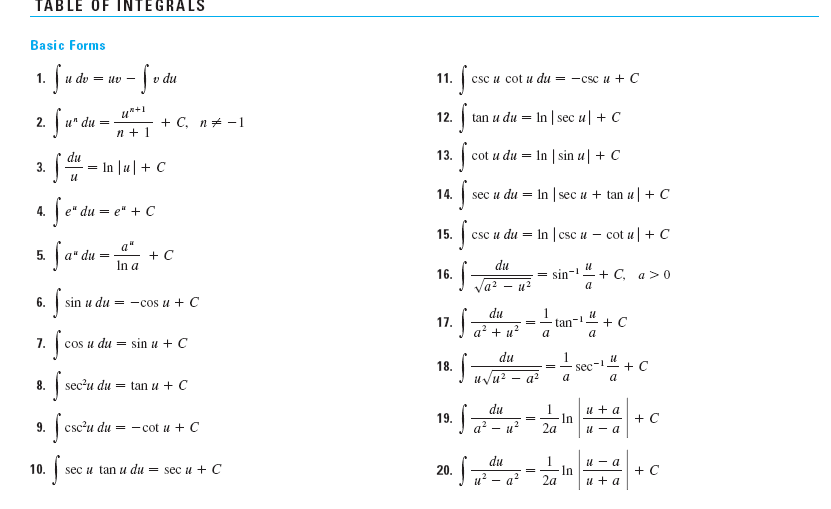
Dr. Resco nodded, and then slammed the book shut. “They’re a crutch, not a wheelchair!”
My girlfriend looked over at me, wide-eyed, and then glanced down at my notes. I had written, “Integral tables: crutch not wheelchair.” She rolled her eyes and sighed.
“They’re a crutch, not a wheelchair!”
Another memorable incident is one I often shared with my own students when we were studying friction and they learned that we symbolize the friction coefficient with the Greek letter mu (μ). One day, Dr. Resco had worked his way through some calculations that took a couple of pages just for one problem. Then he showed us a shortcut, involving the integrating factor, also labelled μ, which drastically shortened the process.
After demonstrating how μ worked, he turned around, triumphant. Then his face fell as he gazed around the hall. He grew visibly frustrated and yelled, “You just don’t get it, do you?”
My girlfriend and I, who no longer sat on the front row, glanced at each other. Dr. Resco threw down his chalk and started gesturing at the boards of calculations.
My friend
“Mu is a gift! You engineers have no appreciation for it?!? Mu is your friend!”
Then he went down on his knees and started genuflecting to the board. “You should appreciate mu! Worship mu!”
My girlfriend again glanced over at my notebook. I had written, “μ is our friend, and Resco completely lost it today.” She nodded in agreement.
Later I found out from my friend Sam, who was a math major with Dr. Resco as an advisor, that Resco had been going through a bad divorce at the time. Bless his heart. Richard Resco taught at OU from 1981 until his death from cancer in 1997. He bequeathed his entire estate of almost $350,000 to endow Graduate Fellowships in Mathematics at OU. And I still remember that mu is my friend.
The Walter Way
My final undergraduate math course was a stark contrast to its predecessor. Engineering Math II, which was about partial differential equations, was taught in a small classroom with Dr. Walter Wei. I guess most engineers didn’t need to go that far in math, but Engineering Physics demanded it.
Wei was new to teaching and unfamiliar with class procedures. While he was friendly, I sometimes struggled to understand his heavily accented English, and I remember being utterly stumped by one assignment. When I showed up for class, defeated, I was relieved to find that no one had been able to do it. Dr. Wei came in, and we shared how all of us were baffled. He grinned, admitting that there was no known solution to the problem he had posed. He had wondered if one of us might find one!
Someone once asked about his research, which I think had to do with topology or manifolds. He said he was working on developing a new mathematical technique, laughingly saying that he hoped it might become known as “The Walter Way”.
We did have revenge on Dr. Wei, telling him that it was a tradition for the professor to bring the students milk and cookies for the final exam. He did so, and when we sheepishly confessed that we had been pranking him, he looked at us, goggle-eyed, and then laughed heartily. And yes, I enjoyed having milk and cookies on the last day I took a math class as an undergraduate.
Changing majors
The termination of my undergraduate math courses coincided with a change in my major. While I had loved my first courses in Physics for Majors, with the fabulous Dr. Stewart Ryan, aka Dr. Indestructo, and Modern Physics with Dr. Suzanne Willis, I didn’t appreciate the subsequent engineering and physics coursework. Immediately after being named an Outstanding Sophomore in Engineering Physics, I decided to quit.
I remember standing in my apartment in Norman, wracking my brain about what major to shift to. A favorite university professor of mine had tried to recruit me into Letters after having me in Latin class and her honors seminars on ancient Greece and Rome. But I had demurred. Should I switch to Letters? That might lead to teaching those subjects at a university. However, I liked high school far more than university, where many professors cared more about their research than about teaching undergraduates. What to do?
I had once wanted to teach music. I liked high school. I loved basic physics, but I was disillusioned with college and engineering. So what had I liked enough to want to do it for a living?
Teaching…high school…physics. Suddenly, I felt a surge of elation, a true calling I had lacked until then. A fresh course of action coalesced.
If you’re searching for that one person who will change your life, take a look in the mirror.
Dr. John W. Renner
I applied to the College of Education at OU, determined to become a high school physics teacher. Dr. John “Jack” Renner, an outstanding leader in science education and the Learning Cycle, interviewed me. I thought he would be thrilled to have me, but after reviewing my transcript he tried to send me away.
Jack Renner said I was too bright to be teaching high school science, that full-time physics positions in Oklahoma high schools were quite rare, and that I should stick with Engineering Physics. “Get your degree and then teach physics at a university, not a high school.”
As you might guess, I was adamant. He eventually caved, and I informed Dr. Ryan, my Engineering Physics advisor, of my decision. He was disappointed but kind and understanding.
No minor matter
Back in 1988, to be certified to teach a high school subject, you had to have earned a certain number of college credits in it and also pass a certification test. I was told that if I wanted to teach physics, I should also certify in math since full-time physics positions were rare, and they often took on some math courses to fill out their schedule.
Well, I wasn’t about to do that. I did ask if I had enough math credits to earn a minor in Mathematics. They checked and said that if I would take just one more math course, such as a methods course about teaching it, I would indeed earn a minor. Another math course? No thanks!
So instead, along with Physics, I certified in Chemistry, Biology, Botany, Zoology, and Earth Science. If I had to teach something else, it would be a science course.
My change in major after two years of Engineering Physics coursework delayed my graduation by a semester, even with me taking summer school courses. So I graduated in December 1988 and substituted in the three high schools in my old Putnam City district from January to May 1989. Substituting when I was 22 years old was challenging, but a happy memory is when I filled in for one of the Calculus teachers, who also had a couple of physics sections. The teacher had left instructions for the students to read the next section in the respective textbooks and do the best they could on the assignments.
As the first class of students walked in for Calculus, they saw me and clearly thought, “No lesson today!”
So they were shocked when I told them to get out their notes and proceeded to teach that day’s lesson. Some gasped, “You’re a sub who can teach calculus?”
When I finished the lesson, the kids actually applauded and got to work on the homework problems, with me circulating to help them individually as needed. Word spread, and for the rest of the day kids came in, saying things like, “I heard we have an amazing sub today.”
My reputation was sealed at that school when I taught the physics lesson as well. That experience was so redeeming, after my years of struggling with math, that I almost regretted not certifying to teach math. Almost.
Christmas 1969 brought me the first childhood vehicle I clearly recall: a Murray Tot Rod pedal car. I had a tricycle before it, and two different bicycles after it to round out my childhood vehicles before I got my first automobile in 1981. Looking back, my favorite vehicle to drive was the Toyota Celica Supra I drove in my twenties, but the Murray Tot Rod isn’t far behind.
Murray Ohio Manufacturing Company was founded in 1919 to make auto parts like fenders and fuel tanks. They began making bicycles in the Great Depression, selling them through retailers like Sears, Roebuck & Co. After World War II, they concentrated on low-cost bicycles and making pedal cars. Below are just some of their pedal car models.
The Super Tot Rod 800 in the bottom row was similar to my green machine.
This is what my Murray Tot Rod looked like
Here I am enjoying my new Tot Rod:
We moved to Bethany after I graduated from kindergarten, and I continued to use the Tot Rod for a few more years. Our house in Bethany was on three lots, with lots of room on both side lots. We lived in the Cross Timbers, with sandy soil and about 70 trees, mostly Blackjack oaks.
My best friend in elementary school was the late Gene Freeman. Gene loved vehicles even more than I did, and he had a Big Wheel.
Gene Freeman with me in the Cross Timbers where we pedaled our vehicles
Gene and I would rake the countless oak leaves into huge piles, forming winding pathways for us to race along, me in my pedal car and Gene in his Big Wheel, which was a huge hit toy in 1971 and 1972. I remember us raking a couple of “parking spots” for our vehicles outside one of the walls of my bedroom.
I’d seen television ads that made the Big Wheel look like a lot of fun:
But I found it much harder to pedal and control than my Murray Hot Rod, and Gene had already pulled so hard on the brake handle that it had busted. So I was happy to stick with my Murray Tot Rod.
Eventually I could no longer squeeze into my Tot Rod. I wound up taking over a purple Schwinn Sting-Ray bike my mother had bought and placed in a mount to use as an exercise machine.
Ignaz Schwinn was a German immigrant backed by fellow German American Adolph Frederick William Arnold, a meat packer, who founded Arnold, Schwinn & Company in 1895. By 1950, most U.S. bicycle manufacturers sold in bulk to department stores, who rebranded the bikes. Schwinn stopped producing such private label bikes in 1950, except for B.F. Goodrich branded bikes sold in tire stores.
Schwinn had a dominant position in the U.S. market by the late 1950s and advertised heavily on television in the 1960s, sponsoring Captain Kangaroo. In 1962, Schwinn’s designer Al Fritz heard about a youth trend in California of retrofitting bikes with “chopper” style motorcycle accountrements, such as high-rise “ape-hanger” handlebars and low-ride “banana seats”. His wheelie bike, the Sting-Ray, was introduced in 1963.
Despite loving Captain Kangaroo when I was little, I wasn’t excited to be getting my mother’s purple Sting-Ray. It struck me as silly and showy. I insisted that a frilly white plastic woven basket be removed from its front, and I cut off the streamers that extended from the end of each handlebar.
If I lost my balance, this awaited my tender flesh
My father tried putting training wheels on it for me, but I didn’t like them, and he wound up taking them off. I just lurched around a side yard to learn to ride, where there always seemed to be a Blackjack oak ready to catch me when I lost my balance. The rough bark on those trees was a great incentive for improvement.
I did enjoy that I could actually ride the bike on the street, and I added a metal basket to the front so I could carry groceries home from the old neighborhood market some blocks away.
The AMF ten-speeds my Dad bought
I was unhappy about the color of my bike, so I made a sign reading Purple People Eater which I affixed over the chain guard, turning it into a joke. Eventually I added a speedometer, but the bike had only one gear and a coaster brake, so I didn’t break any speed records on it.
In junior high, my father bought a couple of AMF Scorcher ten-speed bicycles at a garage sale, and I made good use of one around Windsor Hills, visiting friends and riding down to the big shopping center.
American Machine and Foundry began in 1900 in New York. It evolved into part of what Eisenhower termed “the military-industrial complex” after World War II. In 1950, it purchased the Roadmaster line of bicycles from the Cleveland Welding Company. Its operations shifted from Cleveland, Ohio to Little Rock, Arkansas before moving to a new factory in Olney, Illinois. That is where our bicycles would have been manufactured, and they weren’t considered quality bikes.
This helped me maintain my cheap ten speed bike
My ten-speed’s cheap brakes and gear mechanisms required adjustment, and Dad wasn’t familiar with any of that. So I bought Richard’s Bicycle Book to help me learn how to keep my bike working. Richard Ballantine was the son of Ian and Betty Ballantine of Ballantine Books, which I was familiar with as a major publisher of science fiction. Richard was a cycling writer, journalist, and advocate. He freely expressed his views in his book, which was first published in 1972 and had several later editions.
When my friends and I would go off-road on our bikes, cockleburs would puncture the tires and inner tubes. I couldn’t afford to replace the inner tubes regularly, so I would remove the wheel, use a screwdriver to remove the tire and inner tube, and vulcanize patches onto the tubes using a kit I purchased at the local T.G.&Y. discount store.
My Rampar leg light
I eventually outfitted my ten speed with a speedometer and a headlight. Since I was bicycling to and from a friend’s house after dark, I had a Rampar battery-powered light that I strapped to my lower leg. That light bobbing up and down helped make me more visible to drivers.
I was grateful to have it for transportation, but the ten-speed was just a tool. Once I could drive, I seldom rode it much. I brought it to Bartlesville, but it was difficult to transport to one of the entrances to the Pathfinder Parkway, the paved 12-mile trail system linking the city’s major parks, and I had zero interest in riding a bike on city streets.
I later bought a 21-speed bike with a quick-release front wheel. I used to ride it on the Pathfinder Parkway, using a bell to warn pedestrians that I would pass. By then I had wised up and wore a bike helmet, although I never liked doing so. For many years I’ve left the bike and helmet at home and simply walked along the Parkway. I don’t mind the slower pace now that I can easily listen to an audiobook or music with my iPhone and some earbuds.
I see kids on bicycles on the Parkway, but mostly younger ones with parents. Occasionally I’ll see teenagers, who are usually in a hurry. I’ve never seen a Tot Rod on the Parkway, and while that doesn’t surprise me, it certainly would be a treat to see one pedaled by.