

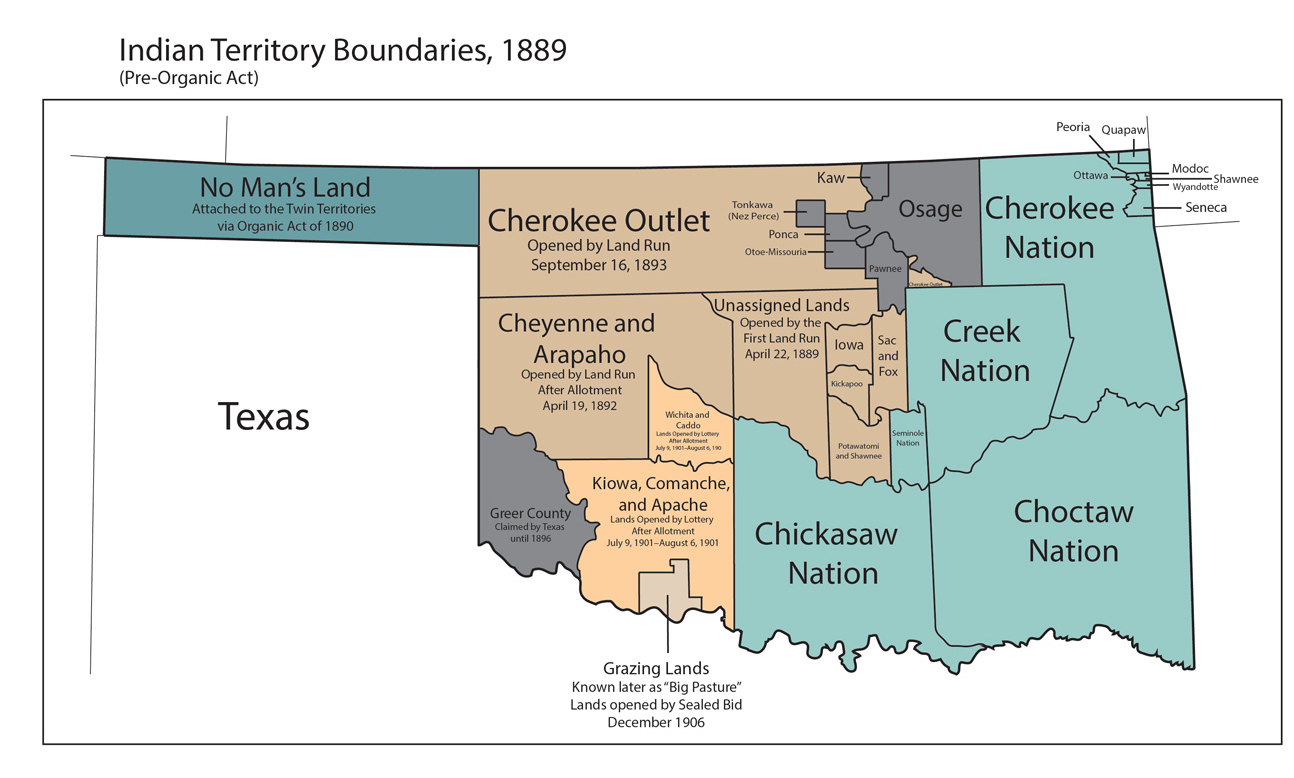
In 1930, Thornton Wilder jotted down, “Ideas for Novels or Novellas — Picaresque: Baptist ‘Don Quixote.’ Selling educational textbooks through Texas, Oklahoma.”
The result was his 1934 comic novel Heaven’s My Destination. He began serious work on it at the MacDowell Colony in New Hampshire, where he also worked on more famous works like Our Town and The Bridge of San Luis Rey. The peripatetic playwright and author continued to work on it in Chicago, Kansas City, and New Haven, finishing it at Mabel Dodge Luhan’s ranch in Taos.

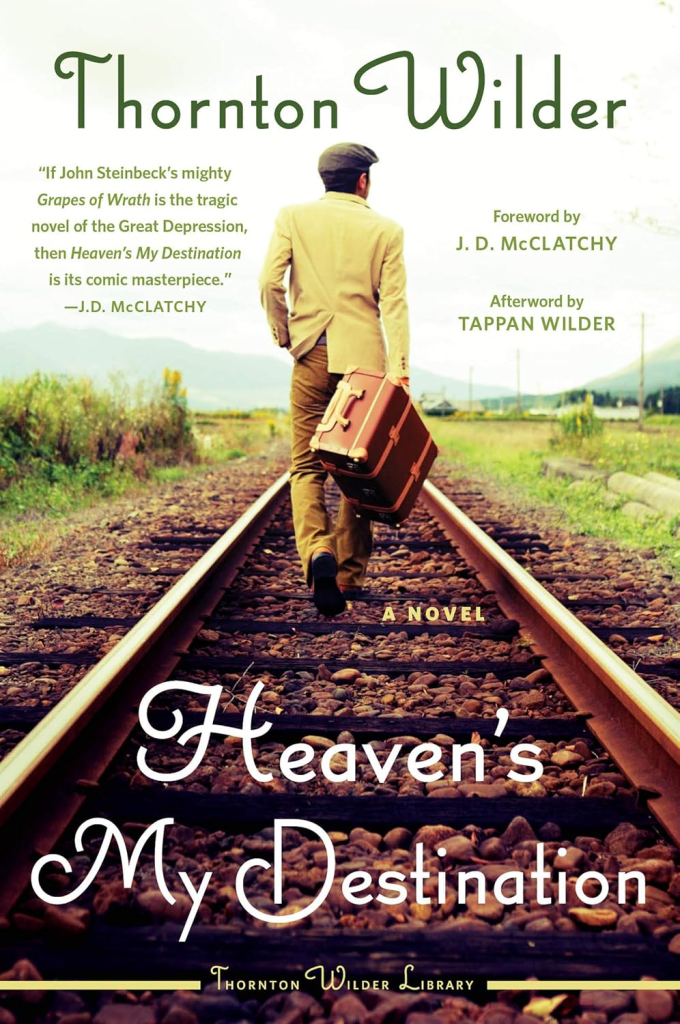
The satirical take on American idealism and faith features George Brush as a fervant young traveling textbook salesman whose sincere but naive attempts to convert others and live by religious dogma lead to a series of humorous, bizarre, and sometimes tragic situations.
The title came from doggerel verse which Wilder claimed that children of the Middle West were accustomed to write in their schoolbooks:
Granger Meador is my name;
America’s my nation;
Bartlesville’s my dwelling-place
And Heaven’s my destination.
No doubt he was knowingly echoing an identification rhyme from James Joyce’s 1916 A Portrait of the Artist as a Young Man:
Stephen Dedalus is my name,
Ireland is my nation.
Clongowes is my dwellingplace.
And heaven my expectation.
Wilder delivered 113 lectures across the USA and Canada from 1929 to 1934, travelling by trains that brought him face-to-face with Depression-era America, especially in Texas, Oklahoma, and Kansas. Wilder had read Don Quixote, the classic example of a Picaresque novel detailing the humorous adventures of a roguish hero, in three languages, and he had both taught and lectured about it.
Wilder channeled all that into a somewhat autobiographical novel. He shared, “It’s all about my father and my brother and myself, and my years among the missionaries in China, and my two years at Oberlin College, and the Texas and Oklahoma of my lecture tours.”
Wilder thought, “The novel is very funny and very heartrending–a picaresque novel about a young traveling salesman in textbooks, very ‘fundamentalist’ pious, pure and his adventures among the shabby hotels, gas stations and hot dog stands of Eastern Texas, Arkansas, Oklahoma etc. His education, or development from a Dakota ‘Bible-belt’ mind to a modern Großstadt [big city] tolerance in three years; i.e. the very journey the American mind has made in fifty years.”
Bear in mind that the Scopes monkey trial of 1925 had drawn intense national publicity and that and the death of William Jennings Bryan resulted in a decline in the influence of Christian fundamentalists that persisted until the 1970s.
I was drawn to the novel because after reading The Bridge of San Luis Rey and the ponderous The Eighth Day earlier this year, I wanted to try his most humorous work. Plus, about 15 years ago, I tried to read Don Quixote, but I gave up out of boredom about 1/6 of the way in. It was simply too far removed from me chronologically, geographically, and culturally. Perhaps Wilder’s picaresque would better suit, being a 91-year-old quest across America’s heartland, versus Cervantes’ tales of the Iberian Peninsula of over 400 years ago, which formed what is considered the first “modern” novel.
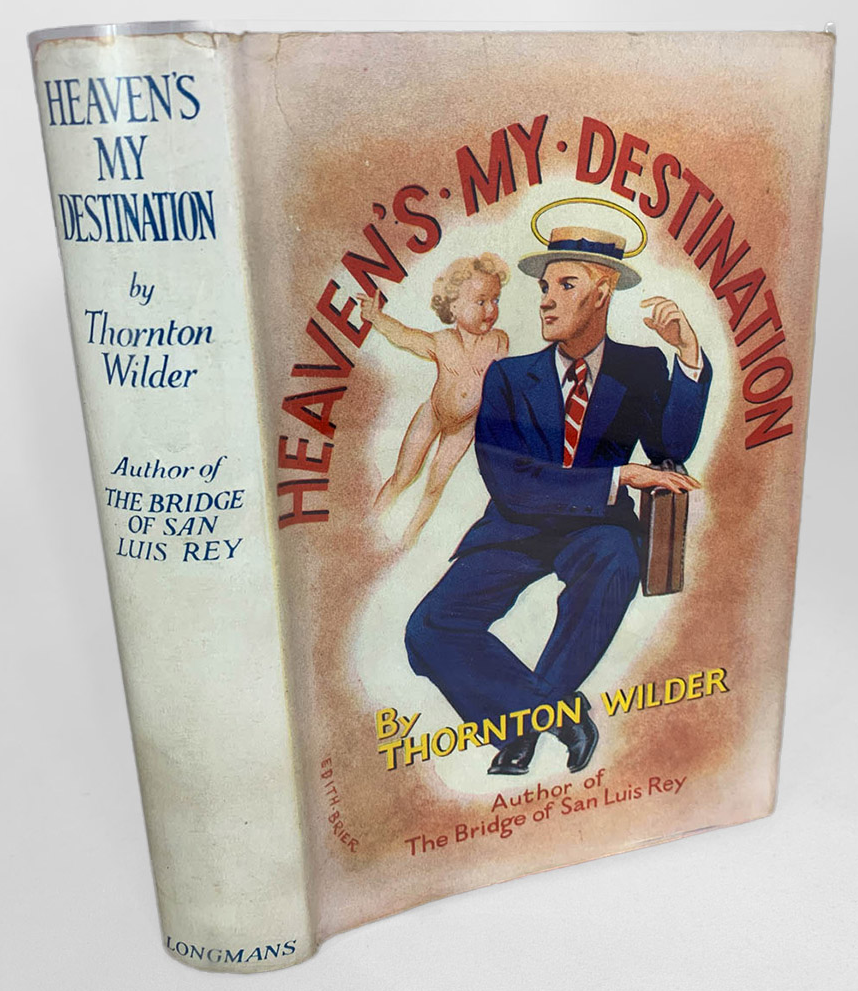
The book’s chapters have the old-fashioned “capitulations” where they begin with brief sentence fragments summarizing the action:
1 George Brush tries to save some souls in Texas and Oklahoma. Doremus Blodgett and Margie McCoy. Thoughts on arriving at the age of twenty-three. Brush draws his savings from the bank. His criminal record: Incarceration No. 2.
Our hero, “an earnest, humorless, moralizing, preachifying, interfering product of bible-belt evangelism,” is on a train to Wellington, Oklahoma. There is, of course, no such place, although there is a Wellington, Kansas and Wellston, OK would become a tiny stop along Oklahoma’s Turner Turnpike. Dragnet comes to mind: Ladies and gentlemen: the story you are about to hear is true. Only the names have been changed to protect the innocent.
George attempts to “save” an amiable man in the smoking car of the train. George inquires, “Brother, can I talk to you about the most important thing in life?”
The man stretches and responds, “If it’s insurance, I got too much. … If it’s oil wells, I don’t touch ’em, and if it’s religion, I’m saved.”
George has been trained to deal with such answers: “That’s fine. There is no greater pleasure than to talk over the big things with a believer.”
“I’m saved,” continued the other, “from making a goddam fool of myself in public places. I’m saved, you little peahen, from putting my head into other people’s business. So shut your damn face and get out of here, or I’ll rip your tongue out of your throat.”
Well, that got us off to a rollicking start. The novel features a few set pieces, and Wilder has fun with the age-old trope of a peddler’s roll in the hay with a farmer’s daughter, exploring the aftermath if the peddler were a religious idealist who had briefly strayed. The Ozark farmer’s daughter characters I recall from my youth included Daisy Mae in the strange comic strip Li’l Abner and Elly May Clampett in The Beverly Hillbillies, while in the 1980s Deep South there was Daisy Duke in The Dukes of Hazzard. I never found them relatable, so I appreciated that Wilder was more thoughtful in his portrayal, introducing a smart sister who could talk sense.
At the end of the novel, George has a crisis of faith, and that spills over into a mental and physical crisis. He confesses to a Methodist minister: “I’ve broken all the Ten Commandments, except two. I never killed anybody and I never made any graven images. Many’s the time I almost killed myself, though, and I’m not joking. I never was tempted by idols, but I guess that would have come along any day. I don’t say these things to you because I’m sorry, but because I don’t like your tone of voice. I’m glad I did these things and I wish I’d done them more. I made the mistake all my life of thinking that you could get better and better until you were perfect.”
However, Brush’s crises are resolved by a comedically trivial gesture from someone he never even met, which inevitably restores his faith and physical well-being, fluffing up the matted wool in his head.
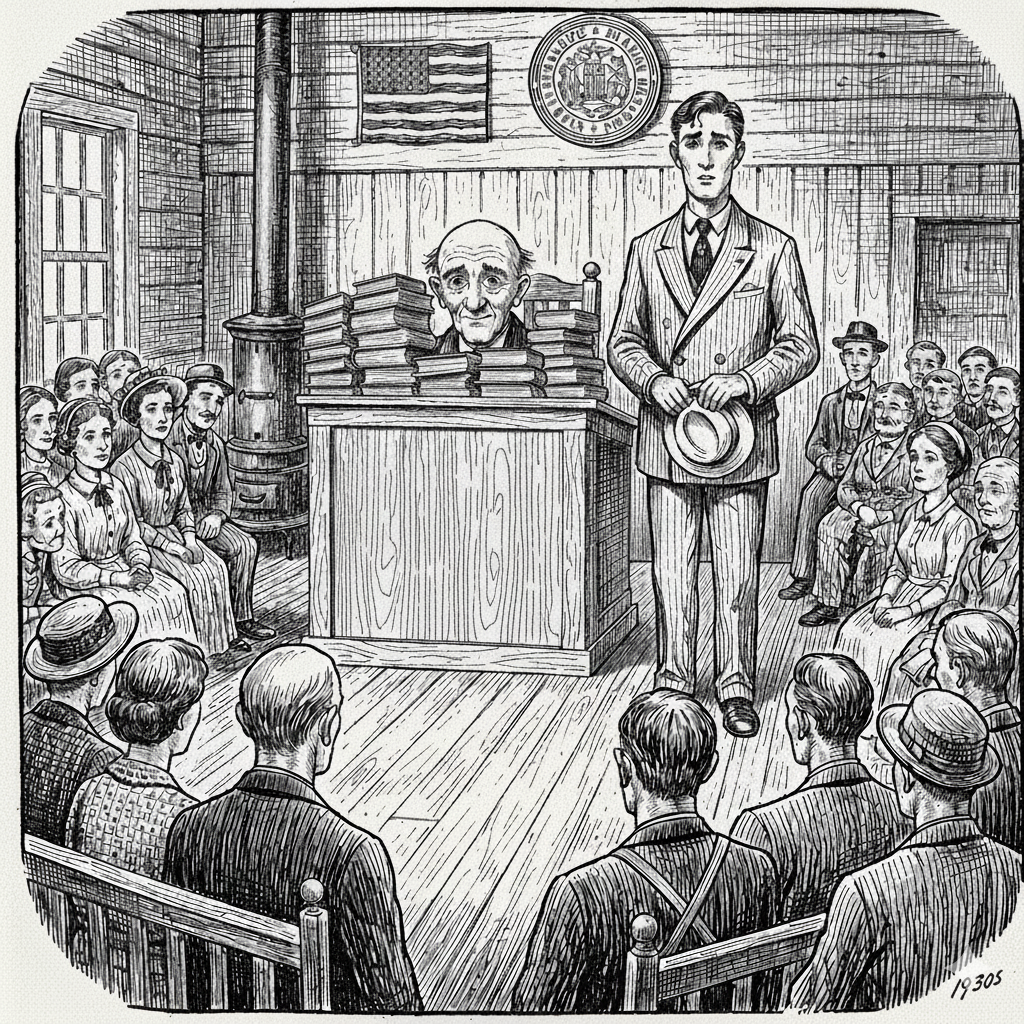
The best part of the novel, by far, is the courtroom scene with Judge Darwin Carberry. It is brilliantly sketched, with Wilder’s strengths as a dramatist coming to the fore, and yes, I noted the judge’s first name.
I particularly liked the jurist’s interaction with the idealist as he sets him free:
Judge Carberry put his hand on Brush’s shoulder and stopped him. Brush stood still and looked at the ground. The judge spoke with effort:
“Well, boy . . . I’m an old fool, you know . . . in the routine, in the routine. . . . Go slow; go slow. See what I mean? I don’t like to think of you getting into any unnecessary trouble. . . . The human race is pretty stupid, . . . Doesn’t do any good to insult’m. Go gradual. See what I mean?”
“No,” said Brush, looking up quickly, puzzled.
“Most people don’t like ideas.”
The Pedant Pronounces
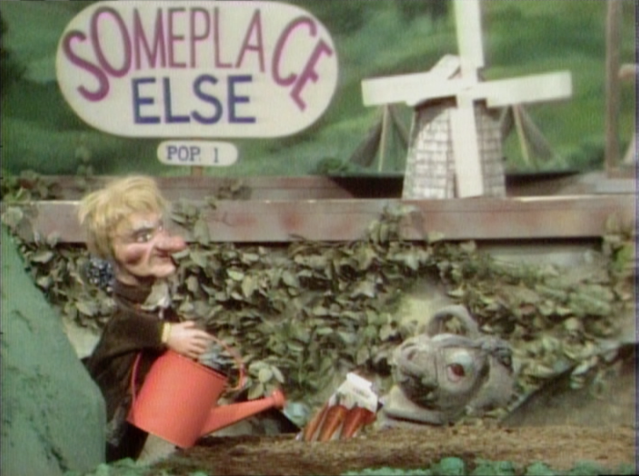
I am amused by how mispronunciations of Quixote are formalized by the adjective quixotic. I grew up with Mister Rogers’ Neighborhood, which included Donkey Hodie, an idealist who lived in a windmill. Part of the joke for adults would be that Don Quixote tilted at windmills, believing he was fighting giants, instead of living in them.
I pronounce Quixote as “kee-HO’tee” or sometimes “kee-HO-tay” although I have been told that in old Castillian it would be closer to “kee-SHO-teh” and I regard the English degradation into “quick-sot” as bizarre. Nevertheless, that weirdness afflicts quixotic, which is typically pronounced as “quicks-AW-tick” while logically it would be more like “kee-HO-tick” or “kee-SHO-tick” . . . but trying to convince folks to adopt those pronunciations would be, er, like tilting at windmills.































 Meador Manor
