
Mary Stewart was a lecturer in English at Durham University when she wrote her first book in the 1950s. She was prompted to finally take the leap and write a book after an ectopic pregnancy nearly killed her and led to her inability to have children.
“I’d always wanted to be a writer, but I suppose what really started me was losing an unborn child and being told I could never have another one. Something was needed to take the place of a family, which I’d always desperately wanted, and writing was the thing.”
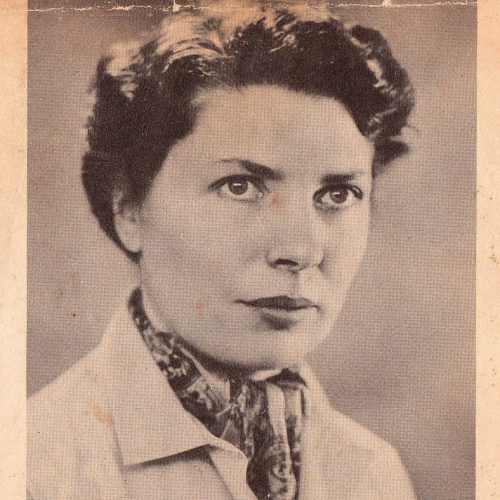
However, Stewart was a very private person, and receiving a 50-pound advance and a proof copy from publisher Hodder and Stoughton sent her into a panic.
“A novel is such an intensely personal thing,” she said. “I couldn’t stand the thought of thousands of eyes reading my private thoughts. I was terrified . . . it felt like walking naked down the street. I told Hodders to stop publication at once.”
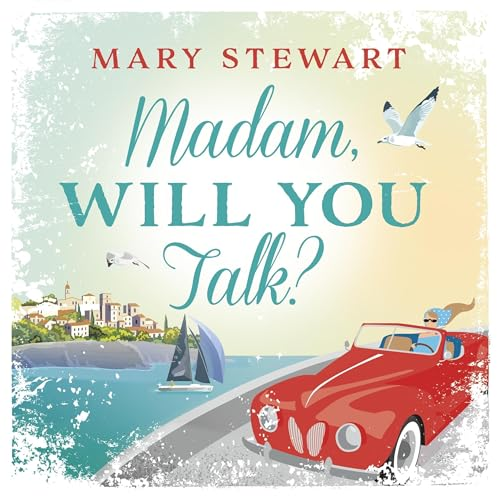
Thankfully, her book about a schoolteacher involved in a murder case in the south of France did get published as Madam, Will You Talk?, becoming the first of many bestsellers.
Stewart was also protective of her work. When she was sent back an edited version of her first novel, her niece reported, “She scribbled it out and said ‘My writing is better than your edits – please don’t edit my books if you want to publish them’.” They worked it out, as she remained with that publisher for her entire career.
According to her obituary in The Times, “Stewart travelled for several months a year around locations such as Damascus, the Greek islands, Spain and France, carrying tape recorders everywhere and talking to local people. . . . Each book would entail four drafts and she was as disciplined as the neat award-lined shelves in her study, working from 2pm after finishing household chores and breaking only to cook for and dine with her husband.”
Stewart demurred at classifying her novels into genres, saying, “I’d rather just say that I write novels, fast-moving stories that entertain. To my mind there are really only two kinds of novels, badly written and well written. Beyond that, you cannot categorise . . . Can’t I say that I just write stories? ‘Storyteller’ is an old and honorable title, and I’d like to lay claim to it.”
I enjoyed reading The Moon-Spinners a few weeks ago, as a welcome storytelling respite after an overindulgence in literature. It read to me like a much more adult and literary version of a Nancy Drew mystery, with deft prose, good pacing, and action. As a youngster, I collected and repeatedly re-read the original Grosset & Dunlap hardbacks of The Hardy Boys mysteries, and a spinster aunt then let me consume her collection of Trixie Belden, Dana Girls, and Nancy Drew stories.
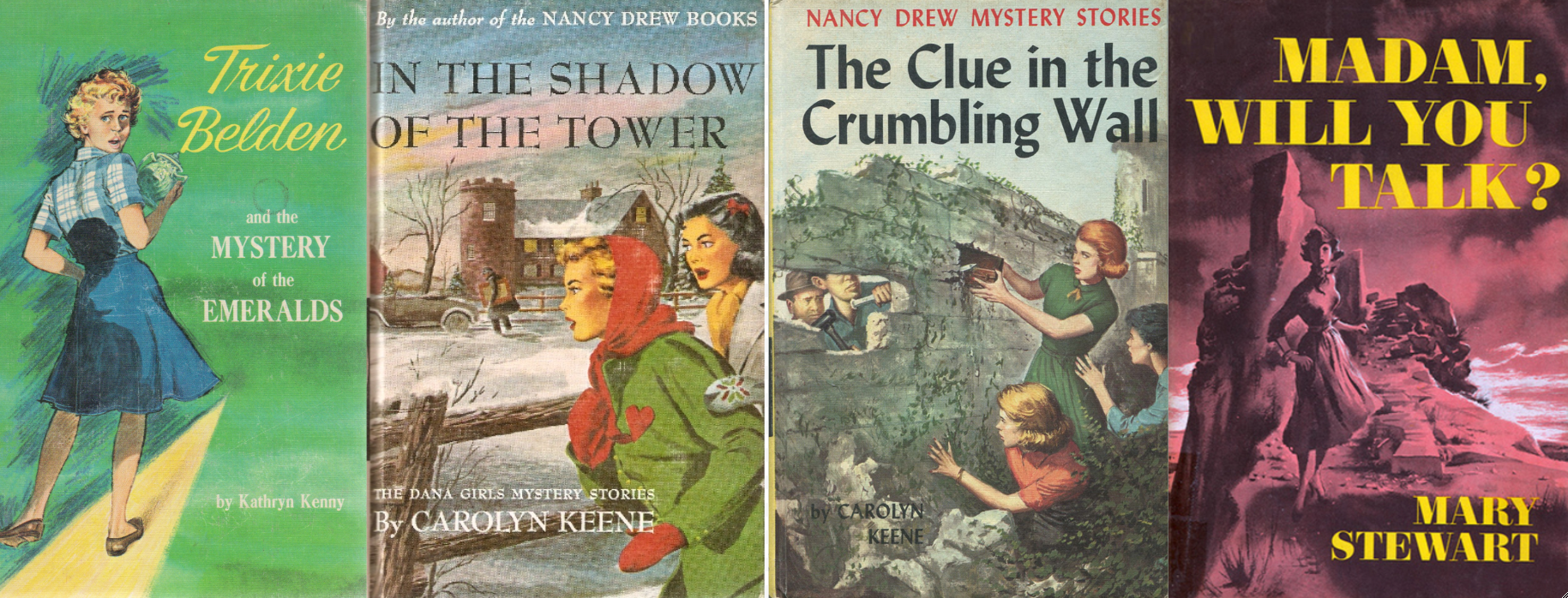
Stewart was more talented, and allowed to be far more painstaking, than the ghostwriters of the Stratemeyer Syndicate like Leslie McFarlane and the intrepid Mildred Wirt Benson, who had to dash off children’s texts based on preset outlines for flat fees. Stewart was especially adept at describing environments and evoking a sense of place, unafraid of making frequent literary allusions drawn from her studies of English literature. That habit fed my insatiable curiosity, which I evidently shared with the lady of Madam, Will You Talk?
In the first chapter, the protagonist declared, “I get on well with cats. As you will find, I have a lot in common with them, and with the Elephant’s Child.”
The what? Context told me she likely meant either curiosity or resiliency, and you know that I couldn’t resist looking it up. I’ll share with you my findings to illustrate the games of ping-pong I sometimes play.
ping
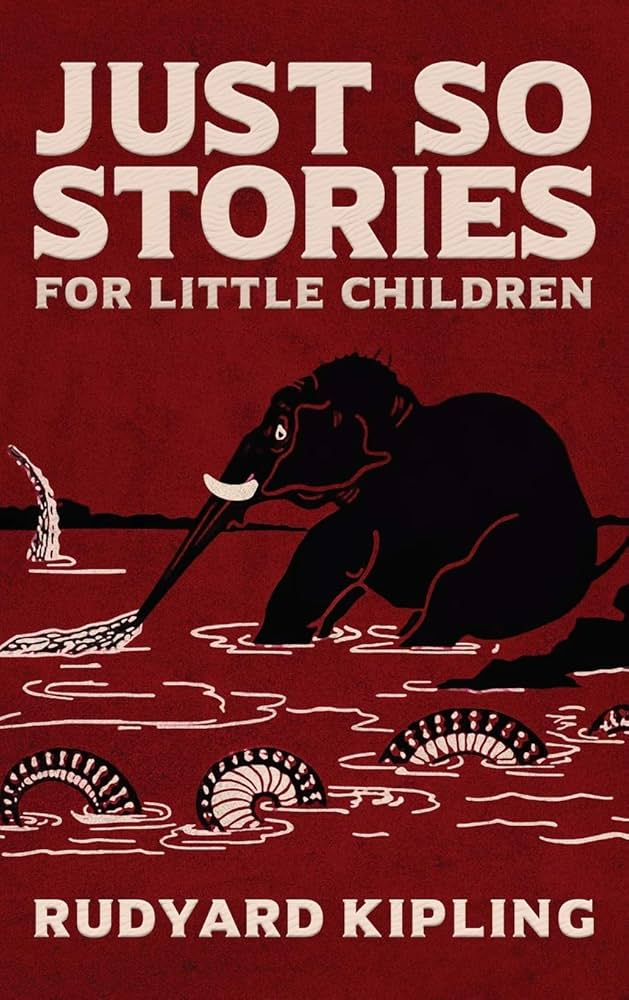
The Elephant’s Child turned out to be one of Rudyard Kipling‘s stories in Just So Stories from 1902 about how a very curious young elephant acquired his trunk. I read the story in question and suppose that Mary Stewart née Rainbow and many other British children were familiar with it back in the day. Kipling’s book was a collection of what had originated as bedtime stories for his young daughter, who insisted on them being told “just so” and who had tragically died of pneumonia in 1899 at age six.
pong
Kipling is far removed from me both culturally and temporally, so if I had ever read anything by him, it was in some forgotten school literature book. In my lookup, I noticed that Kipling also wrote the poem “Gunga Din”. I’d seen references to that character over the years with no understanding of its meaning beyond it involving the British Raj. So I read that poem as well, not caring for it one bit, and I was mightily annoyed to find that in it “Din” is rhymed with “green” and “spleen”, not “pin” as I’d presumed and heard said. Yet another reason to trace things back to their source.
ping
I vaguely knew Cary Grant had starred in a movie oh-so-loosely based on “Gunga Din”, and I watched the movie’s trailer, curious as to how they pronounced the name. The trailer didn’t include it, but I found more excerpts that reassured me.
pong
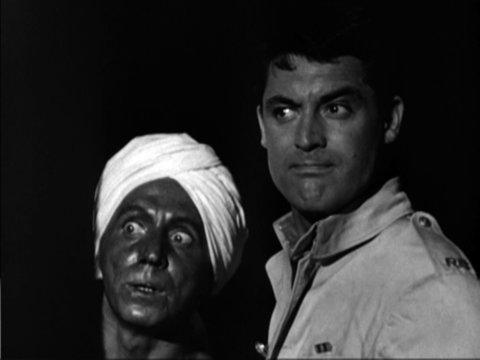
I was surprised to see New York Jew Shalom “Sam” Jaffe playing the Indian water bearer in brown makeup, which struck me as appropriately problematic for a movie based on a poem by the same guy who wrote “The White Man’s Burden” exhorting the United States to colonize the Philippines.
point
And then I bounced back into Stewart’s tale, all the better for my game break. The first chapter also included, in rapid succession, references to Nighug at the root of Yddrasil, the paintings of Ma Yüan, and how a tree’s shadow “dissolved into the image of a ragged witch’s besom”, from which I learned that a besom is the old-fashioned broom constructed from a bundle of twigs bound to a pole.
Mind you, the writing flowed well, and context would have allowed me to flow past such references were I not an elephant’s child. Stewart’s writing talent is illustrated by this description of a beautiful woman’s outfit: “The simple cream dress she wore must have been one of Dior’s favorite dreams, and the bill for it her husband’s nightmare.”
Stewart’s sharp mind is also illustrated by mention of how, at age 97, she astounded lunch guests by reciting 23 verses of The Rime of the Ancient Mariner, and when one of her niece’s friends quoted from Beowulf in English, Stewart replied in fluent Anglo-Saxon.
As I finished the first chapter, I pondered the book’s title. What was that a reference to? Why, an old Cheshire song: I Will Give You the Keys of Heaven. Ugh, although I did enjoy this in the fine print: “In many the lady’s cupidity is at last excited by some especially magnificent offer, and, on her consenting, the man refuses to have anything to do with her.”
For what it is worth, Stewart’s original title for the novel was Murder for Charity, and one manuscript had Decoy to Danger scratched out and replaced with Madam, Will You Talk?, with lyrics from it used to begin chapters 15-17.
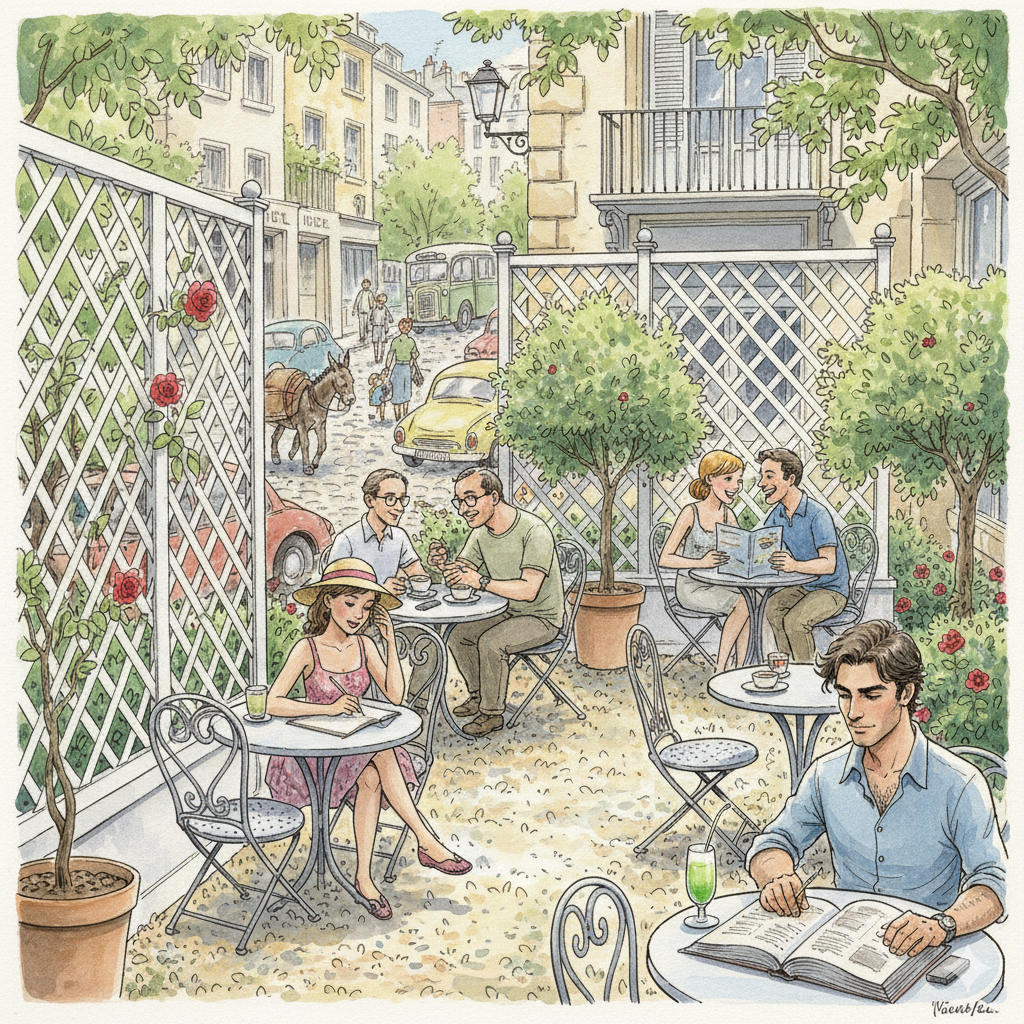
True to form, her second chapter initiated with a quote from Chaucer, and the vacationing schoolteacher, serving as first-person narrator, playing an internal guessing game about people populating a hotel courtyard. She noticed a man sitting alone, “sipping a bright green drink with caution and distrust” who was reading T.S. Eliot’s Four Quartets, which the internet told me explores the nature of time, spiritual redemption, and the struggle for meaning. Here is what Google Gemini made of the scene:
I laughed when the schoolteacher’s gossiping friend entered and said of the man with the poetry book: “His name is John Marsden and he is almost certainly a Boy Scout and a teetotaller as well.”
When asked why on earth she would think that, she replied, “Because any lonely male I ever get within reach of these days seems to be both, and to eschew women into the bargain. Is that the right word, eschew?”
My guess was that the schoolteacher would end up in a romance with Mr. Marsden. Before the end of Chapter 2, about 10% into the story, the travelogue was underway with a walk into the central square of the medieval walled city, and the plot began to unfold with mention of a jealous and possibly murderous husband on the loose, looking for some of the guests we’d met at the hotel. I was glad to see honest mentions in the work of beggars, heat, and less salubrious areas which made the town seem real and not something gussied up with an Instagram filter.
The suspense ratcheted up about 1/4 of the way into the book, and as the action built, the literary allusions were less noticeable, something I’d also noticed in Stewart’s The Moon-Spinners, which was published seven years later. I laughed when Marsden was spied again reading poetry one morning in the courtyard:
‘At breakfast!’ said Louise in an awed voice. ‘A man who can read poetry at breakfast would be capable of anything.’
However, there had yet to be any romance developing for the lead character, with Marsden seemingly involved with another woman, so I was beginning to doubt my initial guess. Half-way through the novel, after an extended and well-written chase, the schoolteacher took an unexpected swerve in romance that I didn’t find at all realistic, but it did make the story far less predictable.
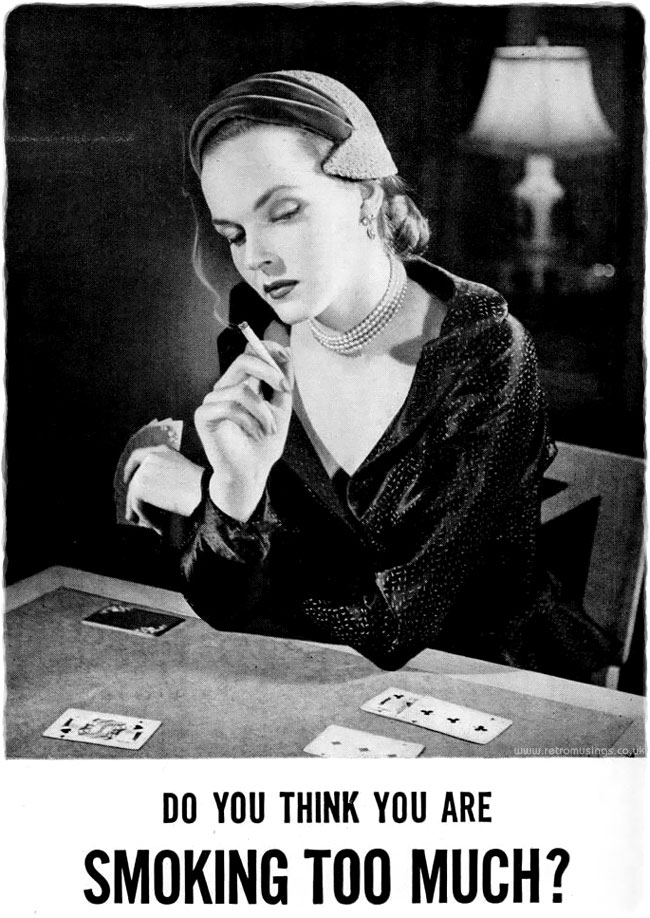
Most of the characters in the novel smoked cigarettes. I wonder if today’s authors, when writing about the mid-20th century, would make the effort to include its pervasiveness. About half of the adult population in France was smoking in the 1950s and 1960s, which declined to a bit above one-fourth by the 2020s. About 42% of adults in the United States were smoking in 1965, and that has declined to about 11%, with about 7% vaping with electronic cigarettes. Recently my wife and I went to a show that was held at an event center in one of the many casinos in Oklahoma, and she was struck by the smell of cigarettes that pervaded the gaming areas. What was once quite commonplace has become a rarity.
The story remained fast-paced, with fun twists and turns. I was struck by Stewart’s evocative prose in conveying a sense of speed and excitement.
The wind of our own speed beat against us, whining along the great bonnet and clawing at the wind-screen, but I could tell from the drift of the high clouds against the starlight that the upper air, too, was alive. The moon had vanished, swallowed by those same clouds, and we raced through a darkness lit only by faint stars, save where the car’s great lights flooded our road for what seemed half a racing mile ahead. And down that roaring wedge of light she went, gathering speed, peeling the flying night off over her shoulder as a comet peels the cloud. Along that rushing road the pines, the palisaded poplars, the cloudy olives, blurred themselves for an instant at the edge of vision, and were gone. The night itself was a blur, a roar of movement, nothing but a dark wind; the streaming stars were no more than a foam in our wake.
I enjoyed Stewart’s red herrings, although the first-person narrative required that the novel’s denouement spend awhile tying up loose ends and the plot relied on too many coincidences, with characters tripping upon each other with abandon.
Stewart was definitely no Christie or Pargeter, but she created light confections that blended mystery, suspense, and romance. I look forward to more of her tasty treats.







My mom and I read Mary Stewart and Daphne du Maurier (sp?) And Charlotte Bronte. Your posts have brought up great memories. Thanks.
I’m so glad! I’m looking forward to my retirement in the summer of 2026 when I can relax and enjoy more reading, including listening to more audiobooks while out walking.