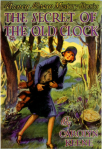
One of the first female authors of detective fiction was America’s Anna Katharine Green. She is now nearly forgotten, but I loaded some of her works onto my Kindle and read her first novel, which was a big hit almost 150 years ago.
Anna Katharine Green’s 37 books were published between 1878 and 1923, so they are all now out of copyright. I discovered that Standard Ebooks had four of them, while Project Gutenberg had 41 of her works, including some story collections. In comparing the sources, the Project Gutenberg version of her first novel included some floorplans and other illustrations that Standard Ebooks had omitted. So I read PG4047-IMAGES-3, which is the 4,047th eBook at Project Gutenberg, and is much better known as The Leavenworth Case: A Lawyer’s Story.
The Leavenworth Case
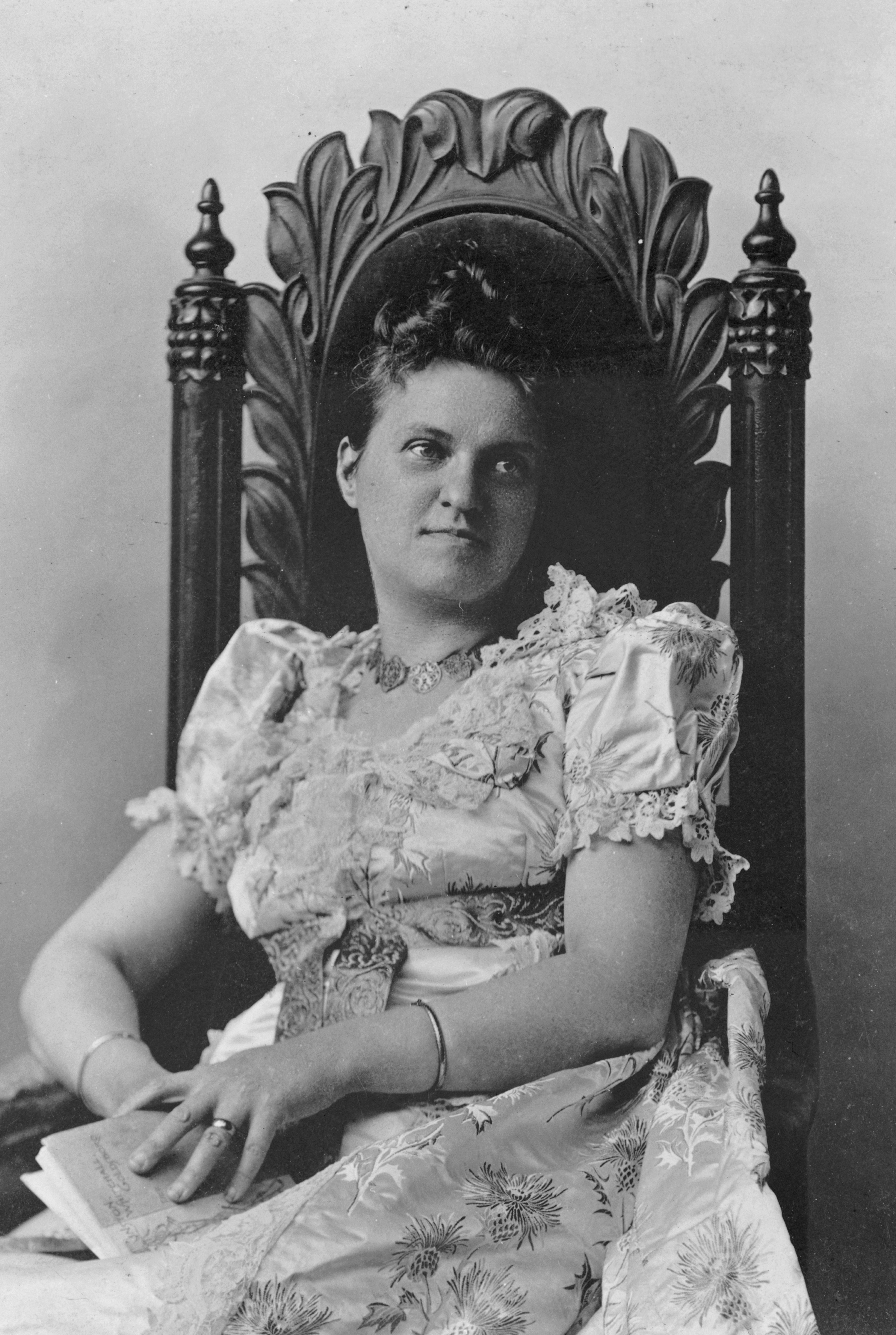
Green’s first novel was published in 1878 when the diminutive, plain, and sheltered woman was 32 years old. It became a hit, with George P. Putnam’s Sons selling hundreds of thousands of copies, and the book being pirated by no less than three other publishers.
Green created what became well-worn tropes in mystery fiction, including the nosy spinster Amelia Butterworth, who inspired Christie’s later Miss Marple. Green also created a teenage detective, Violet Strange, echoed in Nancy Drew et al., along with various plot devices. Her work had faded a couple of generations later in the Golden Age of detective fiction from 1920 to 1940, but her influence was both apparent and acknowledged. Sadly, Green is now nearly forgotten, and I read mysteries for decades before coming across any mention of her work.
T.S. Eliot was evidently an avid consumer of mystery fiction, but he disparaged The Leavenworth Case as “simply popping over with sentiment” in a manner that did not afflict Doyle’s later Sherlock Holmes tales, which did not debut until after Green had published it and three additional novels featuring detective Gryce.
I began the book immediately after finishing Louise Penny’s A Fatal Grace, the second of her Chief Inspector Gamache series. I had been struck by the modernity of that tale, with its sometimes over-sharpened wit and opinionated sensibilities, contrasting with the older tales I was used to from Edith Pargeter (usually writing as Ellis Peters), Agatha Christie, and Mary Roberts Rinehart. I have found Rinehart, the oldest of those authors, to also be the fustiest, so I wondered how dated The Leavenworth Case would read, nearly 150 years after its debut.
I greatly enjoyed the book’s introduction of detective Ebenezer Gryce of the New York Metropolitan Police Force, who would appear in a dozen more of her novels by 1917:
I shuddered—“the murderer must have been in the house all night.”
Mr. Gryce smiled darkly at the doorknob.
“It has a dreadful look!” I exclaimed.
Mr. Gryce immediately frowned at the doorknob.
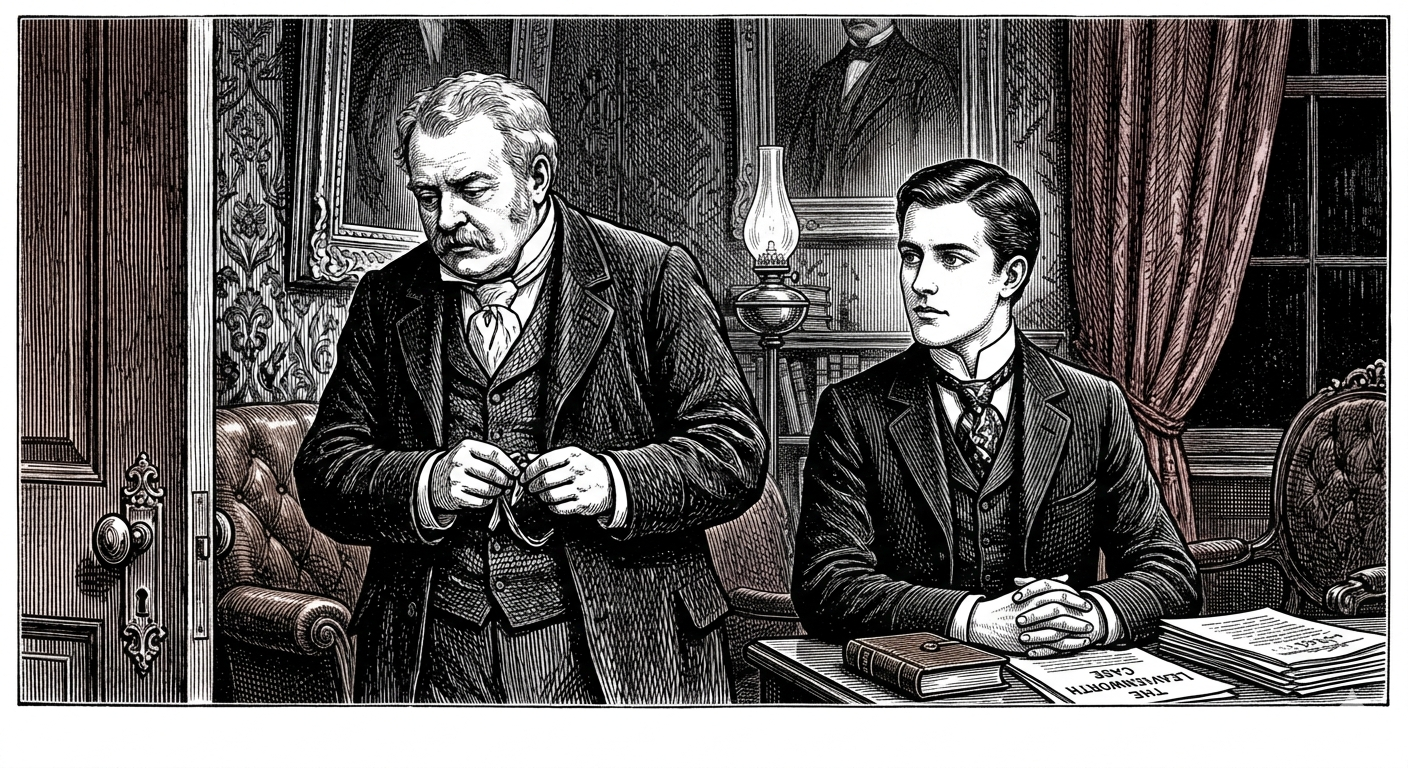
And here let me say that Mr. Gryce, the detective, was not the thin, wiry individual with the piercing eye you are doubtless expecting to see. On the contrary, Mr. Gryce was a portly, comfortable personage with an eye that never pierced, that did not even rest on you. If it rested anywhere, it was always on some insignificant object in the vicinity, some vase, inkstand, book, or button. These things he would seem to take into his confidence, make the repositories of his conclusions; but as for you—you might as well be the steeple on Trinity Church, for all connection you ever appeared to have with him or his thoughts. At present, then, Mr. Gryce was, as I have already suggested, on intimate terms with the doorknob.
“A dreadful look,” I repeated.
His eye shifted to the button on my sleeve.
“Come,” he said, “the coast is clear at last.”
I immediately had a feeling I would like Ebenezer Gryce. His given name of course elicits memories of Scrooge from Dickens’ 1843 A Christmas Carol, and that led me to wonder how common it once was as a first name. One source claimed that in 1840 it was the 68th most popular name, but I was sad to see 11 fictional Ebenezers in the Wikipedia page on it as a given name, but not Green’s creation. So I added him to make a dozen. I’ll admit that corruption of the Hebrew אֶבֶן הָעֵזֶר from 1 Samuel sounds dreadful to my ear, but perhaps that is mainly due to the association with Scrooge.
This debut novel is the only one of Green’s works to have a meta-ranking at The Greatest Books, coming in at 5,193 versus 191 for Christie’s And Then There Were None with eight additional Christie works ranking above Green. As for Edith Pargeter, better known by her pen name of Ellis Peters, her A Morbid Taste for Bones, the first of the Brother Cadfael books, ranks at 4,220 while her non-mystery By Firelight novel ranked at 4,986.
The novel has twists and turns, deftly using circumstantial evidence to throw suspicion on one character, then another, and another. The revelation of the actual murderer was a surprise, with a lengthy explanation and confession.
The age of the work was most apparent in the class-conscious behavior of most of the characters. It was indeed melodramatic, but multiple well-drawn characters and the fun idiosyncrasies of detective Gryce kept me engaged. I enjoyed the book, and I plan for my next Green book to be the eighth Gryce novel, That Affair Next Door, so I can experience the character of Amelia Butterworth.
Mystery author Patricia Meredith has compiled interesting information on Green, and I enjoyed her presentation about “The Mother of the Detective Novel” for the Spokane Public Library.
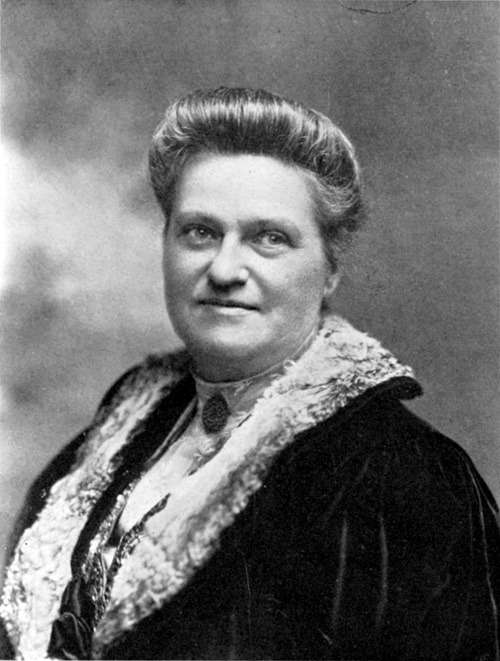
Meredith’s timeline of Green’s life led me to purchase from AbeBooks a used hardback of Patricia Maida’s biography of her, Mother of Detective Fiction. I have tucked it away as a reading possibility if I end up liking more of her works.