
From now until 2073, any books published over 95 years earlier are public domain under U.S. copyright law. So in 2026, anything published in 1930 or earlier can be freely distributed. I’ve taken advantage of three different services to freely access such works, and I’ll share a bit of history on each of them.
To illustrate how their products differ, I include examples from each service of portions of The Leavenworth Case from 1878, the first mystery novel by Anna Katharine Green, who was the Mother of the Detective Novel. That will illustrate, pun intended, their different handling of relevant additions to the text in its original 1878 print edition. I eventually read and reviewed the work.
Project Gutenberg
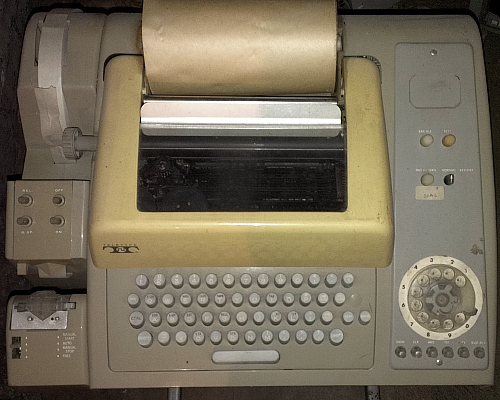
Back on July 4, 1971, Michael Hart of Urbana, Illinois was given a free printed copy of the U.S. Declaration of Independence. He had access to a Xerox Sigma V mainframe at the Materials Research Lab at the University of Illinois at Urbana-Champaign (UIUC), and he was inspired to sit at a teletype station and manually type in the Declaration’s text for transmission via electronic mail to the people he knew about via the Internet’s predecessor, ARPAnet.
That simple act led to 20 years of evangelizing the concept of electronic books, with Hart compiling 100 titles by 1991, including historical documents, reference and literary works, and more. Hart founded Project Gutenberg, which by 2026 had grown to over 75,000 free eBooks, mostly of works that had fallen out of copyright.
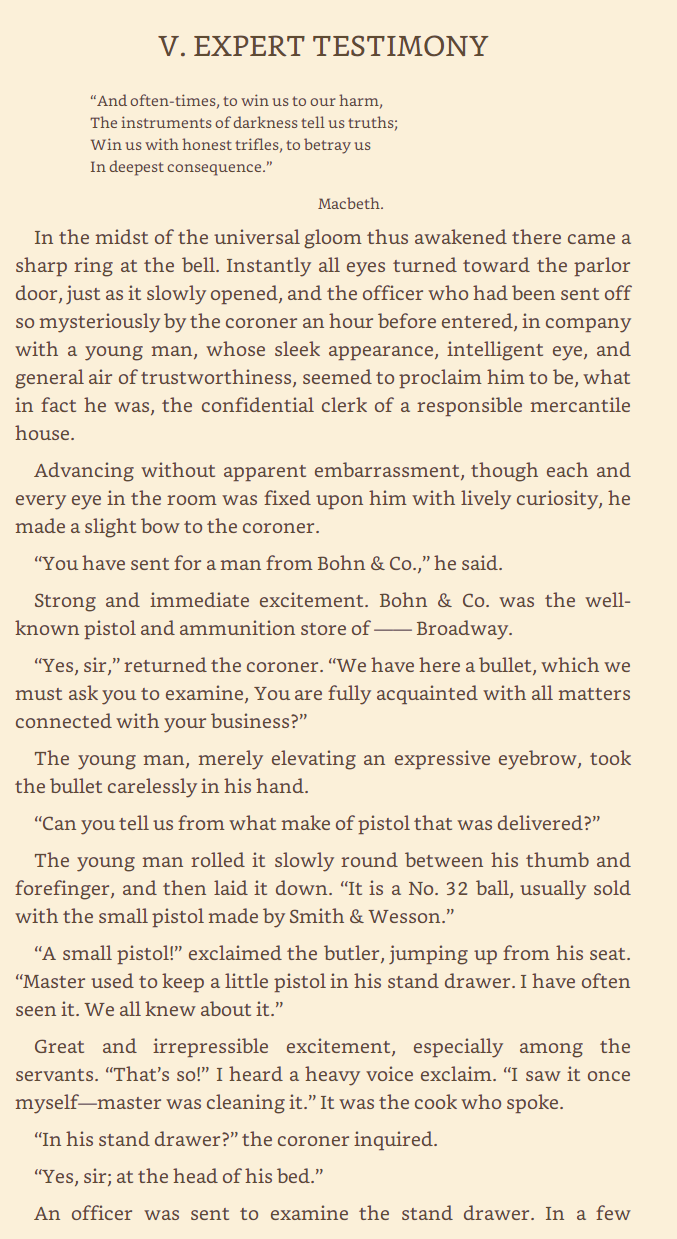
Thousands of volunteers digitized and proofread the eBooks, with digital files in various formats. While one can go to their website and read books there in a web browser, they also offer files in the EPUB3 format, and one can use Amazon’s online Send to Kindle service to have it convert that and add the resulting book to your eBook library, making it readable on dedicated Kindle devices as well as free Kindle apps on smartphones, tablets, and personal computers.
I’ve shown how a Kindle Windows app rendered Project Gutenberg’s eBook of The Leavenworth Case, which was released in 2003 and most recently updated in 2022. It took a minute or two for the EPUB3 file to enter my Kindle library via the Send to Kindle service.
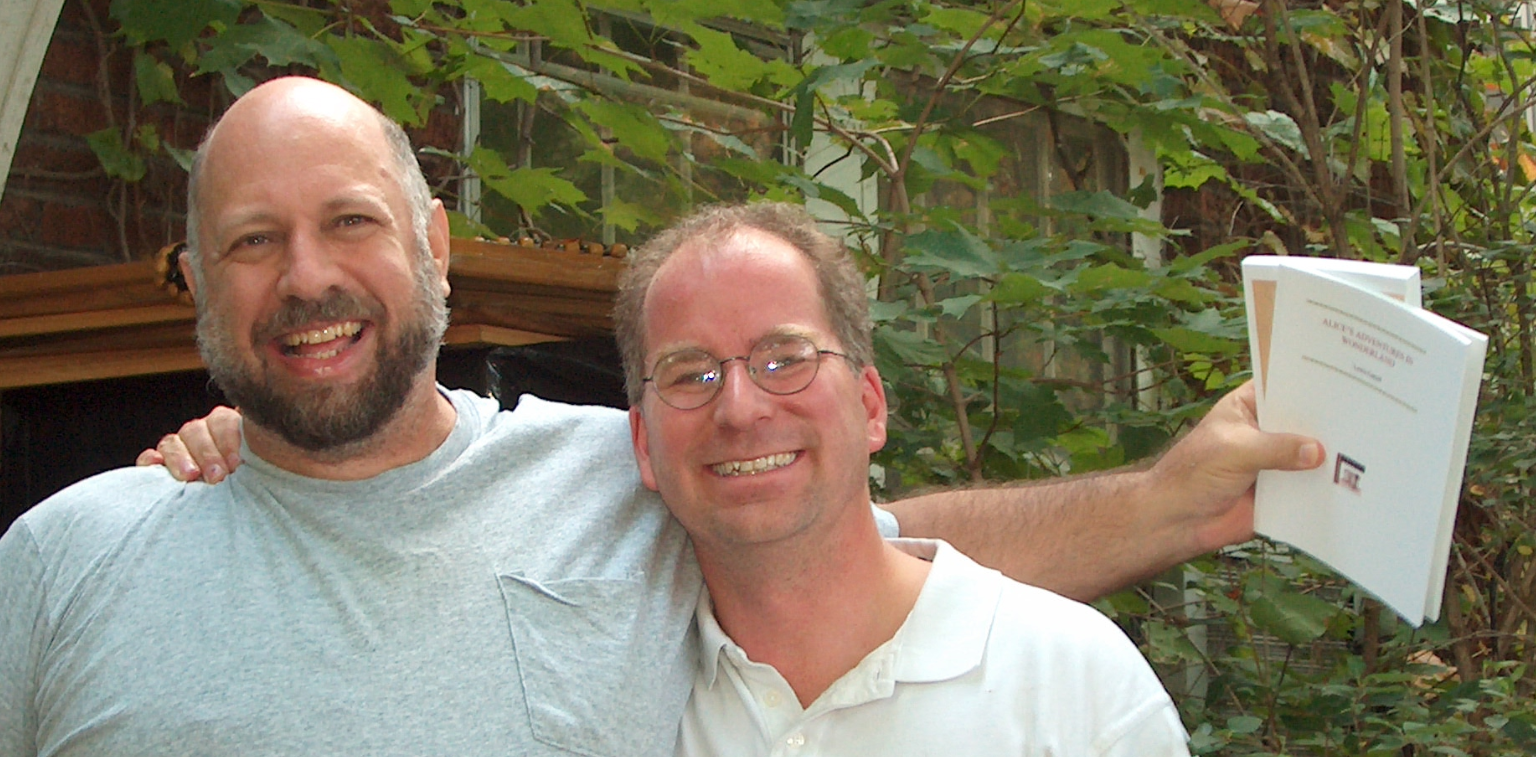
Michael Hart was a friend and inspiration to Brewster Kahle, who founded the Internet Archive in 1996, which began as a preservation of web pages but evolved into a huge collection of digitized material.
The Internet Archive
The Internet Archive provides free access to collections of digitized media including websites, software applications, music, audiovisual, and print materials. Its emphasis for public domain books is on scanning versus manual typing and proofreading into eBooks. It acquires most of its materials from donations, and materials not in the public domain are sometimes lent to patrons worldwide one at a time. However, a negotiated judgment in 2023 barred the Internet Archive from digitally lending copyrighted books for which electronic copies are on sale.
Its Open Library has the full texts of approximately 1.6 million public domain books, out of more than 5 million in the main texts collection. Below is a scan of 1902 London reprint of The Leavenworth Case, which was scanned in 2008 with funding from Microsoft. The Internet Archive does not offer an eBook version of that work, but it does have multiple different scans from various publishers across the years.
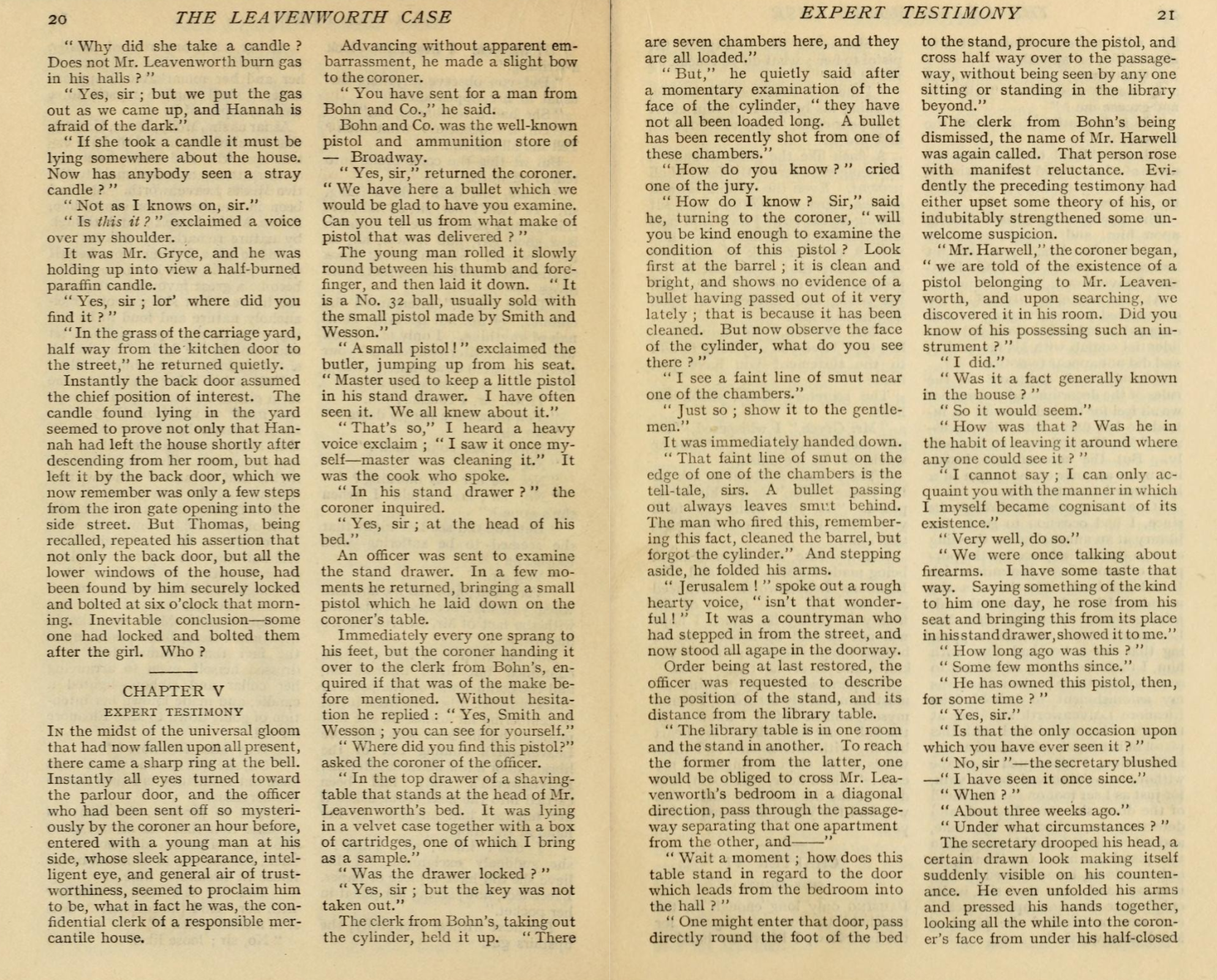
If you examine the scan I show here and compare it to the eBook, you’ll notice that the London reprint lacks the excerpt from Macbeth which Green opened Chapter V with in the original book. Old hardcopy reprints often suffer from such omissions.
Standard Ebooks
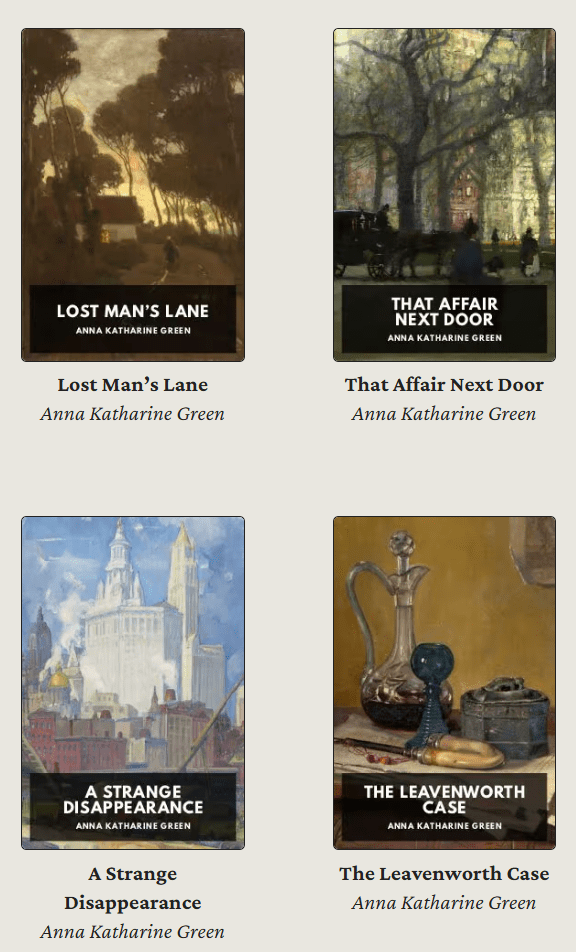
Greg of Another Bibliophile Reads recommends the releases of Standard Ebooks over those from Project Gutenberg, as they are supposed to be more carefully curated and formatted.
Alex Cabal is their Editor-in-Chief, and the service is a volunteer-driven effort that focuses on consistent design and typography. It boasts the use of careful typesetting, cover images, and title pages following a consistent style guide. It began in 2015, and by April 2026 they had about 1,400 titles.
Their preference is that one manually load their AZW3 files and optional cover thumbnails onto a dedicated Kindle device using a USB cable. I did just that with my Mac Mini, having to find a compatible cable, download and use a Send to Kindle application for MacOS I found at amazon.com/connectmykindle, loading the AZW3 files into my Kindle Paperwhite’s documents folder and the associated cover thumbnails into its system/thumbnails folder.
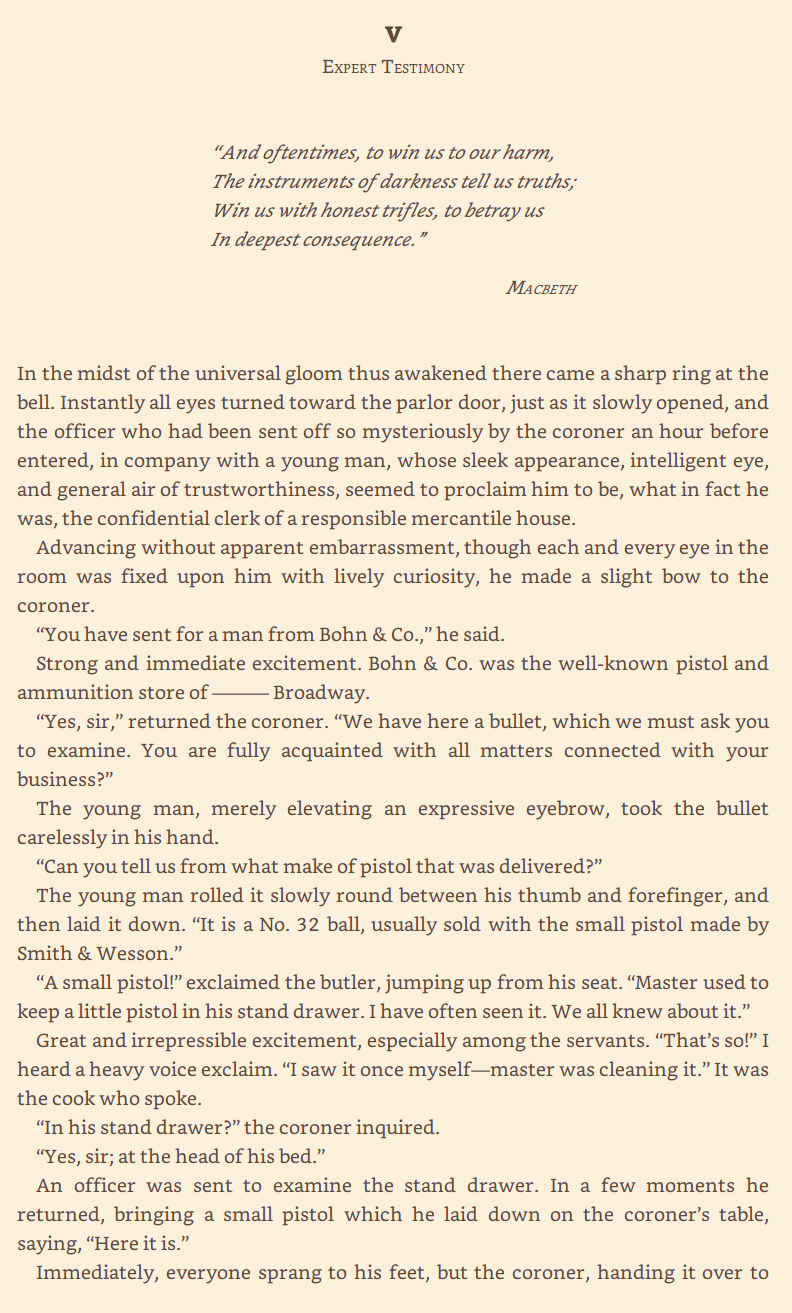
The end result was nice, but I found that downloading the EPUB3 version of The Leavenworth Case from them for use with Amazon’s online Send to Kindle service also worked fine. The few graphics were not as nice that way, but the text looked good, and more importantly to me, it was then available across all of my Kindle apps as well as the Paperwhite, with everything kept in sync with Amazon’s Whispersync service.
Various Shortcomings
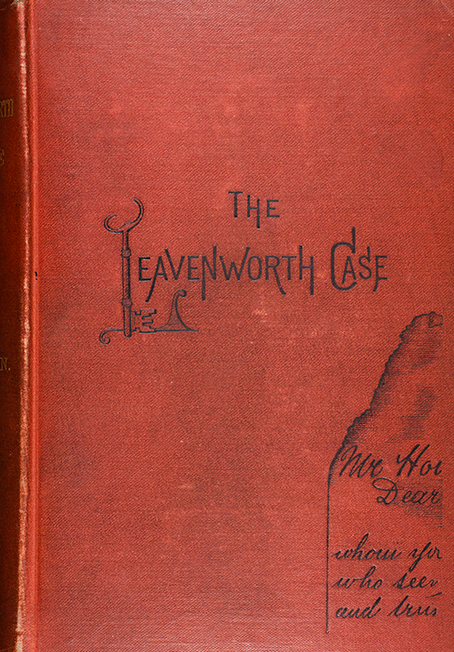
The different versions of the book differ in some other more significant ways, however. In its original edition, there were a couple of floorplans and an illustration of strips torn from a letter. The latter was interesting enough to earn a spot on the cover of the first edition, and the contents of that letter, with blanks for the missing portion, was included in the text of the book.
Floorplans are particularly helpful in some mystery tales, and several, but not all, of the scans of different editions at The Internet Archive did include them. However, the Standard Ebook version, which is supposed to reflect more careful preparation, omitted that entirely in both the AZW3 and EPUB3 versions. The Project Gutenberg EPUB3 version did include the floorplans, labeling them as footnotes.
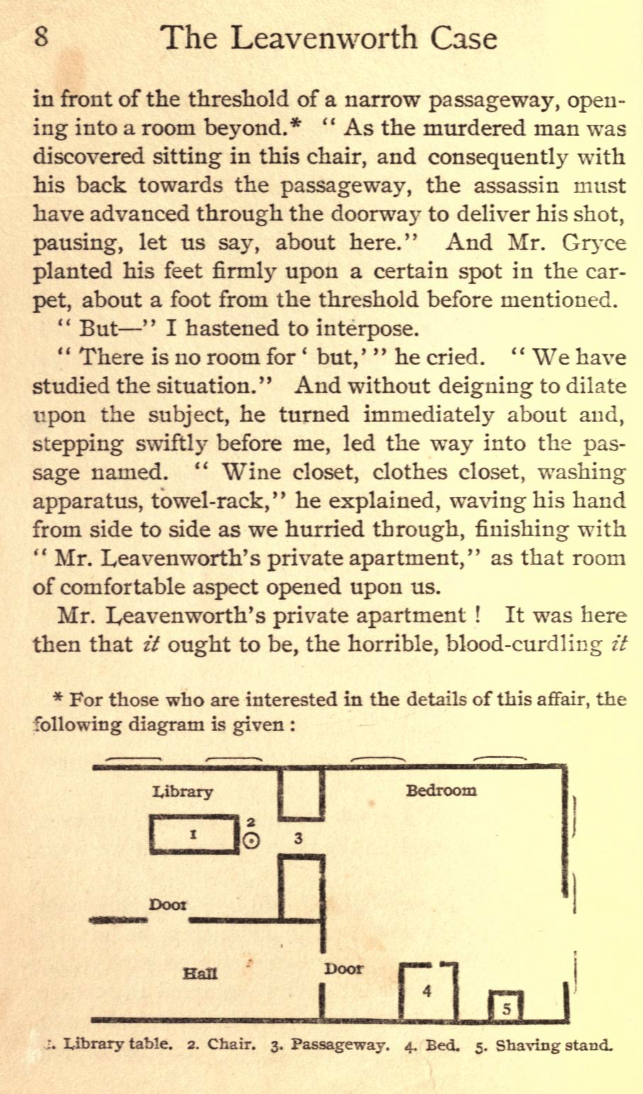
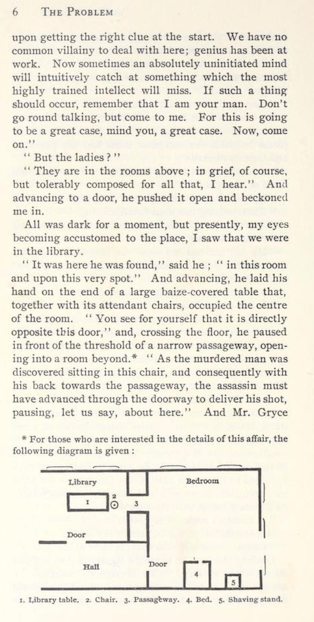
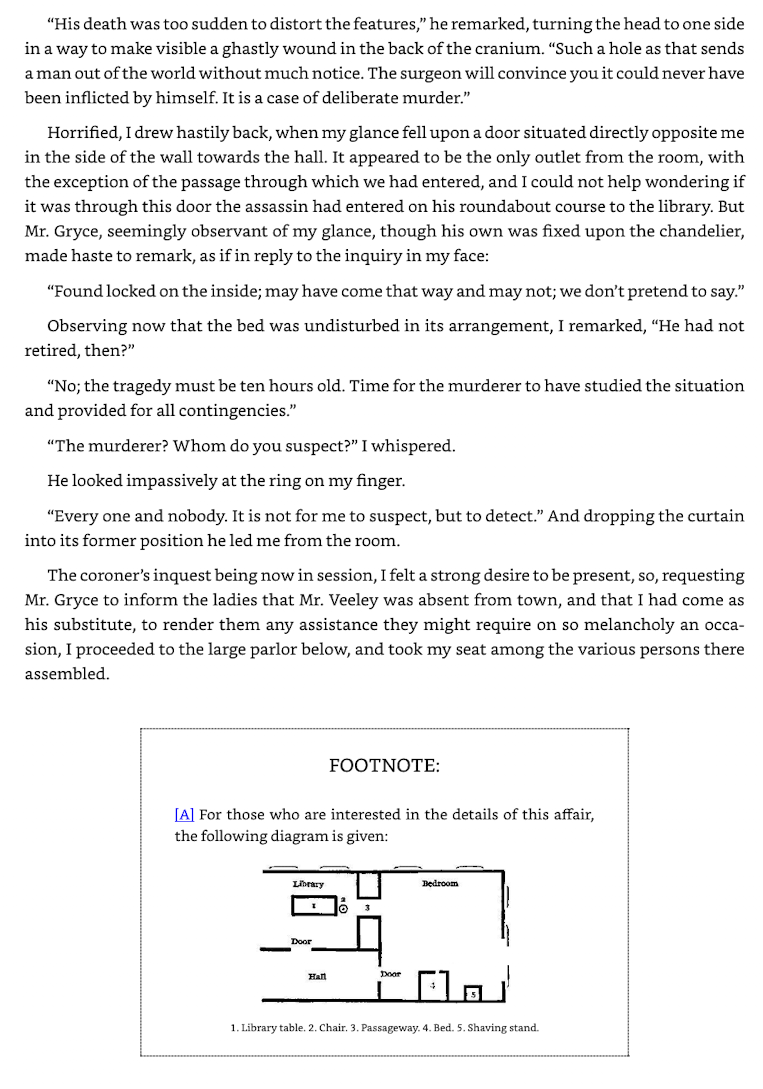
At least one scan at the Internet Archive preserved the illustration of the scraps of letter.
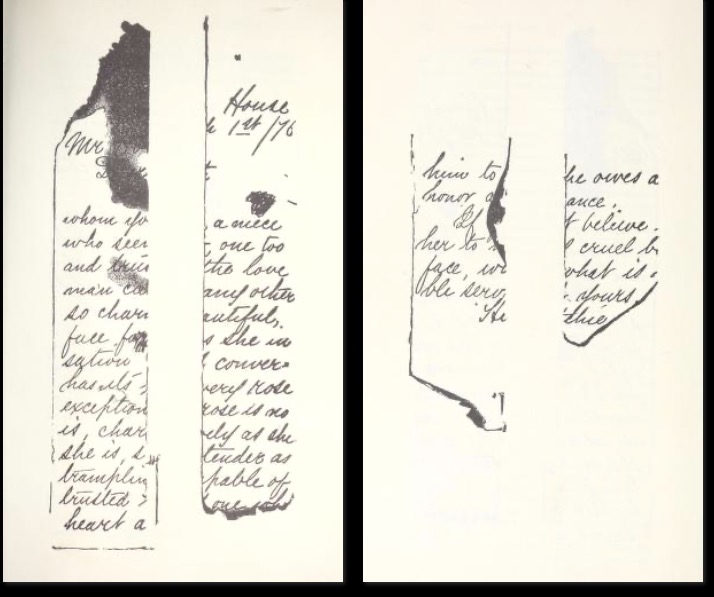
However, the Project Gutenberg edition let me down in that case, omitting that illustration while including others, and its reproduction of the text version, with its many dashes, was as unimpressive as it had been in the print versions.
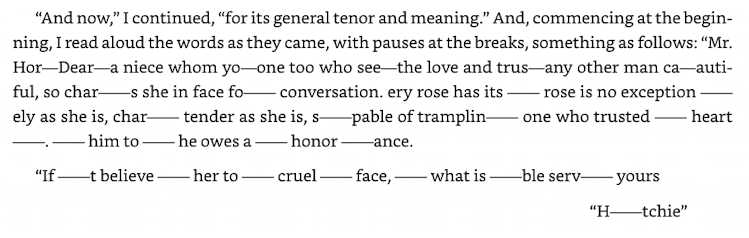
The Standard Ebooks edition had similar shortcomings, but it did have better typesetting.
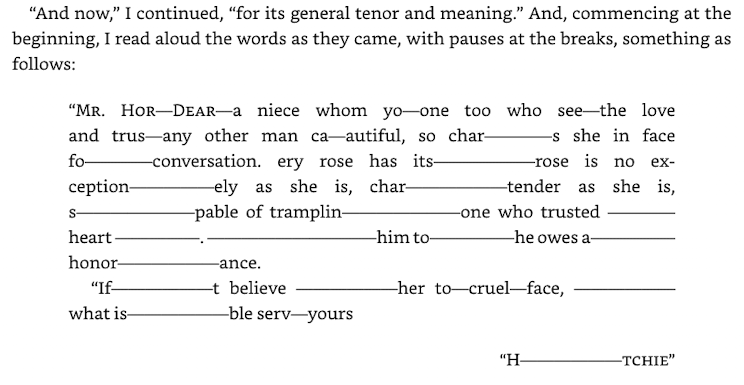
The typeset versions are far less evocative than the original illustration, so in this case the Internet Archive scans would win hands down, save that there are multiple scans of the book and it isn’t all that easy to distinguish them. Plus you can’t read those scans on a Kindle, but instead must use a web browser with the many limitations that brings.
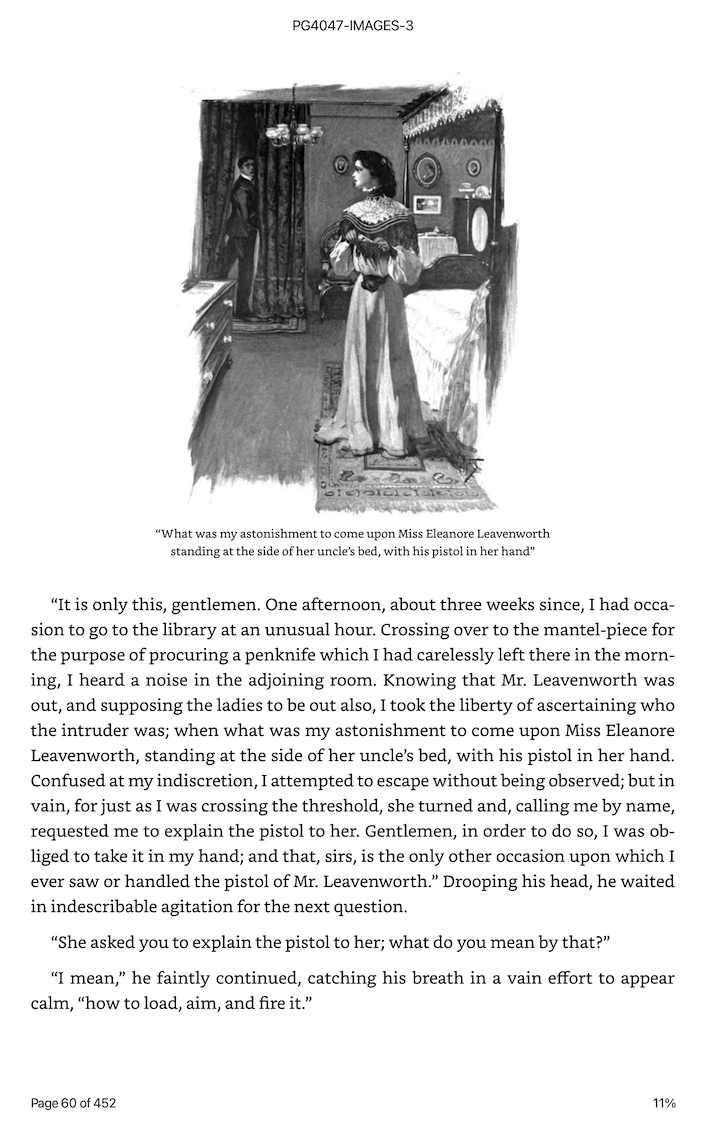
Another interesting difference was that the only version I came across with illustrations of scenes was the Project Gutenberg one. I liked having eight illustrations scattered through the text, even if they weren’t particularly well done, but what a shame that they bothered to include illustrations while omitting showing the torn letter.
A downside to the Project Gutenberg edition is also visible here. In the Kindle app, its title is not The Leatherwood Case, but instead the cryptic PG4047-IMAGES-3. I realize that means it is Project Gutenberg’s 4,047th eBook and has images, but that is of darn little use to the end reader, and I did not find a way to rename it in the app. The solution is to rename the EPUB3 file before using Send to Kindle.
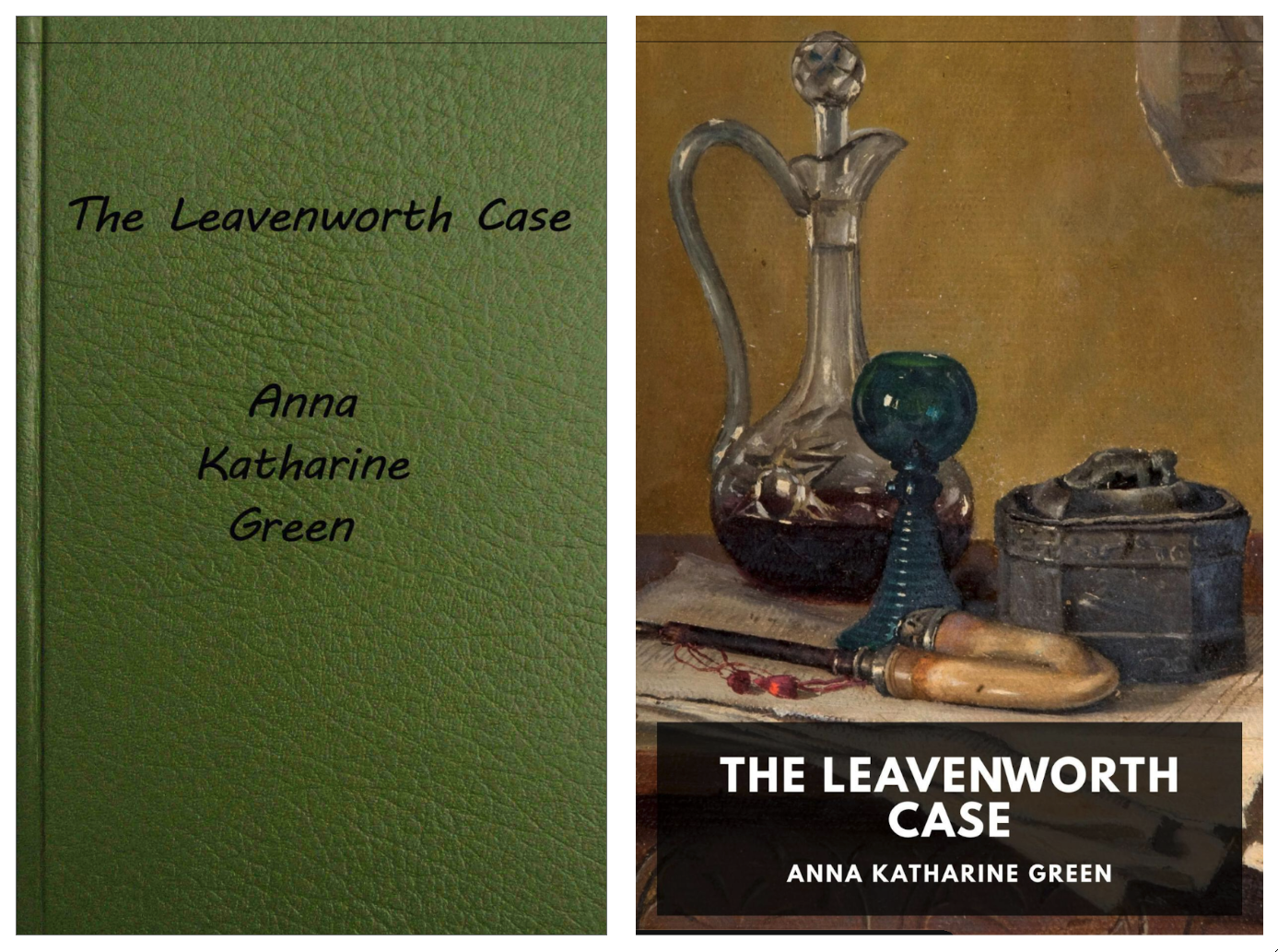
Also, the cover of the Project Gutenberg edition is downright ugly with a plain green background (green for Green?) and a hideous font, while the Standard Ebook one is tasteful, albeit uninspired.
Paid Options
Many public domain works have cheap paid versions for Kindles available at Amazon. There was a $2 Start Classics version falsely claimed to be a Penguin Classics book, but it had no floorplans. A $1 version from Xist Classics had the same issue, while a $1 Panetela Press Presents version also omitted the floorplans and, far worse, admitted it has been “lightly edited for the modern reader”…ugh, no thanks.
Cost does not correlate with quality in these cases, as there was a $5 edition with no floorplans and, unlike the others, omitting the quotations that should begin each chapter. A $3 version had 35 Anna Katharine Green novels, bizarrely arranged in alphabetical, rather than chronological, order.
A $3.58 version (go figure) claimed to have “original Illustrationsand Annotated” [sic]. With that sort of poor handling of the title, one’s confidence wavers, but lo and behold, it did have floorplans! I found another $2 version that had both illustrations and floorplans.
The Verdict
So which of the various versions did I end up reading? I certainly wasn’t going to pay for any of the ones I saw on Amazon, and I didn’t try to read a scanned version at The Internet Archive, as I want an eBook that is synchronized across my Kindle apps and Kindle Paperwhite device. That left Project Gutenberg, which had superior embedded illustrations but slightly inferior typesetting, vying with Standard Ebooks. The illustrations won the day, and I read the Project Gutenberg version.
Going forward, when there is Standard Ebooks version, I will compare that to what Project Gutenberg has on offer. If the Gutenberg version doesn’t have an edge on graphics, then I’ll go with Standard Ebooks, sending its EPUB3 version through Send to Kindle rather than manually loading its AZW3 version on my Kindle Paperwhite.





 Meador Manor