
As an early member of Generation X, I grew up amidst the world order that developed after World War II. The U.S. was a military superpower, but the limits of that power had been demonstrated quite clearly. The U.S. withdrew combat troops from South Vietnam before I turned seven years old, and the Cold War with the Soviet Union remained dominant throughout my childhood.
My first social studies class at Mayfield Junior High was a mandatory one on Civil Defense that included survival strategies in case of a nuclear war. Below are a couple of pages from the book we studied: Your Chance to Live, a 1972 publication of the Defense Civil Preparedness Agency.
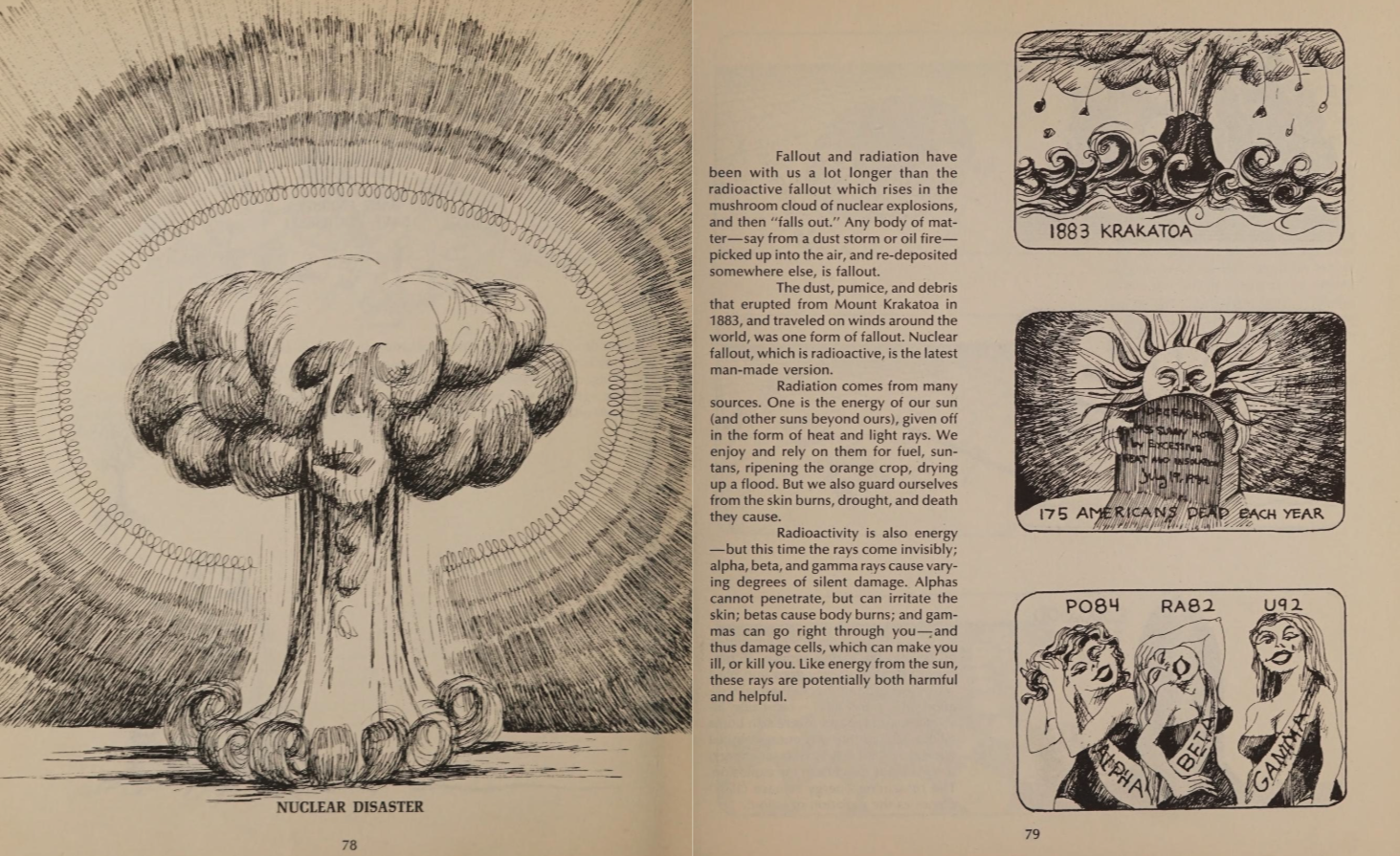
Yeah, a skull in a mushroom cloud juxtaposed with a depiction of the basic types of radiation as beauty contestants in swimsuits with plenty of décolletage. Alpha cannot penetrate, but will irritate your skin. Beta will cause body burns, and gamma can make you ill or kill you. What are we trying to communicate here?
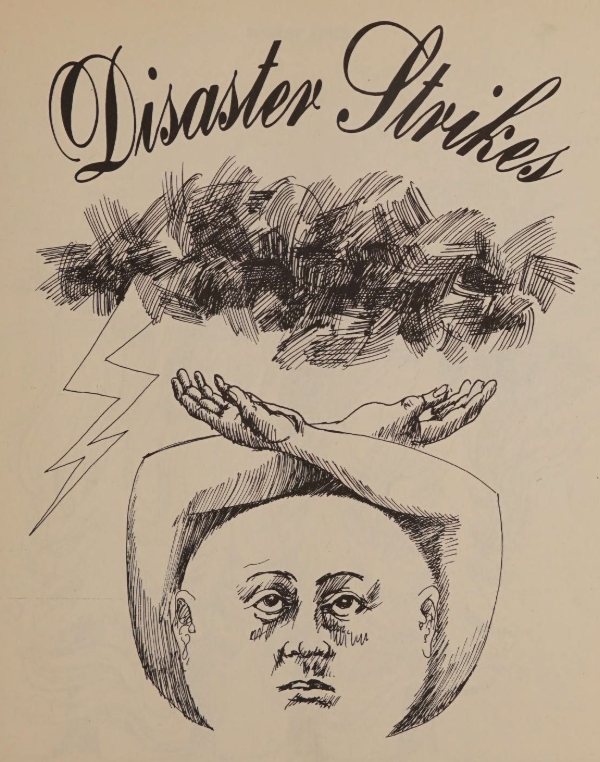
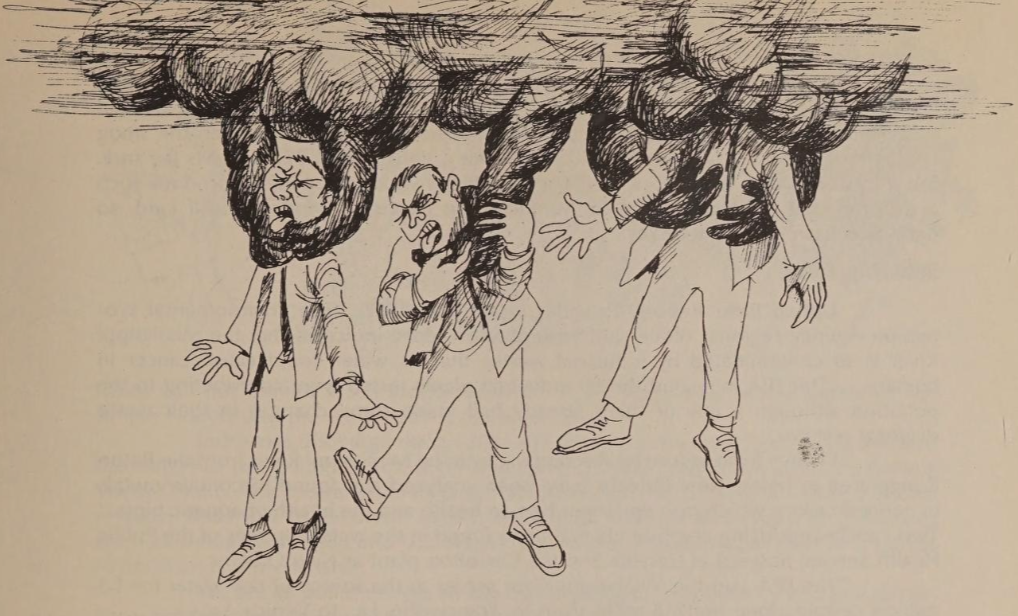
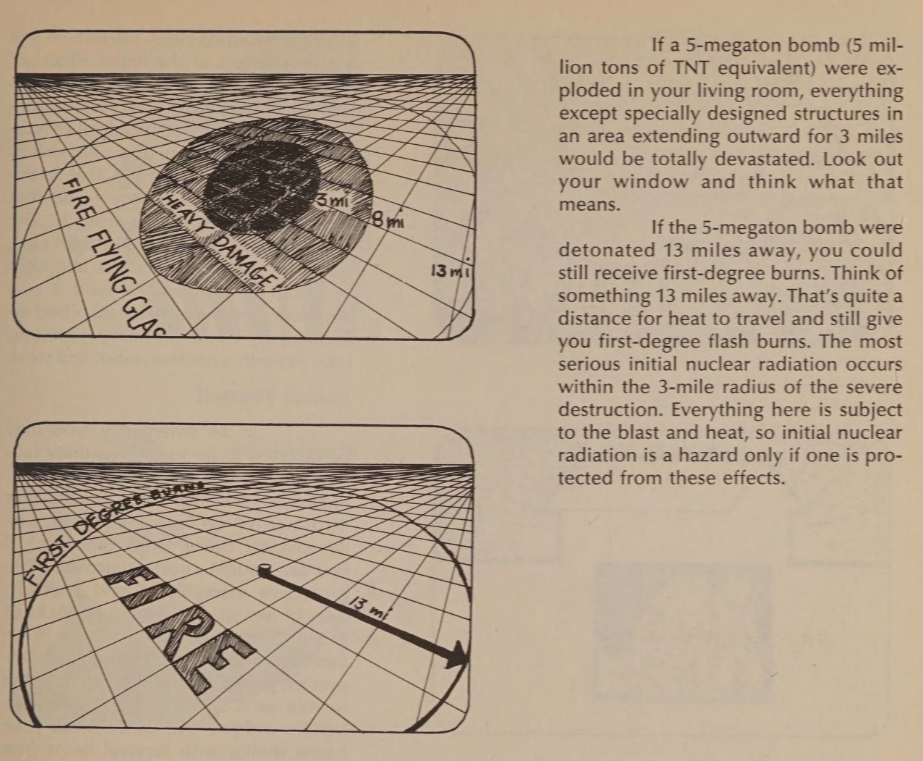
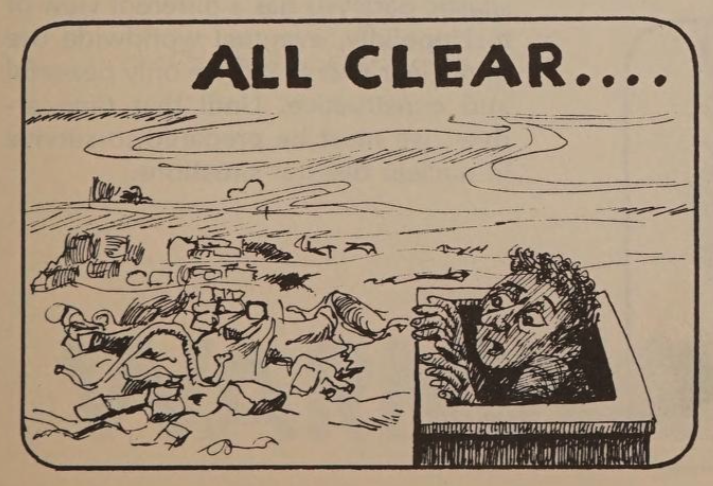
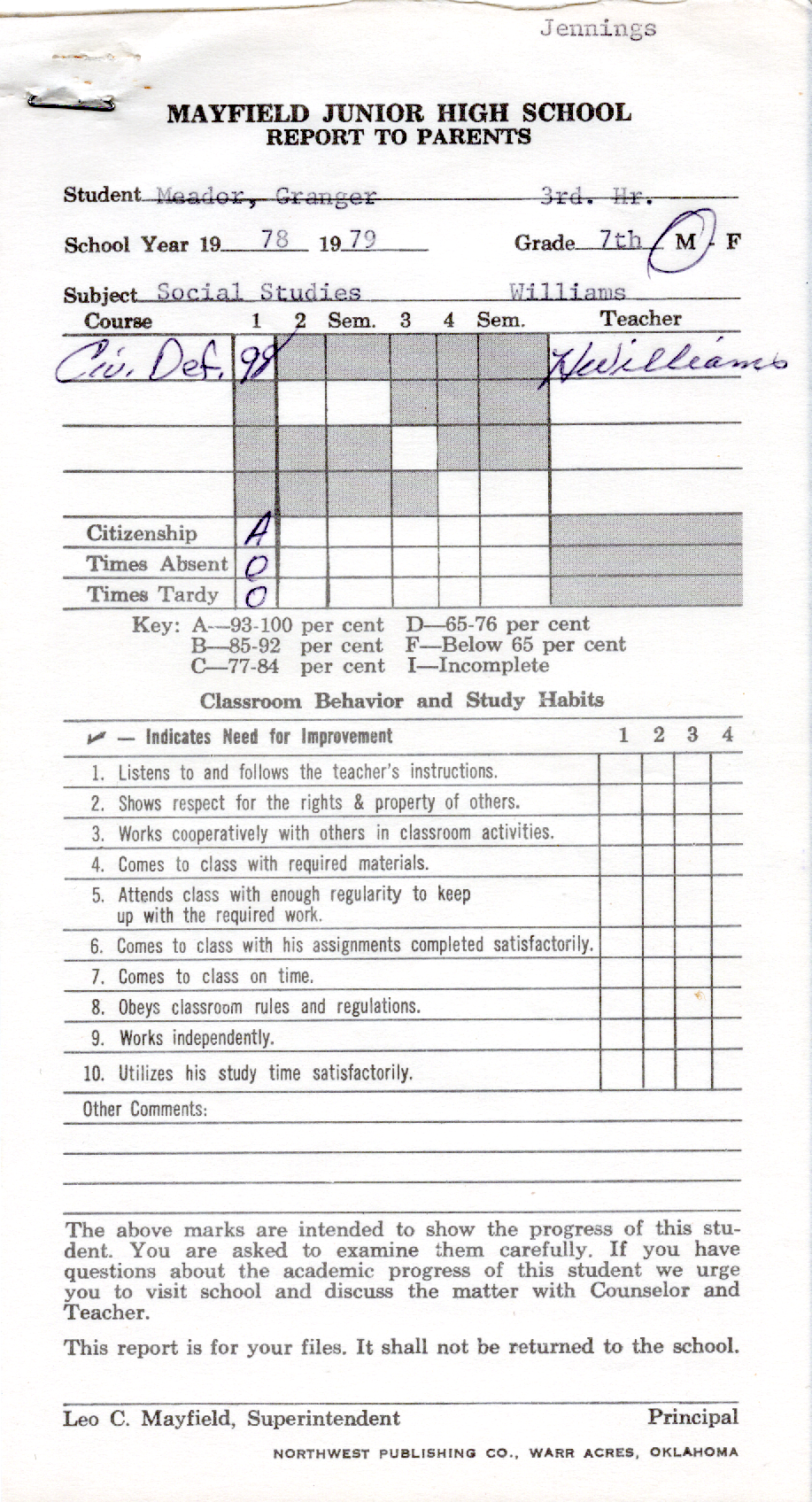
It all struck my 12-year-old self as quite weird, but I’ll admit that illustrator Bradford L. Smith did convey to us the angst and neuroses of his era. I earned a 98% in the 9-week course with perfect attendance, but the report card didn’t have a rating for the development of cynicism, which would have been tops as well.
A year later, Iran seized 66 American citizens at the U.S. Embassy in Tehran, and held onto 52 of them for 444 days. Thus my teenage years were inaugurated with yet another demonstration of the limits of power coupled to how the media can be manipulated by bad actors.
In school we were learning about how the U.S. killed 250,000 people in Hiroshima and Nagasaki after losing about 400,000 of its own military personnel in World War II and after a stunning six million Jews were systematically murdered in the Holocaust. I was studying diagrams of nuclear blast damage radii while at home the television news for over a year was dominated by 52 hostages held by a country with about 1/6 our population and about 1/30 of our economic output.
I guess that prepared me somewhat for the way Donald Trump would expertly dominate the news cycles four decades later, stoking outrage and division while hypnotizing doom scrollers. However, the Vietnam War and the Iranian hostage crisis taught me a lesson Trump had to learn the hard way decades later: the limits of a republic’s military power.
As for military service, my Greatest Generation father had been drafted in 1943 and served in Europe and the Philippines in World War II. Baby Boomer Trump avoided military service during the Vietnam War via five deferments, four educational and one medical. The draft ended in 1973, so when I turned 18 in 1984, like the other males in Generation X, I just had to register for the Selective Service and keep it informed of any changes in address until I turned 26. I was still registered during the Persian Gulf War of 1991, and at the end of that year the Soviet Union dissolved and the Cold War came to an end.
Middle East terrorists set off a van bomb below the World Trade Center in 1993, hoping to topple one tower and have its debris collapse the second. That failed but was a deadly dress rehearsal of sorts for the airborne attacks in September 2001. Meanwhile, domestic terrorists killed 168 people and injured hundreds more in my hometown of Oklahoma City in 1995.
The response to the 2001 attacks illustrated one of the keys to American hegemony after the Cold War ended. It wasn’t just our thermonuclear bombs and other advanced weaponry that left us as the sole remaining superpower, but also our many allies around the world. Those partnerships were instrumental in shoring up the shortcomings that developed in the U.S. over the decades after the second world war. September 2001 was the only time NATO invoked its Article 5, leading to joint operations against terrorism and NATO taking command of the International Security Assistance Force in Afghanistan in 2003.
One reason we need allies is how our relative industrial might has declined. In 1945, the U.S. produced over 50% of the world’s manufactured goods while war-torn Europe and Asia rebuilt, and in 1950 about 30% of nonfarm workers in the U.S. were employed in manufacturing. Contrast that with today, when the U.S. produces perhaps 15% of the world’s manufactured goods, and only about 8% of our nonfarm workers are employed in that sector.
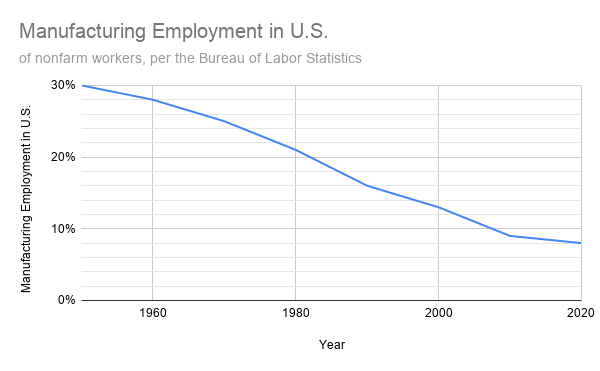
While the employment decline includes significant gains in productivity, it is also a symptom of significant gaps in our manufacturing capabilities. Last week, Phillips Payson O’Brien, professor of strategic studies at the University of St. Andrews, wrote in The Atlantic:
The erosion of American manufacturing superiority is an old story, but it is a key element for understanding the end of the American age. The U.S. could once outbuild other powers by tapping into civilian production. During World War II, Americans retooled the automotive industry to build aircraft. Today, relative to the rest of the world, the United States does almost no civilian shipbuilding. China, in comparison, makes about 50 percent of the ships in the world and controls about 80 percent of the world’s drone manufacture. Having built its military to prevail in a burst of high-intensity fighting, the United States simply lacks the equipment, stockpiles, and rested forces to engage China for any extended period of time.
In the past, the United States could rely on allies to amplify its own power. Nations that shared values or at least interests with Washington have hosted bases, provided diplomatic support for American initiatives, shared intelligence, and sent troops and equipment to support American-led military operations. Today, traditional allies have capabilities that the U.S. sorely needs. For example, Japan and South Korea are the second- and third-largest shipbuilding powers in the world.
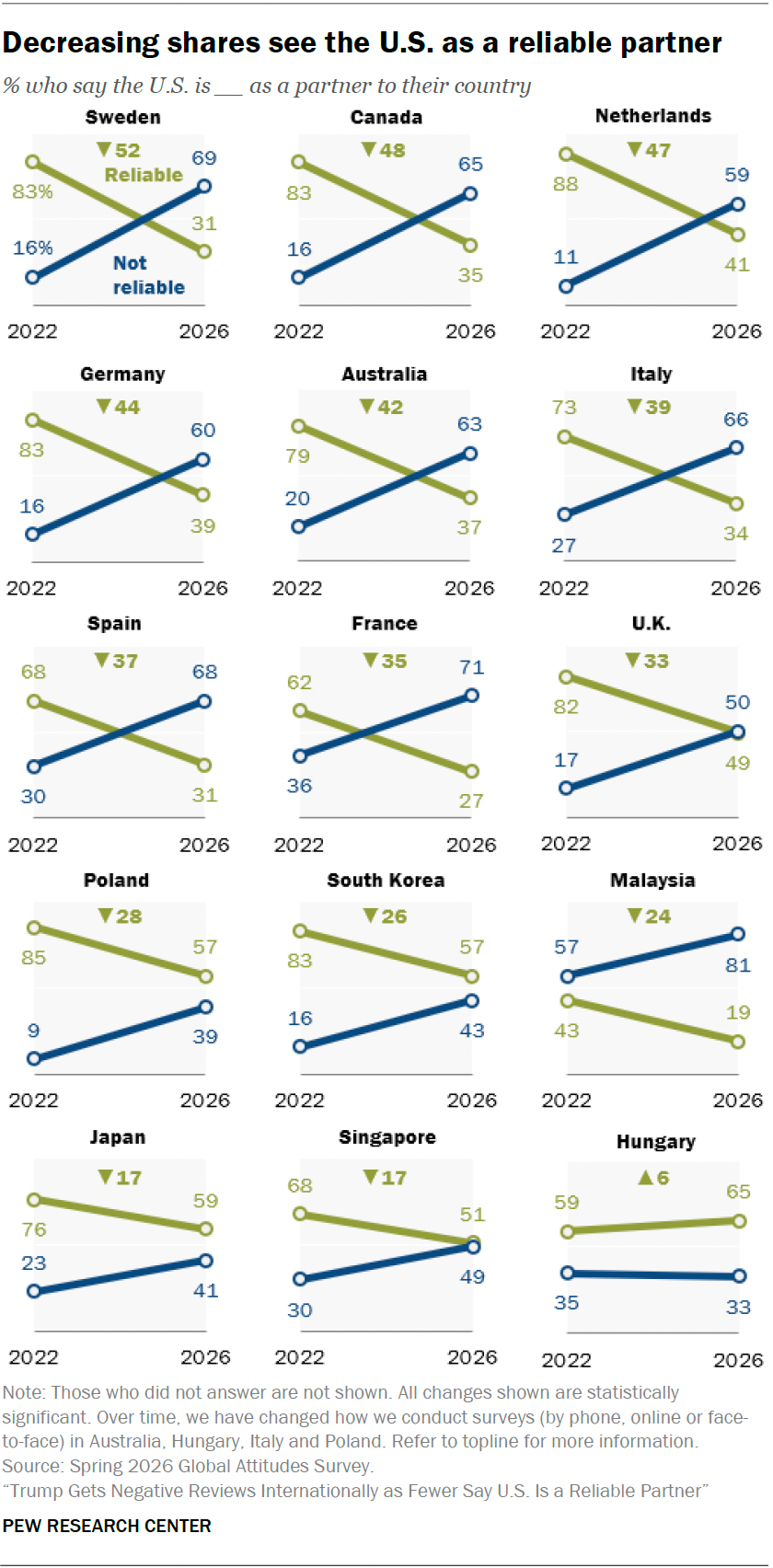
Yet, by the spring of 2026, Trump’s bullying, tariffs, and go-it-alone attacks on other countries that impacted fossil fuel distribution had led to 57% of the people in 36 countries viewing the U.S. unfavorably. Almost 2/3 said the U.S. did not take other countries’ interests into account and did not contribute to peace and stability. A majority viewed it as an unreliable partner to other countries.
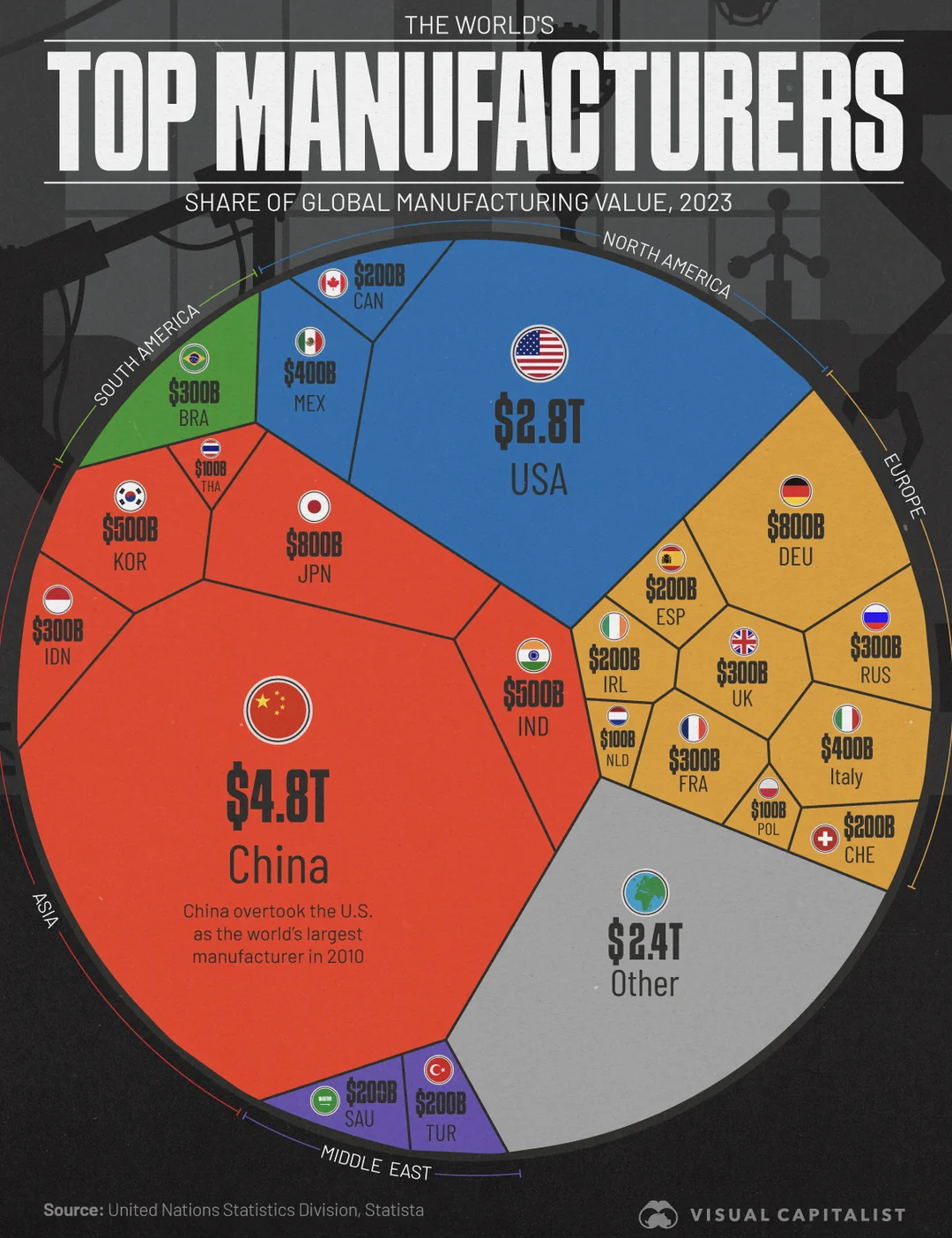
Notice how Trump’s actions have affected the ratings in Canada, South Korea, Japan, and various European countries, and then reflect on the chart below of the world’s top manufacturers.
Being the second-largest manufacturer with $2.8 trillion of value is great, but when China alone has $4.8 trillion, weakening our alliances with countries that collectively produced $3.5 trillion in value will have enduring consequences.
If you’re looking for Russia, it is the $300 billion RUS block in the European segment. It still has thermonuclear weapons, but its economy pales in comparison to that of many other countries.
America isn’t over by a long shot, but the American Age for the world is ending. East Asia is now the center of the world’s economic output. Europe will invest more in its own defense and economy, South Korea is improving relations with China, and Canada and Mexico cannot trust the leaders the U.S. elects, so they will recalibrate their integrations with our economy. The world may experience a chaotic period of wars and competitions in the coming decades.
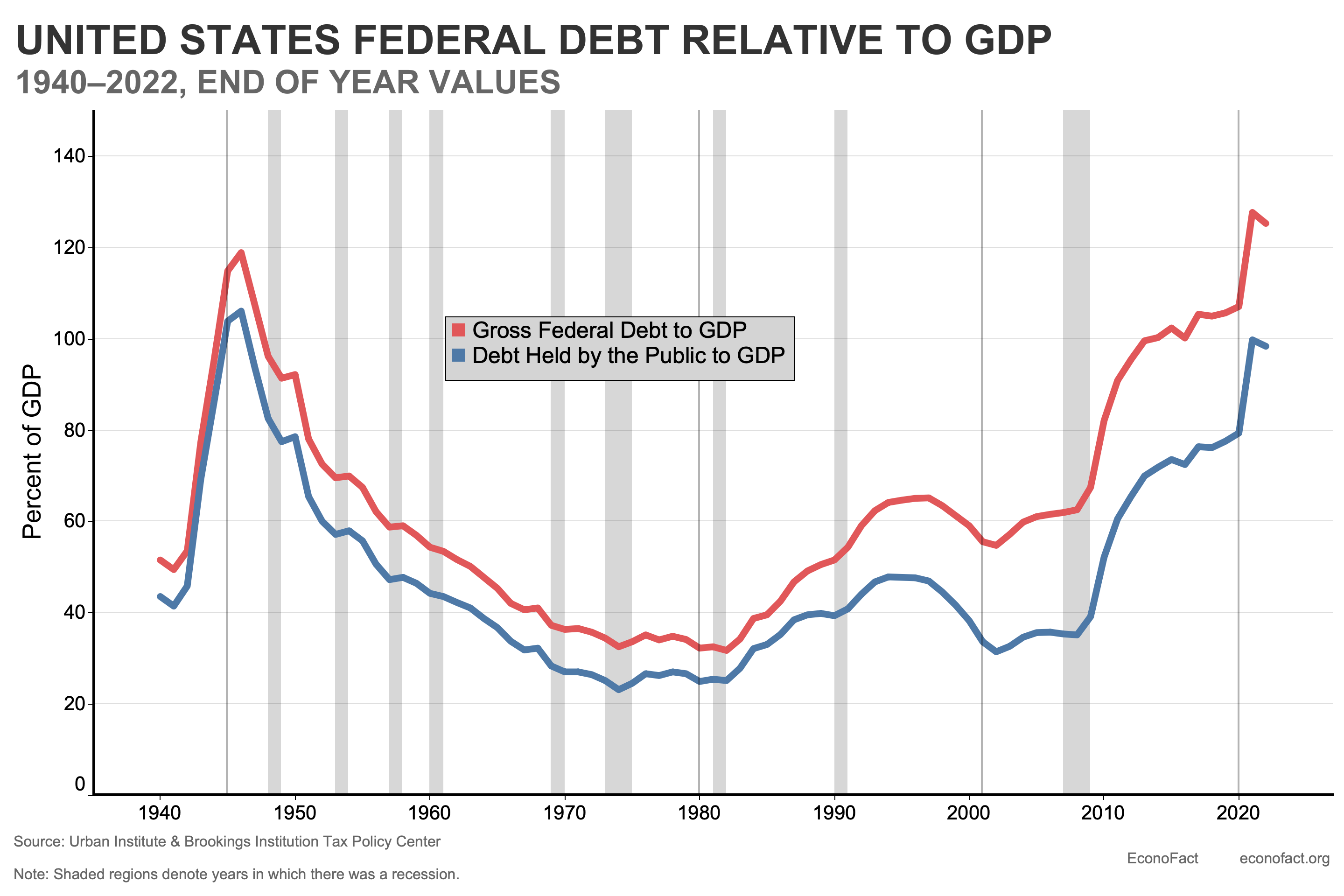
As for the U.S., a terrible economic reckoning grows ever more likely, although I cannot predict when it might arrive. The Republican embrace of supply-side economics fueled a growth in the ratio of the federal debt to the overall economy in 1980s, which was relieved by the dotcom boom of the 1990s; Trump has supposedly been hoping that A.I. would do something similar in the coming decade.
As the chart below illustrates, the debt ratio grew enormously during the Obama presidency after the Great Recession of 2008. It was finally tapering off when Trump and the GOP passed their 2017 tax cuts. However, it then spiked when federal spending increased about 50% in response to the COVID-19 pandemic, and it is now approaching the all-time post-World War II peak set in 1946.
Under Trump, $3.1 trillion was spent on the initial pandemic response. Biden followed that up with another $2.4 trillion to help with the recovery, but that also fueled inflation. In 2017, Trump and the GOP forced through yet more tax cuts that will maintain the growth of the debt unless A.I. or other economic changes come to the rescue. If we examine the debt since 1993, without regard to the overall economy, we can see that the growth rate trajectory has increased with each of the past three recessions.
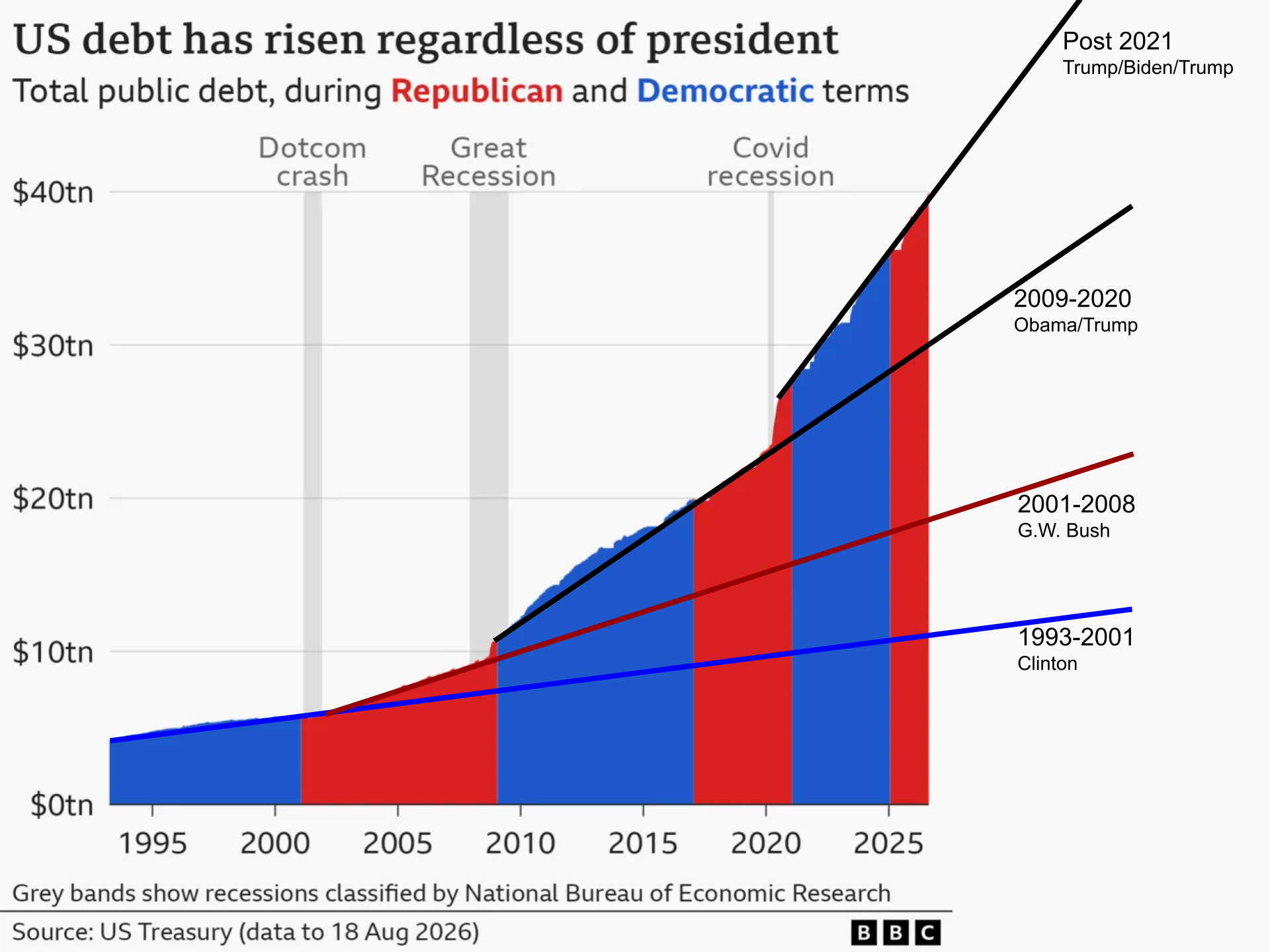
The structural imbalance of spending consistently outpacing revenue will accelerate in the coming years due to rising interest costs, mandatory entitlement spending, and low revenue generation due to tax cuts. A crisis point will arrive by 2032, when the Social Security trust fund will be exhausted if there are no structural changes in that entitlement program.
My guess is that the current debt growth trajectory is already unsustainable, so another recession or the Social Security crisis might someday lead to the U.S. defaulting on its debt and an economic collapse. That would damage China’s economy, and its tightly controlled currency and closed financial system might prevent it from stepping in to replace the deep, open liquidity of the U.S. financial market, leading to a significant worldwide depression.
I’m certainly no fan of Trump’s policies, but he had the support of 77,302,580 Americans in November 2024 who had every opportunity to grasp what he was about. Even now, as pundits talk of his Make America Great Again movement fracturing, over 1/3 of Americans still approve of Mr. Trump’s performance. In Oklahoma, while Trump’s approval rating is -6 among all adult citizens, and he fell from +31 to +1 among registered voters, when you look at who actually voted in the 2024 election, he is still at +17 in the Sooner State. The opinions of the 47% of Okies who were eligible to vote in 2024 yet chose not to do so simply don’t matter.
If the Democrats do manage to regain majorities in both houses of Congress, I hold out little hope for statesmanship. The historian J. Rufus Fears taught that “the statesman is distinguished from a mere politician by four qualities: a bedrock of principles, a moral compass, a vision, and the ability to create a consensus to achieve that vision.” I see very few statesmen or stateswomen running for office these days in either party.
Granted, my political cynicism is a Gen X stereotype. I’ll say that Mayfield Junior High is at least somewhat responsible for me still expecting a big boom…or a big bust.







 Meador Manor