
My father loved his fireplaces. He would light fires on winter days in each of the three houses he owned during my lifetime, despite them all having central heating and air conditioning. I grew up helping him bring in wood, light, and tend many a fire. In my college years, one of the apartments had a fireplace, but I just burned a Duraflame log or two in it, and I never used the miniscule fireplace at my apartment in Oklahoma City during the winter when I was substitute teaching while applying for full-time jobs for the next academic year.
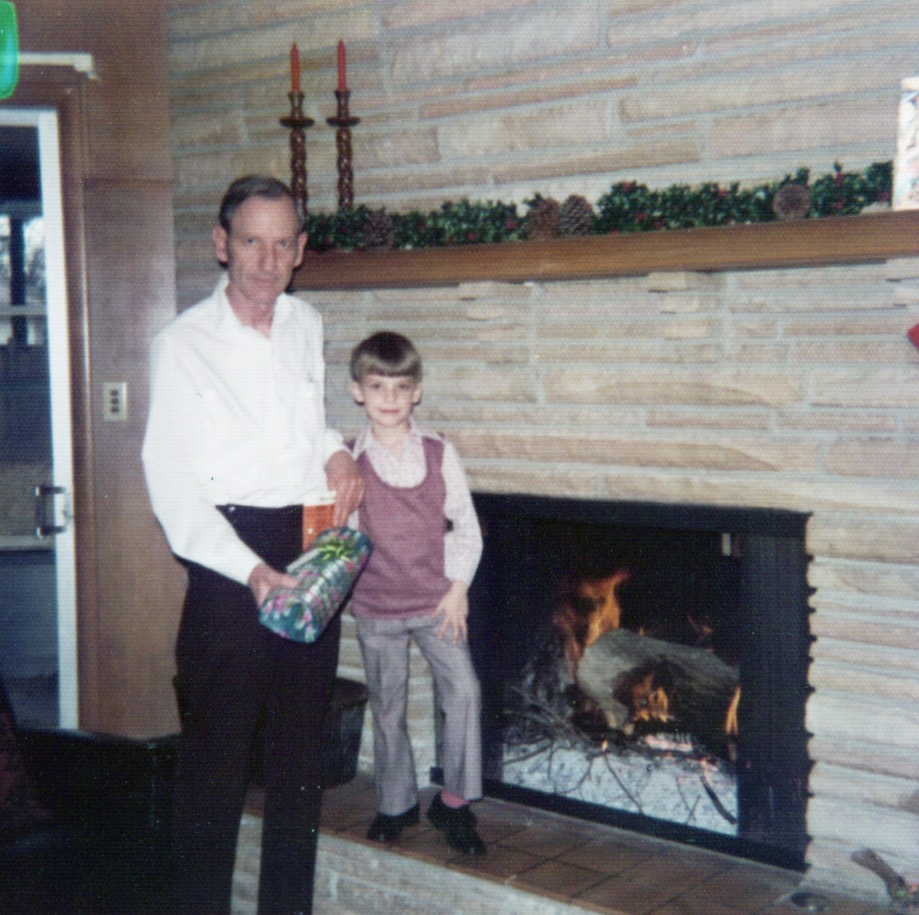
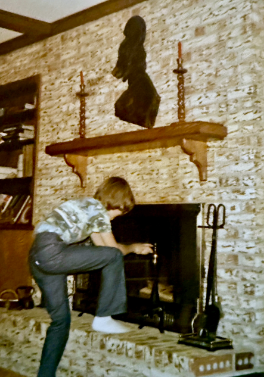
I moved to Bartlesville in 1989, but neither my apartment at The Village nor the house I rented in Pennington Hills had fireplaces. When I purchased my home in Arrowhead Acres in 1994, I was pleased that it had a woodburning fireplace with a natural gas starter pipe as I had been accustomed to at my parents’ homes. I bought half a rick of wood once, and a work colleague once gifted me with cuttings from her new property, but otherwise I relied on tree limbs cut down on my own property to fuel it.
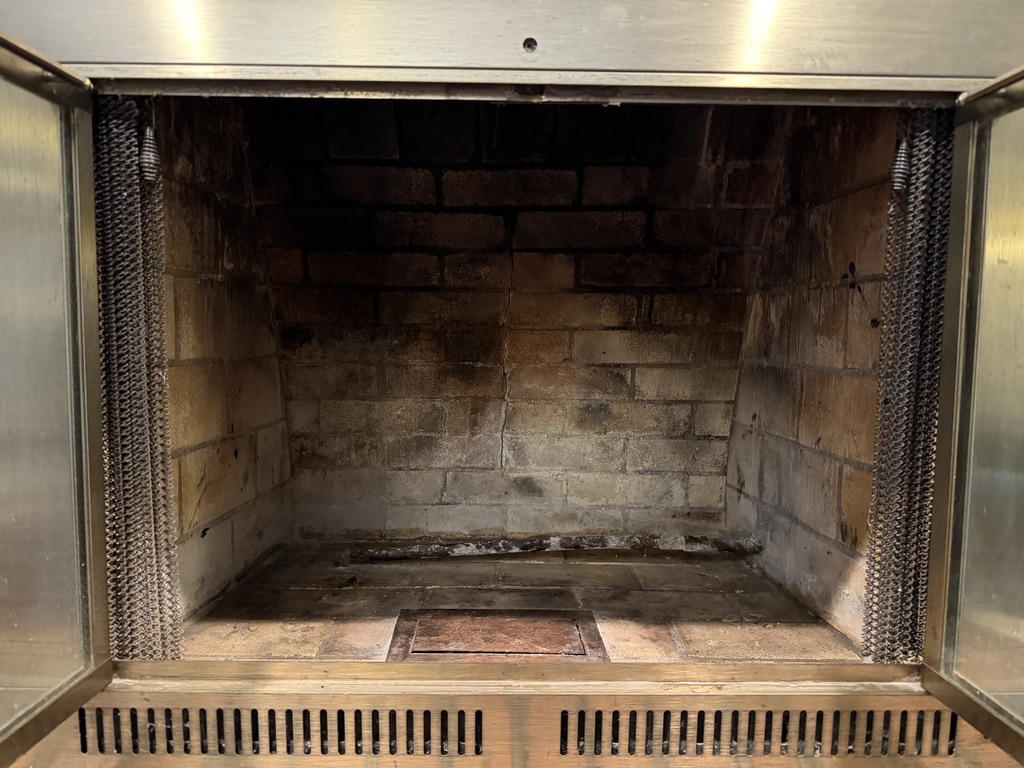
I could go multiple years without lighting a fire, and in the past ten years Wendy and I have used it less than a handful of times. She was wary of the chimney, which had never been cleaned and had badly spalled house bricks on its exterior veneer. Minor efflorescence on the fire bricks in the firebox was likely from water seepage through cracks in the concrete chimney top.
Now that I am retired, I will be spending many cold winter days at home. I asked a professional mason to apply repair mortar to various spalled bricks around the perimeter of the house, and he inspected the chimney’s exterior. He applied sealant to the cracks in the concrete cap but left most of the chimney’s spalling brick veneer untouched since I was no longer interested in burning wood fires, nor in having an insert installed that used the existing gas line.
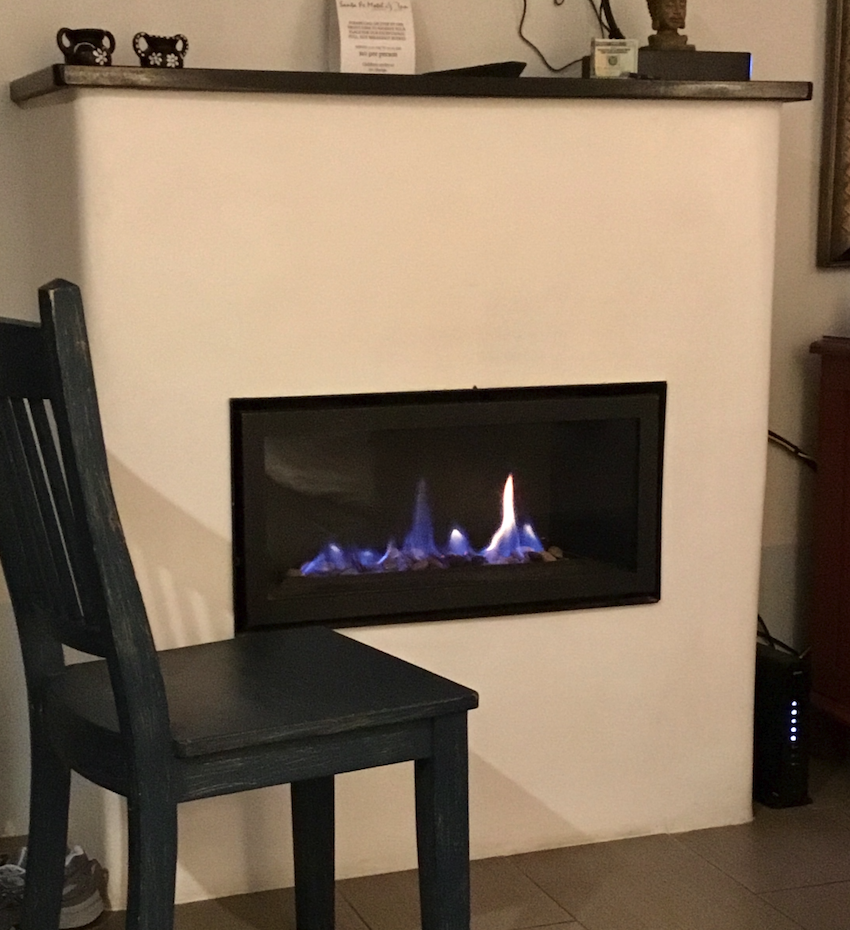
I didn’t want to have the flue cleaned nor hire someone to install an insert, such as the linear gas fireplaces we have seen during our travels, as neither real nor fake linear fireplaces do much for me. I prefer the look of a log fire with its crackles and hiss, and I wanted an inexpensive substitute that was dead simple to install and use.
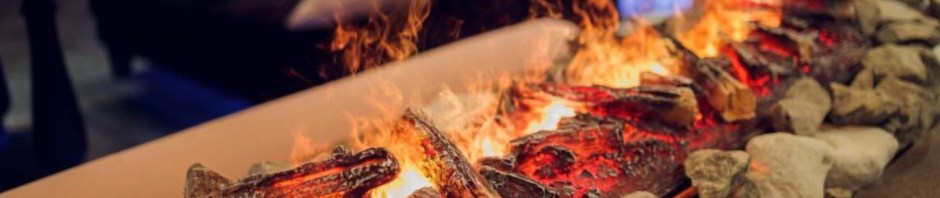
So I opted for a LegendFlame 25″ Free Standing Electric Fireplace Log Set. I cleaned out the ashes from our fireplace and set the $260 unit into it, using pliers to bend one corner of the existing fireplace cover to pass through its electric cord. The included heavy grounded cord wasn’t long enough to reach the nearest wall outlet, so I purchased a six-foot extension cord of 14 AWG (American Wire Gauge) rated to handle up to 1,875 watts.
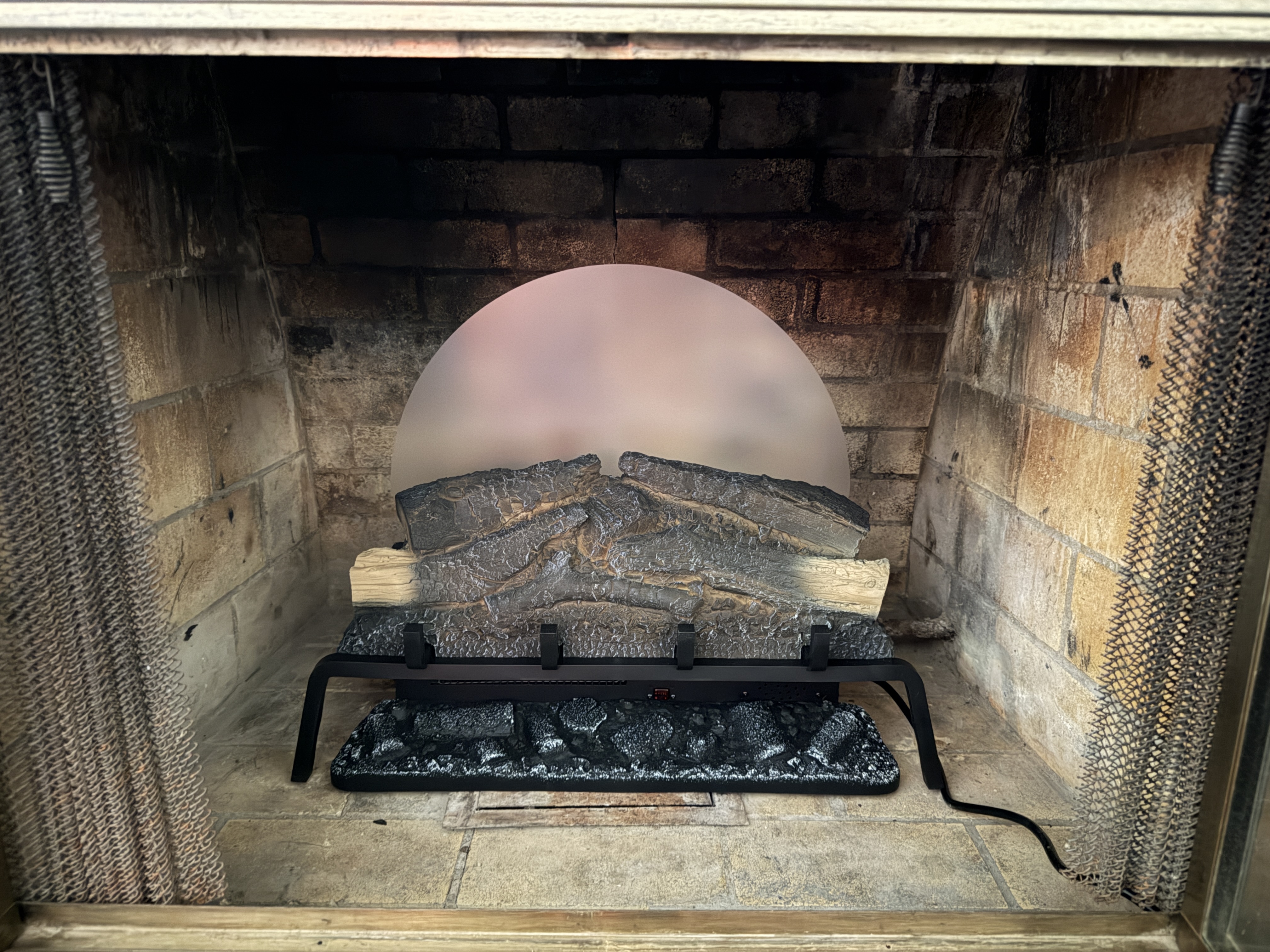
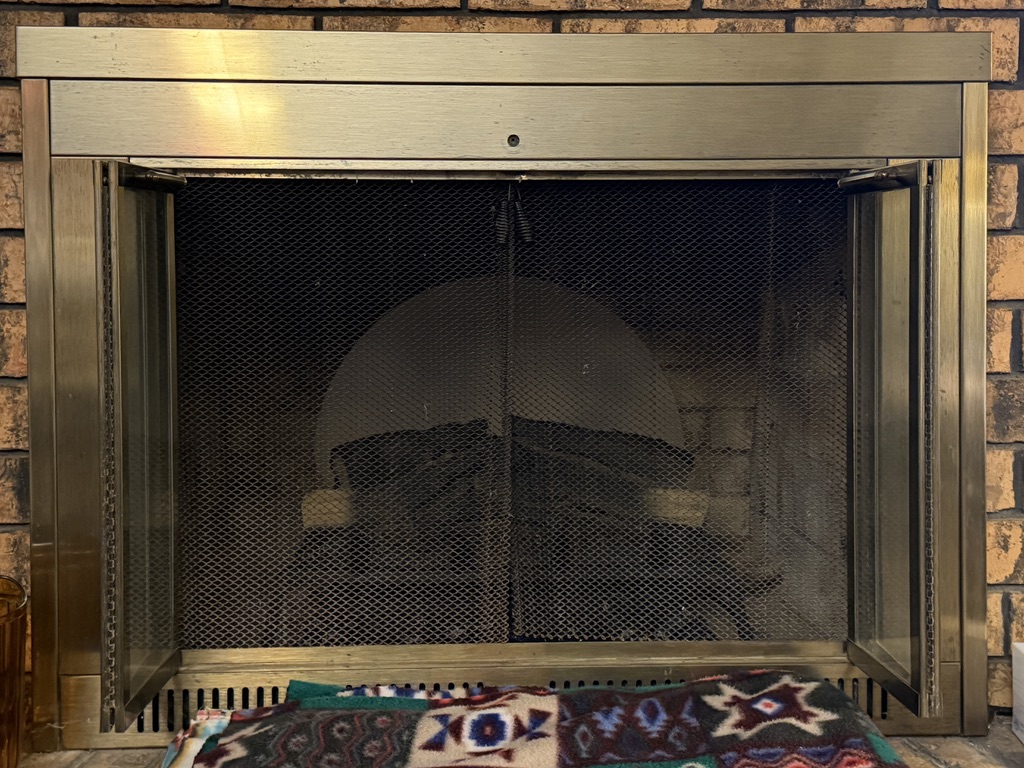
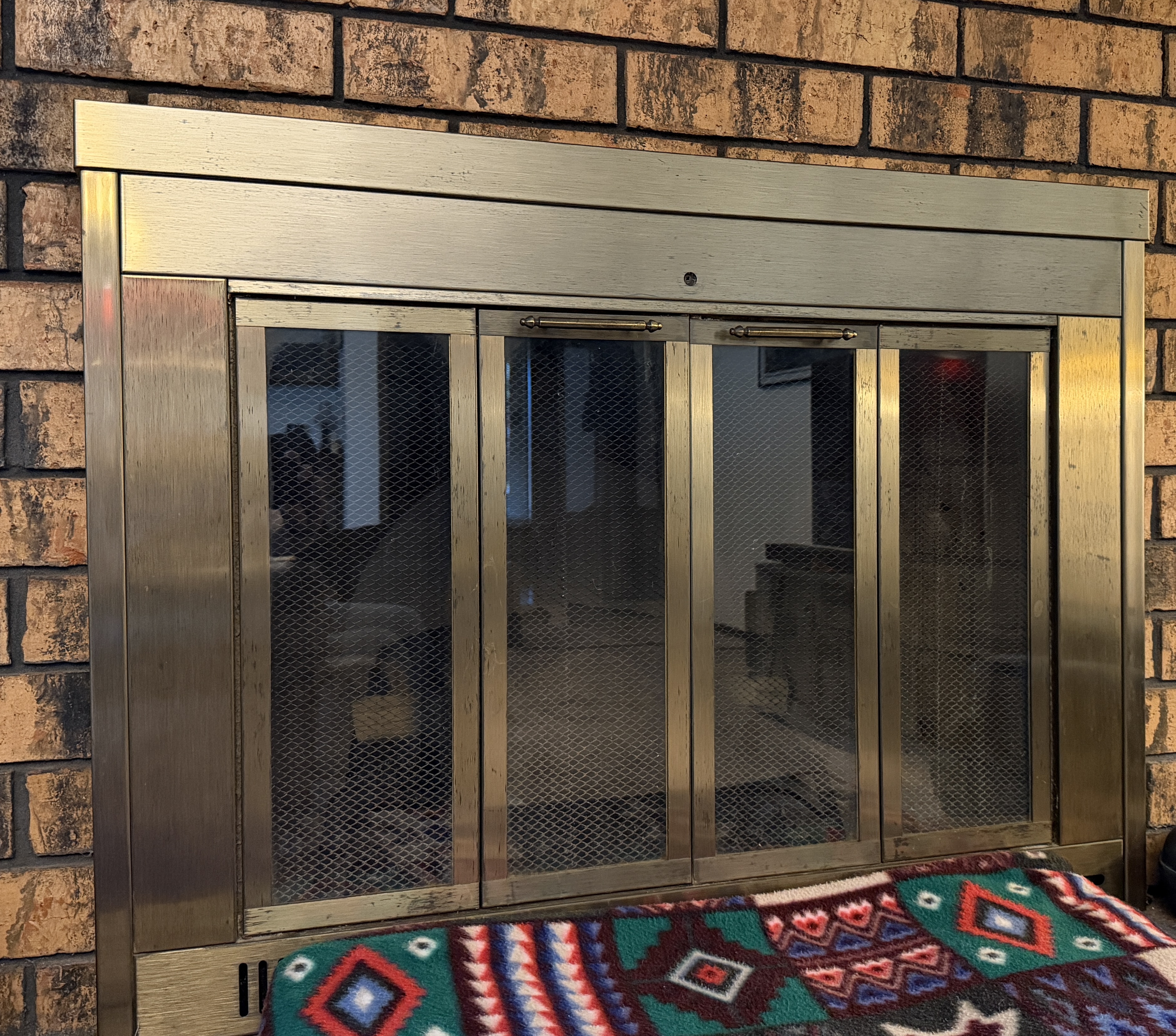
The matte plastic flame screen behind the fake logs is for flame effects, and it works fine for me although some folks opt to instead have the lighting effects fall on the back wall of their firebox. A remote control allows me to quickly switch among high/low/off lighting levels, six optional sound options, and to optionally activate its 750/1500 watt forced air heater. I made a video illustrating the various options.
My initial choices for the unit are to run it at the lower light level on sound setting #6, which is low crackle with wind noise on. In the winter, if I’m sitting near the fire I plan to open the glass doors but leave the wire screen in place, setting the heater on high. Otherwise, I can leave the doors closed and just turn on the unit’s lighting and sound as desired.
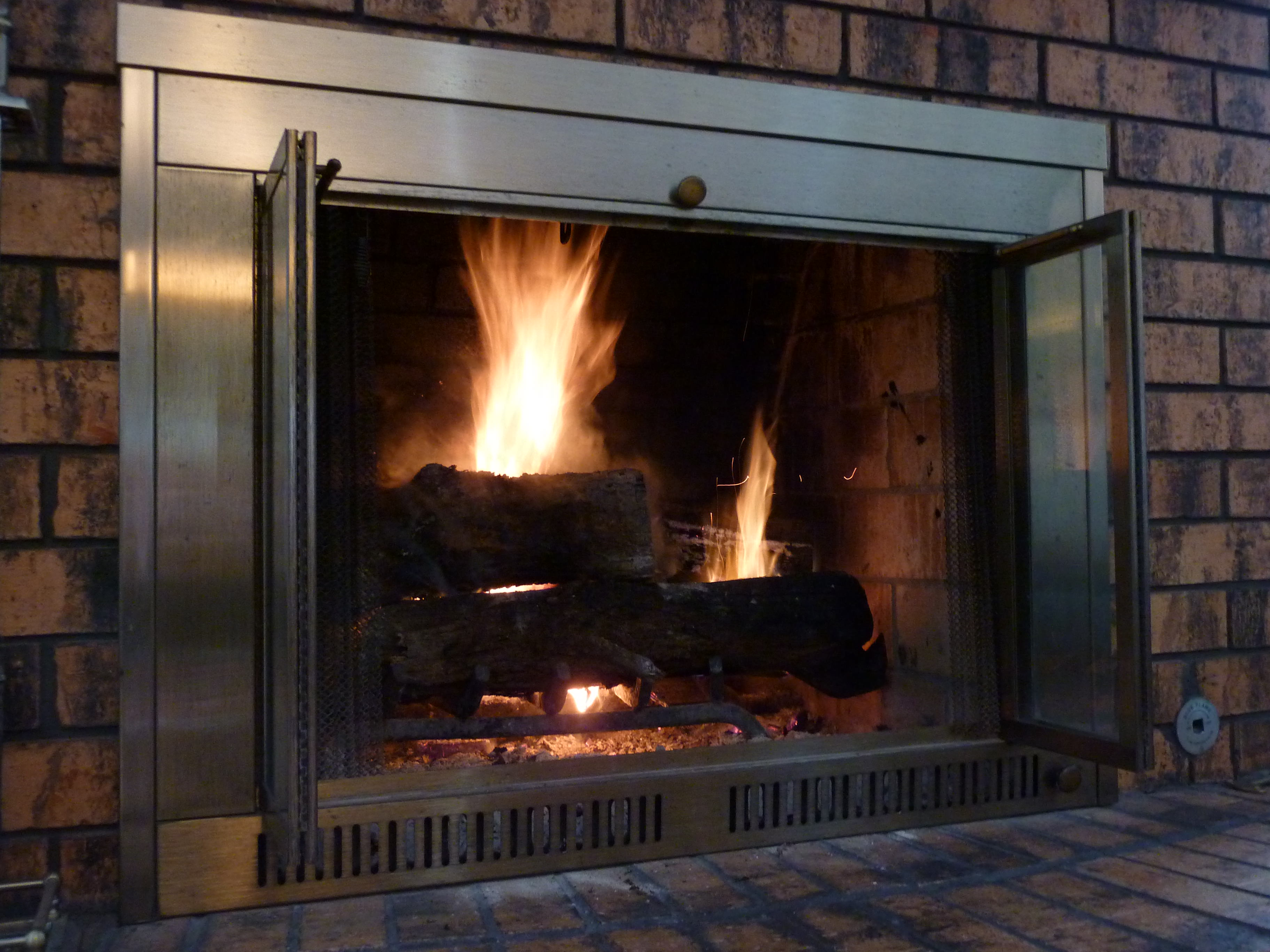
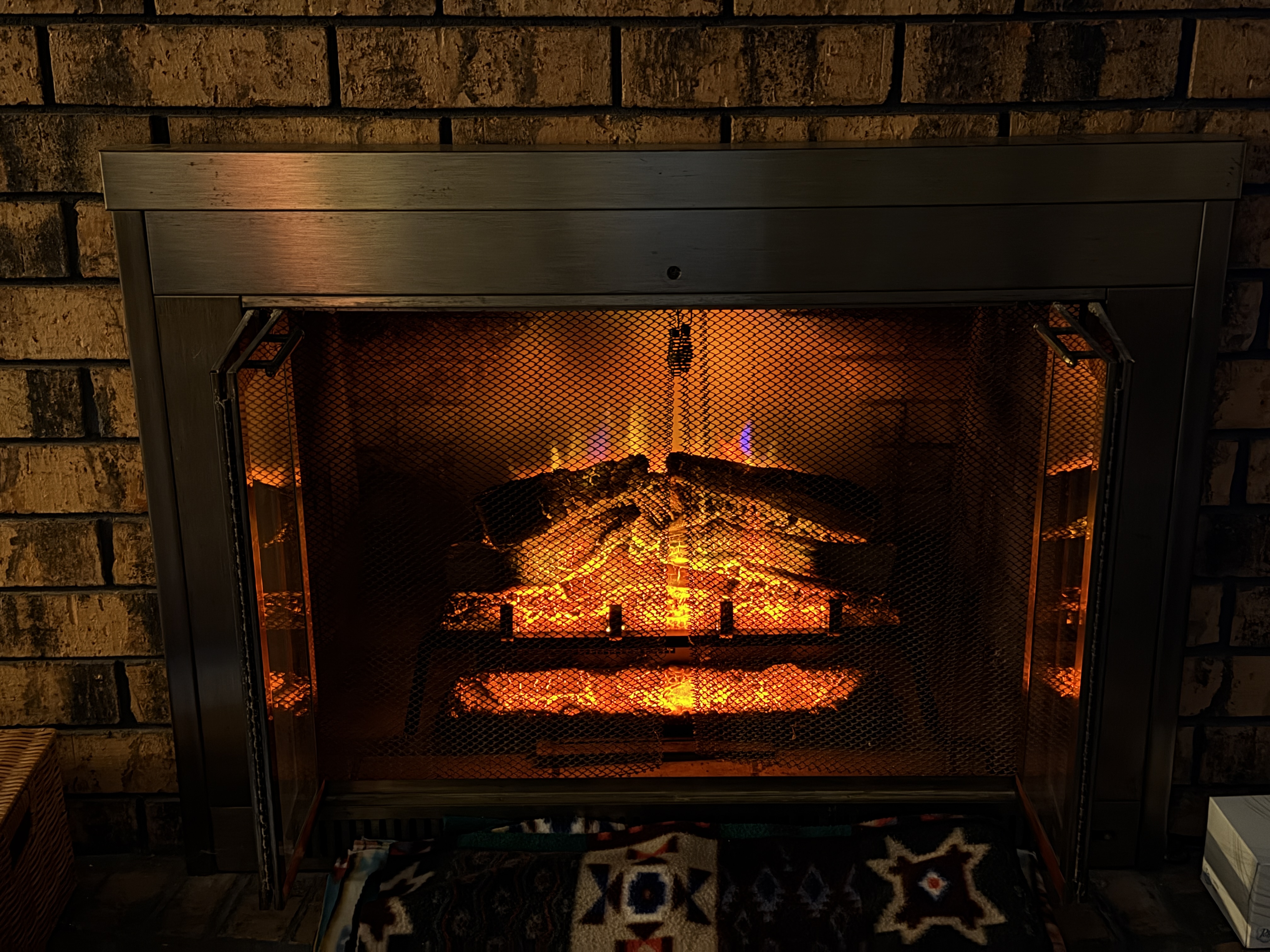
Bear in mind that a plug-in fireplace’s heat output is limited by the 15 ampere electrical circuit to about 1,500 watts for maybe 5,000 BTUs of heat, while an actual wood fire can output 20,000 to 80,000 BTUs and will feel much hotter.
Inexpensive units like mine typically use LED lights shining at rotating reflectors to reflect light onto plastic screens with a matte finish to create the flame effects.
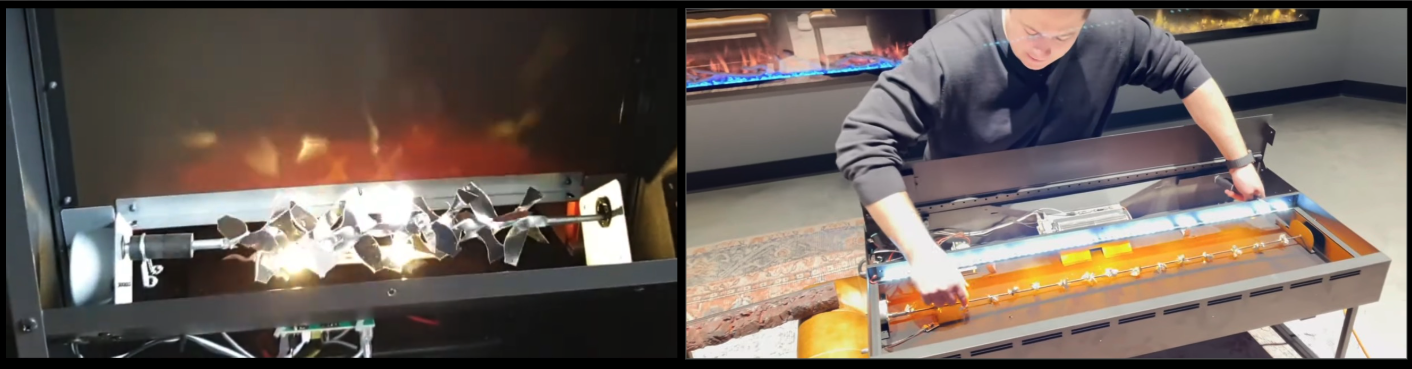
More expensive units can use LCD displays showing recorded flame imagery, and “holographic” units use tilted beam splitter glass to make recordings of actual flames appear amidst fake logs.
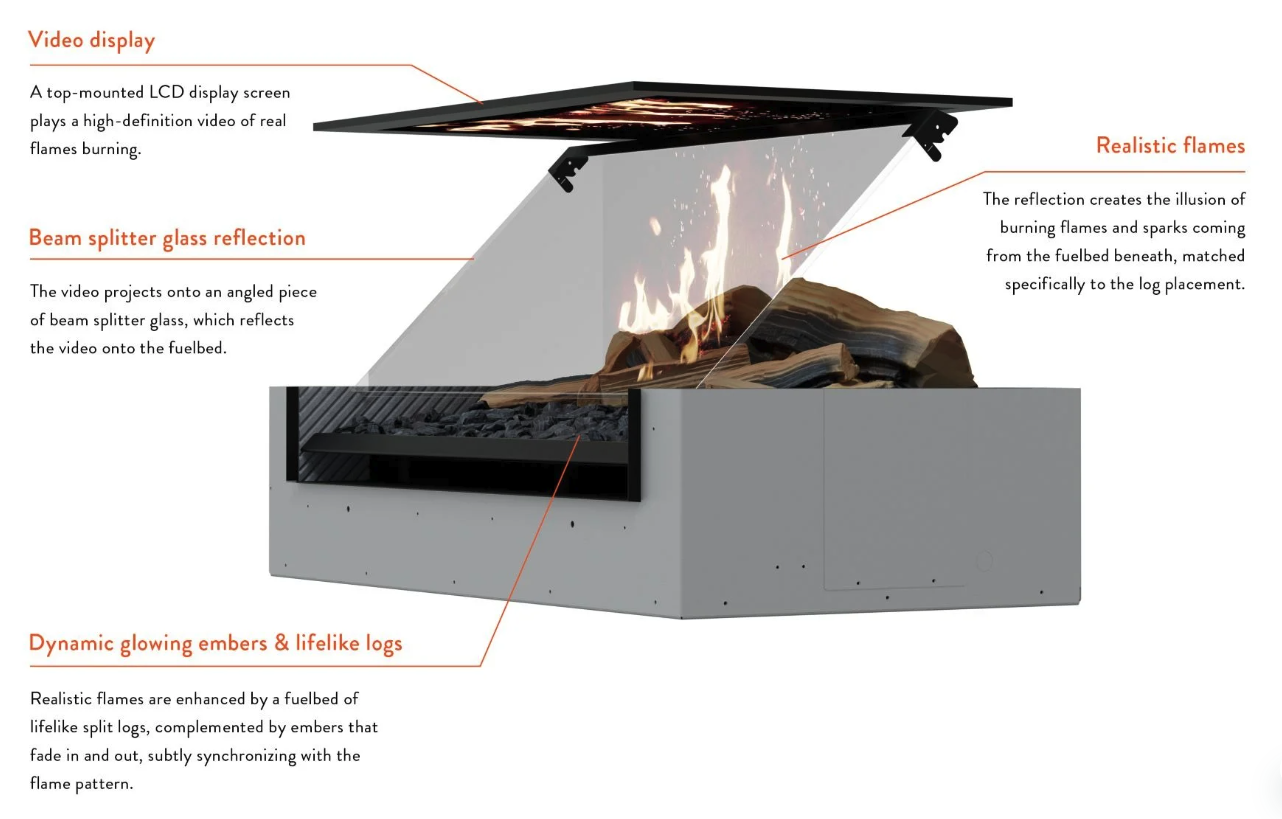
The results can be quite impressive, especially from a distance.
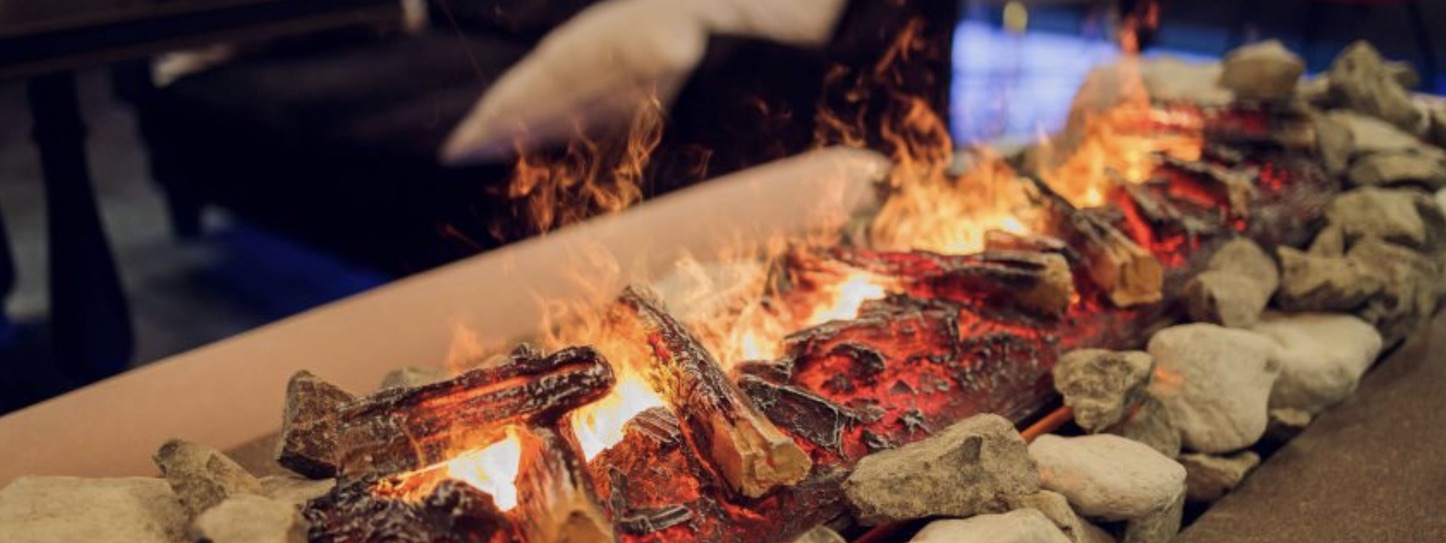
However, once you know how the tricks work, you can quickly spot the “tells” of rotating elements and repetitive patterns or how illusory flames line up along one or more planes in a tableau. As with many forms of entertainment, to properly enjoy a fake fire, you do have to suspend your disbelief.