
Normal School

Traditional teacher preparation has cratered in Oklahoma, which saddens me since I and the 2,663 students I taught from 1989 to 2017 benefited so much from my choice to major in education back in 1986. When I enrolled at the University of Oklahoma (OU) in 1984, I originally majored in Engineering Physics. Two years later, right after being named an Outstanding Sophomore in the program but having become disillusioned with that major, I applied to switch to Science Education, feeling the call to teach high school physics.
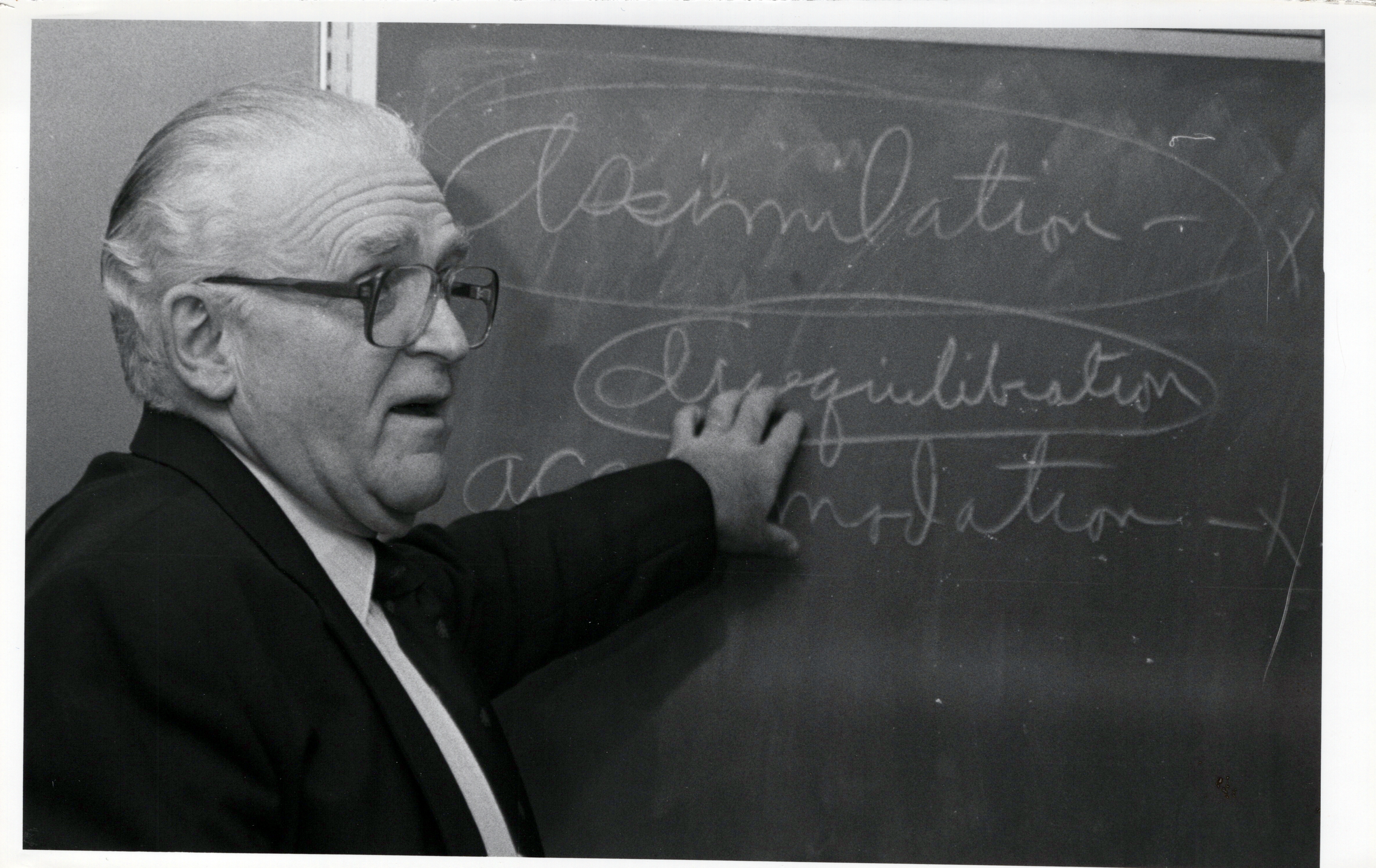
Dr. John W. Renner

Dr. John Renner, an outstanding leader in science education and the learning cycle, interviewed me. I thought he would be thrilled to have me, given my academic prowess, but after reviewing my transcript he tried to turn me away.

He said I was too bright to be teaching high school science, that full-time physics positions in Oklahoma high schools were quite rare, and that I should stick with Engineering Physics. “Get your degree and then teach physics at a university, not a high school.”
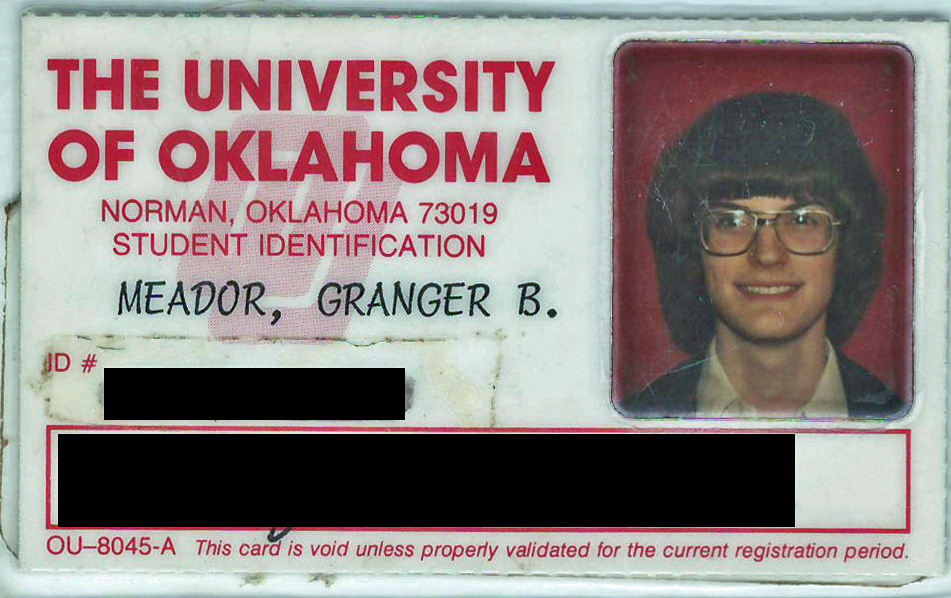
Can you believe Dr. Renner didn’t want this nerd in his program?

I’ve always been stubborn, and I insisted that I wanted to train to teach high school physics. Renner eventually caved, providing me with the opportunity to develop my pedagogical skills. The university also protected me from being too narrow in my teaching specialization by requiring me to expand my science courses.

My original major demanded plenty of physics, engineering, and some electronics plus one course in chemistry. My new major required additional credits in astronomy, botany, psychology, geology, zoology, ecology, geography, and physiology. That allowed me to earn certifications to teach Physics, Chemistry, Biology, Botany, Zoology, and Earth Science in an era when you had to have a certain number of hours in each subject as well as pass a certification test in it. That way I would be marketable to a much larger selection of school districts.

I certified to teach six different sciences and later earned administrative certification

However, in my job search after graduation, I was equally stubborn about wanting to only teach physics. I turned down offers to teach various non-physics subjects at three different districts before I snagged the full-time physics position in Bartlesville, which I held for 28 years before transitioning into administration.

As it turned out, I never taught using my other science certifications, although I have zero regrets about the varied coursework. I loved the various sciences, and being certified in the other subjects did help me in my 20 years of chairing the science department across grades 6-12, since I had a background in what my colleagues were doing.

My switch in majors had me earn 20 credits in education courses, plus another 10 as a student teacher in Bill Fix’s physics classes at Norman High. That undergraduate education coursework set me up for success in my chosen career. A course in Educational Psychology was especially helpful, along with the Piagetian theory and practicums in teaching science, using materials by Dr. Renner and direct guidance from Dr. Edmund Marek. Spending a full semester with Mr. Fix using the learning cycle in physics, first observing and then gradually taking over his classes, set me up for success when I had my own courses a year later.

Even though switching majors meant spending an extra semester in school plus some summer school classes, without scholarship support, that worked in my favor since it meant that I did my student teaching in the first semester of the school year. I was able to observe firsthand how a master teacher built rapport and established norms with groups of students. Because I graduated in December 1988, I spent the early months of 1989 substitute teaching in the Putnam City school district I had attended in grades 1-12. That too was helpful in that I was temporarily embedded in multiple high schools and a variety of subjects outside my expertise. That was a crash course in classroom management, often with students in mandatory courses who were far less motivated than students in an advanced elective science. It also meant I was 23 years of age, rather than 22, when I started teaching in Bartlesville, and I’m sure that extra year of maturing helped somewhat.

Unfortunately, that sort of education coursework and practical preparation is what many now applying to teach in our public schools lack, since they certify through alternative means. I am an expert in pedagogy, but that expertise is often undervalued by people who naively think that subject expertise is all that matters.

Here is the breakdown of my 159 undergraduate credits, which provided me with a solid background in both my subject and the art of teaching:

I am proud of those 30 hours in education, because I know what a difference they made in my performance in the classroom. But nationwide participation in traditional teacher training plummeted 35% from 2010 to 2018, and it simply collapsed in Oklahoma, with enrollment down 80%, by far the largest decline in the nation.

Source: https://www.americanprogress.org/article/make-declining-enrollment-teacher-preparation-programs/

Another somber statistic is that in 2009-2010, 1,731 people completed traditional teacher preparation programs in Oklahoma, but a dozen years later that fell to 1,092.

Districts like the one I’ve served for the past 35 years have responded by paying experienced teachers to serve as mentors and having additional training and pull-out days for new teachers to allow them to observe master teachers and seek their advice. But those efforts pale in comparison to the 20 college credits (approximately 60 hours of coursework) I earned in pedagogy plus the additional 18-week internship in my traditional teacher preparation program.

Oklahoma’s Normal Schools

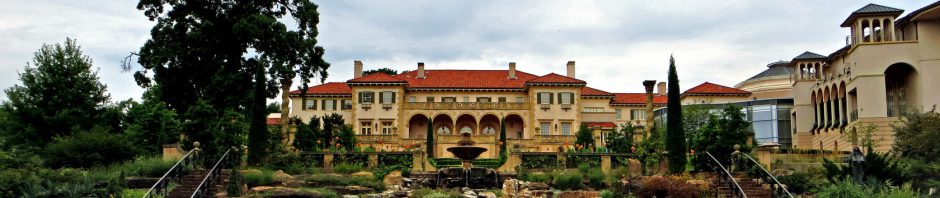
Collegiate teacher preparation in our state was originally done in “Normal” schools. The term arose from the French école normale, a sixteenth-century model school where teacher candidates were taught model teaching practices. The first three higher education facilities established by the Oklahoma territorial legislature in 1890 were OU, OSU, and the Territorial Normal School for teacher training in Edmond. That is now the University of Central Oklahoma, but I knew it in childhood as Central State University, where I competed in an annual piano contest.
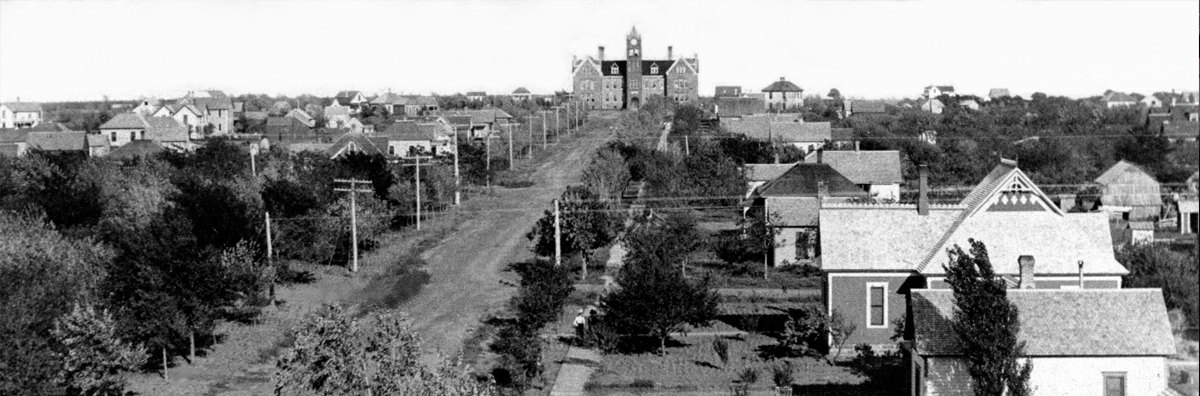
Territorial Normal School in Edmond
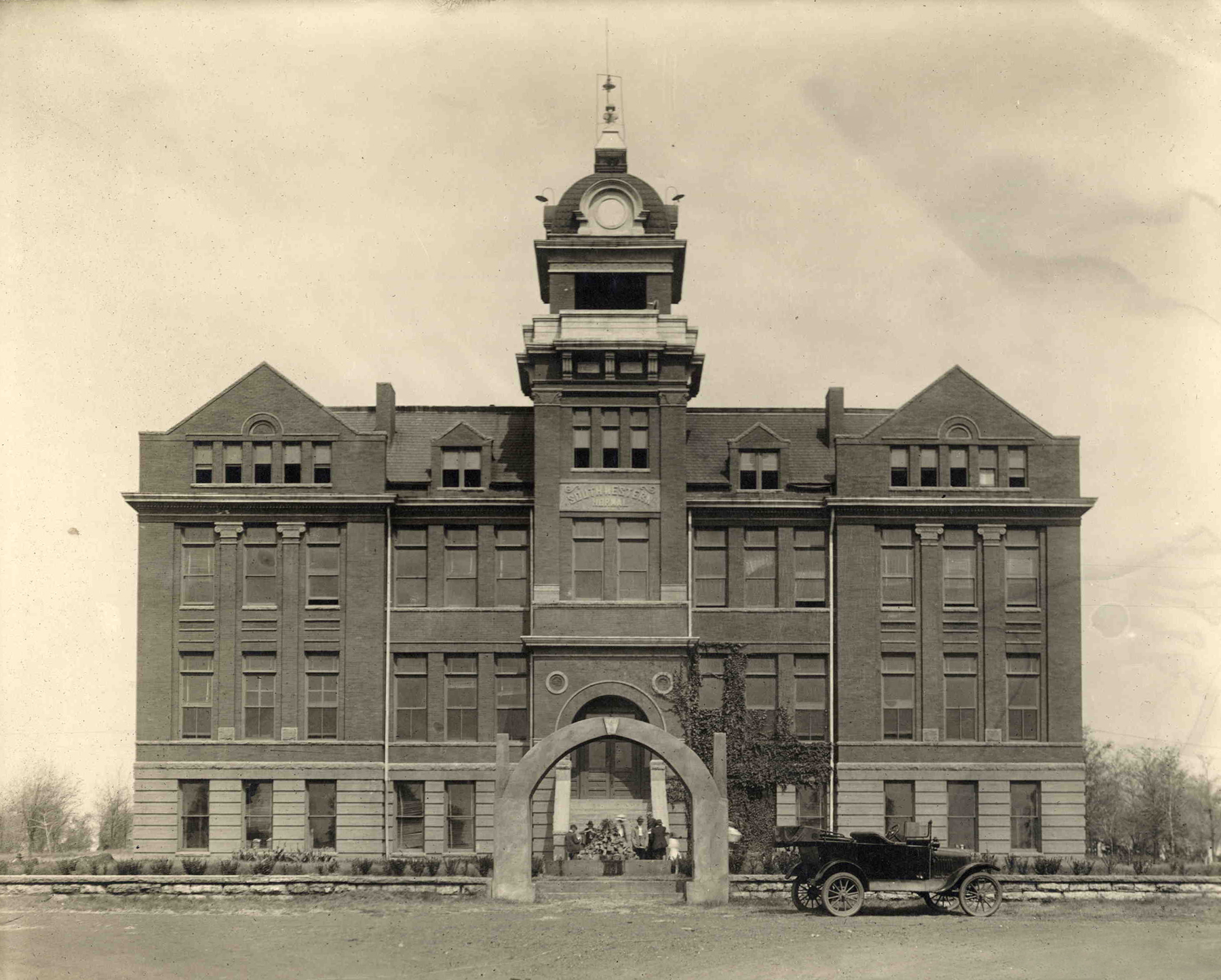
Southwestern Normal School administration building at Weatherford in 1917

Central State Normal was joined by Northwestern Territorial Normal School in Alva in 1897, which became Northwestern Oklahoma State University. That same year, the Colored Agricultural and Normal College was established in Langston for African Americans; it is now Langston University. In 1901, the Southwestern Territorial Normal School was established in Weatherford, which is now Southwestern Oklahoma State University. As a child, I also competed in an annual piano contest there.

After statehood in 1907, three additional normal schools were created in the eastern part of the state: East Central at Ada, which became East Central University; Northeastern State Normal at Tahlequah, which is now Northeastern State University; and Southeastern State Normal at Durant, which is now Southeastern Oklahoma State University.

The normal schools first standardized on six years of instruction: four years of high school courses and two years of college work, with graduates earning a life teaching diploma. They became state teachers’ colleges in 1919, adding two more years of instruction to confer bachelor’s degrees in education. In 1939 they were converted into state colleges to offer additional types of degrees, and by the early 1970s they were comprehensive regional state universities.

OU’s degree-granting College of Education was formed in 1929 by Dr. Ellsworth Collings. Enrollment rose from 100 to over 1,000 by 1946. Think about that: OU wasn’t a former normal school, and it still boasted 1,000 education majors in 1946, when the state population was 2.1 million. By 2022, the state had almost doubled to 4 million, but there were only 1,092 people in the entire state who completed a traditional teacher preparation program.

Collings might be best remembered today for Collings Castle at Turner Falls, the ruins of his vacation home, but I know him for Collings Hall at OU where I took some of my education courses.
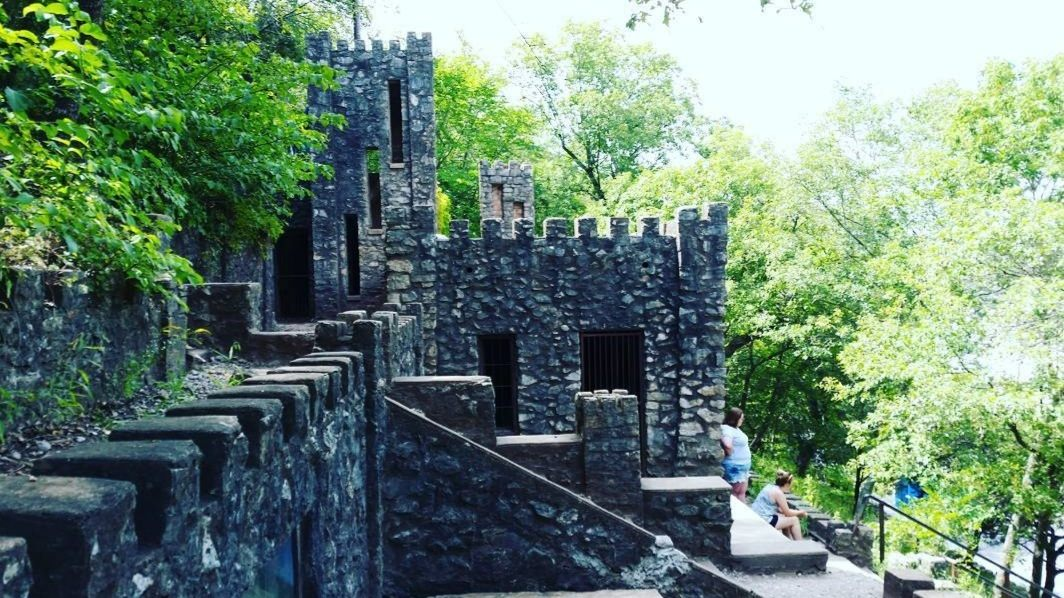
Collings Castle; photo by Darrell Powers

Nowadays traditional teacher preparation in Oklahoma is similarly hollowed out. There are still some students who benefit from teachers who had that full-featured preparation, but many who don’t. That isn’t normal, in two different senses of the word.

Posted in history, nostalgia, random | 1 Comment

Rattling Around

March 2024 | Photo Album

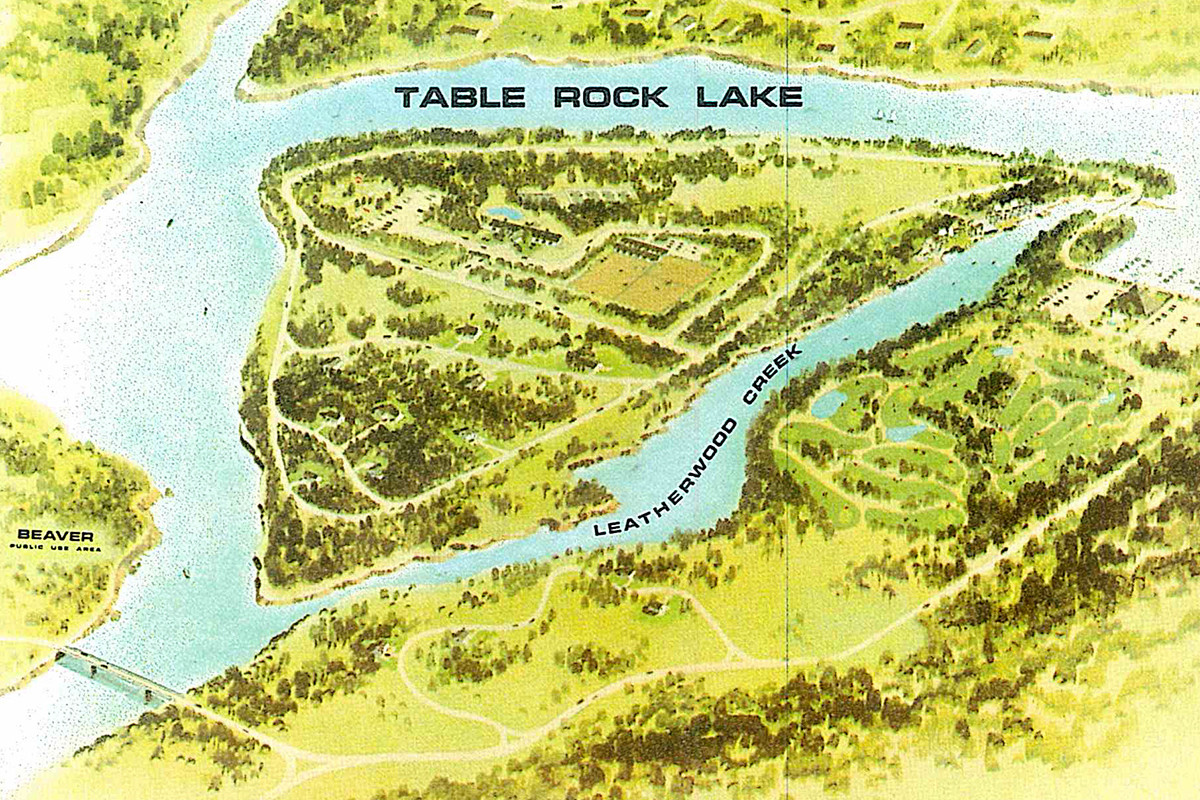
Table Rock Lake, in far northwestern Arkansas and southwestern Missouri, was completed in 1958. My parents purchased a tiny vacation home near its western end a decade later, in a county with many ties to my father’s ancestry. After 30 years of regular use, “the cabin” was sold off. Nevertheless, I have continued to vacation in that part of the Ozarks.

Growing up, I was aware of two retirement communities in northwest Arkansas. As I contemplate my own retirement within the next decade, I have opted to use some of our vacations as an opportunity to explore possibilities. If we ever were to relocate, cost of living would be a major factor, and both Missouri and Arkansas are, like Oklahoma, among the 10 cheapest states. So we have spent two consecutive Spring Breaks in rental homes in those retirement communities.

Bella Vista

Bella Vista, Arkansas was about 30 miles to the west of our lake cabin, or an hour’s drive given the difficult terrain. It was founded over a century ago as a resort, and it was converted into a retirement community in 1965. It incorporated as a city in 2006 and now has a population of over 30,000. Wendy and I spent part of Spring Break 2023 there.

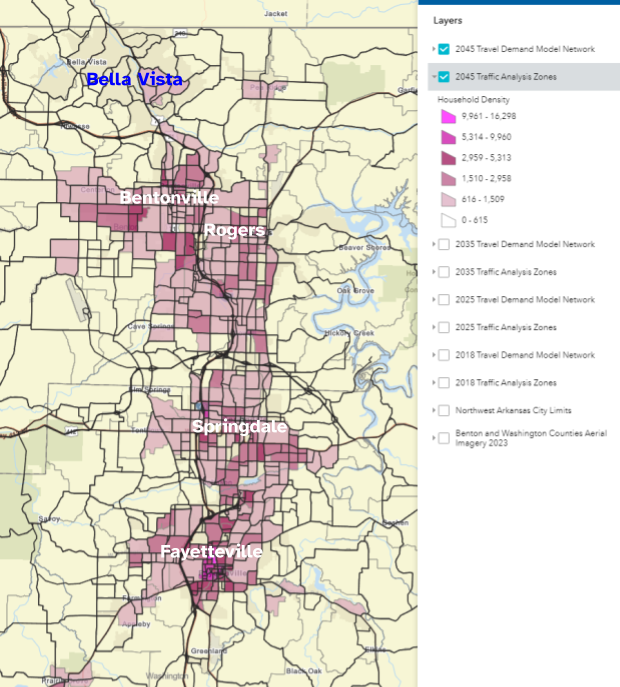
Bella Vista offers plenty of golf, but I have no interest in that. However, I do like to hike and bike, and I love mountain vistas. The community already has over 40 miles of trails, and it has a plan to have 150 miles of them by 2025. The big drawback to Bella Vista, however, is that it is at the northern end of the fast-growing Northwest Arkansas (NWA) metropolitan area that is approaching a population of 600,000.

I am no stranger to living in a large city: I grew up in Oklahoma City when that metropolitan area was itself growing from about 490,000 to 700,000. After my move to Bartlesville, I continued to visit as the OKC metro grew to over one million. But I have now spent 35 years in an isolated town of around 35,000 and dislike the traffic, noise, and the hustle and bustle of metropolitan life.

I certainly appreciate having the 1,000,000-strong Tulsa metro area less than an hour’s drive away, but I’m quite glad Bartlesville is not a suburb. Spending a few days in Bella Vista last year so that we could experience the traffic of Bentonville and the other components of the NWA area made it clear that I wouldn’t want to live there full-time despite its scenic area and extensive trail system.

2045 Traffic Analysis Zones for the NWA metro area

Holiday Island

Wendy and I have often vacationed near Eureka Springs, Arkansas. She enjoys looking at rocks in the streams off Lake Leatherwood, and I enjoy hiking, the vistas, and scenic drives through the Ozarks. For Spring Break 2024 I rented us a large home at Holiday Island, a retirement community at the western end of Table Rock Lake, just five miles north of Eureka Springs.

In 1965, Holly Corporation, owned by the Norsworthy family of Dallas, bought about 5,000 acres which they planned to use for a lake and golf resort, but they lacked the development capital to pull that off. So they sold their acreage to McCulloch Oil Corporation of Los Angeles, better known as the maker of McCulloch chainsaws. McCulloch also built resorts across the country, including Lake Havasu City in Arizona with its bizarre reconstruction of a London bridge.

Holiday Island in its early years

Holiday Island officially opened in 1970, and friends of my parents had a gift shop on the island back then. Below is silent home movie footage of me on Holiday Island in 1971 along with me visiting Eureka Springs with my parents.

A helpful article in Arkansas Business says that in the 1980s the marketers at Holiday Island were sending out 100,000 pieces of direct mail each week across the midwest, with thousands of potential buyers flown in on a McCulloch Oil airliner for free lodging, golf, and boat rides. About 1/10 of the prospects would buy in.

They ran out of the most desirable lots in the mid-1980s. Lots too mountainous to build on became inexpensive tickets to the facility’s two golf courses, but their appeal has waned with golf’s declining popularity. Now residents wonder if they are worth $250,000 per year in red ink, and they have built a couple of trails, but those are nothing compared to what Bella Vista has to offer.

By 1990, McCulloch Oil had been taken over by an associate of the dreaded Michael Milken, who wanted to abandon the Holiday Island development and its 2,000 residents. Tom Dees, a long-time marketer for the company’s resorts, bought Holiday Island and did his best to keep it going.

In 2006, a commercial center was built at the southern end, and we found that a convenient place to buy groceries for our stay. However, the 2008 real estate crash would eventually lead Holiday Island Development Corp. to forfeit almost all of its commercial property to a couple of banks.

The community incorporated as a city in 2020 and had a half-dozen home projects underway in the spring of 2021. It has grown to about 2,500 people, but Tom Dees died in June 2023, and the future of the community with its aging infrastructure is uncertain.

Living Big

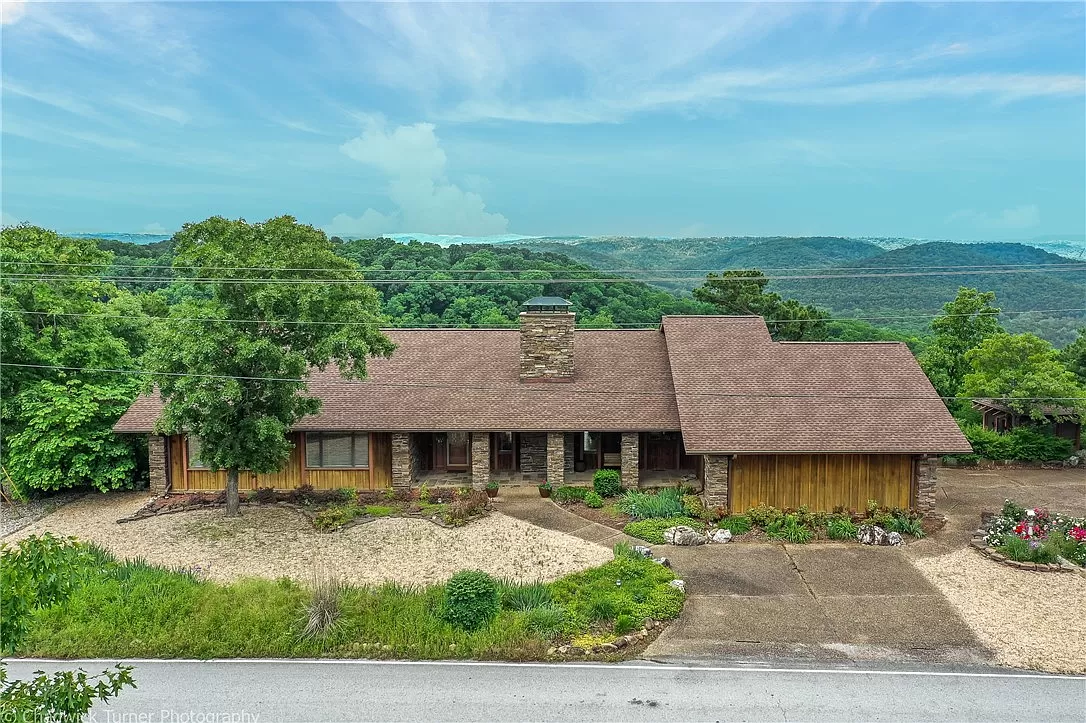
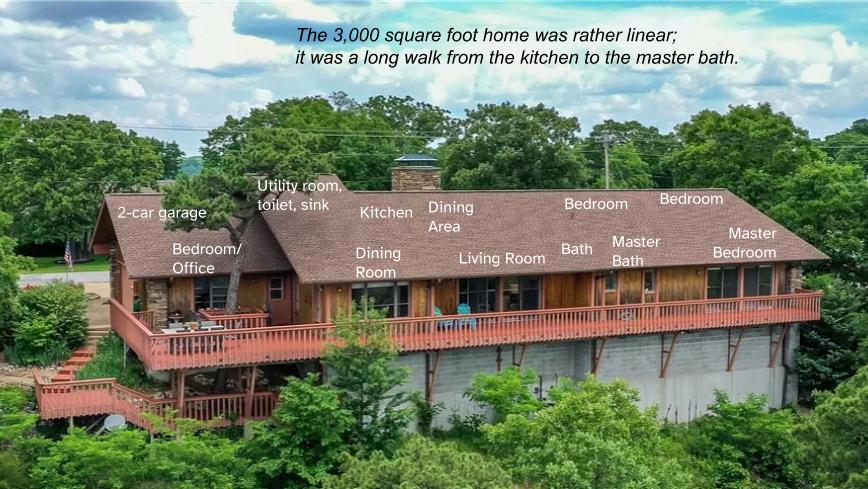
I rented a 3,000 square foot home in Holiday Island from Vacasa for $240 per night. That ensured we would have privacy, a deck with a beautiful sunset vista, and we could see what it was like to be there in a larger home. Although built in 1989, the home was resold in 2021 for $389,000 with modernized finishes.

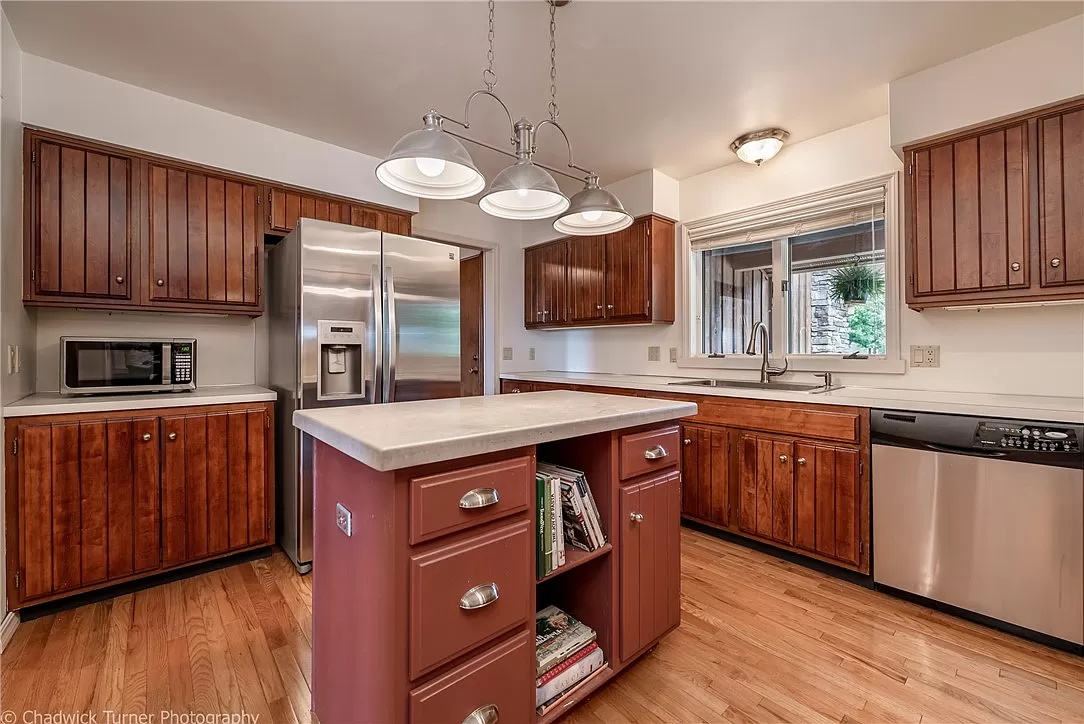
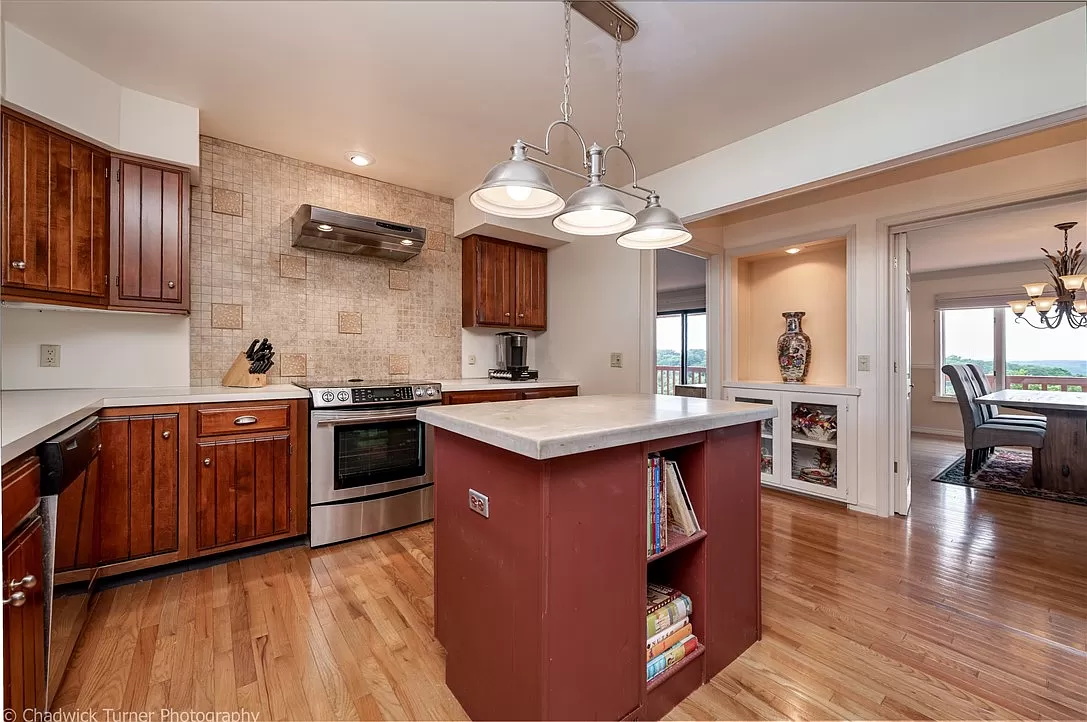
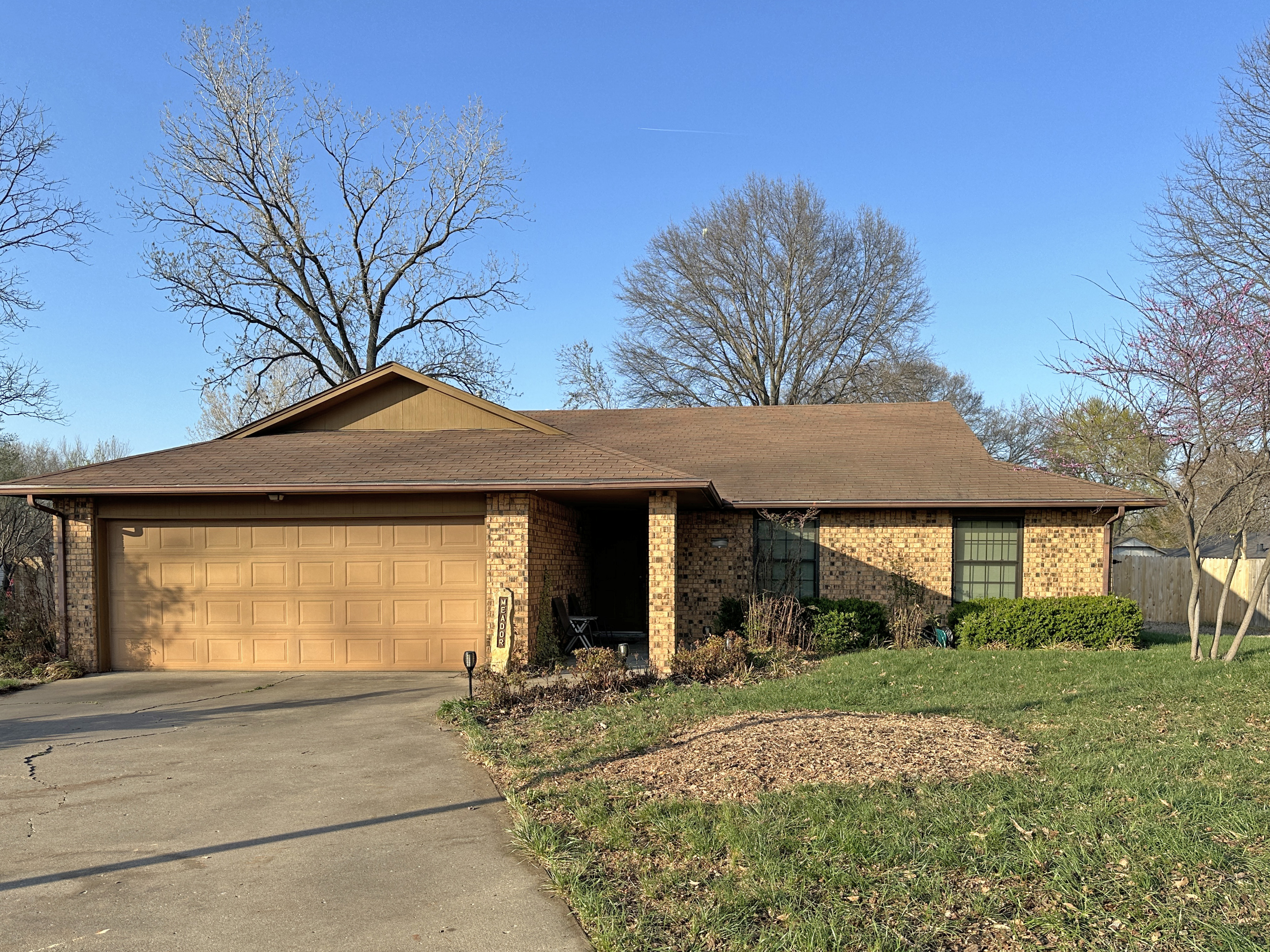
Our so-called Meador Manor in Bartlesville is a 1981 home of 1,600 square feet with three bedrooms, two toilets, two bathtubs, a galley kitchen with dining area, and a patio. The four-bedroom home we rented had three toilets, a bathtub, shower, kitchen with island, two dining areas, and a massive deck.

The 3,000 square foot home we rented in Holiday Island

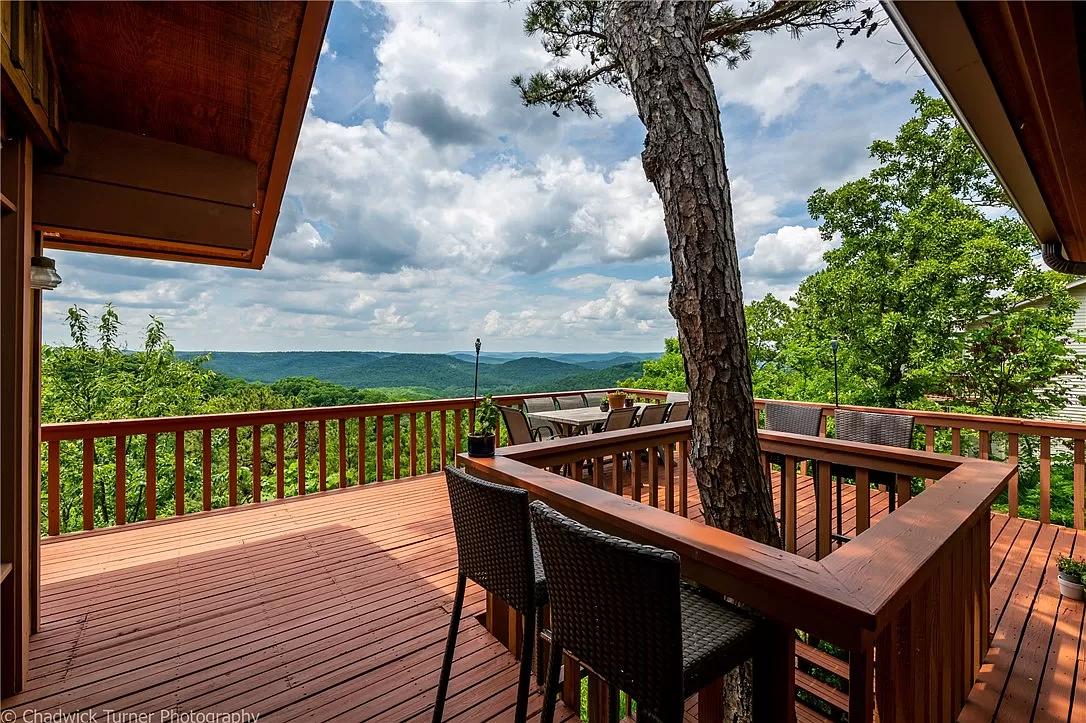
The deck was the home’s best feature. I loved its layout, especially having two seating areas that weren’t in direct view of each other, with a third option on a lower level. A screened gazebo off to one side would provide shade and bug protection in the humid summers.

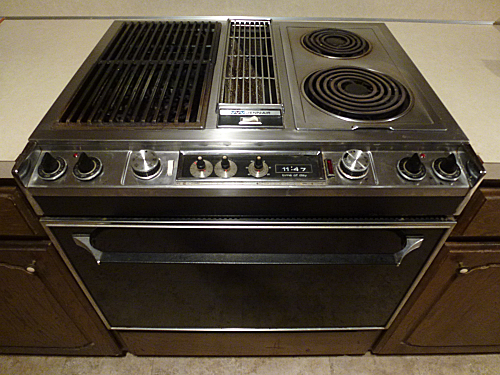
Our Jenn-Air range at home is from 1981

Inside, it was interesting to work in a larger kitchen that featured an island, as I’ve never lived in a home with that feature. As with most homes we rent, there was a modern range with an overhead vent and a glass cover over the electric coils, while Meador Manor still has its original 1981 Jenn-Air with modular exposed electric stove coils and a downdraft vent. I was glad to see that the microwave was a countertop unit, as I don’t like the elevated ones built above countertops or placed above a stove.

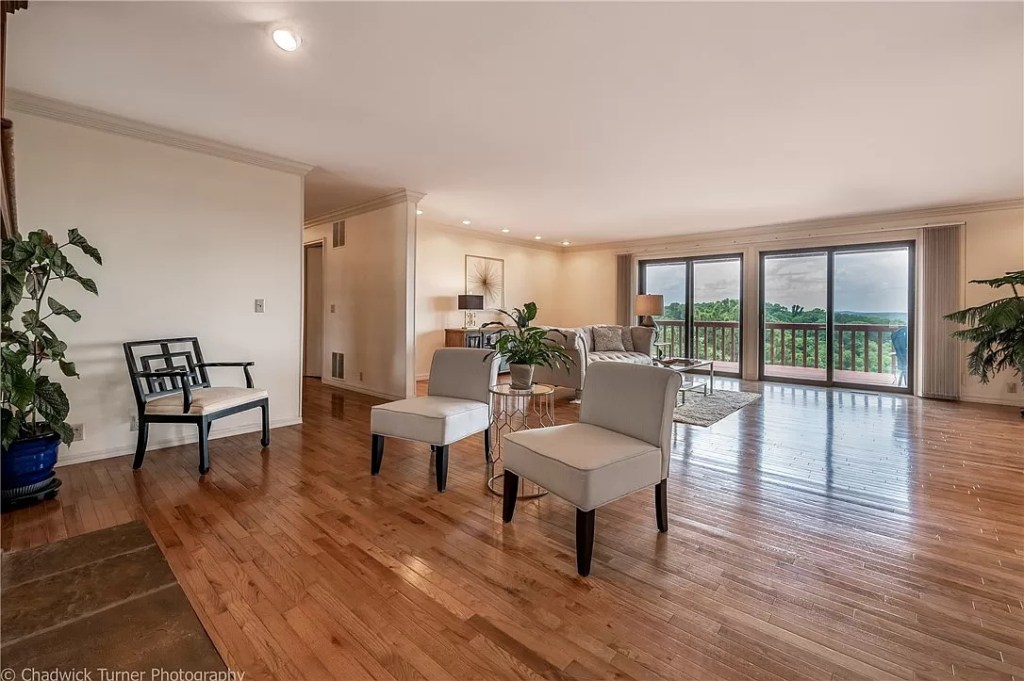
The most disconcerting things about the rental home were its size and linearity. It seemed like a hike from the master bath through the master bedroom, down a long hall, and across the expansive living room to the kitchen. The two of us rattled like peas in a pod in a home that was almost twice as large as what we are accustomed to. Wendy and I agreed that even if we won a lottery, we wouldn’t want a big home, let alone a mansion.

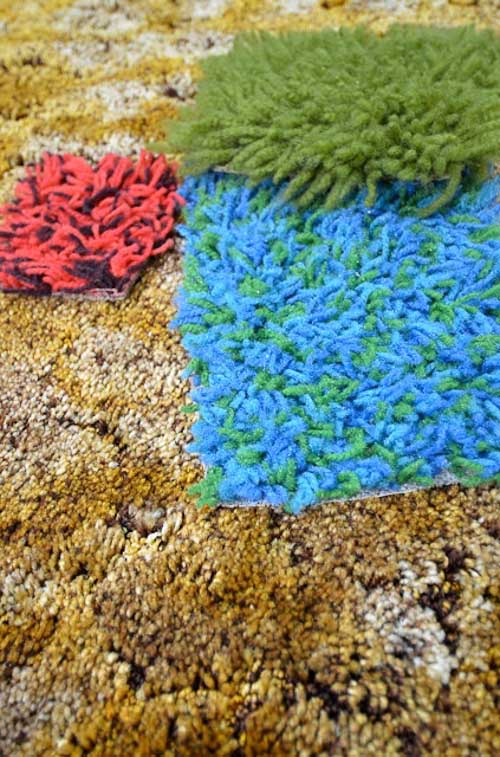
1970s carpeting

Another reason we rattled was a noticeable lack of carpeting. I have always lived in homes with wall-to-wall carpeting, which before World War II was a luxury out-of-reach of the middle class. The U.S. carpeting industry sold about six million square yards of tufted wall-to-wall carpeting nationwide in 1951, but that exploded to about 400 million square yards by 1968 when I was a wee lad. Wild colors and long shags were common; one of my childhood chores was raking the shag carpet.
But in recent decades consumers gravitated toward real or simulated hardwood floors, which were more neutral, considered more luxurious, and made it easier to “flip” a home to new owners. Some of this was fashion, where each generation tends to react against what was popular with previous ones. I also notice people with indoor pets like having robotic vacuums cleaning their hardwood floors and area rugs, while wall-to-wall carpeting and pets can be a problematic combination.

Wendy and I, however, love carpet for its warmth and sound deadening. I hate walking barefooted or sliding in my socks across an uncarpeted floor. We both noticed how loud the echoes were in the rental since it only had one area rug in the living room and two carpeted bedrooms; everything else was real or simulated hardwood.

We also love using DoorDash restaurant food delivery at home in Bartlesville, and while that service is available in Bella Vista, it is not practical in little Eureka Springs or Holiday Island. Finally, while I’ve never had an accident in over 40 years of driving the treacherous winding highways of the area, I wouldn’t want to face that on a daily basis, especially as I age.

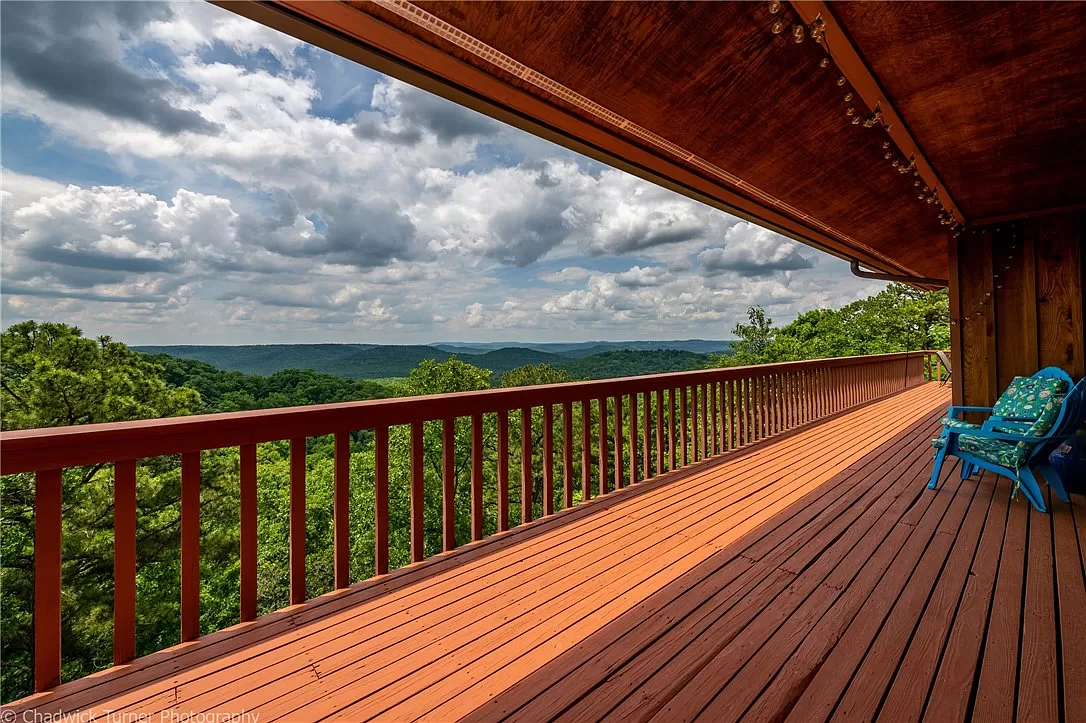
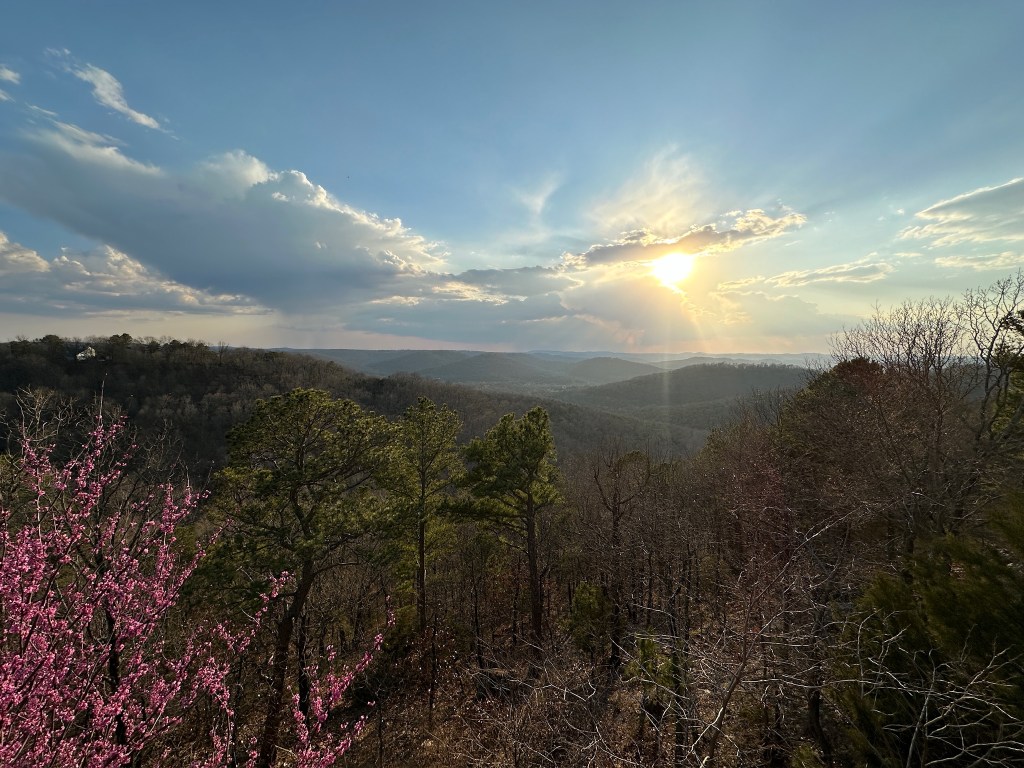
So we have scratched off a couple of retirement living options off our list, and I have a greater appreciation for our current living conditions. But I do want to give full credit to the view from that deck!

Afternoon view from the deck in Holiday Island

Lake Leatherwood

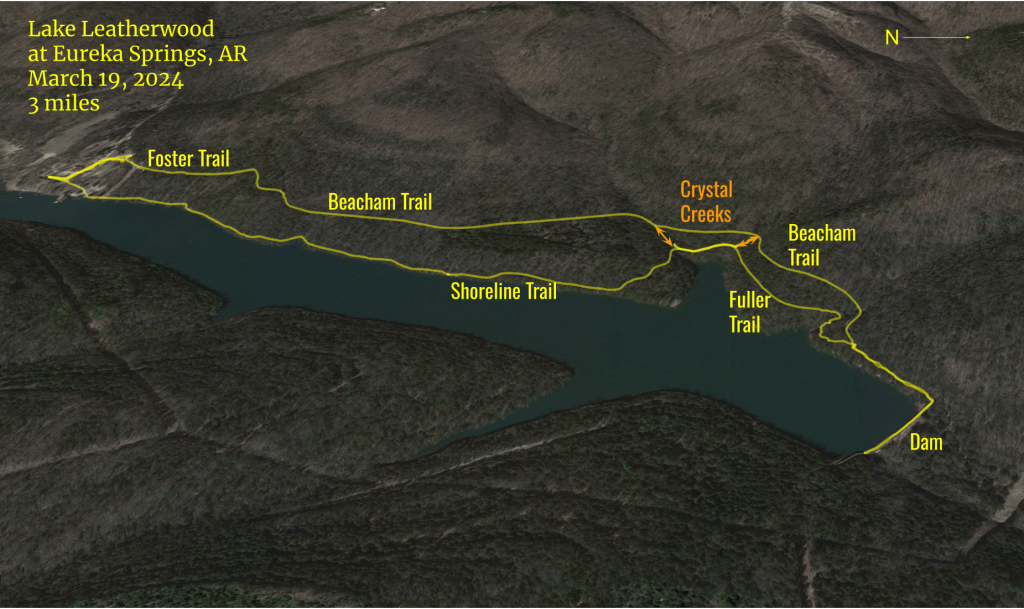
While on break, we did our usual three-mile loop at Eureka Springs’ Lake Leatherwood. We started out from the parking area along the Foster and Beacham Trails, which are both hillier and sunnier than the other options.

I was pleased to note that they have updated the trail signage with sleek new poles that should last awhile.

New signage at Lake Leatherwood

At what I call the Crystal Creeks, Wendy hunted for rocks with crystals while I hiked on to the dam.

Crystal creek at Lake Leatherwood
Wendy likes to search these creeks for rocks with crystals

In March 2021, the dam walkway was closed because the railings had deteriorated too much, so I was delighted to see that the gate was open: the dam had been repaired.

Lake Leatherwood dam walkway reopened
The open gate meant that the dam railings had finally been repaired

It turned out that in September 2023 the city accepted a $52,000 bid from Stacy’s Stoneworks to repair the railings. I was very glad to see that the city’s Parks and Recreation Commission is investing in upkeep.

More Lake Leatherwood dam rail repairs
The railings have been repaired

I strode out to the center of the spillway, where the wind was causing the water to surge.

Lake Leatherwood spillway
The surge of water from the top of the spillway was due to the wind

I enjoyed making a video sweep from atop the dam before returning to pick up Wendy the rock hound at the bottom of a Crystal Creek. We then took the scenic, and flat, shoreline trail back to the parking area.

There was a paddleboat out on the lake, and we passed a couple sitting by the lake smoking marijuana. Arkansas, like Oklahoma, now winks at the latter practice, allowing marijuana “for medical use”. I considered holding my breath to avoid secondhand sedation. My, how things have changed over my lifetime.

Paddleboat on Lake Leatherwood

We look forward to future vacations in northwest Arkansas, even though we wouldn’t settle down there. Much the same applies to other favorite vacation spots of ours: Santa Fe, New Mexico is fun to visit, but the winters are not to our liking, and I love visiting the Pacific Northwest in the summer while recognizing that the rainy and cloudy weather in other seasons would not appeal to me.

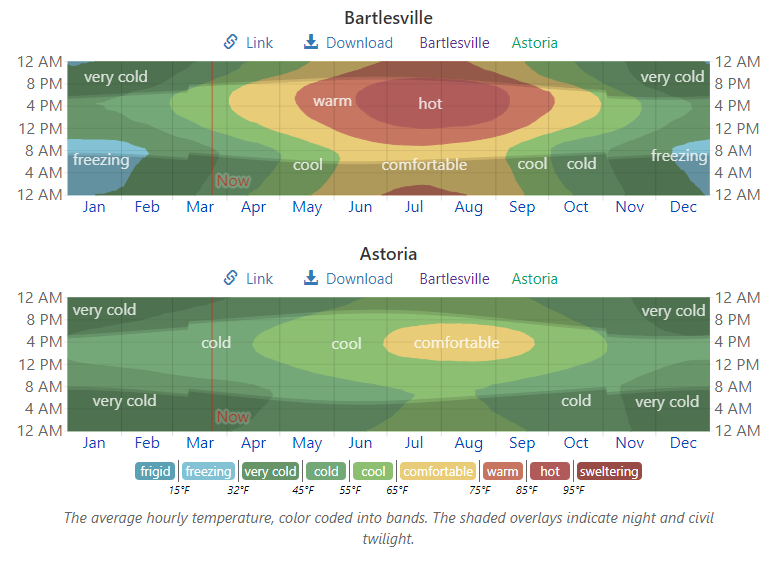
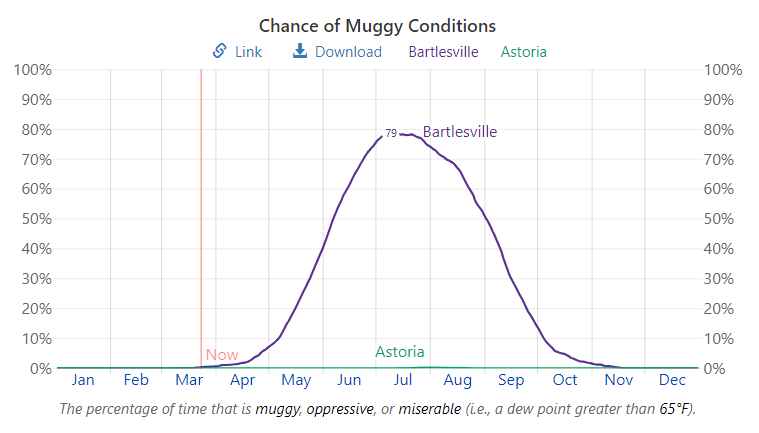
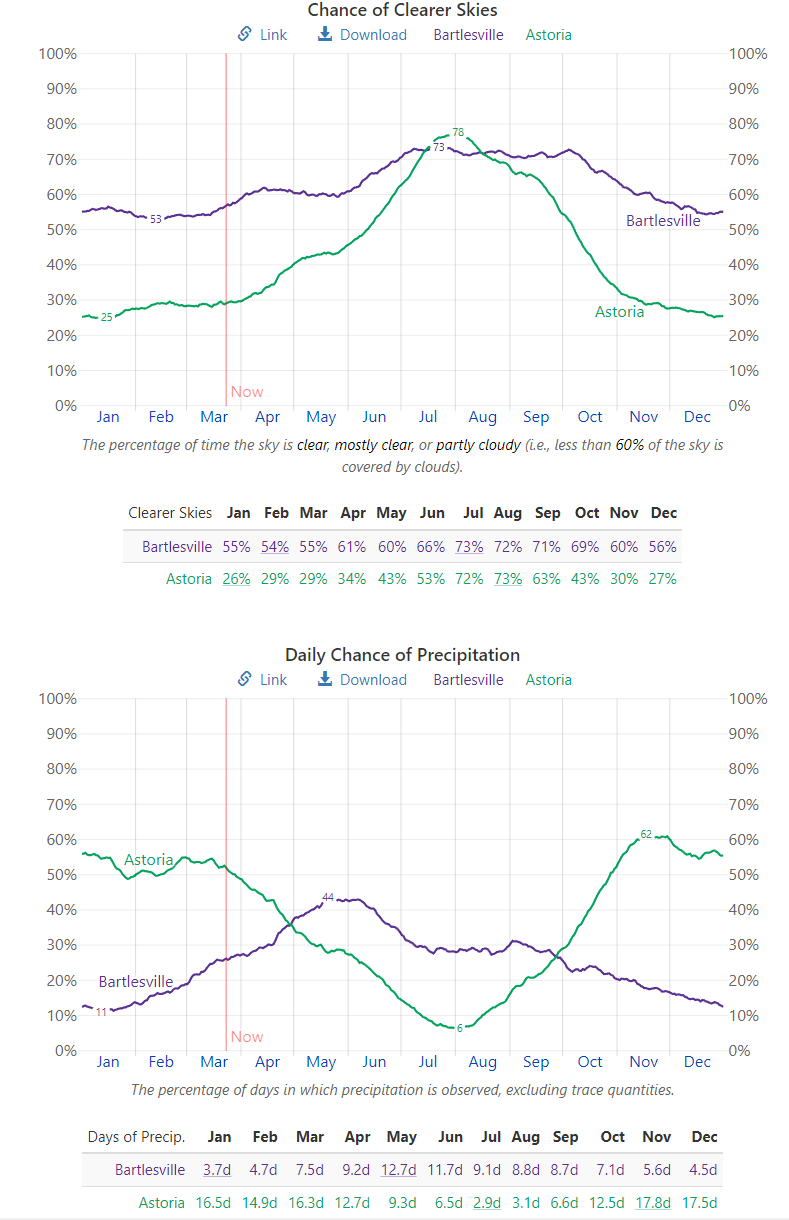
At this point, my inclination is to retire in Bartlesville but escape to the Pacific Northwest from June through September. Wendy has only been out there once, for our honeymoon in 2016, while I made summer trips there in 1998, 2005, 2006, 2008, and 2009. One of our favorite stops was in Astoria, Oregon along the mouth of the Columbia River a few miles from the Pacific Ocean. Below is a comparison of the climate there to that of Bartlesville.

Astoria, Oregon would be more to my liking than Bartlesville from June through September
I especially dislike muggy weather

Obviously, Astoria is not the place to be if you like to swim or lounge by a pool. And while its winters are not harsh, due to its proximity to the ocean, they are overcast and rainy. But from May through September the daily chance of rain is actually higher in Bartlesville than in Astoria.

Since Wendy has only seen northern Oregon and up along the coast of Washington state to Victoria, British Columbia, this June I plan to show her southwestern Oregon and far northwestern California. I’ll call it more retirement research, but of course it will really be a nice vacation.

Photo Album

Posted in day hike, nostalgia, photos, travel | Tagged , , , , | Leave a comment

Two Hollers & Haunting Harmonies

Wendy and I spent part of our Spring Break at the Holiday Island retirement community in Arkansas. More on that will come in a later post; this tale is about our trips through two different hollers on the way there and back and the harmonies that haunt me.

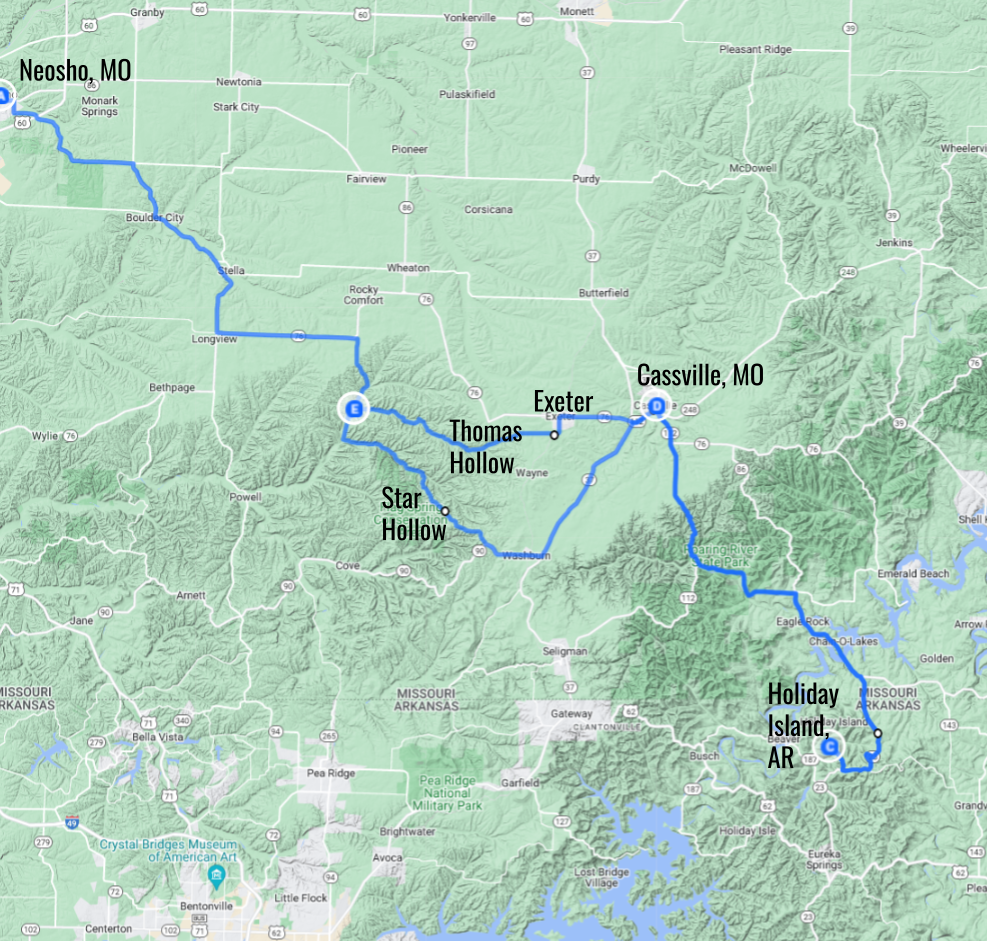
Southwestern Missouri is replete with ancestors of mine from my father’s side, and I have been vacationing there for a lifetime. The traditional route for my parents to get there from Oklahoma City was to follow Interstate 44 to Fairland and then head east on US 60 to Neosho, Missouri. From there we could take a variety of routes leading southeast to Cassville and on to our vacation cabin on Table Rock Lake. But we seldom if ever took the route I chose for this trip.

At Neosho I deviated from the usual options to take highway D past old Fort Crowder and follow it past Stella to intersect US 76 and follow it a few miles east where we could dive down into the hills and hollers southwest of Exeter, Missouri along highway U, seeking Thomas Hollow.

We drove the gravel roads of Star and Thomas Hollows

In the 1970s, my parents would drive south out of Exeter and turn west to drive into Thomas Hollow, where we would visit Bazil and Glee Duncan on their farm. I remember hunts held at their place, with many camping trailers, including my paternal grandparents from Independence, Kansas. Below is a clip from one such trip, shot by my father on standard 8mm film, so it is silent:

While my father’s film of the hunt camp are silent, my memories are filled with sounds. Certainly there were the bays of dogs on the hunt. But there were also sweet haunting harmonies from live music at some of the hunts.

I remember when the third iteration of The Foggy River Boys would sing at some hunts during the off-season for their show at Kimberling City and later Branson. Here is a look back at that group:

Years ago, I learned that Brian Wilson of the Beach Boys had been heavily influenced by the four-part harmonizing of The Four Freshmen:

My first exposure to live harmony singing had been The Happy Goodmans at one of their appearances in Oklahoma City:

Then that was reinforced by The Foggy River Boys at a hunt:

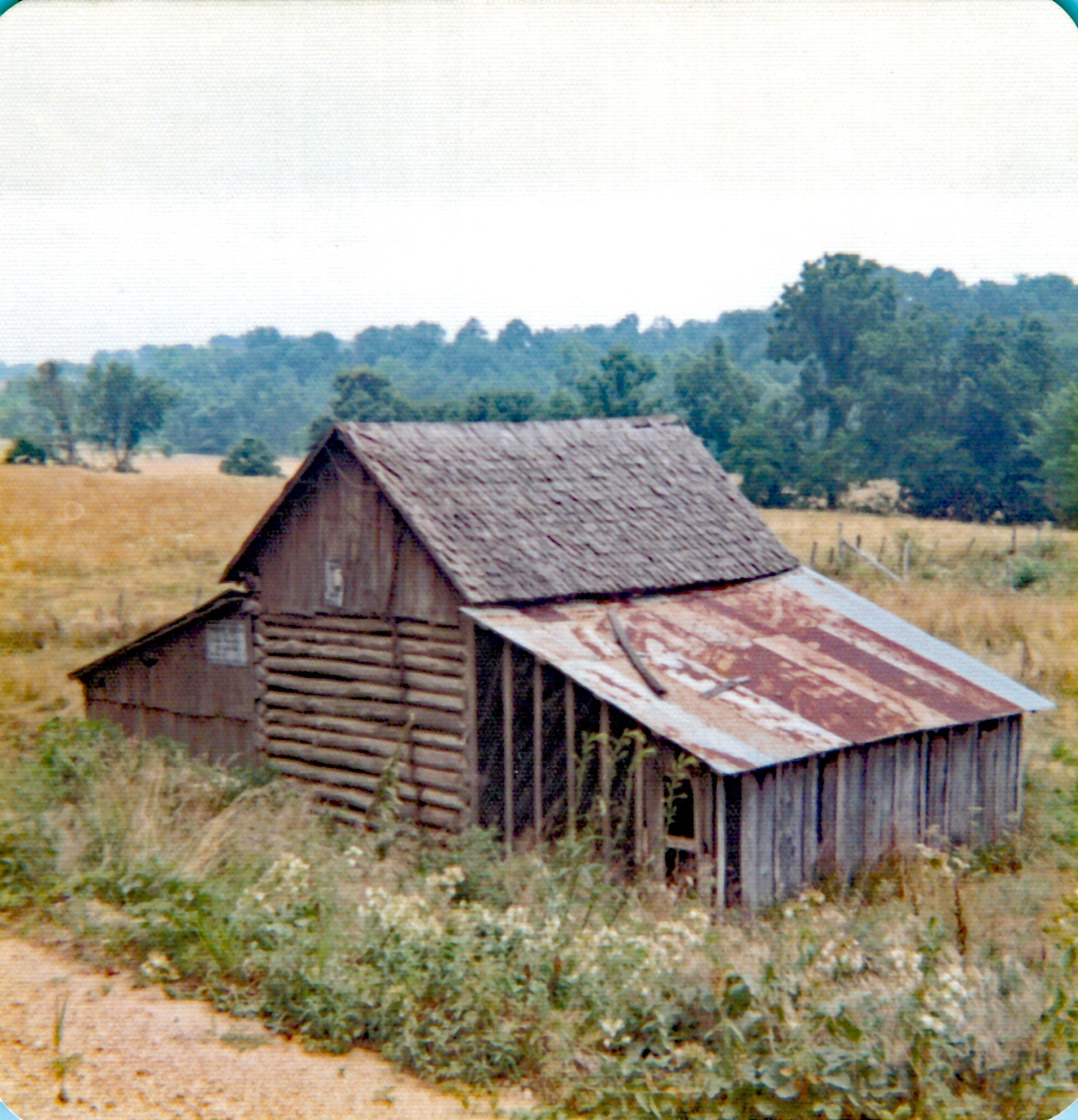
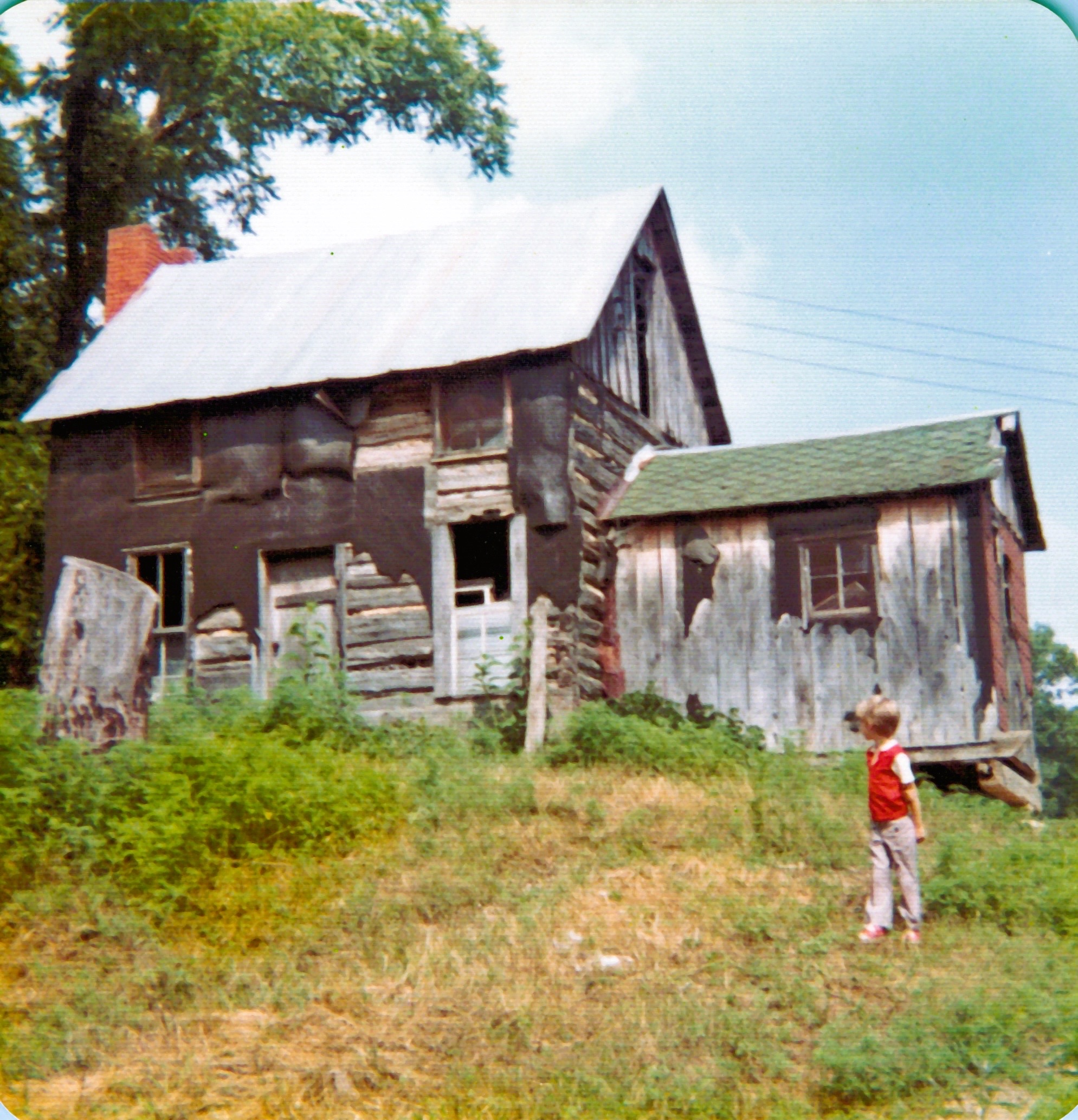
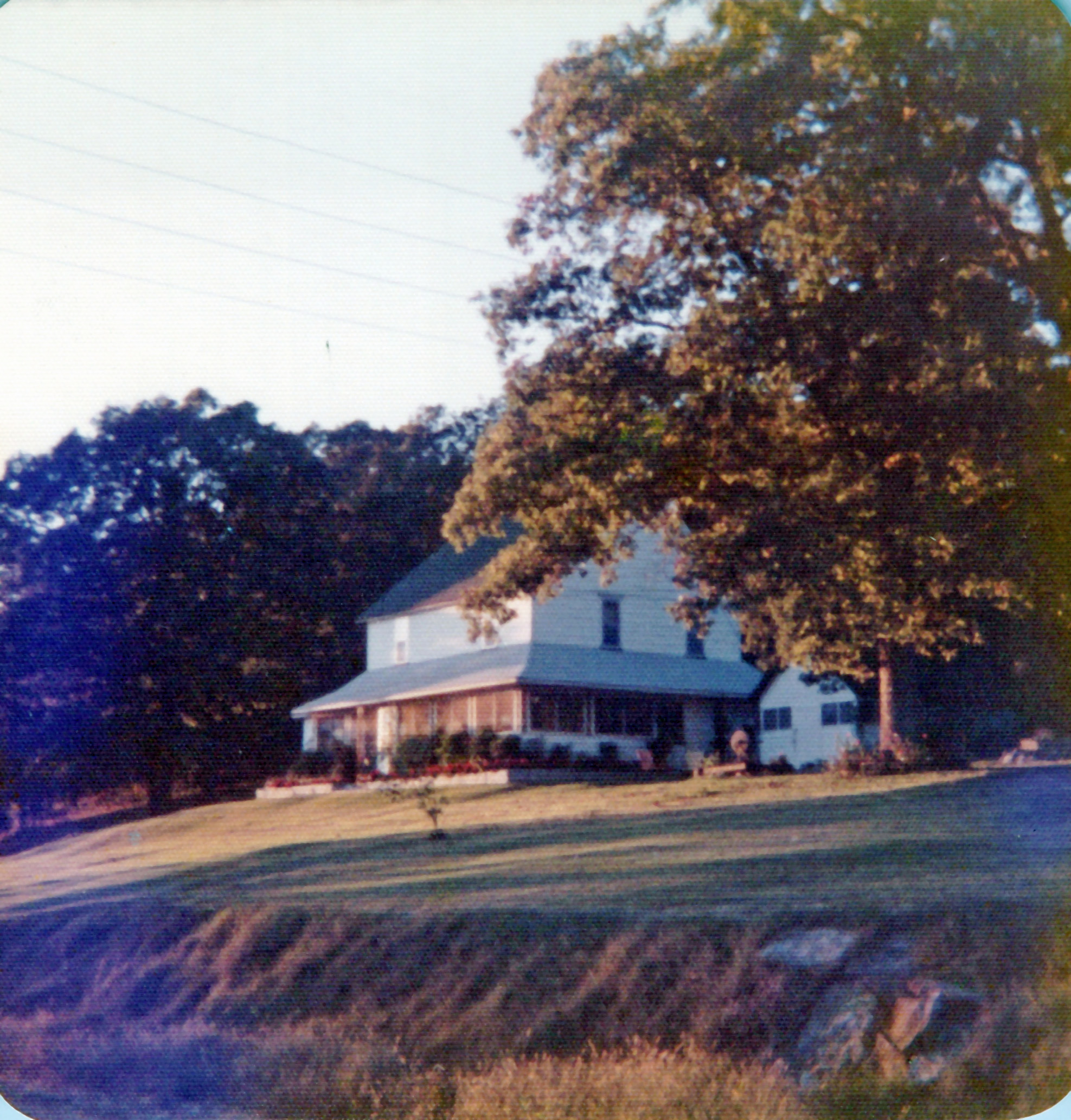
But what prompted my decision to return to Thomas Hollow was that recently I have been scanning old family photo albums, and I came across shots of over a dozen old barns in Thomas Hollow that we visited in 1973. I recognized a shot from a half-century ago of Bazil and Glee’s farmhouse, and then I saw it again as I started digitizing my father’s old home movies.

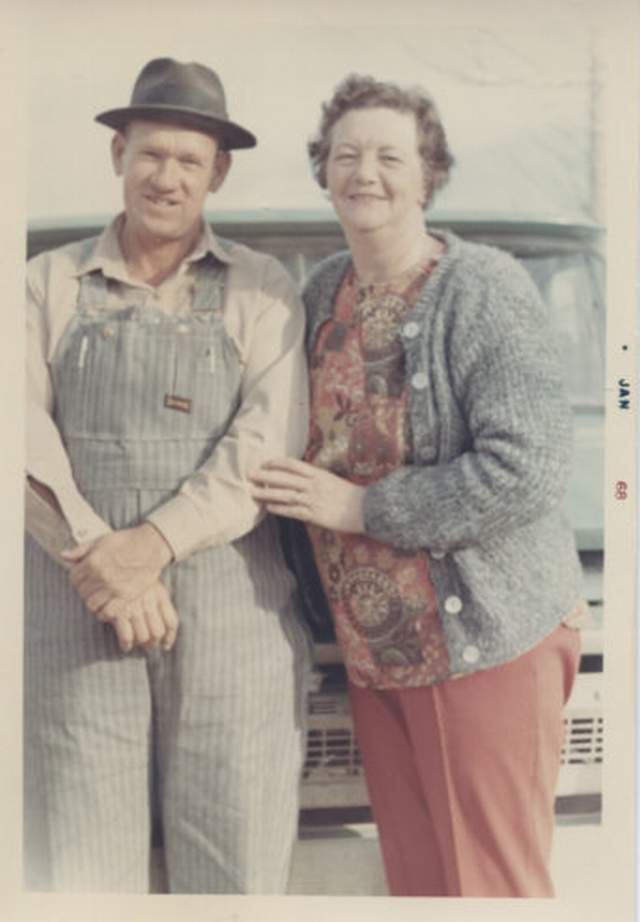
Bazil was a farmer and school bus driver who died in 1994 and Glee was a former schoolteacher who left us in 2000. I reckoned that their farmhouse was gone as well, but I wanted to see for myself, and the entire area is dotted with family history. But I hardly if ever had driven to Thomas Hollow, instead being chauffeured by my father, and my memories had faded after a half-century.

So my first attempt missed the mark, with me driving Wendy’s minivan past the turn for Thomas Hollow and instead leading us through Star Hollow to the south. It was still a fun drive, with us finally exiting near Washburn. I didn’t mention it to Wendy, but my paternal great-grandfather, who had been orphaned in the Civil War, once had a farm southwest of Washburn. He had a series of hill farms all over the area, moving so often that my grandfather once told my mother that his family had moved so often that the chickens would come up, lie down, and cross their legs to be tied for the next move.

My mother’s family moved 13 times in five years across Oklahoma, Arkansas, Texas, New Mexico, and Arizona when she was a teenager. So she retorted that they had moved so often that the chickens would come up, lie down, cross their legs to be tied, and they had the string in their bills. My grandfather really got a kick out of being one-upped by her.

My paternal grandparents when they were courting, circa 1915 or 1916

If we had headed south to Seligman, we would have passed near to where my paternal grandmother was born in 1893. But we headed north to Cassville, where my paternal grandfather was born in 1892 in the Flat Creek valley at the southwest edge of town, in an old double log house which had once been a stagecoach stop along the wire road between Springfield, Missouri and Fayetteville, Arkansas.

My grandparents married in 1917, had two daughters, and moved to Dewey, Oklahoma in 1923, where my father and his younger sister were born. The family then moved to Grabham Station outside Independence, Kansas in 1936. My grandparents were married for over 68 years, a feat I cannot match since I didn’t get married until I was almost 50.

Anyway, having missed the hollow on our way to Arkansas, I decided to try again a few days later on our return to Oklahoma. I knew my memories would allow me to find it when approaching from the east.

We drove west from Cassville to Exeter, turning south on MM past Maplewood Cemetery, which is the resting place for a great-grandfather and great-grandmother, a great-grand-uncle, a grand-uncle and his wife, two grand-aunts and their husbands, and probably some other relatives of mine.

We then turned west on Farm Road 2190 and successfully traversed Thomas Hollow, where I readily located what was once Bazil and Glee’s farm. Their old farm house has been replaced with a new one. Now knowing where to look, I was able to use Google Earth to see that the farmhouse was replaced sometime between 1996 and 2003. But the fields where the trailers and tents once stood are still there, along with the deep woods where the dogs once ran.

I hid my emotions as we headed through the holler, haunted by voices that only I could hear. I heard Bazil laughing as my ten-year-old self told him a long joke about Datsun cars. The Datsun brand would be phased out a decade later, and Bazil was gone eight years after that. But his laughter will live on in me for awhile yet.

As for my haunting harmonies, by the early 2000s the Happy Goodmans were all gone and the Foggy River Boys had disbanded, but their euphonies live on via vinyl, magnetic tape, and digital technology…and in my heart.

Standin’ in the shadows
The man I used to be
Wanna go back
(Can’t go back, can’t go back)
Melodies awaken
Sorrows from their sleep
Wanna go back
(Can’t go back, can’t go back)

Don’t cry because it’s over. Smile because it happened.

from the poem Bright Days by Ludwig Jacobowski
Posted in history, music, nostalgia, photos, travel, video | 3 Comments

Landscaping Lamentations

The green thumbs of the former owners of Meador Manor should be stained red, given the poisonous and polluting species they planted. In the early 1990s, they completely reworked the yard, and admittedly it looked good when I bought the property in 1994. I do not enjoy gardening or yardwork, and I have added almost nothing to their designs. Instead, I have merely gradually eliminated some of their worst mistakes. This week came the most expensive fix, and that led me to share my landscaping lamentations.

The previous owners labored long and hard to rip out the front lawn, replacing clay soil with better topsoil and planting shade-friendly grass under the trees and plant beds on the front and back of the house. However, most of the plants were mistakes, and I haven’t done much better myself. Mea culpas all around.

Meador Manor in 1994 with two Bradford Pears, a River birch, and a redbud

Design Drawbacks

I like our Nandinas, but they have some drawbacks

The previous owners planted several Nandina domestica, Asian heavenly bamboo, on three sides of the house, and they lined the front sidewalk with dwarf Nana cultivars. I kept all of them, as I found the plants hardy and beautiful, especially liking the clumps of red berries on the tall plants. They survived decades of occasional drastic pruning with no watering or other care, only suffering in a couple of harsh winters.

However, every part of these plants is toxic to some animal, and cedar waxwings and cats should not eat the berries. They are now considered invasive in Texas, and I can’t recommend planting them.

I made the mistake of having a pest control company treat our yard a few times, and something they used poisoned the tall and dwarf Nandinas. They haven’t thrived since, and this spring I plan to cut down the ones in the front. Let the animals rejoice!

More successful were clumps of striped grass that were planted in front of the dwarf Nandinas along the front bed. Liriope, or monkey grass, is a member of the asparagus family from Asia, and the creeping form, Liriope spicata, has runners and will spread and smother out other plants. It also forms a welcoming environment for mosquitos.

Thankfully, what the landscapers planted decades ago was a striped variety of Liriope muscari, which forms clumps and does not spread with runners. It is very hardy and has narrow, arching leaves. In the late summer, it has pretty purple flowers. Early each spring I just lower the mower on each clump to cut off the withered yellow leaves to the ground, and soon pretty green shoots will appear.

If you plant Lily turf, use the Liriope muscari clumping type

Some choices by the landscapers, however, were so annoying that I eliminated them long ago. They planted a few Berberis barberry bushes, which sport vicious spines on their shoots. I would prune them back while wearing gloves and still get cut up, so those had to go. My torturers also planted some Lagerstroemia crepe myrtles too close to the corners of the house. The crepe myrtles shot up against the eaves of the roof, and even if I cut them off at the ground, they would just grow back. So I had to dig out their roots to eliminate them, which was a joyless task. The largest problem I inherited, however, was trees.

The Bad Bradford Pear

The Bradford pear is a cultivar of Pyrus calleryana, the Callery pear. Arborists made the mistake of importing it into our country multiple times. In 1916, the U.S. Department of Agriculture introduced it after the commercial pear industry was devastated by fire blight. The Bradford pear was used as rootstock for the common pear before its ornamental value was recognized.

Their pretty blossoms fool people into planting Bradford pears; don’t do it!

The Maryland Department of Agriculture started planting them in the mid-1960s as an “excellent option” for ornamental landscaping. True, the tree does have a compact, stable, and symmetrical shape and pretty blossoms, although some find them quite stinky. The tree is also fast-growing and disease-resistant.

By 1967, Oklahoma State University horticulturalists and county extension agents were recommending them across Oklahoma. The City of Bartlesville once planted a long series of them along the median on Frank Phillips Boulevard east of Washington Boulevard all the way to the Will Rogers school. I remember how yellow ribbons adorned them during the Persian Gulf War in 1990-1991. Many of them were also planted on the west side of Jo Allyn Lowe Park.

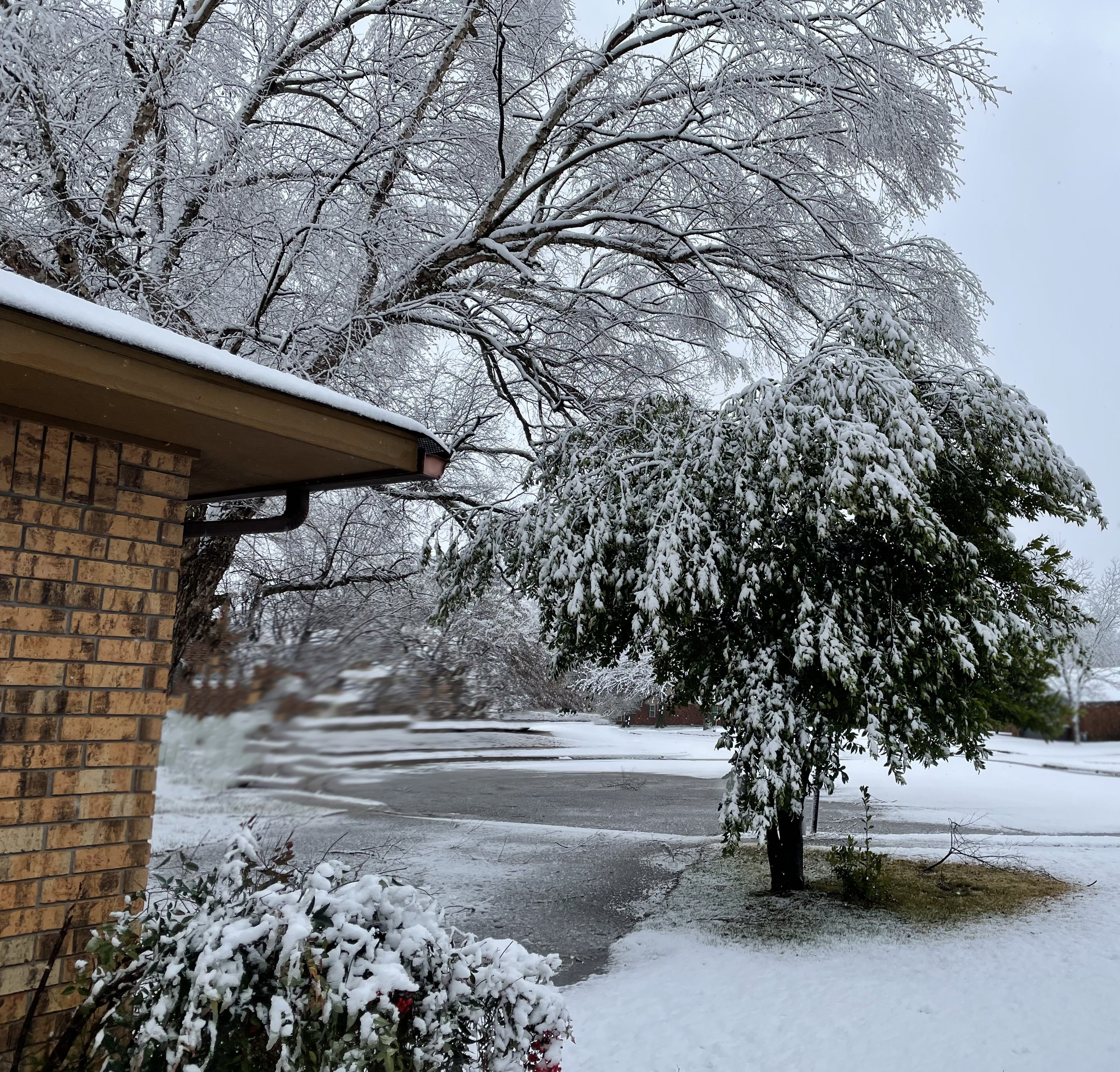
Unfortunately, as both I and the city learned, the Bradford pear is prone to splitting and cracking upon maturity. It has little chance of long-term survival in the high winds and storms of Oklahoma. As trees began to crack and crash, the city redid the medians, eliminating all of the Bradford pears there, and over the years many of them have been removed at Jo Allyn Lowe Park. But each spring those beautiful yet dangerous trees are increasingly apparent all over town.

One of my two Bradford Pears had a limb break off in a snow storm in May 2000. Thankfully it did not damage my neighbor’s house, but it sure came close. I paid a tree service to remove both of the trees and grind the stumps.

We now know that the Bradford pear is not only too fragile for our climate, but it is also a rapidly spreading and harmful invasive species. Native to Vietnam and China, the Bradford was originally a hybrid cultivar over here that couldn’t, in theory, reproduce. But a wide variety of cultivars were planted in high volumes, leading to cross-pollination and the production of viable seeds. It outcompetes native trees and you will see clumps of them spreading across untended areas of town, such as the floodplain south of Lowe’s and along one side of north Bison Road. I’m glad to note that Green Country Village, where my mother lives, has a plan to remove all of its Bradford pears.

Cherry Laurel

I replaced the two Bradford pears with a fresh mistake: a cutting of Cherry Laurel from my parents’ backyard in Oklahoma City. Prunus laurocerasus is a species of cherry native to regions around the Black Sea. I was attracted to its evergreen nature, since the big River Birch and small redbud in the front yard were always bare in the winter.

The shrub or small tree thrives in sun or shade, grows rapidly, and is commonly used in hedging. However, like the Nandinas, it is a toxic plant if consumed, and I discovered that it also can’t handle our snow and ice storms. At my parent’s house, it had grown in a corner of the fence, where it was protected. But it was exposed in my yard, and a bad ice storm in 2007 bent much of it over, such that I wondered if it would survive. It bounced back and still looked good in 2014.

The cherry laurel was bedraggled in a 2007 ice storm, but looked nice in 2014

However, a snow at the start of 2021 illustrated how fragile the tree was. Part of it broke and died, leaving it ugly and misshapen.

A New Year’s snow in 2021 showed how fragile the Cherry Laurel was

This week I had what remained of the original tree taken down and the stump ground down. There are still some big stems rising out of one its shallow roots which I plan to eliminate.

Leaving my lamentable side strip, let’s turn to my one decent tree, which thankfully declined to die despite my ill treatment.

Oklahoma Redbuds

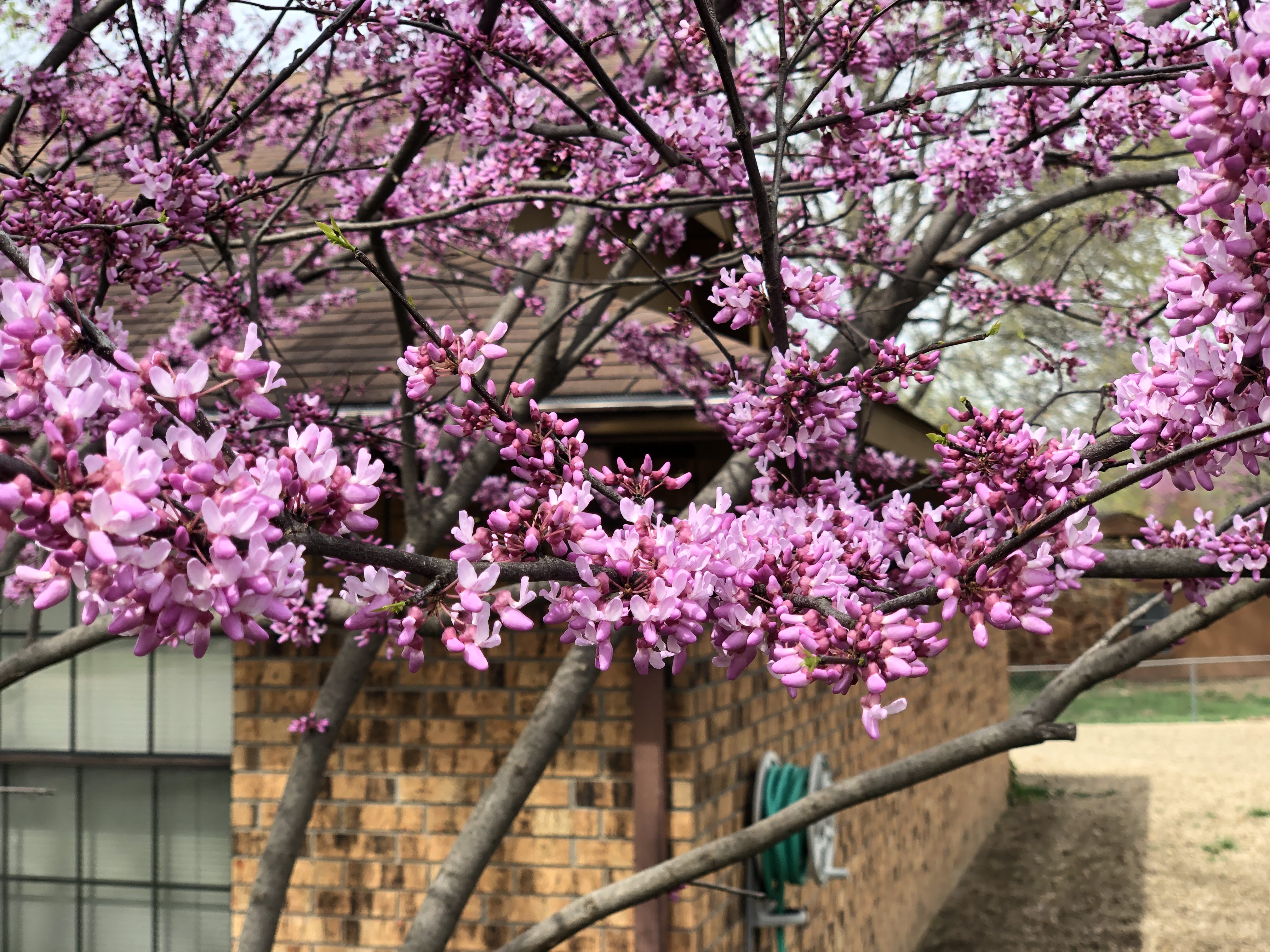
The Eastern redbud, Cercis canadensis, is a medium-sized tree from the Leguminosae family that boasts an array of purple-pink clustered blossoms in the spring. It is native to the state, hardy, and desirable. Okies know it as our state tree, but in the late 1930s, whether or not the Eastern redbud should be an emblem of Oklahoma became a bone of contention between two future Oklahoma Hall of Famers.

Spring blossoms on my redbud

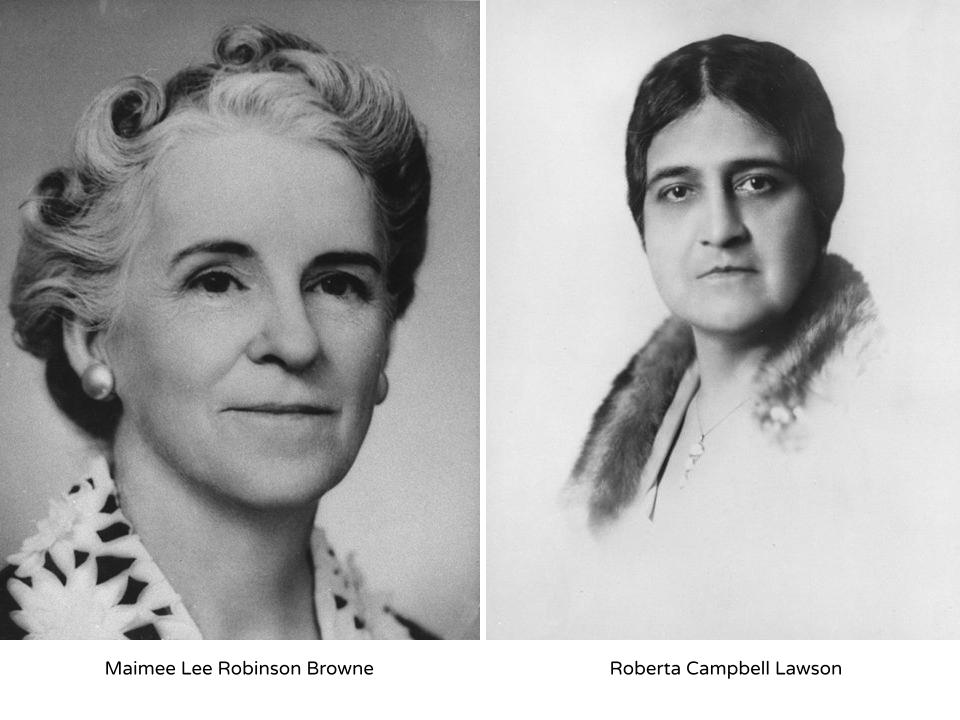
Maimee Lee Robinson Browne chaired the Oklahoma City Beautification Committee and pushed for the recognition. The Daughters of the American Revolution got a bill through the Sixteenth Legislature in 1937 and onto Governor Marland’s desk.

However, that did not sit well with Roberta Campbell Lawson, a granddaughter of Delaware chief Charles Journeycake and leader in the Federation of Women’s Clubs. Lawson sent Marland a telegram objecting to the redbud’s adoption as the state tree, saying it was the tree on which the disciple Judas hanged himself. She declared, “It would be most unseemly to have such a tree as Oklahoma’s state symbol.”

These two ladies took very different views on having the Eastern Redbud as the state tree

Lawson was referring to a myth that Judas Iscariot hanged himself from a Cercis siliquastrum tree, a European redbud, an event which supposedly changed its flowers from white to red. This weird idea may have arisen from a translation error, as the European redbuds were referred to as ‘arbre de Judee’ in French, meaning Judea’s tree, which probably got corrupted into ‘Judas tree’.

Despite the controversy, Governor Marland signed the bill naming the Eastern redbud an emblem of “sturdy and hardy pioneers.” Marland commented, “This resolution is signed at the earnest request of the good women of Oklahoma, and I hope they plant enough redbud to hang every Judas in the state.” He went on to say, “What is the date–the 30th? I couldn’t put this off until the first of April, could I?”

As for Ms. Browne, she led a campaign to plant redbuds, including a slew of them in what was once Platt National Park at Sulphur. In 1939, the legislature made it illegal to harm redbuds growing along Oklahoma’s highways. In 1971, Governor Hall signed a statute naming the redbud as the official tree of the state. Hmm…given the moral failings of both Marland and Hall, was Lawson onto something? Er, no.

My redbud was long an understory tree below the big River birch. As it grew, some of its branches had a shallow angle, and I would struggle to mow around it. In June 2010, a summer storm blew down one section that had begun to rot. Removing that left an asymmetrical mess that was still hard to mow under, so while I had the chainsaw out I cut it all down. I was left with about one-third of a rick of wood and a little stump in the lawn.

It wasn’t long before several shoots rose up from the stump, and over time I pruned those that leaned over too much. Eventually I had four that grew into a reborn tree in the shadow of the River birch. In the 2022 photo below, the redbud is just to the right of the edge of the house. The Lily turf striped grass clumps are visible behind and left of it in front of the hedge, and you can spot a large Nandina in front of the left window and dwarf Nandinas behind the Lily turf at the bottom left of the photo. That was before they were poisoned in 2023.

My reborn redbud is just to the right of the edge of the house

The River Birch

I was very glad that the redbud returned, but that victory brings us to what was literally the biggest yard mistake I inherited: the Betula nigra River birch and the fescue grass surrounding it. River birches are found along water courses and lowlands. Like fescue, they crave water.

For three decades I have reeled out hoses in the summer months and set up sprinklers for the shaded front lawn. When I wasn’t diligent in my watering, the fescue would die off, and for years I have paid to have it reseeded. Without watering, the River birch tree’s leaves would turn yellow and fall off in droves. I refused to have a sprinkler system installed, as that would reduce my incentive to eventually get rid of the annoying tree and pretty but demanding fescue grass.

The River birch did its best to mess with me. It was self-pruning, meaning it continually dropped thin branches that I picked up from the lawn, beds, driveway, roof, and street. I have filled an entire city trash can with those things at one go.

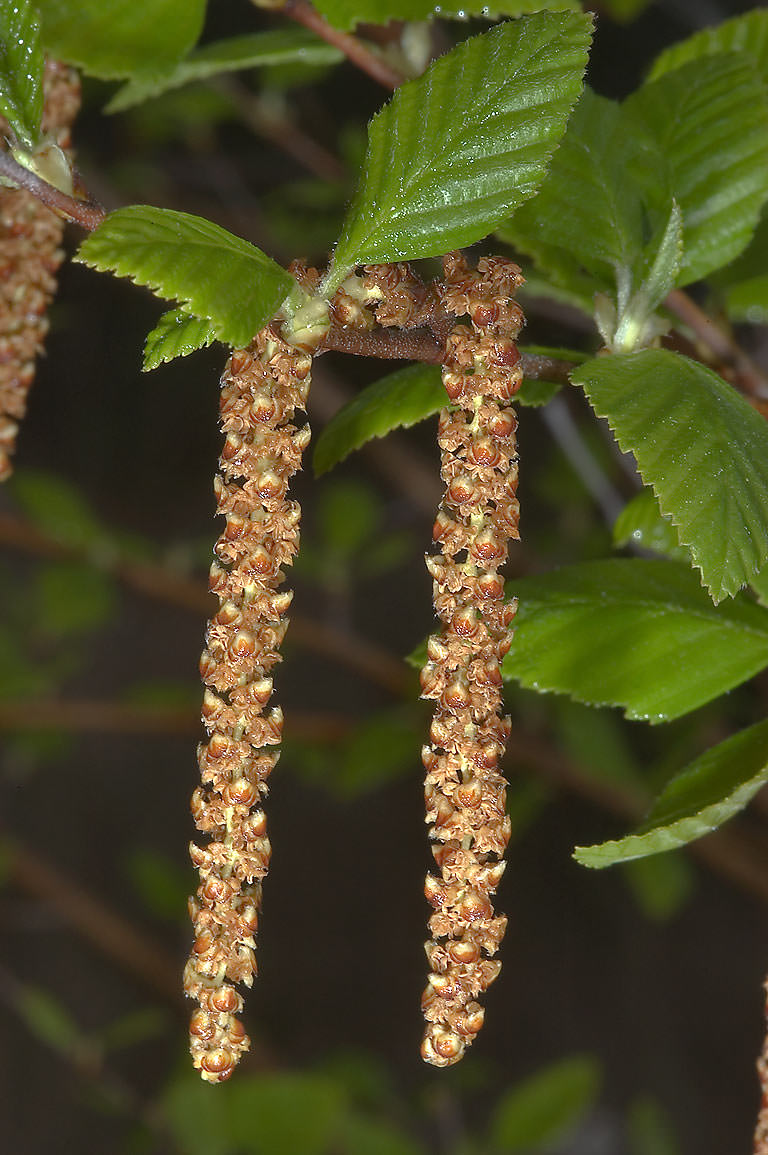
It also has male flowers that are arranged in catkins that are several inches long. They shed pollen and then drop from the tree, clogging the gutters on the house and piling up on any hard surface. Once they dry out, they disintegrate into little flakes that are perfect for clogging downspouts. The trees also have winged seeds packed between the bracts of female catkins on the tree which are the largest seeds of all birches native to the USA.

Back in 2015, I covered the gutters on the house with plastic filter screens. That prevented the downspouts from getting clogged by the catkins, but the darn tree covered the screens in a couple of areas, leading to water backflow that damaged the eave near the front door. So I had to remove the screens in a couple of areas and remember to clear the gutters.

The tree of course continued to grow over the past 30 years. A neighbor trimmed part of it back from over his driveway well over a decade ago to ensure it didn’t drop a branch on his vehicles, and every few years I would have to break out my pole trimmer to cut off branches that were too close to the roof or hanging down into the street or threatening the streetlight.

The River birch in 2022, dwarfing the Cherry laurel on the left and redbud on the right

The tree was lovely in the summertime, and its shade was nice. But I’ve reached an age where I should not be climbing up on the roof to clear gutters, I’m tired of picking up sticks, and Wendy rightly considered the tree a menace in a wind storm. But cost and procrastination combined to leave me in limbo until this past summer, when the latest drought made watering the lawn expensive and increasingly problematic.

So this month I finally contracted with Jeff Beck (918-766-5440) to have the massive tree taken down. I couldn’t resist peeking through the window blinds from time to time as he and his helper vanquished my nemesis of the past 30 years.

After one evening of work by Jeff Beck and his helper

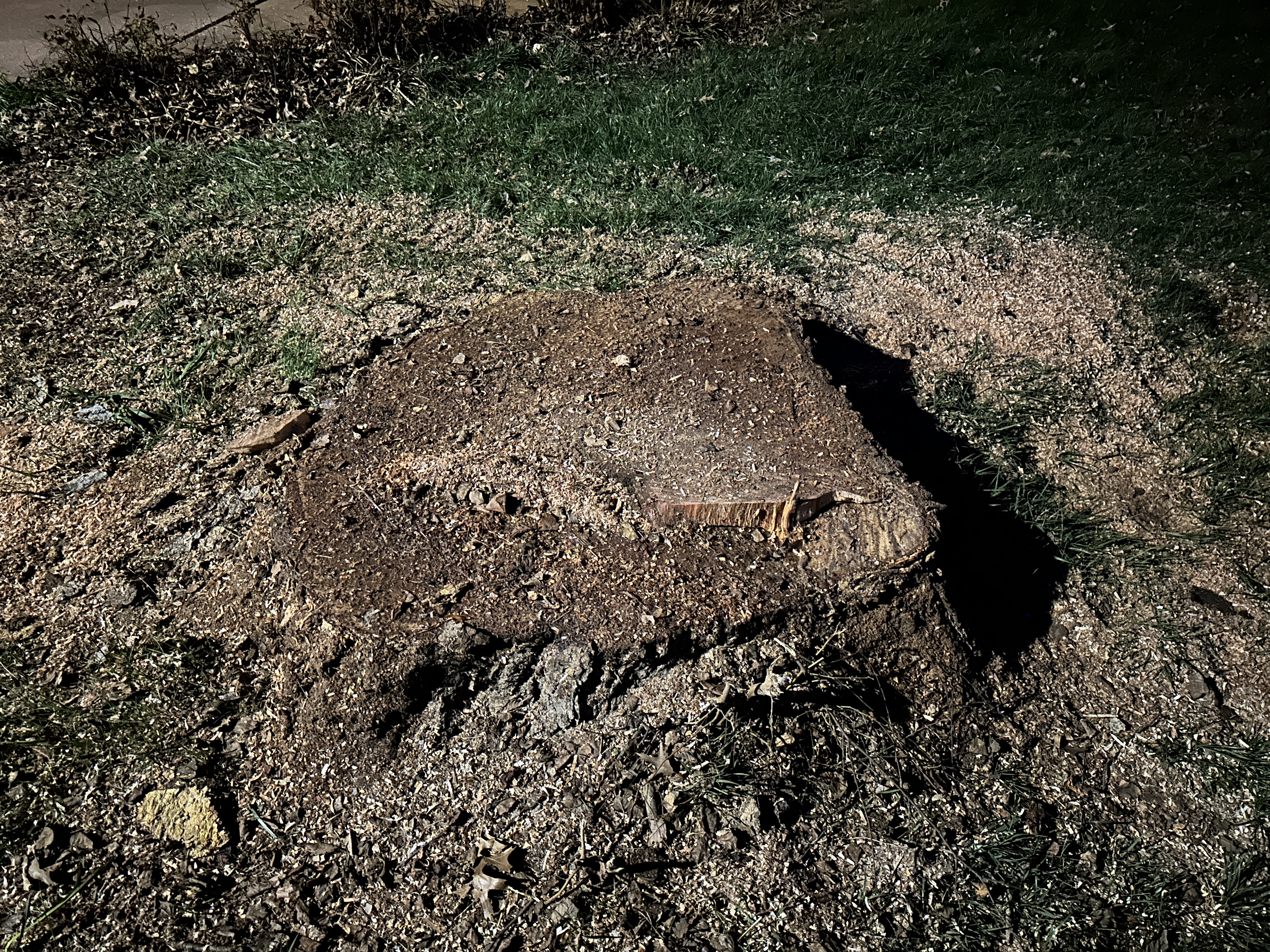
By the end of the second evening of work, they had reduced the tree to a stump that was over four feet in diameter.

On the third evening, they ground the stumps. I was impressed with their work.

It will be interesting to see how the redbud responds to the loss of its huge neighbor. I want to eventually stop watering the lawn, so I plan to seed Cynodon dactylon Bermuda grass over the now-sunny front lawn and have it choke out the fescue. Bermuda’s above-ground stolon stems and underground rhizome stems spread like crazy, and it is a mainstay of my back yard, which I never water. Bermuda tolerates drought well, simply going dormant in the hottest summer months. However, it requires full sun, so for decades it couldn’t grow out front. That has finally changed, and here’s hoping that I finally put one of my yard’s invasive species to good use.

Posted in gardening, photos, random | 3 Comments

The Elastic Heart of Youth

The elastic heart of youth cannot be compressed into one constrained shape long at a time.

Mark Twain, The Adventures of Tom Sawyer

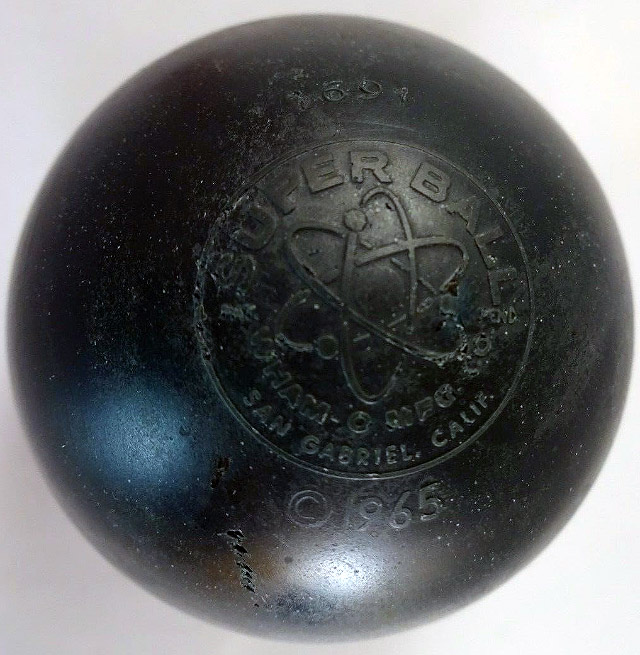
Almost all of my childhood belongings were sold off over time in garage sales, given to younger relatives or charities, or simply discarded. When I scrounged around for the oldest item I still possess, I came up with a bouncy ball from 1968.

This is actually the more attractive side of my rubber ball from over 55 years ago

My bouncy ball features in one the portraits my parents had taken of me at age two by Olan Mills.

Olan Mills was once renowned for photographic portraits. It was founded in the 1930s in Selma, Alabama by Olan and Mary Mills, working out of an old woodshed they had converted into a darkroom. They sold the concept of studio-quality photographic portraits door-to-door across the south, opening their first permanent studio in Pine Bluff, Arkansas in 1938. The company later shifted to telemarketing and in 1952 began selling a package deal. For three bucks, customers received three sittings to be taken any time in a 12-month period. 40 years later, the deal was still available for only $15. At one point the company operated 1,000 free-standing studios, and it thrived into the 1990s. Gradually it lost market share to competitors and was finally sold to Lifetouch in 2011.

As for my toy ball, it has lost much of its elasticity and the white surface is flaking off to reveal a pink core on one side, while the other side has become lumpy and discolored. Light, oxygen, and heat all take their toll on elastomers by adding crosslinks to the synthetic rubber molecules.

The sad state of that bouncy ball after a half century of storage led me to think about two bouncy balls I used back when I taught physics. One was a Super Ball which when dropped lost very little energy to heat via internal friction, so in physics jargon it had low elastic hysteresis and fairly elastic collisions. The other was made of polynorbornene and had such high hysteresis that it barely bounced with highly inelastic collisions. Here is a demonstration at the University of Maryland:

That in turn led me to link up Super Balls, Wham-O, and Bartlesville.

The Super Ball

In 1964, Norman Stingley was a chemical engineer working for the Bettis Rubber Company in Whittier, California. He experimented in his spare time. After combining polybutadiene and other ingredients and vulcanizing that with sulfur at 329 degrees Fahrenheit at a pressure of 3,500 pounds per square inch, he created a rubber with a very high Yerzley resilience of about 92%. It wasn’t durable enough to interest his employer, so he approached the Wham-O toy company.

Wham-O had made a fortune in the late 1950s with the Hula Hoop and the Frisbee. They agreed to play ball if Norm could make his compound more durable. Soon he had perfected it, Wham-O named it Zectron, and another hit toy was born.

If you dropped a Wham-O Super Ball, it would bounce back amazingly well, and if you threw one down, it would rebound high into the air. It had about three times the resilience of a tennis ball.

Wham-O sold the original 1 13/16″ diameter balls for 98 cents at retail and was eventually producing over 170,000 per day. They had sold six million by December 1965.

The original Super Ball

Bartlesville & Wham-O

In the late 1950s, Wham-O had a strong connection to Bartlesville, Oklahoma, where Wendy and I live. Prompted by the demand for plastics after World War II, Phillips Petroleum Company invested $50 million to bring Marlex to market in 1954. That synthetic polymer was invented by research chemists J. Paul Hogan and Robert L. Banks in their work on gasoline additives. They modified a nickel oxide catalyst to include small amounts of chromium oxide, expecting to produce low-molecular-weight hydrocarbons.

Paul Hogan & Robert Banks discovered ways to produce high-density polyethylene as well as crystalline polypropylene

Their experiment produced the expected liquids along with a white, solid material. That solid was a new polymer: crystalline polypropylene. Mass-producing it proved difficult, and the company was stuck with warehouses full of dingy, off-size pellets. The company searched for new customers, and Wham-O came to the rescue.

Wham-O introduced the Hula-Hoop in 1958, after a fad began in Norway of girls twirling rings made of cane. That toy craze traveled to Australia, where high demand led to the introduction of polyethylene hoops. When Wham-O introduced the toys to the USA, its first hoops were made of Grex, a plastic produced in Pennsylvania by the Skyline Plastics Company of Titusville. Skyline eventually had 125 employees working three shifts, seven days a week, to try to keep up with demand.

The first Hula-Hoops were made of Grex, not Marlex

The fad simply outstripped their capacity, and Phillips convinced Wham-O to start making hoops with Marlex. The warehouses were emptied of the old Marlex pellets, and the Phillips plant’s entire output was used for Hula-Hoops for almost six months, giving the company time to improve the production process and expand the available product grades. Phillips president Paul Endacott was so happy that he kept a hoop in his office for demonstrations. By 1960, Wham-O had sold 100 million hoops, and as the Hula-Hoop fad faded, Wham-O continued to use tons of Marlex — to produce Frisbees.

Time is the enemy of fads & flexibility

An original Wham-O Super Ball from 1965

By 1970, Wham-O had sold about 20 million Super Balls. It even spawned the moniker for the biggest football game of each year. The first NFL and AFL contests were labeled the “World Championship Game”, but the owners wanted a catchier title. After the second contest, Lamar Hunt, owner of the AFL’s Kansas City Chiefs, recalled watching his daughter play with a Super Ball a few days earlier. A few days before I was born, Hunt wrote to NFL commissioner Pete Rozelle, “I have kiddingly called it the ‘Super Bowl’, which obviously can be improved upon.” Evidently, it needed no improvement.

The Super Bowl lasted, but in the 1970s, the Super Ball fad began to fade, and competitors introduced a variety of colorful bouncy balls that sapped Wham-O’s energy.

I see that Wal-Mart sells a “Mega Bounce” ball with 85% resilience, but why settle for that when you can still buy a Super Ball from Wham-O?

Posted in history, nostalgia, physics, random | 1 Comment