Beautiful glasswork in the service of science

If you have ever pressed a flower in a book or observed a diaphanous jellyfish, you can grasp the difficulty of preserving their fragile beauty for later study. This is the story of a Czech/German glassworker and his son who, from 1863-1936, crafted thousands of beautiful and anatomically accurate glass models of hundreds of species of marine invertebrates and flowering plants.

This slideshow requires JavaScript.

An interest borne out of tragedy

Leopold Blaschka was born into a family of glassworkers arising out of the Izera Mountains on the border between the modern-day Czech Republic and Poland, a region known for processing glass, metals, and gems. As a student, he loved natural history and painting. After being apprenticed as a goldsmith and gemcutter, Leopold joined his family’s business in Aicha, Bohemia, crafting costume jewelry and other fancy glasswork.

Leopold Blaschka

In 1846 Leopold married Caroline Zimmermann, the daughter of a local mill owner, and they had a son, Josef. But both Caroline and Josef died of cholera in 1850. Heartbroken, Leopold was depressed and in poor health, leading a reclusive existence. A local doctor, who had a large library of natural history books, encouraged Leopold to find solace by collecting, studying, and sketching the plants in the countryside around his home.

Then Leopold’s father died in 1852. Further devastated by this loss, Leopold took time off in 1853 to visit the United States. On the outward journey from Europe, his ship was becalmed for two weeks near the Azores. Leopold spent the time collecting and drawing jellyfish and other marine invertebrates. He had never seen such animals before, except in book illustrations, and was fascinated by their glasslike transparency. He described observing their phosphorescence at night:

It is a beautiful night in May. Hopeful, we look out over the darkness of the sea, which is as smooth as a mirror; there emerges all around in various places a flashlike bundle of light beams, as if it surrounded by thousands of sparks, that form true bundles of fire and other bright spots of light, and the seemingly mirrored stars. There emerges close before us a small spot in a greenish light, which becomes ever larger and larger and finally becomes a bright shining sunlike figure.

Carolina and Rudolf Blaschka

After arriving in New York, he stayed for a few months, supplying goods to wholesale jewelers. Then he returned home to Aicha, where he married Carolina Riegel in 1854, establishing a glass workshop in his father-in-law’s house. He supervised workmen in producing glass eyes, costume ornaments, lab equipment, and other goods. In his spare time, he began crafting glass models of plants as a seemingly profitless hobby, with no idea of where his idle artmaking would eventually lead him and their only child, Rudolf, who was born in 1857.

From orchids to anemones

Leopold’s hobby caught the attention of Prince Camille de Rohan, who invited Leopold to his castle. From 1860-1862 he commissioned Leopold to produce about 100 models of nearly fifty species of orchids based on specimens from the Prince’s greenhouses. The Prince then displayed them on two artificial tree trunks in his palace in Prague. The prince also introduced Leopold to Professor Ludwig Reichenbach, the director of Dresden’s Royal Natural History Museum and Botanical Garden, who displayed the models in the garden’s pavilion in 1863. The glass orchids were later lost in a Belgian museum fire, but a bouquet of flowers which Leopold crafted in that era, shown below, survives.

Early flower bouquet by Leopold Blaschka, circa 1860-1865

Leopold moved his family to Dresden. While the glass flowers aroused little commercial interest, an Englishman living in Dresden remarked to Leopold how glass models of sea anemones, which are notoriously perishable, could adorn aquaria. He loaned Leopold a book with illustrations of sea anemones and corals.

Building a business

Remembering his own experience seeing sea invertebrates a decade earlier, Leopold used the illustrations to craft models which were purchased by museum director Reichenbach for display in dry aquaria. By 1871 Leopold had built the making of glass marine animals into a business, producing a mail order catalog that would offer hundreds of different models of anemones, worms, echinoderms, molluscs, and jellyfish. Reichenbach noted in the catalog how the glass models were better than specimens preserved in alcohol, as the glass models retained both their shape and color, while preserved invertebrate specimens inevitably subsided into dull shapeless masses at the bottom of their jars.

Young Rudolf Blaschka

Leopold and Caroline’s son, Rudolf, grew into a teenager who studied with his father and fully joined the family business by 1876 at age 19. They began maintaining living specimens in seawater aquaria, and Rudolf made a field trip to the Adriatic in 1879 to study more invertebrates.

Their work, a combination of both glassblowing and lampwork, steadily shifted from a more showy decorative style toward increased scientific accuracy. They sometimes incorporated the shells of terrestrial, freshwater, and marine gastropods and created glass bodies attached to the shells of bivalve molluscs. A fine speckled layer of pigment, often applied to the inner surface of the glass, conveyed a jelly-like translucence. Thicker skins and textures were crafted from deeper coats of paint or enamel, often mixed with a fine granular material.

A Blaschka octopus, which is quite beautiful even in its damaged state

They sold specimens to museums around the world, with some universities building up prodigious collections. They sold 784 models to a London museum, about 600 to Cornell University in Ithaca, New York, 530 to a Dublin museum, 350 to Harvard’s famed naturalist Louis Agassiz, and Boston University acquired 311 of them. Harvard still has 185 Blaschka models in its Natural History Museum.

Ward’s 1878 catalog of Blaschka models

Henry Ward, a protégé of Harvard’s Agassiz, became a professor of natural science at the University of Rochester in 1860. After creating a superb teaching collection, he went into business in 1873. Ward’s Natural Science became the North American agent for Leopold Blaschka, issuing a 22-page catalog in 1878 of 630 different Blaschka models, which grew to 700 in Ward’s 1888 catalog.

Ward’s Natural Science continues to sell biological models of various materials to this day, and our own Bartlesville High school has some of them, but none of the Blaschka models. By the middle of the 20th century, Ward’s was able to build a thriving business shipping live specimens to schools, which seemed to render the glass marine models obsolete. However, the diminishing populations of these fragile creatures has renewed interest in the Blaschkas’ work, with Cornell offering online photographs of 250 Blaschka marine models and Harvard now restoring some of its models.

Blue Button model

French photographer Guido Mocafico was photographing jellyfish in aquaria. While researching jellyfish online, he kept stumbling across images of the glass models, mistaking them for the real thing. So he decided to travel across Europe, taking photos of Blaschka marine models, using an array of backlights to make the sculptures glow as if lit from within.

Harvard’s Glass Flowers

Carolina, Rudolf, and Leopold Blaschka at their Dresden greenhouse

In 1886, George Lincoln Goodale, a botany professor at Harvard, traveled to Germany to try to persuade Leopold to abandon making marine models and concentrate again on plants. Goodale had seen the marine models and knew that glass models would solve his problems with flower specimens which lost their dimensionality and eventually their color after pressing.

Leopold was reluctant, given the general lack of appreciation for his earlier plant models and the loss of so many in a museum fire. But Goodale eventually persuaded Leopold to make a few samples. Even though they were badly damaged by U.S. Customs, Goodale appreciated the work and showed them widely, convincing his former student Mary Lee Ware and her mother Elizabeth, who were independently wealthy benefactors of Harvard’s botany department, to underwrite the commissioning of glass flowers from the Blaschkas. The Wares were descendants of the Cabots, a wealthy family of Massachusetts ship merchants since the 1700s.

In 1887 the Blaschkas agreed to spend half of their time on the glass flowers, but found it difficult to split their time between the marine models and the flowers, deciding by 1890 they must devote themselves to one or the other. Harvard signed them to a ten-year exclusive contract for 8,800 marks per year, with arrangements to ship the items directly to Harvard where Mary Lee Ware and museum staff could open them safely in the presence of Customs officials.

Glass flower models in the Blaschka’s studio before being shipped to Harvard in 1891

Harvard sent the Blaschkas seeds, plant cuttings, and specimens, and the Blaschkas had their own greenhouse and garden in Dresden. The plant models were made with internal copper wire armatures with glass pieces slid onto them and attached with hide glue or melted glass sprit. The accuracy and skill of their work was amazing.

Rhododendron model by Rudolf Blaschka

In 1894 several of the Blaschka plant models were subjected to microscopic examination by Harvard botanist Walter Deane. He documented their scientific accuracy: one model he examined had 2,500-3,000 individual buds, blooms, and developing fruit, with each flower having its five petals and five alternating stamens, and the back side, even though not visible when on display, he found to be equally complete and accurate.

This slideshow requires JavaScript.

Benefactor Mary Ware in 1907

The Blaschkas used a mixture of clear and colored glass, with Rudolf painting many of the works with watercolors and oil-based paints. Mary Ware took an avid interest in the work and personally unpacked each model and made arrangements for Rudolf’s fieldwork. Rudolf traveled to the United States in 1892 and Jamaica in 1895 to study additional plants, making extensive drawings and notes. At that point, the Blaschkas were sending about 120 glass models to Harvard annually. Upon meeting Mary Ware on his 1892 trip, Rudolf described her as “a large blond lady of very lively temperament.”

One of Rudolf’s sketches

The Blaschkas plant models were crafted by lampwork. Instead of glassblowing with a furnace, they used the flame of a lamp to heat rods of glass which were softened and then pulled, shaped, and fused. Harvard has the lampworking table the Blaschkas used, with its foot-operated bellows providing a stream of air that intensified the lamp flame.

The lampworking table used by the Blaschkas

A letter of Leopold’s remarked, “Many people think that we have some secret apparatus by which we can squeeze glass suddenly into these forms, but it is not so. We have tact. My son Rudolf has more than I have, because he is my son, and tact increases in every generation.”

Leopold and Rudolf Blaschka

Leopold passed away in 1895, but Rudolf continued the work at a slower pace to achieve higher levels of perfection. By the early 20th century he could not buy glass of suitably high quality and started making his own, as well as the enamels which he powdered to use in paint and colored glass. Mary Ware encouraged him, supporting his glassmaking experiments.

A glass flower by the Blaschkas

A lifetime of dedication and support

Rudolf married Frieda Richter in 1911, when he was in his mid-50s. Mary remained a generous benefactor and correspondent. Rudolf’s mother, Carolina, passed in 1923. When Mary Ware visited Rudolf for the third and final time in Dresden in 1928, with six years having passed since the last shipment, she wrote of the 71-year-old craftsman, “I was daunted to see what seemed a little old man, legs that were not strong, very rounded, stooped shoulders, and an exceedingly white face. He must have dropped nearly two inches in height, his hands were somewhat out of shape from rheumatism.” But she was reassured when he showed her his new techniques for enameling the models with his powdered glasses:

His movements are quiet, deft, soft in laying down or taking up where speed or a miscalculated movement might ruin the work of hours. It all leaves you breathless that anyone can and will do such work… Mr. Blaschka’s head and bearing are very expressive, and I wished I could catch a photograph of his profile as he stood for a few moments, a plaque with a model on it held in both hands. His whole expression of absorbed, concentrated study was worth keeping, had it been possible.

A rotten apple that could last forever – one of the final works of Rudolf Blaschka

Rudolf continued making glass flowers for Harvard with a final series on rotting fruits and fungi that were shipped to Harvard in 1936. Mary Ware passed away the next year, leaving over one million dollars in assets. Her will bequeathed $600,000 to charity and education, with the largest single bequest in her will being $300,000 for completion and upkeep of the Glass Flowers and support of Rudolf and Frieda. She had supported the project for five decades.

Rudolf died on May 1, 1939. Unfinished models remained on his lampworking table. The Harvard collection had grown to 4,400 pieces representing more than 830 species of 164 taxonomic families. 780 species were modeled life-size with over 3,000 other models illustrating magnified details. They included a variety of plant parts such as flowers, leaves, fruits, and roots, including some showing pollination by insects.

Blaschka grave

The grave of Leopold, Carolina, Rudolf, and Frieda Blaschka

Frieda died in 1947. She and Rudolf had no children and neither Rudolf nor Leopold had taken on any apprentices. So their amazing skills were not passed on and their family’s glassmaking tradition was brought to an end. Together they had produced about 10,000 glass marine invertebrate models along with the 4,400 plant models at Harvard. Leopold and Carolina, together with Rudolf and Frieda, share a grave in the Hosterwitz cemetery in Dresden.

Harvard is investing in restoring its famed glass flowers, some of which are now over 130 years old. A lasting legacy that has long preserved some of the world’s most ephemeral natural wonders.


Posted in art, photos, random, video | 1 Comment

Our South Central Vacay

March 20-22, 2019 | Slideshow | Photo Album

Our 2019 Spring Break included a brief vacay down in South Central. Not a vacation to LA’s South Central, mind you, but instead to south central Oklahoma, with two stops in Shawnee and a couple of nights at The Artesian Hotel in Sulphur. I had to work on Monday and on Tuesday visited the Gilcrease Museum and the Tulsa Botanic Garden, enjoying the sunny weather. But on Wednesday we loaded Wendy’s minivan and headed south. 

Spring Break 2019 Map
Road trip!

A rough start in Stroud

We drove down US 75 to Tulsa and then southwest along the Turner Turnpike to Stroud. There we had lunch at the Rock Café, known these days for how its owner, Dawn Welch, inspired the character of Sally Carrera in the 2006 Pixar movie Cars. Dawn was named the Oklahoma Woman of the Year after she had the restaurant rebuilt in 2009 after a fire.

Wendy had looked up the restaurant and noted that restaurateur Guy Fieri recommended it as part of his Diners, Drive-Ins and Dives show. Since he had likewise recommended Clanton’s Cafe in Vinita, which she liked, she was game to try this one.

We had to wind our way around the building to find a working entrance and were promptly seated. We both ordered one of the German dishes Dawn introduced to the historic restaurant after she bought it in 1993.

Jagerschnitzel is a pounded, breaded, and fried pork cutlet served with a brown gravy that includes bacon, mushrooms, and onions. It comes with spaetzle, a hand-cut egg noodle that also is drizzled with the gravy. I thought the Jagerschnitzel was fine, although I could live long and prosper without more spaetzle, but Wendy was truly repulsed. Afterward, she declared she had lost faith in Guy Fieri’s palate and made me promise we would not be eating at any more diners!

National travel in one state

All along our trip to Sulphur there was signage noting our passage from one tribal nation to the next. We began at our home in the Cooweescoowee District of the Cherokee Nation and then traversed the Muscogee (Creek), Sac and Fox, Citizen Potawatomi, Absent Shawnee, and Chickasaw nations, touching base with the Kickapoo and Seminole to boot. This quilt of nations within my home state reflects the forced relocations of various Native American tribes in the 1800s. The Cherokee were originally from the modern-day Carolinas, Tennessee, and Georgia; the Creek were from Georgia and Alabama; the Sac and Fox were from the Lake Huron and Michigan areas; the Kickapoo were from Wisconsin; the Citizen Potawatomi were from Indiana; the Absentee Shawnee were from Ohio, Indiana, Illinois, Kentucky, Tennessee, and Pennsylvania; the Seminole were from Florida; and the Chickasaw were from Mississippi, Alabama, and Tennessee. 

We were over a month too early to enjoy the Kolache Festival in Prague (which is pronounced Pray-g in Oklahoma instead of Prahg). When the Sac and Fox Reservation was terminated by an 1891 land run, many Czechoslovakians settled there. Food acts as its own preservative in some small Oklahoma towns, with kolaches in Prague preserving a taste of Czechoslavakia, pasta in Krebs recalling its Italian settlers, etc. Buffalo burgers don’t count as a remembrance of Native American cuisine, however, since Plains Indians cut the meat into thin slices which were dried until they were hard and brittle for long-term transport and consumption.

We noticed various sites named after Jim Thorpe, the renowned Sac and Fox athlete, who was born to the southwest of Prague in the lost community of Bellemont on the line separating Pottawatomie and Lincoln counties.

Shawnee’s Mabee-Gerrer Museum of Art

It was about 45 highway miles from Stroud to Shawnee, which was the home of the only Catholic university in Oklahoma, St. Gregory’s, until it suspended its operations in September 2017. Hobby Lobby bought the campus for $8 million and is leasing it to Oklahoma Baptist University. On the campus is the independent Mabee-Gerrer Museum of Art, which opened in 1979 and features the works and collections of Rev. Gregory Gerrer, a Benedictine monk.

Gregory Gerrer during his time in Rome in 1903

Gerrer was a dynamic figure, born as Robert Francis Xavier Gerrer in 1867 in France. His parents immigrated to Missouri and then Iowa, with Robert learning to play various musial instruments. When he was 23, he joined the Hulbert and Leftwich Circus as a clarinetist, playing his instrument while riding a trick bronco.

Later that year he met the abbot of Sacred Heart Mission in Shawnee, which later became St. Gregory’s, and took the train to Purcell and then a 40-mile trip by prairie schooner to the Mission to become a monk who was given the religious name of Gregory. Eight years later he was sent to Rome to study art. Gerrer traveled throughout Italy and the Near East during his time in Rome, including a mission to the Holy Land. He entered a competition of artists to paint the official portrait of Pope Pius X, and Pius selected Gerrer’s portrait, saying he chose it because Gerrer painted him true to life and did not minimize his facial warts.

Father Gerrer in 1931

Gerrer was recruited to become an art advisor and instructor at the University of Notre Dame and went on to direct and curate an art gallery there. He would spend his summers at Notre Dame, autumns in eastern cities as an artist, critic, and collector, and the remaining months at Shawnee. He displayed art and artifacts in the rectory of St. Benedict’s Church in Shawnee, where he was assistant pastor, and later in his painting studio behind the church. He moved his works and collections from the studio to the newly constructed St. Gregory’s High School and College in 1919.

Early photo of Gerrer’s museum at St. Gregory’s

Gerrer created an encyclopedic museum with everything from taxidermied animals, natural history items, weapons, and Renaissance art. By 1942 he had 218 paintings and 6,347 artifacts. He was commissioned to paint 79 portraits during his lifetime and often traded his own paintings in exchange for pieces for the museum. He passed away in 1946.

In 1957, the museum hired a director and the collection was loaned to the Kirkpatrick Science and Arts Foundation in Oklahoma City in the 1960s, eventually returning to Shawnee to occupy a new building through a challenge grant from the Mabee Foundation, with some of its features based on the Kimbell museum in Ft. Worth, Texas. Back in 2004, fellow teacher Betty Henderson and I marveled at some intricate Etruscan artwork at the museum, which was the only stop in the United States for that exhibit.

The museum walls are covered by berms

The museum is enclosed within earthen berms. Wendy and I gained free admittance via our Woolaroc membership cards, once again benefiting from Woolaroc’s participation in the North American Reciprocal Museum program, which regularly gains us free admittance to Gilcrease, Philbrook, and other museums across the country.

The main galleries have a mix of artworks

The main galleries now feature vivid red walls for the many paintings, with scatterings of armor, weapons, and other artifacts. A docent was interacting with a group of young children about Giulio Romano’s painting The Adoration of the Magi; later one of the brothers showed them other works.

The Head of a Girl by Jacquet

Wendy and I strode through the museum, pausing at items of interest. She liked the colors in Oscar Jacobson’s Landscape and Sven Birger Sandzen’s Logan, UtahShe also admired Gustave Jean Jacquet’s The Head of a Girl.

I was impressed by  William Adolphe Bouguereau’s Reflexion. His The Shepherdess is an emblematic part of Tulsa’s Philbrook Museum, and Reflexion displays the same virtuosity in the girl’s facial features.

Reflexion by Bouguereau

An interesting side note is that for years Philbrook’s Rest During the Harvest was also attributed to Bouguereau until an infrared microscope revealed it was actually painted by Bouguereau’s student Francois Alfred Delobbe. The re-attribution did not diminish its appeal for me.

Shawnee Mills

Shawnee Milling Company

As we drove from the art museum over to the town’s former train depot, Wendy and I noted the famous Shawnee Mills plant, which has operated in the town since 1897. It was bought by J. Lloyd Ford in 1906 and is still operated by third and fourth generations of his family. The plant creates flour, cornmeal, and baking mix products with the flour mill capable of producing 7,000 hundredweight (392 tons) per day of flour from Oklahoma’s red winter wheat and 3,000 hundredweight a day of milled corn products. My peers may remember their TV commercial jingle, “It’s as easy as 1-2-3, and Shawnee adds the ME.”

Pottawatomie County Museum in Shawnee’s Santa Fe Depot

A striking architectural feature of Shawnee is the Santa Fe Depot with its turret tower and tile roof. It was built in 1903-1904 and used as a depot until 1973. The Historical Society of Pottawatomie County raised funds to restore the building and opened the depot as a museum in 1982. Last year a new roadway was built for it using 1905 brick pavers reclaimed from Shawnee’s Main Street.

Sante Fe Depot in Shawnee

Buddy the Brown Bear, who turned white [photo by Cate E.]

The museum is a classic hodgepodge of treasures and trinkets. A professional curator would clear much of the dross, but I love the oddities one finds in these places. Witness the foot-long 600 volt fuse given to the museum in 2004 which once protected Shawnee’s Aldridge Hotel. It was part of the original electrical system which was removed when the hotel was renovated into senior citizen apartments, along with 400 loads of plaster and trash, 100 cast-iron tubs which each weighed 300-400 pounds, and what the construction superintendent described as a ton of pigeon droppings. 

You can catch a dim glimpse of the museum’s variety of displays in photos on its website,  although they strangely fail to highlight Buddy the Bear, an Alaskan brown bear shot by a Shawnee resident. The bear was stuffed and displayed for years in the window at a local hardware store. Years of ultraviolet light turned his brown fur white, making him look like a polar bear. 

Depot model at the depot

The entire south room of the museum is filled with a railroad model recreation of Shawnee in 1942 by Dawson Engle. However, the museum staff noted his artistic license in including a train track circumnavigating his model. We had fun locating the mill, the depot, and noting various buildings. 

The north baggage room had more train models, with an old-timer working on a malfunctioning engine. He asked me to power on the tracks so he could test it, offering to answer any questions Wendy or I might have. I’m not sure if he was relieved or disappointed that we had none. My dad picked up a big O-scale Lionel train set for me when I was a kid, and I remember being amazed and embarrassed about how much it cost my mother to buy me a single new accessory for it: a weight-activated electric semaphore. That experience convinced me it was too pricey a hobby for me.

Sulphur

We reached Sulphur in the late afternoon, schlepping our bags up to the Hollywood Suite which we had stayed in back in October 2013. It was still beautiful, and after dinner at The Springs restaurant I enjoyed relaxing with a good book on a window seat during the sunset hour.

3 mile hike at Bromide Hill

Wendy and I hiked 3 miles in the Platt Historic District the next day. We started out a few blocks south of the hotel, heading across smelly Rock Creek to reach the trail on its south side that led over to Bromide Hill. The hydrogen sulfide in the water gives the town its name, and later as we walked by some park restrooms Wendy and I reckoned it could be difficult to know if a restroom had malfunctioned or not. 

Plum trees on Bromide Hill

The Chickasaw plum trees were in bloom up on Bromide Hill. Prunus angustifolia is also called the sand plum and ranges from Nebraska to New Jersey on the north and from New Mexico to Florida on the south. A member of the rose family, its white flowers emerge in March in Oklahoma just before the leaves emerge. The tree produces yellowish to reddish fruit in early summer. The Sac and Fox used to boil its root bark to treak canker sores and diarrhea.  

Chickasaw plum bloom

The Artesian from Bromide Hill

We headed on up past the conglomerate rocks of Bromide Hill to reach the top and look out 140 feet above the town. The Artesian was off to the right; our suite was just below the leftmost dome at the hotel’s northwest corner. The next time we stay at The Artesian, I will try to book a suite on the east side of the hotel to get some distance from the noisy trucks on highway 177. But we still thoroughly enjoyed our stay there.

Wendy and I at the Vendome Well back in 2014

We made our way down to the entrance to Rock Creek Campground and over past Bromide Pavilion, which once dispensed water from Bromide, Medicine, and Sulphur springs. The flow from the Bromide and Medicine springs ceased suddenly in the early 1970s, although the nearby Vendome artesian well drilled in 1922 remained active. It has diminished over time, though, due to falling aquifer levels. While it once spewed as high as 30 feet and sent 3,500 gallons per minute into Rock Creek, in 2019 its spout reaches perhaps only a few feet. In 1998 a new well of corrosion-resistant piping was drilled 20 feet west of the original one, and the water was piped into the center of the historic structure where it still flows…and smells. Wendy and I posed by it on a 2014 visit to Sulphur.

After our hike we returned to The Artesian and had a nice sandwich lunch at its Bedré Café where we also purchased yummy orange Meltaway squares, chocolate covered espresso beans, and a can of Crisps (milk chocolate-coated Pringles) and a can of Twists (white fudge-coated Bugles) which we would give to my parents in OKC the next day. Bedré Fine Chocolate started in the former Homer Elementary School in Ada over forty years ago, and the Chicksaw Nation purchased the company in 2000.

Murray’s Folly was mine too

I thought there was still time in the afternoon to head south to Lake Murray and show Wendy its Tucker Tower. Oklahoma’s most colorful governor, Alfalfa Bill Murray, was a farmhand from Toadsuck, Texas (I’m not kidding) who grew alfalfa and could rhapsodize about the crop at length. He became a self-educated lawyer in Tishomingo, the capital of the Chickasaw nation. Years before his governorship he presided over the writing of the Oklahoma Constitution, the longest governing document in the U.S. when it was ratified in 1907. Murray strongly supported white supremacist and segregationist clauses in its draft which President Teddy Roosevelt thankfully had stricken before ratification. Oklahoma voters have tinkered with it ever since, approving over 150 constitutional amendments.

“Alfalfa Bill” Murray

During the Great Depression, Murray was elected governor with a campaign slogan that is shockingly offensive today: he railed against “The Three C’s – Corporations, Carpetbaggers, and Coons.” And we think today’s politics is extreme! Murray used the National Guard on 47 occasions and declared martial law over 30 times in four years, for everything from policing ticket sales at OU football games to patrolling oil fields. 

Anyhow, the story goes that back in 1932 Oklahoma City and Tulsa wanted 3.2 beer legalized but rural politicians supported full prohibition. A deal was struck where the rural pols would vote for 3.2 beer and the city slickers would support building a lake in south central Oklahoma near the Texas border. Alfalfa Bill didn’t see the need for a lake, however, so supposedly the legislature agreed to build Tucker Tower as a summer retreat for Oklahoma’s governors in return for his support. 

The veracity of that story is uncertain, but the tower was indeed built and named for Fred Tucker, a state senator. Fred said they did have trouble getting Governor Murray to go along with the lake idea, and Murray only agreed to support it if they would name the lake after him.

Tucker Tower

The tower was based on photographs of a European castle that Fred Tucker had taken in World War I. Limestone was quarried on site to build the five-story tower with observation deck, including a two-story section intended as a living area. By 1935 federal officials decided the tower was taking too long and was too expensive and halted work on it. It was left open to the elements and the public without windows, doors, floors, or ceilings. Years later the state park service completed the tower, and it opened as a geological museum in 1954. It was still a museum when I visited it some years back. In 2013 it was closed for renovation, including a $3 million 4,000 square foot addition to form a new nature center.
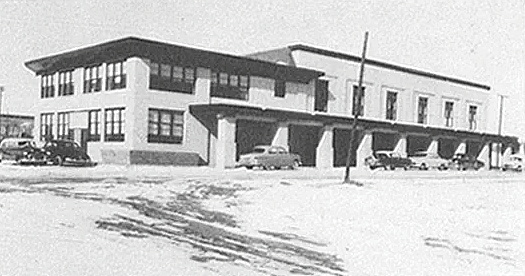
Gene Autry

I projected it would take an hour to reach the tower from Sulphur, so we headed off down US 177, but we were trailed by a police vehicle for miles. I normally just stick to the speed limit anyway, but I decided to lose the fuzz by turning off toward Gene Autry.  That prompts another tale: Gene Autry was a famous singing cowboy who appeared in 93 films between 1934 and 1953 and also had his own radio and television shows. Most folks know him today for his #1 hit Rudolph the Red-Nosed Reindeer and for the first recording of Frosty the Snowman as well as Here Comes Santa Claus, which he composed and performed. His signature song, however, was Back in the Saddle Again.

Autry was born in north Texas but as a teenager lived in Ravia, 15 miles east of another little town called Berwyn. When Autry bought the 1,200 acre Flying-A Ranch on the west edge of Berwyn in 1941 as the headquarters for his traveling rodeo. Townspeople drew up a petition to rename Berwyn in honor of the cowboy crooner, and all 227 residents signed on. About 35,000 people attended the ceremonies which were broadcast live on Autry’s Melody Ranch radio show on the state’s 34th birthday, November 16, 1941. Three weeks later the U.S. entered World War II, and Gene enlisted in the Army Air Corps. He sold the ranch after the war, merging his rodeo with another one and moving his operation to Colorado. His namesake town dwindled to less than 100 people by 1990, when the empty school building became the Gene Autry Oklahoma Museum.

We drove through Gene Autry, noting that the tiny town is still struggling despite having a Dollar General distribution center and other businesses to the north. We should have just pulled in there and seen the museum despite its depressing facade, but I still had my heart set on Tucker Tower. Wendy wondered if it would be too late, but I stubbornly drove onward down the Gene Autry and Mary Niblack roads to Lake Murray and arrived at Tucker Tower at 4:10 p.m.

I should have listened to Wendy! The caretaker told us she was about to close up and at best we would have five minutes to run through the tower.

New lodge at Lake Murray

I was sorely disappointed and tucked in my tail. However, we were able to backtrack and take a stroll through the park’s new lodge: a six-building complex with ballroom, restaurant, and 32 guest rooms. The $27 million project was funded by oil and gas royalties at the lake, with construction beginning in 2014 and the lodge opening in February 2017. I remember how the state’s lodges were pretty run down in the 1980s, back when I worked one summer for the Tourism Department in OKC. So I’m glad we now have new lodges at Quartz Mountain, Roman Nose, and Lake Murray. We’ve stayed at the first two, but I doubt we’ll ever stay at Murray. The “scenic drive” around the lake was mostly invasive cedars rather than lake views, and the fairly flat terrain holds limited interest for me.

We zoomed up I-35 to Davis and then over to Sulphur for dinner at The Springs, relaxing afterward in the Hollywood Suite. The next day we had lunch with my parents in Oklahoma City, dropping off the treats from Bedré and doing a little tech support by getting the online comics working again on my mother’s Chromebox and reviving my father’s old Kodak digital camera with a new battery.

Our vacay to South Central was short, unlike this blog post, and sweet. It was fun to travel in Wendy’s new minivan, and we’re both excited about taking it out west in June to our favorite late spring destinations of Santa Fe, New Mexico and Pagosa Springs, Colorado and a chance to connect with friends in the mountain state.

Slideshow| Photo album

Posted in art, day hike, photos, travel | Leave a comment

Breaktime in Branson

January 6, 2019 | Slideshow | Photo Album

For our Winter Break of 2018, Wendy and I opted to return to Branson for a few days after Christmas. The first semester of this school year was never a dull moment, with each of us continually engaged in challenging technology work. So we deliberately avoided any school-related work, emails, etc. during our stay in the tourist town. We needed to relax and were ready to be pampered a bit.

Keeter Center Stay

We had enjoyed our stay at the Keeter Center at the College of the Ozarks during Spring Break 2015, so we returned there to be pampered by the attentive students of Hard Work U. They turned down the beds each night, leaving us cookies they had made and milk from the college dairy, and brought us a tasty breakfast each morning of mostly farm-to-table items. We made sure to provide gratuities for the various students throughout our stay, who work at stations across the college in lieu of tuition.

We arrived late on a Friday afternoon. After checking in, we dined at the Dobyns Dining Room in the Center, where the hosts, servers, cooks, and bakers are all students working for their cost of education. Wendy had country fried chicken, and I had prime rib. We were seated near a piano and were pleased when a student came over and began to play during the meal.

Dolly’s Stampede

Ready for the show

The main attractions at Branson are the various live shows, and we enjoyed the old-style Presley’s Country Music Jubilee show on our previous visit. On Saturday, after a light lunch at a Subway and a walk through the Branson Landing outdoor shopping mall, we took in the Christmas dinner show at Dolly Parton’s Stampede. The show featured 32 horses with stunt riding, singing, two skaters performing on a tiny ice rink lowered from the ceiling, and various tableaux. The menagerie included camels, sheep, goats, pigs, dogs, and a donkey.

The Dolly Parton Stampede Christmas Show

Dinner was markedly different from the previous day at Dobyns. We consumed without the benefit of cutlery some creamy vegetable soup, a biscuit, a Cornish game hen, a slice of barbecued pork loin, corn on the cob, a potato, and apple turnover. Thankfully they also provided warm towelettes.

Godfather’s

I had originally hoped to hike at the Lakeside Forest on Sunday, but it was too cold and rainy for that. My plan to have lunch at the Godfather’s Pizza in Branson was also foiled, as it was closed on Sundays. I really had a hankering for their pizza, since I got hooked on it at Campus Corner in Norman back in my undergraduate days yet there are no franchises near Bartlesville. The internet revealed there was another location, open on Sundays, a 30-minute drive north in Ozark. Wendy was willing, so off we went.

Springfield Art Museum

After lunch we needed to walk, and I recalled there was an art museum in Springfield only a 20-minute drive away. At first we were the only visitors, viewing three galleries containing the exhibit El Grabado: Contemporary Cuban Printmaking. Drs. Tony and Luz Racela of Kansas City had provided from their private collection 70 prints created by 33 artists at Cuba’s Taller Experimental de Gráfica de Habana.

There were several images of skeletal figures by Julio César Peña Peralta, including Jimaguas (Twins) and Clases de grabado (Lessons of Printmaking). I liked the intense expression on the girl in Cabalgata (Ride) by Daysi Carmona Pérez.

Cabalgata (Ride) by Daysi Carmona Pérez

Most of the works were lithographs (stone-writing) where an image was drawn with oil, fat, or wax onto a limestone plate, which was treated with acid and gum arabic to etch areas not protected by the image. When the stone was moistened, the etched areas retained water and would repel oil-based inks. Then a blank paper sheet would be applied to transfer the ink from the image areas to form a printed page.

In the 1800s thousands of lithographic stones were imported into Cuba from Germany, along with machines from France and Germany, to create lithographic seals and rings for Cuban cigars to fight counterfeit products. The switch to embossed aluminum seals in the 1950s meant many lithographic stones were repurposed as field stepping stones and the like, but some of the apparati were preserved. A red woodcutting machine from 1829 is still used today by artists at the Taller Experimental de Gráfica de Habana.

The Springfield Art Museum has over 9,000 works in its collections, built up since 1928. In its main galleries it had an exhibition that was a cross section of the collection with particular emphasis paid to the ways its works reflect our country’s history as it developed its identity. This included works by George Caleb Bingham, Asher B. Durand, Jackson Pollock, Grandma Moses, Robert Motherwell, Wayne Thiebaud, and Alison Saar.

Cabinet with porcelain inserts

There were some furnishings on display, and a 19th century ebony cabinet with porcelain inserts caught my eye. Most of the inserts were vague images of couples and cherubs, while the large centerpiece showed a blindfolded man playing hide and seek with two damsels. I was amused at how his left foot was about to step on a dog whose face was a bit too human, with what appeared more like a girl’s hair than dog ears. His right hand also appeared to almost be cupping one woman’s breast. His anatomy seemed questionable, given the oddities of his right leg and the suggestive folds in his leggings.

Cabinet centerpiece

Wendy is always on the lookout for color schemes she might use in her own paint pours, and noted Nell Blaine’s First Lyme Landscape and Michael Mazur’s Pond Rain

Pond Rain by Michael Mazur

Living in Oklahoma, we are regularly exposed to western art at area museums. I was pleased that the museum had some pieces that broke away from the typical works reminiscent of Remington and Russell. I liked the high energy of the cartoonish lithograph Bronco by Luis Jiménez. He is better known as a sculptor, with his memorable Mustang at the Fred Jones, Jr. Museum of Art in Norman. Tragically, he was killed when the torso of a larger version of that statue fell on him in 2006 in his studio.

Bronco by Luiz Jiménez

Wendy and I both enjoyed William Schenck’s Where Have All the Cattle Gone, with its static-edged clouds, the colors of the distant hills, and the choice to render the cowboy and much of his horse in shadow.

Where Have All the Cattle Gone by William Schenck
Self-Portrait of Samuel M Charles

19th century and earlier American portraiture can often seem amateurish and off-putting, but the smug expression on Samuel M. Charles’ Self-Portrait made me wonder what he was thinking as he read his paper.

I loved Julie Blackmon‘s Portrait, a large photograph that appeared rather painterly, finding the composition visually interesting and the expressions on several of the children’s faces quite amusing. It is part of her Homegrown series. A native of Springfield, her works are part of permanent collections in museums across the country, reflective of her talent in composing memorable scenes.

Portrait by Julie Blackmon

Aaron Bohrod’s Rainy Night, Wilmington wonderfully depicted city signage, including the reversed embossed One Way sign in the foreground and glowing neon hotel signs. I suppose the distant running figure is more likely headed through the rain from one hotel to the other than making his way toward the dark and distant cathedral.

Rainy Night, Wilmington by Aaron Bohrod

Abstract expressionism is often cold, but I liked Jimmy Ernst’s Dayscape with its bold circle of red and strong foreground pattern against a cool cyan background, somewhat reminiscent of stained glass.

Dayscape by Jimmy Ernst
Fast Food, New Orleans by Andrew Abramoff

Wendy admired Andrew Abramoff’s skill at manipulating oil paint with photographic clarity and realism in Fast Food, New Orleans, although the subject matter struck me as banal. I wonder what he found appealing about that restaurant. Was it the giant mug of root beer on the roof? Or did he also like the decayed midcentury modern American architecture? Before coming to America, he had trained and restored 17th century icons and frescoes in Russia. Midcentury modern is getting more love these days. But having grown up surrounded by it and bearing witness to its rapid decay, I find much of it bland and depressing.

For us, the highlight of the exhibition was the immense Timing by Frank Owen. He invented his own painting system in the 1970s, building a skin of transparent polyethylene plastic and then painting and collaging layers atop it. The works were built “in verso” where the first layer is the top of surface layer of the painting we see, with the final coat the layer that was actually applied to the canvas. So he “imagines each work from the inside out.”

Timing by Frank Owen
Wendy and Timing by Frank Owen

Wendy loved the work, which reminded me of a series of painting pours with particularly vivid colors. Owen described such works as abstract landscapes in microcosm, a response to his working environment in the Adirondacks, with the ripples and layers of paint suggesting the movement of water as viewed from above. The museum reports that painting is the subject of the most Instagrams from its collection, and we could see why.

We had a wonderful visit at the museum; so much better than my previous one years earlier. The works were interesting, and the staff members were friendly and helpful. While I appreciated the free admission, I happily placed a donation in their box. We will certainly be back in the years to come.

And we’ll someday return to Branson, to be pampered again at the Keeter Center and take in another fun show. We took Wendy’s new minivan on this trip, enjoying its comfortable ride across some rather rough highways and having plenty of easily accessible cargo space. For longer trips with luggage it sure beats traveling in my Camry.

We returned to Bartlesville for New Years and then I went back to work for three days while Wendy remained on vacation. Having fewer distractions with school out of session, I was able to finish a couple of lingering technology projects. Soon classes will resume with us refreshed and ready to take on another semester.
Slideshow| Photo album

Posted in art, photos, travel | Leave a comment

iPads as televisions and a desktop computer DVR

December 23, 2018

I canceled my cable television subscription in early 2008. But, like most so-called cordcutters, I didn’t actually cut any cords. I retained what was then 5 megabit/second internet service over the same cable that had been providing television programs.

Over time, more folks have embraced “cordcutting”, by which they usually mean dropping cable television for online streaming services over the internet. Kim Komando released a chart of popular channels and which streaming services offer them.

Back in 2008, that was a more dramatic choice to make than it is over a decade later. YouTube was around, but didn’t offer high-definition video, and Netflix was only one year into its streaming service with limited title selections and monthly rentals. Back then I got the movies I wanted on disc from Netflix, and the few television episodes I wanted to see were purchased and downloaded in advance with my first-generation Apple TV or Amazon’s Unbox service to a Tivo. That was better than trying to stream them, because the limited bandwidth led to much buffering suffering.

Wonder Woman in 4K from Amazon on our OLED TV

A decade later, Meador Manor has 40 times more download bandwidth, so Wendy and I can simultaneously watch multiple 4K video streams without noticeably affecting other internet operations. We can rent movies from iTunes, Amazon, or Google Play to watch together on the 55″ television using its built-in apps, our Chromecast Ultra, or our Apple TV 4K. The Chromecast Ultra works with our Google Home so we can just tell Google to turn on the television and cue up a YouTube video of our choosing.

But we consume most of our video entertainment separately on our own iPads, and the only streaming video subscription I have (outside of on-demand movie rentals) is that YouTube Premium is bundled with my $10/month Google Play Music service. The premium service used to be called YouTube Red and removes ads while offering background and offline video playback. YouTube has evolved to where it has a plethora of high-quality content on most topics.

Broadcast HDTV in Bartlesville

The Manor’s 1995 antenna can still pull in 31 free channels despite two decades of storm damage

There are still some local and national television shows that can be entertaining, and the antenna I mounted on the chimney back in 1995 can still pull in up to 31 free broadcast television channels even though hail, ice, and wind have stripped it of a couple of its VHF elements.

If you’re not familiar with broadcast digital television, they usually have a high-definition (1080i or 720p) main channel broadcast in the 16:9 screen ratio of modern sets. They often also multiplex additional separate sub-channels at standard definition (480i), often in the old 4:3 ratio. Here’s what I can currently pick up in Bartlesville:

In the spirit of the wonderful Chaos Manor columns the late great Jerry Pournelle once wrote in the long-defunct Byte magazine, I’ll share the details of my travails in getting everything set up and how that led me to finally purchase a streaming service subscription which brought what I still think of as cable TV channels back to Meador Manor.

Installing a HD HomeRun Connect Duo

The HD HomeRun Connect Duo lets you stream over-the-air HDTV broadcasts to devices on your network

I started out only intending to get the free over-the-air television broadcasts onto our various devices. A little internet research led me to purchase a HD HomeRun Connect Duo box for $70.
Since we could always cast from our devices to the Apple TV, rather than split the antenna signal between the television and the HomeRun’s two tuners, I just disconnected the antenna’s coaxial cable from the back of the television and screwed it on the connector on the HomeRun box. I needed to wire the HomeRun into our network router with the bundled ethernet cable, but found that every port on the router as well as a 5-port switch hooked into it were full.

I’ve cooked up a spaghetti of cords in the area behind my television, but the recent installation of new carpet did lead me to organize and label the mess. Plugged into the router back there are cables for my desktop computer in the office, the television, the sound amplifier, a Blu-Ray player, a Philips Hue hub, an Apple TV, and a Chromecast. So I purchased an 8-port switch for $30 and swapped that for the 5-port one, plugged in the HomeRun box, and mixed its power cord in with the others. The box powered on, ready to be configured.

I’ve become accustomed to configuring new smart home devices using my iPad or iPhone via WiFi. So I tried loading the configuration website on the iPad, but no new devices were detected. Guessing that the hardwired device might for some reason need to talk to another hardwired device plugged into the router, I went to my Windows desktop, but again nothing showed up. Huh?

A check of the living room network connections revealed what happened. When I swapped switches, I just unplugged the ethernet cable from the router to the old switch and plugged it into the new one, as I did with the other cables hooked into the old switch. In messing about I had inadvertently jostled loose the other end of the cable connecting the switch into the router, and now it had buried itself amongst the other cables. I fished it out and made sure it was snapped into the router. I trotted back to the Windows computer in my office to check things out, since it is often easier to configure devices with a big screen and keyboard than on an iPad, especially if you have to create or use any logins.

The HD HomeRun’s configuration menu

Sure enough, refreshing the HomeRun configuration webpage showed the device was now in the network, although it was whining about a firmware update to be installed. After that was completed, which took a few minutes, I clicked on Channel Lineup and, just like a television’s usual tuner setup, it scanned through the available digital channels and displayed what it found.

But, alas, it only found 15 channels instead of the usual 31. The various HDTV and standard-definition sub-channels for the NBC, ABC, and OETA affiliates were missing entirely. I did a web search for help, finding suggestions about adjusting the gain on any signal booster on the antenna.

Be sure the FM trap is OUT if you use an antenna booster

So back to the living room I went, to reach behind my recliner for the old antenna signal booster I bought back in 1995. It has been faithfully heating the carpet back there for almost a quarter-century, as well as making it possible to tune in the weaker signals from some transmitter antennas which are over 50 miles away.

Map showing the broadcaster antennas we can pick up from Meador Manor (via antennasdirect.com)

Given the distance to the transmitters, I did not believe the signal was so strong it was overwhelming the HomeRun’s tuners. But I dialed down the gain adjust and went back to rescan channels. Sure enough, that only led to even fewer of them showing up. Trying the gain in the middle made no difference, and at full power I was back to only 15 out of 31 channels. Harumph!

Another web search revealed that if I installed the Windows software for the HomeRun unit, there was a utility program included which I could use to see the signal quality on the various channels. Doing that merely confirmed that it couldn’t get a readable signal for the missing affiliates.

I figured there must be some problem with my home’s antenna system, so I went back and pondered the signal booster. Some fairly distant channels were coming through, so I doubted the exterior antenna connections were faulty. Then I noticed the FM trap switch was set to IN. That helps reduce any interference from nearby FM transmitters, but perhaps it was causing issues. I set it to OUT and, sure enough, a rescan showed the HomeRun’s two tuners were now finding all 31 channels. Yippee!

I installed the HD HomeRun Windows 10 app on my desktop and was able to quickly tune in any of the channels. Downloading and installing the app on my iPad was a breeze and worked fine too. Even better, I did not need to set up any sort of account with SiliconDust, the makers of the HomeRun unit. The apps just work when a device is connected to my router’s wired or wireless network.

Tapping the screen in the HD HomeRun’s iPad app lets you quickly browse what’s on and adjust controls

Tapping the screen brings up various controls, including a scrolling sidebar with what’s showing on each channel. I eventually discovered you can tap the right edge of the previews to get descriptions and thumbnails of upcoming shows.

Tapping the thumbnails shows upcoming shows & descriptions

You can also tap a menu icon for thumbnails of what’s currently showing as well as upcoming shows and movies in the next 24 hours. However, the HD HomeRun has no traditional grid viewing guide and does not let you edit which channels it displays.

In practice, my damaged old antenna cannot pull in channels 2 (NBC) and 8 (ABC) if signal is degraded by rain. It also struggles with 44, but that’s an Okmulgee channel that mainly shows shopping channels I could not care less about.

The high-definition channels look great on my iPad and desktop computer, although since they are 16:9, they display on the iPad with black bars at the top and bottom. The standard-definition ones are quite grainy or fuzzy due to their low resolution, and 4:3 broadcasts display with black bars on the left and right. A few broadcasts sent out in a 4:3 anamorphic mode should be displayed stretched back into a 16:9 ratio, but the app doesn’t always pick up on that, resulting in a squished image. Sometimes a 4:3 broadcast is displayed in 16:9 mode, with black bars on all sides, but there is a zoom button to make it fill the screen properly.

SiliconDust offers premium channels for $35/month, which is similar to what one would pay for Hulu, Sling TV, and other similar streaming services.

A DVR for the HomeRun

I used two different TiVo digital video recorders over the years, enjoying the ability to pre-record shows and later view them while skipping commercials. I gave one to my parents, and they loved it. When their unit finally died, I gave them my Series 3 TiVo, since it has a lifetime TiVo service subscription. They still use it daily, whereas it had gathered dust for months in my home.

The continuing value of a DVR was reinforced when I watched a show via the HD HomeRun on my iPad. I haven’t had to sit through television commercials in years, other than the ones in the aerobics shows I taped from 1993-1997 and habitually ignore in my weekday workouts. They haven’t become any less intrusive or annoying, so I knew I’d want a DVR so I could not only pause shows, but also fast-forward through commercials and time-shift programs to fit my schedule.

You can subscribe to a DVR app from SiliconDust to use your desktop computer or network attached storage to create and playback recordings, but one reason I went with their HD HomeRun box was that it is compatible with the Plex Media Server software I already run on my Windows 10 desktop.

I had downloaded the Plex software to my Windows desktop years back since it is a way to share your saved music, photos, and other media files via the Plex app running on a web browser or various devices, including my Apple TV, iPad, iPhone, and Chromecast. I hadn’t really ever used it, however, even though a year ago I had also purchased a lifetime Plex Pass to allow me to turn my desktop computer into a DVR and get programming guides without paying any subscription fees. At the time, I wasn’t sure where I was headed with the home entertainment system and our personal devices, but the lifetime TiVo subscription I’d purchased years back had worked out great for both me and my parents, so I decided to risk investing in a lifetime Plex subscription to be future-ready. Now it was time to try out that investment.

My Plex media server lets me access media files via the internet

I opened up the configuration settings for the Plex Media Server software on my Windows 10 desktop, finding the DVR category. But when I triggered it, it briefly showed it had detected the HD HomeRun Connect unit, but then blanked that out. Another glitch to resolve.

Earlier, I’d noticed when I ran the HomeRun diagnostic utility that it complained that some Universal Plug and Play (UPnP) data packets were not making it through the server, warning that would affect some services. I figured that was the problem with the Plex software, and another web search told me to go enable UPnP packets on my router.

So I opened up my Asus router’s configuration controls, found the Enable UPnP setting in its WAN menu, and that did the trick: the HD HomeRun Connect Duo appeared in the Plex server’s DVR section. The Plex software allowed me to choose which channels to link with my DVR; I just picked them all. I was able to have it download a grid viewing guide, and clicked on an entry in that guide to record a show.

That in turn prompted me to set up libraries in the Plex software for TV shows and movies. A perusal of the built-in help system told me where to click to do that, selecting folders on my desktop computer where my videos would be stored for retrieval. I also enabled some User Agent options that use any meta-data in the video files to organize the items.

The Plex software on my desktop lets me turn it into a DVR

I then clicked on an upcoming show to have it recorded. It asked if I wanted to record only that episode or all that were aired, and gave me an option of which library to use for the recordings. Advanced options included adjusting the start and stop times if you find you need some leeway at the front or back end of a show. There was also an option for it to try to automatically remove commercials, with a caveat that it could result in high CPU usage. My desktop is pretty powerful, so I turned that on to see how that went.

However, none of those options would do any good if my computer went to sleep and didn’t wake up when a show needs to be recorded. I checked that “Wake Timers” were enabled in my Windows 10 desktop’s power management and then put the system to sleep.

I was pleased to note that even when “sleeping” the sophisticated Plex software could work with Windows 10 and still allow me to stream music and video from my desktop to my other devices. Even better, although the show I had set to record did not show up in my recordings library while it was occurring, the next morning I did find it had recorded successfully. I could play the recording on my desktop, and when I paused it and opened the Plex app on my iPad, it could resume playback where I had left off.

The software did NOT successfully remove any commercials from the CBS show I randomly picked to record, and that hour-long recording consumed 6.3 GB of space on my desktop’s solid state drive. I have over 500 GB free on that drive, so it could store plenty of recordings, although I have no interest in archiving videos on my local storage; unlike with music, I seldom replay videos.

Subscription Channels & a Cloud DVR

When I showed Wendy how we could now access the HomeRun box from our iPads with its own app, she immediately asked if it had Adult Swim. She had reveled in the nighttime content on the Cartoon Network channel years back when she had cable TV. While I could subscribe to that and other “premium” content via the HomeRun service, we would have to rely on using my Windows 10 desktop or some other hardware in the home for a DVR. I decided to explore our options.

I found I could go back to a TV/internet bundle with our cable company, which would provide apps to watch its shows on our mobile devices. But there was no true DVR capability included, and I knew Wendy would want the ability to record shows and skip through the commercials.

Internet streaming options included Hulu and Sling TV. I decided to try Sling TV free for a week, opting for its Blue package with the Hollywood Extra to pick up Turner Classic Movies, plus its Cloud DVR option. That would give us access to all of the channels we had some level of interest in with the ability to record 50 hours of shows and skip their commercials on playback, except for required ads in some Fox shows, including some on its National Geographic channels.

That bundle would cost $35/month with the benefit of a cloud-based DVR so we wouldn’t be eating up as much of our own bandwidth nor using the office desktop to store shows. The Sling TV apps on our iPads and the desktop are easy to navigate, with a nice viewing grid which includes good synopses of the various shows.

Sling TV’s viewing guide provides nice info

There are also on-demand episodes of some shows, but those won’t let you skip their commercials. So Wendy will try having Sling TV record episodes of various shows for later playback. We celebrated the return of subscription television by watching an episode of Chip and Joanna Gaines’ Fixer Upper show on HGTV on our big television, and I figure in the coming weeks I’ll hear Wendy giggling at some comedy shows she has recorded.

A decade after they left, the channels of cable television are again available in the Manor, although in a different manner, and we can enjoy easy access to over-the-air broadcasts on our mobile devices. However, my prediction is that I’ll use the HD HomeRun Connect Duo and the Sling TV services sparingly. I’m more drawn to tightly focused and rather nerdy podcasts and YouTube channels and reading books with my Kindle app. But it is nice to have more options, and I expect Wendy will get some real use out of Sling TV.

Posted in HDTV, home repair, technology | Leave a comment

Treasures in my net

December 8, 2018

When I cast my net out into the world wide web, sometimes I see the welcome gleam of bits of treasure amidst the accumulated flotsam and jetsam. Facebook and other social media are polluted by poisonous politics, but even there one can find safe harbors maintained by gracious caretakers. One person’s treasure is another’s trash, but here is a sampling of items I recently found online that brought me happiness.

A Sooner High that never was

Local nostalgia author Rita Thurman Barnes, who currently writes for Bartlesville Monthly,  helps folks stay positive in her latest curated Facebook group, Once Upon a Time in Bartlesville. My interest in local history ensures I scan it regularly for interesting tidbits new to me. Over the years I’ve compiled information on our local school facilities, which I organized into a District History section at the district website. But in all my rummaging through library vertical files and the disorganized filing cabinets I inherited in my district office, I had never come across any promotional material on the effort to build Bartlesville’s Sooner High in the 1960s.

So I was fascinated when Rita posted a handout sent to parents of Southview Elementary students in 1964 to promote the bond issue that built Sooner High. Take a look at the architects’ rendering:

Sooner High rendering

The original concept for Bartlesville’s Sooner High

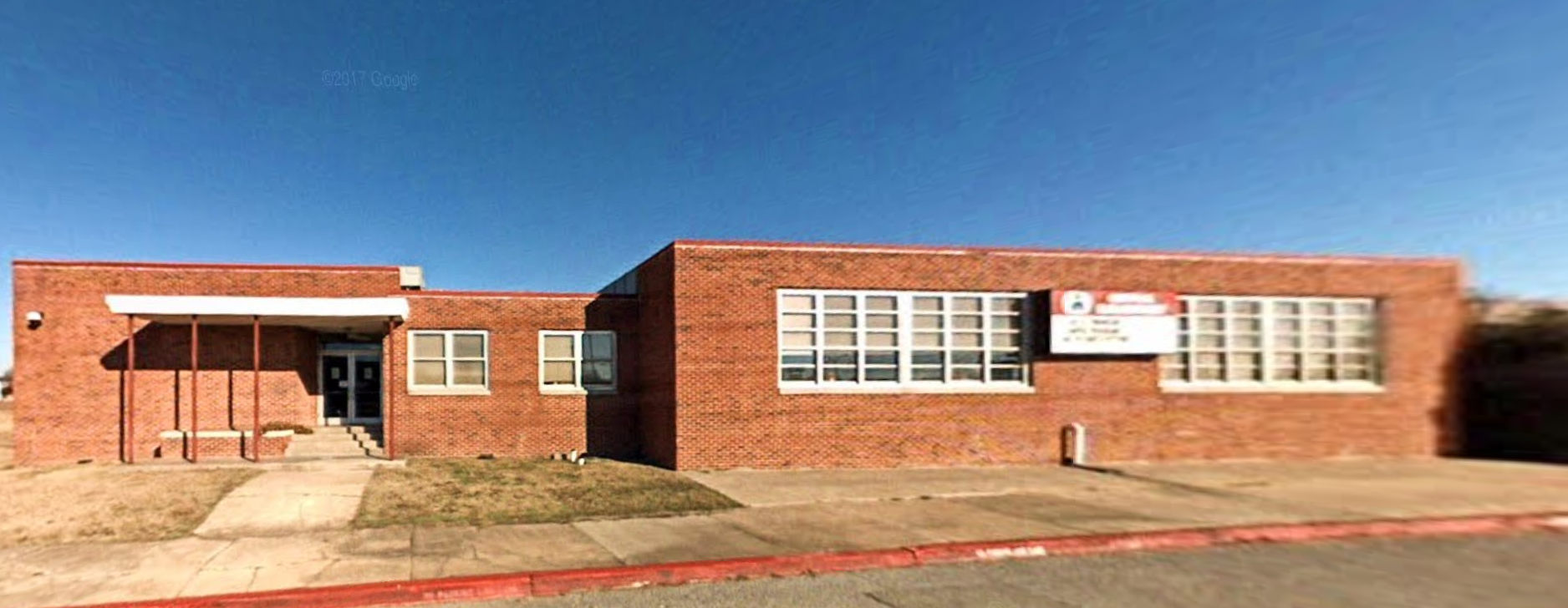
For those familiar with Bartlesville’s Sooner High, which later became the Mid-High and has now become the replacement Madison Middle School, this is a glimpse into an alternate reality. When the school opened in 1966, the curving auditorium wall in the initial rendering had become a stepped series of straight walls, the large areas in the rear had changed, and the T-shaped classroom wing had transformed into two shorter and separate east-west wings. A one-story addition extended the south wing in 1980, a two-story addition extended the north one in 1999, and a single-story 2009 addition connected them to form a fully enclosed courtyard.

The later reality

More Beatles songs after 1970?

Everyday Chemistry

Speaking of alternate realities, another bit of treasure in my net came from a transdimensional thief who snatched a cassette tape of songs crafted by The Beatles after 1970. Say what? Granted, they did release two new singles in the mid-1990s based on some old demos by John Lennon, but this tape had 11 songs I’d never heard of.

Despite its entertaining backstory, this is really a beautifully crafted mashup of songs from the solo careers of the members of The Beatles after they broke up. The human miracle that is Wikipedia has documented what went into the pot to form this stew.

Modern technology has enabled depressing public displays of widespread intolerance, ignorance, and bigotry. But it has also unleashed incredible amounts of remix creativity.

Klaatu barada nicto

Apropos of alternate Beatles, my financial support for Longreads surfaced for me a Ledger Note article about Klaatu, a Canadian band which was briefly mistaken for The Beatles in 1976. I was intrigued enough to stream their initial album, 3:47 EST, and could certainly see why folks wondered if Paul McCartney, John Lennon, George Harrison, and Ringo Starr might have reunited.

It turned out instead to be the work of John Woloschuk, Dee Long, and Terry Draper. I wasn’t all that thrilled by the first song, Calling Occupants of Interplanetary Craft, which I was familiar with as a strange cover by The Carpenters. But I persevered, if only to hear what in the world a song titled Anus of Uranus might have in store. Those who didn’t get their fill of briny Beatles from Yellow SubmarineOctopus’s Garden, and McCartney’s Admiral Halsey might enjoy the over-the-top Sir Bodsworth Rugglesby III, but I prefer Sub-Rosa Subway.

Sedermasochism

A final treasure of late has been an excerpt from Nina Paley‘s latest movie. Almost a decade ago, I posted about her delightful Sita Sings the Blues, which she released into the public domain. Her creative and exacting animation told the story of the Indian epic the Ramayana with the help of 1920s torch songs by Annette Hanshaw.  I urge you to give it a try.

Recently YouTube offered up to me Death of the Firstborn Egyptians. What the heck? But I instantly recognized Nina’s incredible animation style, coupled this time to two songs from the “Spider Suite” by The Duke of Uke and His Novelty Orchestra.

Wow…she continues to amaze me with her artistry and expertise in combining disparate elements to retell ancient stories. This comes from Nina’s new film, Sedermasochism. It is described thusly:

Loosely following a traditional Passover Seder, events from the Book of Exodus are retold by Moses, Aharon, the Angel of Death, Jesus, and the director’s own father. But there’s another side to this story: that of the Goddess, humankind’s original deity. Seder-Masochism resurrects the Great Mother in a tragic struggle against the forces of Patriarchy.

After the movie makes the rounds of the various film festivals, I gather Nina will release it for the rest of us. That day my net will be heavy, filled with a great treasure for me to enjoy for years to come.

When winter weather drives you indoors and you pick up a device to cast your net upon the waters of the internet, may you find your own treasures amidst the dross.


Posted in history, movie, music | Leave a comment