Stereophonic

November 8, 2023

This is a look back at the key shifts in how I listened to recorded music over my lifetime, with examples of what I was listening to at the time.

1960s vinyl record albums

I was born in the mid-1960s, and at first the only recorded music stored in our home was on vinyl long-playing records that my mother could play on her phonograph, a Sears model from the late 1950s.

My mother taught me to play records on my own, cleaning and handling them carefully. My favorites were a 1957 performance of Peter and the Wolf by the Philadelphia Orchestra with Eugene Ormandy conducting and Cyril Ritchard narrating, the 1955 Songs of the West album by the Norman Luboff Choir, and 1962’s Pianos in Paradise by Ferrante & Teicher.

1970s vinyl record albums

By the mid-1970s, 46% of U.S. recorded music sales were still on long-playing 33-rpm vinyl records, 32% on vinyl 45-rpm singles, 18% on 8-track tape cartridges, and 4% on compact cassettes. I was nine years old when I acquired the first album of my own: 1975’s Goofy Greats by K-tel. I had received a blue plastic fishing tackle box as a gift but didn’t like fishing, so my best friend Gene Freeman, who owned Goofy Greats, traded it for my tackle box.

The album was entirely novelty songs, with favorites of mine being Shirley Ellis’s The Name Game, the Playmates’ The Little Nash Rambler (The Beep Beep Song), and especially the Royal Guardsmen’s Snoopy vs. the Red Baron.

The records I encountered were either long-playing (LP) 12-inch diameter albums you were supposed to play at 33 1/3 rpm or 7-inch diameter singles you were to play at 45 rpm. But 78 rpm records were produced until 1958, and Mom’s player could also handle rare 16 2/3 rpm records, which were typically talking books for the blind. So Gene and I had fun even with the songs we didn’t care for, adjusting the speed on the 1950s record player from 33 1/3 rpm to 45 or 78 to make it sound like the Chipmunks were performing or to 16 rpm to slow a song way down.

That ready ability to change speeds on record players allowed for great discoveries to be made. This included transforming Dolly Parton into what we imagined to be a black male singer by playing her song Jolene on a 45 rpm single at the reduced speed of 33 1/3:

Not much later I somehow acquired the record Convoy during the Citizens band radio craze of the mid-1970s. I was still a bit young to identify with Hot Chocolate’s You Sexy Thing, Donna Summer’s Love to Love You, or the Ohio Players’ Love Rollercoaster, although I did like Silver Convention’s Fly, Robin, Fly, John Denver’s Country Boy, and his Fly Away.

Physical media dominated U.S. recorded music sales until the mid-2000s. The RIAA chart below shows how they then faded away. As of 2022, sales of physical media were only 11% of U.S. recorded music revenues, while 58% of revenues were via paid subscription services and most of the rest via various types of ad-supported streaming services. The light blue bars in the graph show the rise and then disappearance of cassette tapes.

Reel-to-reel, 8-track, and compact cassette tapes

For those too young to recall tape formats, the first audio tapes I remember seeing were reel-to-reel units that some audiophiles would purchase for home use. Our family never had one, but the father of a friend of mine in junior high did, although we didn’t mess with it. Reel-to-reel units were mostly discontinued by the 1980s.

Techmoan, a YouTuber I have supported via Patreon since 2016, with a classic reel-to-reel tape unit

The first tape formats to gain widespread popularity were the 8-track cartridge and the compact cassette, driven (pun intended) by their use in automobiles. Lear Jet designed a version of the 8-track that was quite popular, peaking at over 18% of U.S. recorded music sales in 1978.

Me looking at my parents’ stereo in the 1970s

In the 1970s, my father purchased an inexpensive Soundesign stereo system with a turntable to play vinyl records, an AM/FM radio, and 8-track recorder. He liked playing 8-tracks in his station wagon and accumulated quite a few, some purchased new and others at garage sales. He never used the recording feature much.

8-track tapes my parents liked included Johnny Rodriguez, Don Williams, the Statler Brothers, and Freddy Fender.

8-tracks had drawbacks, including how as an endless loop they couldn’t be rewound and had to be split into four “programs” with two tracks in each program for stereo sound. That led to songs sometimes being split across two programs. Such songs would fade out, you would hear a clunk as the tape head shifted to two new tracks, and then the song faded back in.

In the early 1970s, my parents purchased a compact cassette recorder from Radio Shack for use with my piano lessons. That was a significant purchase at the time, with $74.50 in 1971 equivalent to $563 in 2023. We used it for years, and I had a lot of fun one summer in junior high with a neighborhood tomboy recording our own “Batgirl and Robin” adventures on it. I wish I had saved those tapes!

My parents bought this expensive cassette recorder for my piano lessons

Compact cassette tape ran at a slower speed than 8-track tapes, so originally 8-tracks had better sound quality. Cassettes, however, were less bulky, could have a longer run time, could be rewound, and only had a side A and side B.

So gradually cassettes edged out 8-tracks, and eventually noise reduction technology reduced their tape hiss and different tape formulations improved their sound. 8-track sales volumes started plummeting in 1979, when I was still in junior high school, and the format was essentially dead by 1983 before I graduated from high school.

I had another cassette recorder in 1981, a Radio Shack CTR-80A we purchased to link to my TRS-80 Color Computer so it could save and retrieve programs as a 1500 baud audio signal. It worked, but I was very glad to eventually replace it with some 160 kilobyte 5.25″ floppy disk drives.

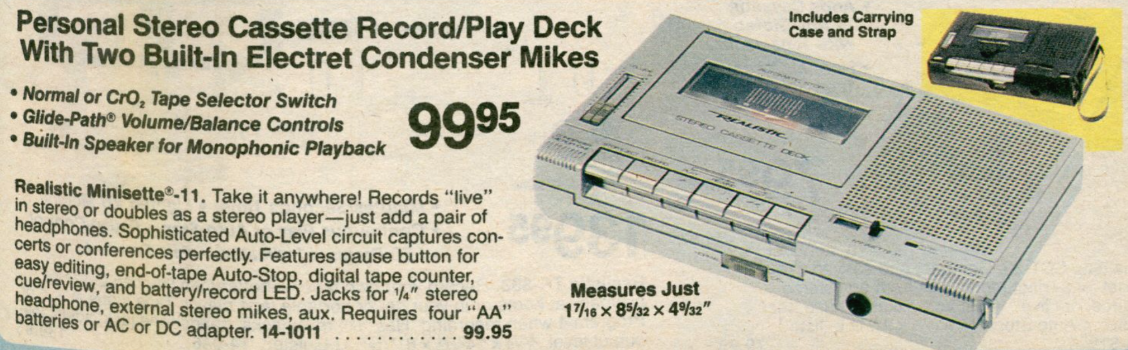
In 1983, I purchased a Radio Shack Realistic Minisette-11 for the equivalent of over $300 in 2023 when adjusted for inflation. I wanted something more functional than a typical Sony Walkman portable cassette player, although I eventually had one of those too…which I almost never used.
Vinyl with cassettes

In junior high I began purchasing some vinyl long-playing records from Columbia House, which let me acquire a bunch of albums in the mail for next-to-nothing so long as I agreed that I would pay for another album they sent me each month unless I remembered to reject it in advance.

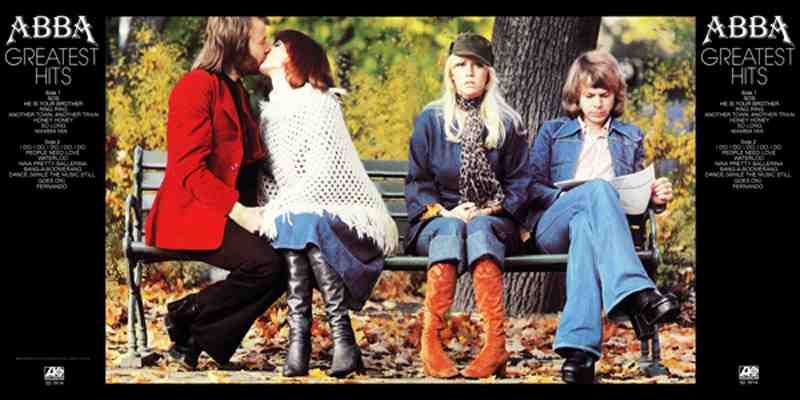
My favorite album from my initial purchase was ABBA’s Greatest Hits, so I bought their Greatest Hits Vol. 2, and eventually all of their albums from Columbia House, and remained a customer of theirs for several years until I could drive myself to a record store.
I purchased 45-rpm vinyl singles in high school

In high school I would hear songs on the radio and see music videos on the MTV cable channel. I would purchase my favorite songs as 45-revolution-per-minute vinyl singles, usually at the Sound Warehouse in the Cornerstone Plaza shopping center at 39th Expressway and McAlester Boulevard in Warr Acres.

My first car, a 1976 Toyota Corolla, originally just had an AM radio and no way to play recorded music. So I saved up money to address that issue, which required a new home stereo and a new unit in the car.

My 1976 Toyota Corolla came with just a crummy AM radio

In high school I had a checking account with a debit card. I remember nervously making what was then an immense withdrawal of about $200 at an automated teller machine to purchase my own stereo system at a Service Merchandise.

Service Merchandise was an interesting retailer. It had an extensive catalog of items along with “catalog showrooms” where you could see a working demonstration model of an item. If you wanted to purchase an item at the showroom, you grabbed a clipboard and pencil and filled out the item number, description, and price in pencil on an order form, which you submitted at a cash register to pay for it.

You then went to the pick-up area where items would come in on a conveyor belt from their warehouse area. I remember being impressed when they updated to computer terminals where shoppers could enter an item directly into their system, immediately letting you know if it was in stock.

My first stereo was a Soundesign Model 6827

My stereo, like my parents’, had an AM/FM radio and a turntable, but while theirs had an 8-track recorder, mine had an 8-track player and a compact cassette recorder.

For the car, I had a new AM/FM radio unit with a cassette deck installed. That allowed me to play my vinyl albums and singles on my home stereo, record the playback onto compact cassette tapes, and then play my “mix tapes” in the car.

Would you go cruising on the strip in this thing?

By then it was the early 1980s and one of my friends had fixed up an old muscle car and would go “cruising” in it along 39th Expressway/US 66 in Warr Acres and Oklahoma City. My girlfriend and I once had fun cruising the strip in my pathetic green 1976 Corolla, blasting I Love Rock and Roll by Joan Jett and the Blackhearts on my cassette deck. We would provoke the muscle cars to go tearing off at stoplights, leaving us laughing and choking on their exhaust.

I was nerdy enough, and my handwriting poor enough, that I actually used a typewriter for the cassette labels and the track listings on the case inserts. Soon I had a briefcase in the backseat filled with cassettes, almost all being ones I had recorded off vinyl records, not commercial cassette tapes, since I liked being able to listen to my songs on vinyl records at home and on cassette tapes in the car.

So what were some memorable albums I purchased in high school? ABC’s The Lexicon of Love, Peter Gabriel’s Security, and Synchronicity by The Police.

Upgrading my stereo equipment

In 1986 I updated my stereo system from an all-in-one to components when I was mid-way through my undergraduate work at The University of Oklahoma. I spent about $100 each on a Technics tuner, phonograph, and cassette player. By then, U.S music sales by volume were 20% vinyl albums, 15% vinyl singles, and 56% cassettes. Compact discs had appeared, but were still less than 9% of sales volume.

I bought a Technics SL-QD3 direct-drive turntable. I liked how it had quartz lock and a stroboscope to help ensure it was turning at the correct number of revolutions per minute, whereas my cheap Soundesign phonograph had some noticeable wow and flutter.

My phonograph, tuner, and cassette deck in 1986, with a record sleeve and cleaning cloth to one side

But that nicer turntable needed a dedicated tuner to amplify its phonograph output, and I needed a compatible cassette recorder. So I also purchased a Technics SA-150 tuner and a cassette deck. The tuner provided AM/FM radio and allowed me to switch between the phonograph and the cassette tape monitor.

I didn’t keep the original silver cassette deck for long, opting to replace it a year later with a Technics RS-B105-KM unit that had Dolby B noise reduction and supported Type II chromium dioxide and Type IV metal tapes.

So what sort of albums was I purchasing in college? Favorites would be Paul Simon’s Graceland, U2’s The Joshua Tree, and Promise by Sade. I had them all on vinyl, and would eventually buy them on compact disc as well.

Compact discs

Compact discs were wonderful, being digital and having anti-skip error correction. I was so glad to be rid of the distracting pops and crackles and jumped grooves of aging vinyl records, and I embraced the greater dynamic range and simpler handling of CDs.

I remain bemused that some people prefer vinyl. If they say a vinyl record sounds better than a compact disc, they might also be the type who like the “cinematic look” of 24-frames-per-second movies and are not annoyed by flicker or motion blur.

As I was completing my undergraduate degree, I finally purchased my first compact disc player in 1988, almost six years after the first players became available. It was a Technics SL-P1, which was quite expensive and was 13.1 inches deep, while my tuner was only 9.5 inches deep and the cassette deck was 8.66 inches deep. I put my new CD player on the bottom of the stack and was grateful that the cassette deck and tuner did not block its top rear vents.

My first compact disc player
My first CD

Compact discs were originally specified to support indices within a track, which allowed you to jump to different parts of a given track. My SL-P1 could display the index during a track, and I could jump to an index. My first compact disc was Stravinsky’s Le Sacre du Printemps (The Rite of Spring) by the Montréal Symphony Orchestra conducted by Charles Dutoit. Like many early classical compact discs, it supported the index feature, but I don’t recall ever using the index function on another disc, and none of my later players supported them.

I also spent $60 in 1988 on a Sony CFS-1000 AM/FM Cassette portable stereo with speakers that could be detached and extended on wires. I never used it much.

My first “boombox”
1989: phonograph on top (with a landline phone sitting on the lid), then the receiver/tuner/amplifier, the cassette recorder, and the compact disc player with compact discs, vinyl records and cassettes below that

Looking at a photograph of my stereo system taken in an Oklahoma City apartment in early 1989, I see that by then I had 24 compact discs as well as the various vinyl record albums, vinyl singles, and a few cassette tapes – with a bunch more out in the car. I see that the system was still hooked up to some old Zenith speakers that each had a tweeter and a woofer.

Although I had updated from the 1976 Corolla to a 1978 Chevrolet Monte Carlo and then a 1981 Toyota Celica Supra, I was still using cassettes in the car, since I didn’t have a car with a compact disc player until I bought a new Honda Accord in 1991.

When I moved into a rental house in 1990, I could finally play music as loud as I wanted to. I found I enjoyed turning off all the lights at night and lying on the couch, listening to a compact disc. But there were times I wanted a mix of songs, and CDs sounded much better than cassette mix tapes. So in 1992 I replaced the original compact disc player with a Technics SL-PD827 carousel unit that could play five discs at a time. I could program it to jump to a particular track on any of the five discs.

1992 compact disc changer

That setup was stable for over a decade. The CDs I purchased during my early teaching career included various ones by Basia, Pet Shop Boys, Sinéad O’Connor, Sting, and U2. At a Science Club Christmas party at my rental house in the early 1990s, I remember some students were impressed that I had about 40 CDs…that would grow to over 400 by 2010.

My stereo in 2001 before I finally upgraded my television; notice that an old lyrics sleeve is out, and by then the telephone handset was wireless, but not cellular

Television brings an audio update

My music system evolved again in 2003 when I upgraded my television. By then the stereo in the living room was hooked up to the big old speakers my parents had purchased with their 1970s Soundesign system and there were also wires tucked under baseboards leading back to my office where my old Zenith speakers were available as remotes.

My 2003 Onkyo speaker system

I decided to purchase a new 30″ high-definition cathode-ray-tube television to replace my 19″ television from 1982. In addition to the high-resolution 16:9 screen, I wanted surround sound for movies. So I upgraded to a Panasonic SAHE100S receiver with Onkyo surround sound speakers to use with a VCR and DVD player, which could also play CDs.

Those 2003 speakers are still what we use twenty years later in the living room, albeit with a different tuner/receiver/amplifier that could support a 7.1 system if we wanted that. 5.1 systems have a center speaker, left and right front, and left and right back plus a subwoofer for low-frequency sounds. That’s plenty for us, but some folks splurge on 7.1 systems that add side left and right speakers, and a few folks add in-ceiling or up-firing speakers for Dolby Atmos.
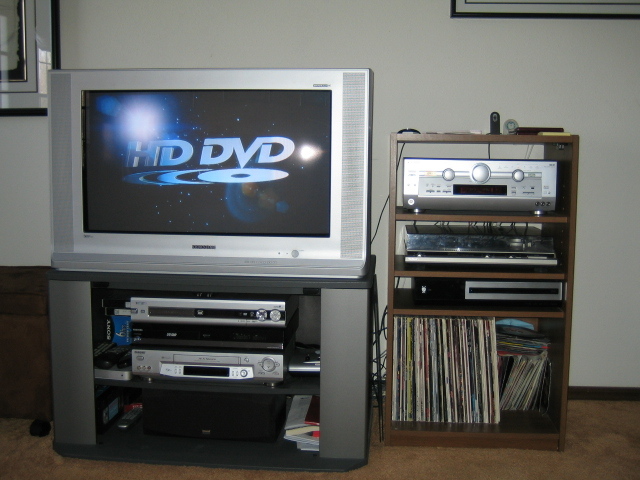
My system in 2008 shows several added devices for video playback, while music was either from playing a compact disc in a DVD player or from the phonograph

2003 was when I abandoned playing cassettes in the house, and that was also the last year cassette recordings had a measurable amount of sales volume in the U.S. Soon I would make the switch to downloading music as MP3 files.

MP3 files

My first iPod in 2004

The MP3 compression format for digital audio files came along in 1993. That eventually allowed the Napster file sharing network to make pirated music readily available. I refused to use Napster or LimeWire to steal music…I was never a Boy Scout, but my wife says I might as well have been one. I continued to purchase compact discs, although once I had an iPod, I did begin “ripping” them on my home computer into the MP3 format so I could load them onto it.

In 2004 I purchased a 4th-generation Apple iPod for $500 (equivalent to $819 in 2023). It was exhilarating to carry so many songs in high quality around in my pocket on its tiny 40 gigabyte spinning hard drive. The click wheel was a great interface for the time.

I will never forget taking my iPod with me on a hike on Mount Rainier in Washington State in the summer of 2005. I was hiking on a snowy trail in short sleeves listening to my iPod on shuffle play. Just as I came to a tremendous vista, Hanson’s MMMBop of 1997 started playing, and I couldn’t resist singing along as I bounded down the snowy mountainside.

One of the happiest days of my life, in which my new iPod played a key role

Since I was building up MP3 music files, I also purchased an Philips AZ 115517 MP3-CD player boombox for my home office. You had to burn MP3 files on a recordable compact disc to play them; the unit didn’t support USB flash drives. It survived until the great Meador Manor cleanout in 2016.

My first iPod still used a spinning hard drive, but it was replaced by solid-state iPod Nanos in 2005 and 2007 and then my first iPhone in 2008. I had so many music files, all of which I had paid for in one form or another, that I had to buy iPhones with larger storage capacities to handle them, and for several years still couldn’t fit my entire collection on the devices. My 2008 iPhone 3G only had 16 gigabytes of memory, while my 2022 iPhone 14 Pro has 16 times more.

MP3 killed the CD star

Compact discs were less attractive once I had an iPod, since I could connect it to a cheap cassette adapter to play songs in my 2001 Toyota Camry and dispense with having to create cassette tapes or playing CDs in the car. So sometime after 2004 I shifted from purchasing CDs to purchasing music as digital files via the iTunes Store. That led me to upgrade the computer speakers in my home office for awhile since I found myself playing songs there on iTunes instead of on CDs in the living room.

For awhile I was fascinated by the iTunes Visualizer, and I would playback songs like Fatboy Slim’s Praise You with the room lights off, watching the Visualizer.

I found it fascinating to see how Fatboy Slim created his remixes back in the day:

I still love his remix of Brimful of Asha, which really amped up the original song. And of course I identify with how Tjinder Singh was singing and writing about listening to Bollywood cinema star Asha Bhonsle “on the 45”, referring to the vinyl record singles I listened to back in high school.

I finally abandoned physical musical recordings altogether in 2010, when I decided to sell off most of my books and compact discs to fund the purchase of my first iPad. Longtime readers of this blog will know that I enthusiastically embraced the Amazon Kindle along with my Apple iPods and iPhones.

I managed to get paid $631 for 364 compact discs in 2010. By then, downloads accounted for most U.S. recorded music sales, with compact discs accounting for only 16% of the sales volumes and vinyl for a paltry 0.2%. I crammed all of my old phonograph records and cassette tapes into a bedroom closet, where they sat until Wendy and I got rid of them in 2016.

Car surgery

2010 was also when the cassette player in my 2001 Toyota Camry automobile wore out, forcing me to switch to FM transmitters to get the music on my Apple devices into the car’s amplifier. In 2012 I pulled the stereo from my car so I could wire in an FM modulator. That provided a line-in port from my devices to the stereo. It was quite a task for someone like me, but it gave me much better sound in the car for a couple of years until I finally sold the Camry in 2014 when it had over 236,000 miles on it.
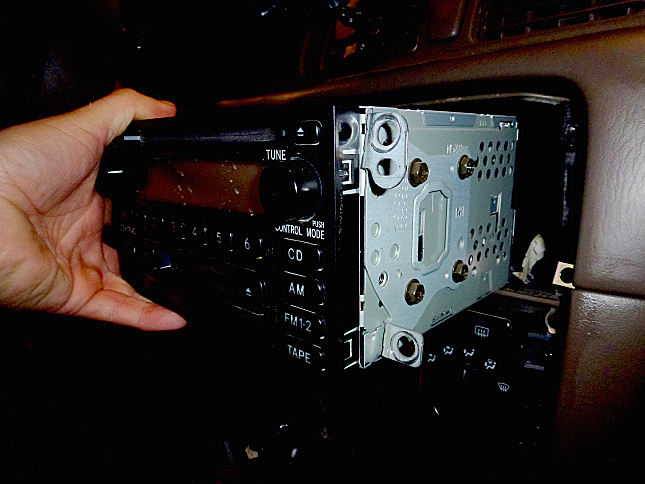
Sliding the stereo out of my 2001 Camry to install an FM modulator for my iPhones

Thankfully my 2014.5 Toyota Camry XLE sedan, which I am still driving in 2023, has Bluetooth allowing me to easily use my iPhones in it for music playback. Wendy’s 2018 minivan is new enough to support CarPlay.
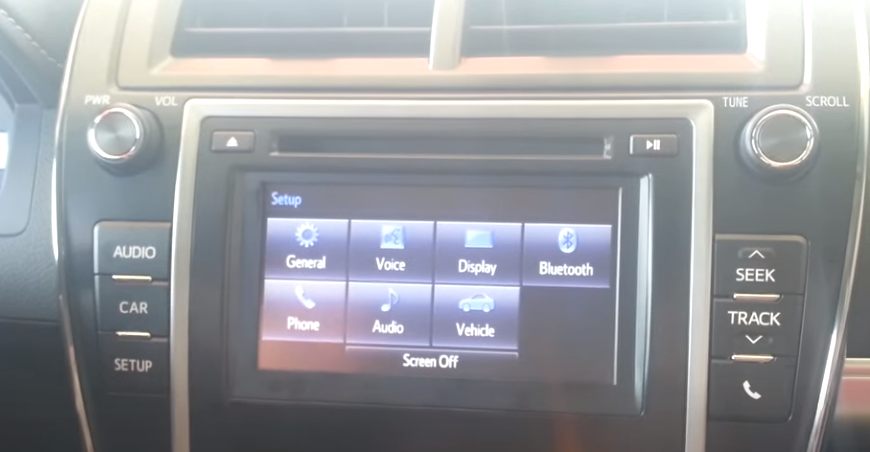
My 2014.5 Camry’s Entune Audio has Bluetooth, but not CarPlay

Modern music

So how do I acquire and listen to music in 2023? Wendy and I have access to three different services which each provide access to over 100 million songs. I pay $33 per month for Apple One Premier, which provides 2 terabytes of iCloud+ storage along with Apple TV+, Music, Arcade, Fitness+, and News+ which I can share with up to five people. The Apple Music component lets me stream over 100 million songs, and I actually purchase very few songs these days — only rarities which are so precious to me that I would never want to lose access to them should they disappear from the streaming platforms.

I also still pay $25 per year for iTunes Match, which is an older service that provides high-quality versions of songs I ripped many years ago into my iTunes library and syncs all of my music across devices. I could probably cancel that, but I fear that might cause weird glitches for my Apple music library, which I began building in 2004 and now includes over 17,800 songs on 2,154 albums from 1,336 artists across 138 genres. So I just keep paying for iTunes Match as a form of insurance.

There are two other music streaming services available to us. I pay $23 per month for YouTube Premium, which gives Wendy and me ad-free YouTube videos. It happens to include access to over 100 million songs via YouTube Music, but I rarely use that service, although Wendy uses it often via the Google Home Hubs around the house. I also pay $139 annually for Amazon Prime, mostly for free Amazon deliveries and renting streaming movies, but it is a third streaming music option that now also includes over 100 million songs, but it has skip limits on playlists.

Across the U.S. in 2022, recorded music sales volume was about half of what it was in the 1970s, about one-fourth of what it was in the 1990s, and about one-sixth of its peak in 2008. People mostly just stream their music these days.

Personal music

Much of my music listening is in my 2014.5 Toyota Camry, which connects via Bluetooth to my iPhone 14 Pro. I rarely play music on speakers in the home. Wendy’s hearing is far more acute than mine; I have high-frequency loss and tinnitus. So around the house, I usually wear headphones of some sort.

For music and audiobooks on the trail, I use wired Apple earbuds with my iPhone, while around the house I sometimes listen to music on my iPad using AfterShokz Aeropex bone conduction Bluetooth headphones, but I mostly listen to videos with them. If I want to listen to high-quality music in the house, I connect my Tribit XFree Tune Bluetooth headphones to my iPhone or iPad. When working at my home office desktop computer, I wear Mpow HC6 USB headphones. The bone conduction headphones are so comfortable I can wear them for hours, while headphones with cups get annoying after awhile.

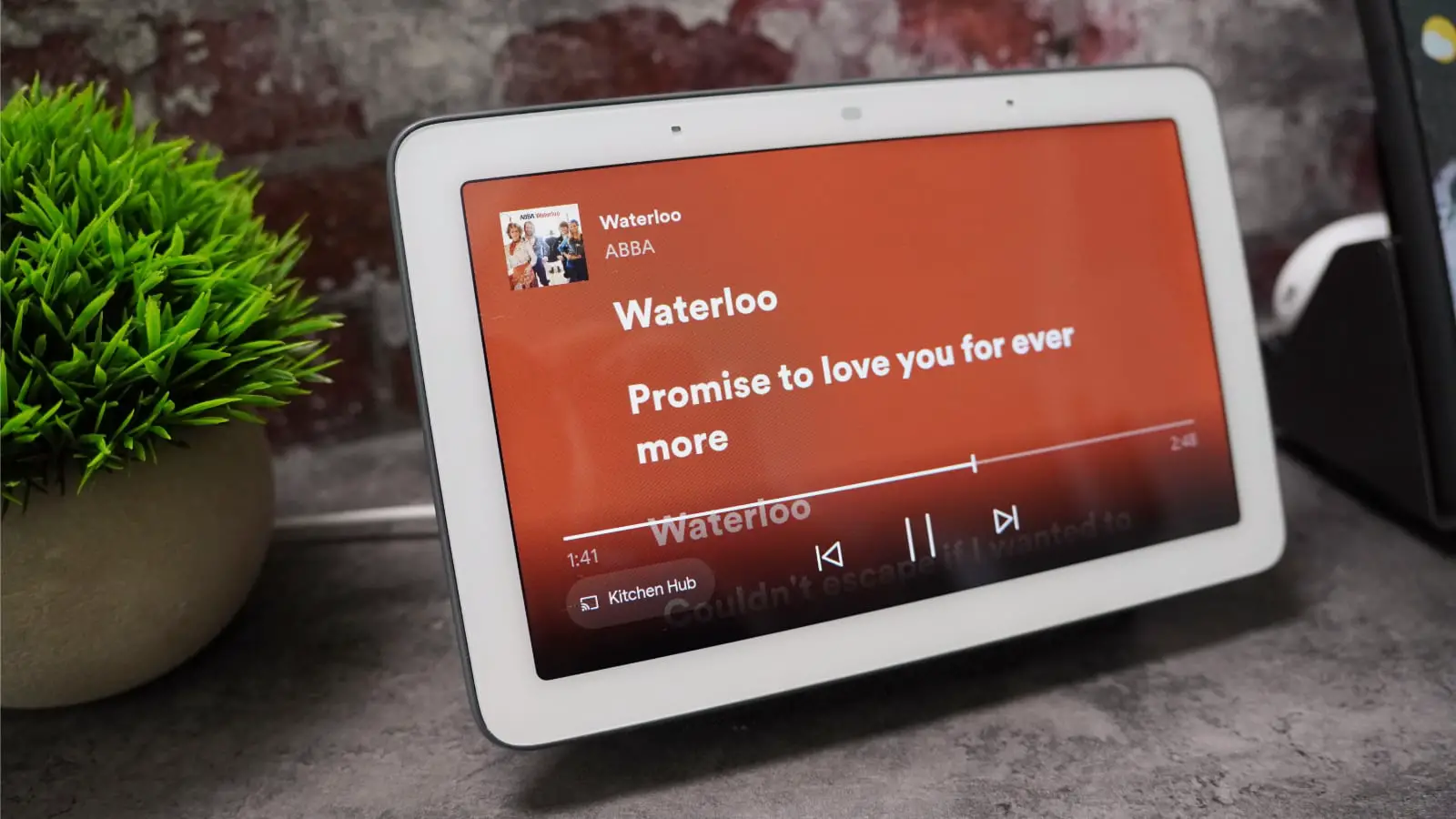
When Wendy and I want to listen to a song together in the home, we usually just tell one of our Google Home Hubs to play it. We could also pull up a song on the Apple TV to play through the living room speaker system, but we never bother with that.

Nostalgia only gets you so far

I certainly don’t miss messing around with the vintage technology of vinyl, 8-tracks, cassettes, and compact discs. But I do get a kick out of the many obscure formats and players that Mat Taylor of Techmoan has explored, and I have supported him on Patreon since 2016. A great example is the Tefifon, which had a needle playing music on cartridges of endless loop plastic tape.

That was so weird that Mat produced a follow-up video. He’s covered an amazing variety of music formats. I also greatly enjoyed Alec Watson’s Technology Connections coverage of early sound technology and compact discs, and I have supported him on Patreon since 2017.

Nowadays, Wendy and I can stream whatever we want, whenever we want. Recorded music has come a long way in the past half-century…we have no use for record stores or most physical media.

What comes next? I don’t have a vision for much more innovation in our audiovisual technology at home, just occasional updates of aging devices with new ones that operate similarly; virtual or augmented reality headsets have never appealed to me. Having navigated the transitions from vinyl records to 8-track cartridges to compact cassette tape to compact discs to MP3 files to online streaming services, I’m pretty happy that physical media have mostly disappeared from my life.

Apple Data Center in Reno, Nevada
Posted in music, nostalgia, technology, video | 2 Comments

Finding Forster

Meador Selfie Profile Pic

In 2011, I perused the Modern Library’s listing of the 100 best novels of the 20th century. Upon finding that I had only read 10 on the board’s list, I decided to read Nabokov’s Lolita and Lowry’s Under the Volcano. In 2019, I returned to the listing to discover and read McCullers’ The Heart is a Lonely Hunter. I returned to the board’s listing today, rightly convinced that my latest read would be on it; my tally is now 17.

#17 for me was #79 on their list: A Room with a View by E.M. Forster. Since it was published in 1908, it was a free download from Project Gutenberg. Forster has two other novels ranked higher in their list: A Passage to India at #25 and Howards End at #38. So what prompted me to read my first Forster novel and make it A Room with a View?

The Machine Stops, Merchant Ivory, and Julian Sands

Director James Ivory, his business and life partner Ismail Merchant, and screenwriter Ruth Prawer Jhabvala gave us movie versions of Forster’s A Room with a View in 1985, Maurice in 1987, and Howards End in 1992. I saw each of them years ago, but I hadn’t considered reading the Forster novels they were based on.

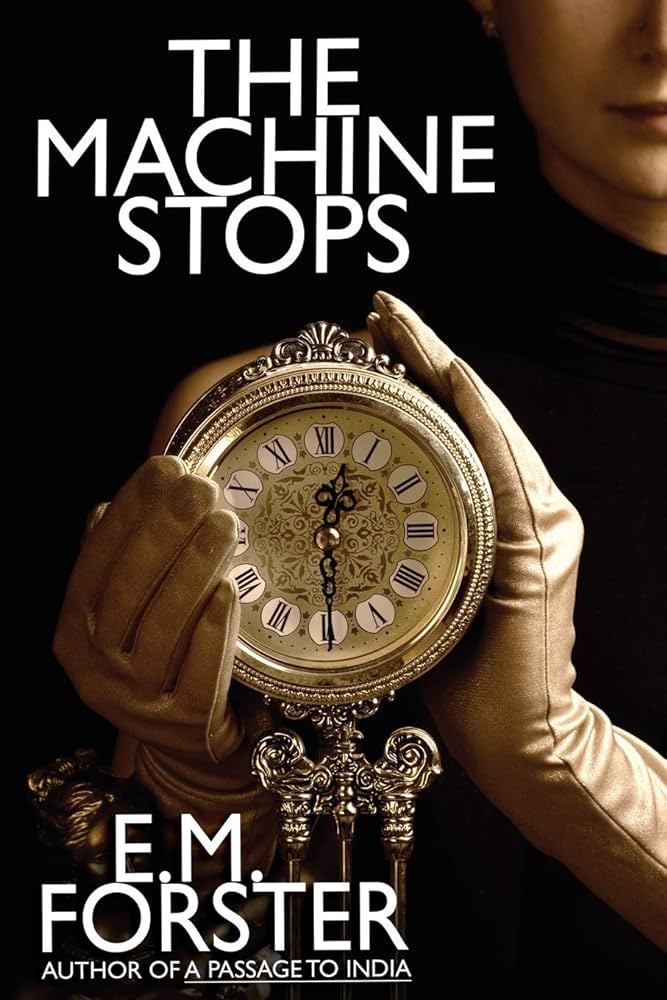
Years later I came across Forster’s science fiction short story of 1909, The Machine Stops. The story is set in a time when humanity lives underground and relies on a giant machine to provide its needs. It predicted technologies similar to instant messaging and the Internet, and I found the prescient and chilling tale quite stunning. While that primed me to consider reading one of his novels, I took no action.

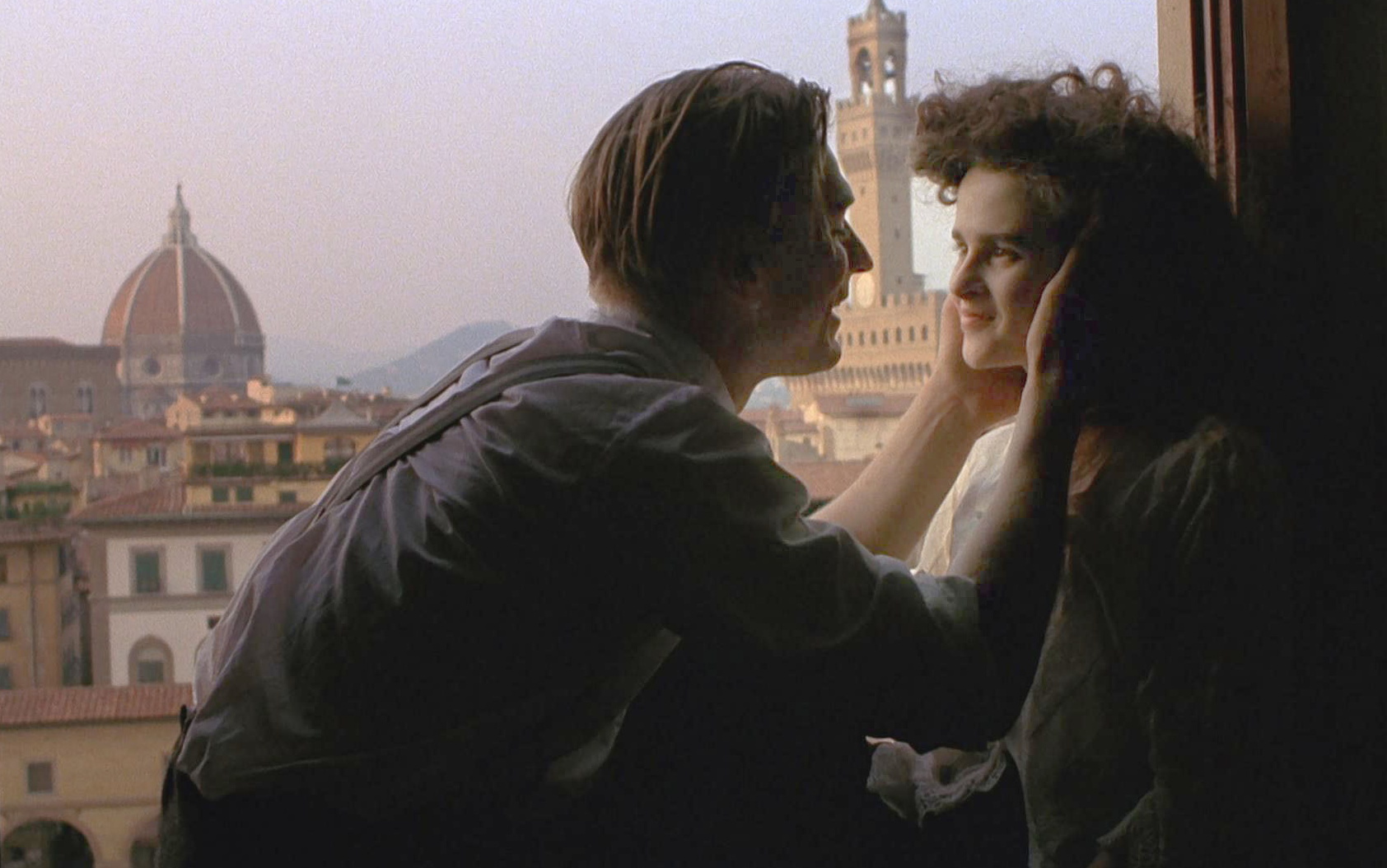
Julian Sands played George Emerson in the 1985 version of A Room with a View

Back in 1985, at age 27, Julian Sands starred as George Emerson in Merchant Ivory’s A Room with a View. He shared the screen with a bevy of talented actors, including Helena Bonham Carter, Maggie Smith, Denholm Elliott, Daniel Day-Lewis, Judi Dench, Simon Callow, and Rupert Graves. In January 2023, at age 65, Sands went hiking in the San Gabriel Mountains near Los Angeles and disappeared. In June his remains were finally discovered.

When I read about his death, I realized that I remembered little from the movie, which I hadn’t seen in almost 40 years. Thus a seed was planted in my subconscious.

Skip ahead a few months to when I finish reading Mercury Pictures Presents on my Kindle. As I had encountered with The Lincoln Highway a year earlier, the prose was truly impressive, but the plot failed to engage me, and I found myself distracted by other pursuits after each chapter. I knew there were books waiting on my Kindle with more gripping plots, but less skilled prose. I yearned for something that would excel on both fronts.
That gave my subconscious the opportunity to surface A Room with a View. It whispered, “You liked the plot of A Room with a View when you saw the movie adaptation in 1985. Why not download the book, read it, and then rewatch the movie?” So I downloaded the novel, used Send to Kindle to load it onto my devices, and sampled the first chapter.

Highlights

I was immediately struck by how rapidly and skillfully Forster created a milieu for female characters whose repressed manners were happily reminiscent of the best of Jane Austen’s work. The tone reminded me of the humor I found in Emma, which I read in 2012 after enjoying the 1996 movie version with Gwyneth Paltrow. So I read on.

Chapter 2 rewarded me with this:

At that point, I knew I was in good hands and would happily read multiple chapters at a sitting.

Forster’s Novels

E.M. Forster only produced six novels. Although he lived from 1879 to 1970, all of them were published by 1924, except for one which he held back for posthumous publication since it was a tale of homosexual love. Forster lived in the closet, since homosexual acts were still grounds for imprisonment in Britain until 1967. I wonder how many who enjoyed the romantic tale of heterosexual love in A Room with a View without realizing it was written by a gay man. Probably a similar proportion to those who see and hear the songs of Curly and Laurey in Oklahoma! without knowing the story of Lynn Riggs.

Forster’s novels repeatedly address issues of class in Edwardian England, with Howards End notably revolving around social conventions, codes of conduct, and relationships among three families representing the upper, middle, and working classes. I am certain that I shall read it some day, but first I must revel in A Room with a View.

The character of Mr. Emerson, the liberal father of George, provides some of the best lines. Early on, he remarks:

Forster also wonderfully evoked what playing the piano once meant for me:

I particularly enjoyed the character development of Lucy, the protagonist, who matures through the book from a confused girl into a self-directed woman. Here is an adept passage about her struggle in which I have emphasized a key insight Forster had about human foibles:

And that is soon followed by:

My highlighted passages conclude with two, again from the character of Mr. Emerson as he prods Lucy to stop lying to the world and to herself about her love for his son, George:

Forster embues his novel with such humanity, such tender understanding and forgiving regard for human nature even as he points out our failings. It helps me understand what Lord Annan meant when he spoke about the novelist after his death:

…his friendship was one of the things that one could never forget, because he was both very loyal to his friends and also very critical, and you had to keep up the mark. You were frequently deflated if you appeared to be insensitive, because that was the thing that he cared about so much…he had a greater sensitivity to the complexities of life and the complexities of morality, and that is why I think he will live as a great force in our literature.

I was touched by how the novelist, playwright, and screenwriter Christopher Isherwood spoke about his late friend:

Forster once said, “I have only got down on to paper, really, three types of people: the person I think I am, the people who irritate me, and the people I’d like to be.” My guess is that Mr. Emerson is a person Forster would have liked to be, that Lucy’s fiancé, Cecil, represents Forster in some ways, and cousin Charlotte would have irritated him. Yet a careful reading shows Charlotte to have been instrumental in eventually uniting Lucy and George. There is something profound in that.

A Beautiful Adaptation

After finishing the novel, I immediately rented and watched the movie on my iPad. It was delightful. Here is a glimpse of the start, which illustrates screenwriter Jhabvala’s skill at adapting the book:

It is a beautiful film:

Hence I am grateful to Merchant, Ivory, Jhabvala, and the other talented professionals, including the poor late Julian Sands, for helping me find Forster. More treasures await.

Posted in books | 1 Comment

Westward Ho! Manitou Springs

June 17-20, 2023 | Photo Album

Meador Selfie Profile Pic

Manitou Springs, Colorado is a two-hour drive north on Interstate 25 from Trinidad. Our journey was enlivened by storms.

Stormy weather

We zipped through Walsenburg, where we have stopped and stayed a few times over the years, and on past the Huerfano Butte. We stopped for a pit stop at Colorado City, where the helpful clerk alerted us to hail on the road ahead. So we delayed there for awhile to let the storm sweep eastward, texting our friends up in Manitou Springs that we would be delayed.

A tornado warning came up on our phones, so we were glad to have missed the excitement to the north. Soon enough the radar app on my phone showed me the storm had cleared the interstate highway, and we drove on through and beyond Pueblo. The clouds were still unsettled, and we spotted piles of hail on the roadside terrain.

Friends at the melodrama

We reached the hotel before 4 p.m. and that evening joined our friends, John and Betty, and their grandson Max, for the melodrama at the Iron Springs Chateau. It once offered a three-course meal with the show, but had devolved to snacks, so we dined on popcorn and nachos. The show was “All Trains Lead to Home…or…Training Spaces” and we dutifully cheered the heroes and booed the villains.

The next day, while our friends took Max on adventures in the area, Wendy and I had breakfast at Uncle Sam’s Pancake House…it wasn’t worth the long wait, and she was much happier with the pancakes and sausage she bought the next morning at a McDonald’s.

Manitou Springs Locations
Manitou Springs and Old Colorado City locations

Miramont Castle

We drove up to Miramont Castle, which I had been wanting to see since our previous visit with John and Betty in Manitou Springs in 2019. The rambling mansion was built on the side of a mountain from 1895-1897 for Father Francolon, a French Catholic priest, and his wealthy aristocratic mother. It is a weird mix of nine styles of architecture with four levels, each with at least one exit to level ground along the mountainside, with the front door on the first level and the back door up on the fourth.

Miramont Castle Exterior
Miramont Castle

The mansion is over 14,000 square feet with over 40 rooms, including octagonal rooms, a 16-sided room, and various oddities. It has been lovingly restored, with a fire department museum in the lowest level, various odd rooms outfitted to remember different aspects of life in Manitou Springs, a gift shop, tea room, etc.

Miramont Castle Interior

Father Francolon had moved to Manitou Springs for his health after drinking from a poisoned chalice during Mass in New Mexico. Perhaps that was because of his conflicts with Spanish priests, or because of his own misbehavior. He first built a home above the later castle, and after the castle was completed, his original home became a sanitarium for tuberculosis patients run by the Sisters of Mercy. A tunnel connected the castle to the sanitarium, through which the nuns delivered meals for the Francolons.

Francolon and his mother didn’t enjoy their castle for long, as in 1900 a lynch mob came for him after the mother superior of the Sisters of Mercy accused him of pedophilia. He hid under the seat of a buggy and was whisked away to refuge at a Catholic church in Colorado Springs, and he and his mother later returned to Europe.

The sanitarium moved into the castle when its original home burned, and it was sold off in 1946 and converted into apartments. It was purchased by the Manitou Springs Historical Society in 1975.

My impression is that overblown mansions, such as the Marland Mansion of Ponca City and La Quinta of Bartlesville, seldom stay in families for more than a generation or two. Their long-term survival, due to tax and maintenance issues, often depends on them being repurposed by tax-free religious or academic institutions. Eventually historical societies get hold of some of them, raise funds for restoration, and we get to tour them. Miramont stands out for having shifted from a sanitarium run by nuns into private apartments before finally becoming a museum.

When I was younger, I would fantasize about what it would be like to live in such a mansion. Now I’m grateful that our home is only about a tenth of the size of Miramont and is 27 times smaller than the Marland Mansion. I now appreciate having a home that is small enough that we can operate our machine for living without additional staff, and I realize that we are introverts who don’t need space to host gatherings.

Red Rock Canyon Open Space

After climbing through the castle, Wendy and I enjoyed a tasty lunch at Savelli’s, which was next door to our hotel, before driving down the highway to the Red Rock Canyon Open Space in Colorado Springs.

Wendy at the Red Rock Canyon Open Space

Almost a century ago, John George Bock accumulated land parcels south of the famous Garden of the Gods area, which is where Wendy and I stayed in 2015. The city acquired 789 acres of Bock’s parcels in 2003, which had previously been used for quarries, gravel pits, a gold refining mill, and a 53-acre landfill. The former industrial sites have been transformed into a rugged and beautiful landscape with miles of trails for hikers, joggers, and mountain bikers. The city has now expanded the park to 1,474 acres.

Granger at Red Rock Canyon Open Space
Granger at the Red Rock Canyon Open Space

We only had the time and endurance to explore a few trails on the northwestern edge. The trails led past ridges of red sandstone. Those formed from sand and gravel washed down from the ancestral Rocky Mountains which spent millions of years near the edge of a sea, then formed the bottom of a shallow sea, and were slowly buried under a mile of new sediments. Eventually, when the Rocky Mountains were uplifted to the west, the mile-deep Red Rock Canyon strata were lifted up, deformed, and bent onto their ends to be eroded into what we enjoy today.

Survivor at Red Rock Canyon Open Space

The sandy trails led around the jagged upturned strata, with rises and falls providing vistas of Pike’s Peak and nearby homes in panoramas to the west. We saw a snake and trees that seemed to grow from the rocks.

There were quite a few people out enjoying the area on a Sunday afternoon, but the size of the park kept it from feeling crowded. I hope to explore more of the Open Space on a future visit.

Old Colorado City

That evening we regrouped with our friends and drove into Old Colorado City for a Father’s Day dinner. Old Colorado City is a tiny 8-acre area on the western edge of modern Colorado Springs, which is over 125,000 acres. In 1859, it was a small settlement of El Dorado at the eastern entrance to the pass through the mountains to the west. Renamed Colorado City by four founders, it became the first permanent town in the Pikes Peak region.

Colorado Springs was a “dry” town, while Colorado City was “wet” with over 20 saloons, gaming parlors, and brothels serving gold miners after gold was discovered in 1891 at Cripple Creek. Prohibition arrived in 1914, and the town was annexed by Colorado Springs in 1917. It is now an arts district.

We dined at the Trails End Taproom and Eatery, which had been the Mason Jar when we were there in 2019 before the pandemic. Now there was a wall of beer taps, but we ordered items like peach cobber, macaroni and cheese, a salad and patty melt, and fried mushrooms.

Ad astra per aspera

The next day we began our journey home. That meant a long drive along rough Highway 24 from Colorado Springs to intersect Interstate 70 at Limon. Then it was a long roll along the interstate to Hays, Kansas, where we stopped to rest overnight.

I surprised Wendy with Gershwin done surfer style by playing for her a cover of Rhapsody in Blue by Thomas Lauderdale and Satan’s Pilgrims.

That helped pass the time, along with a train and wind farms. At Burlington, just west of the Colorado-Kansas state line, we stopped at The Farm Grill & Restaurant where Wendy enjoyed corn dogs and pecan pie while I had another French dip.

A train and some windfarms in Kansas

It was windy and hot driving through Kansas, which has the state motto “Ad astra per aspera” or “To the stars through hardships”. Their tourist board has condensed that down to just the first three words. Oklahoma has a similar issue with its motto of “Labor omnia vincit” or “Work conquers all”, which is another saying from Virgil, this time from his Georgics, a poem supporting Augustus Caesar’s back-to-the-land policy encouraging Romans to farm. Our tourist board gave up and uses, “Imagine that”, which is pretty awful, but perhaps better than its predecessor during my childhood: “Oklahoma is OK”.

At Hays, we loved JD’s Country Style Chicken, which featured all fresh food with chicken tenders, rolls, spicy and delicious potato salad, green beans, corn, and more.

Four roundabouts in Hays, KS

I was surprised at having to navigate four roundabouts on Highway 183 from our hotel to drive into Hays. It reminded me of encountering a long chain of them in Bend, Oregon. I like the lone and often busy roundabout we have in Bartlesville, which is both faster and safer than the stoplight it replaced, but find that a series of them gets old pretty quickly, especially if there isn’t much intersecting traffic to highlight their functionality.

The next day we dashed home. We roused to enjoy fresh hash browns, good pancakes, and French toast at the Pheasant Run. Then we drove along the interstate to Salina, stopping at the Kansas Originals Market & Gallery outside Wilson for a nice shopping break.

I like the historical map on the wall of the one of the rest stops in Kansas. It included the Great Osage or Black Dog Trail across southeastern Kansas near where we live, which was a 200-mile trail leading east from Baxter Springs, Kansas to the Great Salt Plains in Oklahoma. Black Dog lived from approximately 1780 to 1848. He was born near St. Louis, Missouri and his village, Pasuga (Big Cedar), was located at present-day Claremore, Oklahoma. He was a huge fellow, almost seven feet tall and weighing about 300 pounds.

Historical Kansas Map
On the wall of an interstate rest stop

Next was a windy drive south to Wichita, where we had lunch at the Old Mill Tasty Shop, a feature of the Old Town there since 1932. Wendy had tasty crab salad on white bread, while I enjoyed a turkey sandwich and a delicious chocolate shake. We wrapped it all up with a 2.5-hour zigzag drive from Wichita through Derby, Winfield, Cedar Vale, and Caney to finally head south into Oklahoma and little Bartlesville, concluding our latest westward expedition.

Photo Album | Previous Stop: Trinidad

Posted in art, day hike, history, music, photos, travel, video | Leave a comment

Westward Ho! Trinidad

June 16-17, 2023 | Photo Album

Meador Selfie Profile Pic

There are two roads from Santa Fe to Taos. Each begins in Española, a 30-minute drive north of Santa Fe. The high road is more scenic, winding through the Sangre De Cristo mountains for 105 miles. Wendy and I took it in 2019.

So this time we took the low road, which winds for 70 miles, much of that along the Rio Grande. We stopped at the Rio Grande Gorge Visitor Center, where they had a print of a view from the west rim by Geraint Smith. It was priced at $450, and I’ll allow you to compare it to my own iPhone 14 Pro snapshot of the view from the road.

The Rio Grande is the fourth longest river in the USA. The Missouri is 2,341 miles, the Mississippi is just barely shorter at 2,340 miles, the Yukon is 1,979 miles, and the Rio Grande stretches 1,759 miles from southwestern Colorado to El Paso, Texas where it then forms the southern border of both the state and the country to the Gulf of Mexico.

We enjoyed tamales and tacos at Mante’s Chow Cart SouthSide in Taos, and then headed east on US 64 across the Sangre de Cristo mountains, the southernmost sub-range of the Rocky Mountains. They are generally much lower in New Mexico than in Colorado. The portion in Colorado has ten peaks above 14,000 feet, but there are several peaks over 13,000 feet near Taos and Santa Fe.

The two-lane highway is edged by giant, sandy-colored rocky cliffs with distant green peaks. It follows the Rio Fernando de Taos stream through the mountains for 20 miles to the Moreno Valley. The Angel Fire ski resort is at the south end of the valley, and we drove into town to use a restroom at a grocery store there.

Then we drove north to Eagle Nest and turned east to cross another section of the Sangre de Cristos to Cimarron. That took us across the midsection of the immense Philmont Scout Ranch.

The boundaries of Philmont; we crossed on US 64 across its midsection

Philmont covers over 140,000 acres of wilderness and was donated to the scouts by oil baron Waite Phillips. Waite was based out of Tulsa, and donated his 72-room mansion there to become the Philbrook Museum of Art. When he donated Philmont to the scouts, he not only included its water, mineral, and timber rights, but also endowed it by donating the Philtower building in downtown Tulsa. He was the brother of Frank and L.E. Phillips who founded Phillips Petroleum in Bartlesville.

From Cimarron we drove northeast to intersect Interstate 25, which took us north through Raton, a few miles south of the border with Colorado, and on to Trinidad. Once we could see Fishers Peak, I knew we were close.

Fishers Peak
Fishers Peak near Trinidad, Colorado

Trinidad

My first visit to Trinidad was in 2012, and I liked it enough to take Wendy there last year. We were pleasantly surprised at the accommodations of the Family Suite at its La Quinta and booked it again for this visit.

We turned off Interstate 25 to follow the route of the old Santa Fe Trail into town. Wendy wanted a sandwich, and TripAdvisor led us to the Sub Shop at the Whistle Stop convenience store. Our sandwiches were top-notch, as was the service.

We had breakfast the next morning at the La Quinta and then drove downtown to return to the A.R. Mitchell museum we had enjoyed last year. We again parked a couple of blocks away in the public lot east of the Most Holy Trinity Catholic Church and the imposing old abandoned brick Schneider Brewery. It was built in 1866 and was one of four breweries in Colorado to survive prohibition by making non-alcoholic beer or malted milk or by bottling soda water.

Trinidad Brewery Building
Old brewery building in Trinidad

The brewery fell into disrepair in the late 1950s and has been mostly vacant for decades. New owners plan to demolish parts of the structure that have become structurally unsound while renovating much of it. We shall see in the coming years if they can make a go of it.

We strolled through the Sister Blandina Wellness Gardens and then along Main Street, popping in at a thrift store so Wendy could see if they had any Barbie dolls. She has been re-rooting the hair on old dolls as a hobby. They didn’t have any dolls, but I loved the melting pot of old phonograph albums they had on display.

Thrift Store Records
Fun old albums at a Trinidad thrift store

The A.R. Mitchell Museum of Western Art was again a treat, with us admiring Robert Martinez’s Blue on Black Coyote.

Blue on Black Coyote by Robert Martinez

Upstairs was a fun exhibit about the Fox West Theatre with old projector equipment and many old movie posters.

Old Movie Poster
Old movie poster from the Fox West Theatre
A juvenile science fiction book that also mixed crystals with Atlantis

Seeing the poster of George Pal’s 1961 movie about Atlantis set my mind pinballing around the world of science fiction of my youth.

I first thought about a book I enjoyed as a youngster: Lester Del Rey’s Attack from Atlantis of 1953. Its premise included crystals from undersea volcanoes that created forcefilm bubbles that excluded liquids and solids with unlimited force. The poster reminded me that Pal’s film also featured crystals, albeit ones that absorbed sunlight and could fire heat rays.

Before I fixated on the poor physics of both works, my mind dredged up that the special effects and miniatures in the film were by Project Unlimited, a group that included Wah Chang. He was the non-union artist who built several creature costumes used in the original Star Trek series, designed the communicator and Vulcan harp props for it, and built the original Romulan spaceship model.

The prop from Demon with a Glass Hand

Then my mental railcar jumped tracks to how Project Unlimited had also built masks, creatures, and special effects for the earlier series The Outer Limits. I wondered if Wah Chang built the eponymous hand for my favorite episode, Demon with a Glass Hand.

To escape the mental ricochets, I strode past the wall of posters to look at a large old sign near the front windows, which thankfully diverted me from science fiction to westerns.

It was an advertisement about Hopalong Cassidy promotional gifts. William Boyd portrayed that fictional cowboy in 66 films from 1935 to 1948 and then in radio and television series until 1952. I’ve never seen a Hopalong Cassidy show nor read any of the stories; my childhood experiences with western series were limited to The Lone Ranger and the genre-blending The Wild Wild West.

But the internet informs me that Boyd’s portrayal of Cassidy was of a clean-cut sarsaparilla-drinking hero who never shot first, while the character in the original novels of Clarence E. Mulford was rude, dangerous, and rough-talking. The name came from his walk, which had a little “hop” in it after he was shot in the leg during a gun fight.

Hopalong Cassidy Gifts
Vintage Hopalong Cassidy promotion

Another exhibit was of framed photographs by Edward S. Curtis. I liked The Rush Gatherer – Arikara, and a photograph of Chief Joseph of the Nez Perce inspired a previous post.

The Rush Gatherer - Arikara by Edward Curtis
The Rush Gatherer – Arikara by Edward S. Curtis

For lunch, we walked a half-mile up Main Street to Tony’s Diner, where Wendy enjoyed a BLT while I indulged in a French Dip and a chocolate shake.

After lunch, we returned to the minivan. Lowering clouds were an omen of a tornado and hail storm brewing up north, along our path to Manitou Springs.

Trinidad Colorado

Photo Album | Next Stop: Manitou Springs | Previous Stop: Santa Fe

Posted in art, history, photos, travel | Leave a comment

A Port in a Storm

October 4, 2023
Meador Selfie Profile Pic

During my Sunday morning walk, I was listening to Richard Osman’s second Thursday Murder Club book, The Man Who Died Twice. A character remarked:

…it really is very pretty here in the dark. There are a few lamps lighting the paths, and you can hear the animals in the bushes. I could just imagine the foxes thinking, “What’s this old woman up to?” And I was thinking the same.

Whoosh!

My mind was instantly transported from the Pathfinder Parkway in Bartlesville to a destination 137 miles southwest and 38 years in the past: my port in a storm.

The Port

Imhoff Creek drains central Norman, Oklahoma into the sandy expanse of the Canadian River. Four decades ago, there were paved paths along the west side of the creek north of the river. Shaded by trees, sidewalks meandered above the steep bank, alongside timber retaining walls. They were lit by sturdy metal lamps along the sidewalks, sometimes perched in beds above the paths.

It was all part of The Port apartments, which had been built in the early 1980s just northeast of a new golf club, The Trails, built between state highway 9 and the river. The apartments were northeast of the club’s 10th fairway, separated by a large pond. The place had a nautical theme, with heavy ropes, life preservers, etc. The laundry was built on pilings, projecting out above the pond.

The Port in Norman, OK

The complex was built between 1981 and 1983, so it was still quite new when I was hunting for an apartment in 1985, seeking refuge after a stormy freshman year living in a dormitory at OU — the University of Oklahoma.

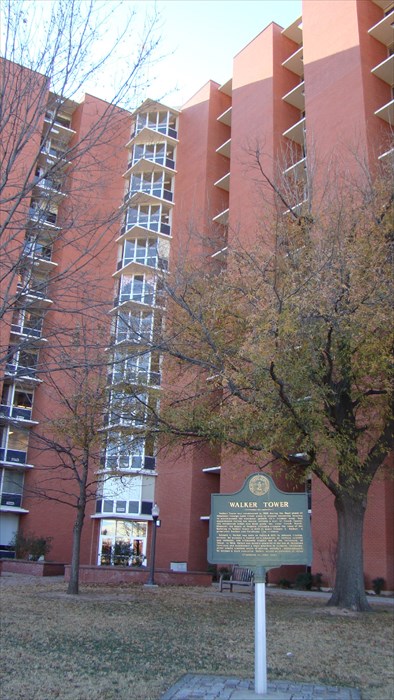
Walker Tower

OU’s three 12-story dormitories

The Walker Tower dormitory opened in 1966 as Couch North and was renamed in 1970 to honor a prominent banker. It housed over 1,400 students in the four wings of its twelve stories. Next door was the Adams Center, built two years earlier and named for K.S. “Boots” Adams of Phillips Petroleum, with four towers connected at ground level. Across the street was the Couch Tower, seemingly identical to Walker, although in 1984 it was rented out by the U.S. Postal Office’s training center.

Walker Tower at the University of Oklahoma

Serving all three gigantic dorms was the circular Couch cafeteria. The food at the cafeteria was poor enough that a few months in we got notices that the cafeteria apologized for itself, had plans to improve, and would be offering us a steak and lobster dinner one evening. I had the steak, which was as you might expect. It was more worthy of catsup than Worcestershire.

Back then, freshmen who didn’t own property in Norman were required to live in the dorms. I had a steady girlfriend for the final two years of high school and first two years of college who escaped living in them because her parents had purchased a condominium in Norman for her and her older brother.

As an introverted only child, I had signed up for a single room with air conditioning and a dorm that didn’t have an entire hallway of residents sharing a communal bathroom. I was assigned to Walker’s 8th floor, the Honors Floor, and I expected to have a single room with a bathroom that I would share with the occupant of the adjoining single room.

I moved in on a sizzling summer day. As I waited for an elevator in what would soon become a familiar wait, I spied orange flyers taped on the walls beside each elevator. They urged me to come to a concert by the Kansas City punk rock group “Orange Donuts” with “Death Puppy” as their local warm-up band. It is interesting what sticks in the mind.

Arriving in my room, I puzzled over the message our Resident Advisor had written on a markerboard in the room: Chill out, guys!

The use of the plural form and the presence of two beds alarmed me. I found the Resident Advisor, who cheerfully told me they had more students than expected, so I had been randomly assigned a roommate and we would be sharing a connecting bathroom with two suitemates: a guy from Nebraska and a fellow from South Dakota.

I returned to my room, fuming. I set up my TRS-80 Color Computer and my microwave oven. Eventually Random Roommate came in with some boxes. He proclaimed, “A microwave? Nice! And a computer? Cool! That will sure come in handy for us.”

At that point, I was anything but chill. So as soon as he left to get more things, I scoured the Honors Floor and located a fellow from my high school who had his own computer. I convinced him to be my new roommate, and we moved his stuff into my room, transferring the boxes my assigned roommate had brought up thus far to my new roommate’s former abode. When Random Roommate reappeared, I informed him of his new room assignment and guided him to it. The Resident Advisor came by later, asking what was going on. I cheerfully told him how to amend the assignments on his clipboard.

Self-confidence can be learned, practiced, and mastered–just like any other skill. Once you master it, everything in your life will change for the better.

Barrie Davenport

I was happy enough in my recruitment of a new roommate, but dorm life was not for me. I was frequently awakened in the middle of the night by slamming steel doors, and we endured multiple middle-of-the-night fire alarm evacuations. The Resident Advisor would come around, opening each room to ensure we evacuated. That meant climbing down the emergency stairwell for eight flights, and then climbing back up it afterward because the elevators would be hopelessly overloaded. The most frustrating was the alarm sounding in the depths of a cold winter night and us freezing outside for a long time only to find out that the alarm was sounded by someone who had seen the steam coming from the vents of the basement laundry and mistaken it for smoke.

Earlier this year, they tore down Walker’s high-rise neighbor, Adams Center. Walker Tower will be coming down next. I shan’t shed any tears.

Finding Refuge at The Port

So I was excited to go hunting for an apartment in the summer of 1985. My own bathroom, kitchen, and bedroom! I was thrilled when I found The Port, with 128 units on four acres. It had a cute theme, a nice mix of residents, and I was able to secure a 6-month lease for a second-floor one-bedroom unit with a cathedral ceiling, a skylight, and a balcony for $275 per month. That is equivalent to about $782 in 2023.

My first apartment was upstairs and to the left

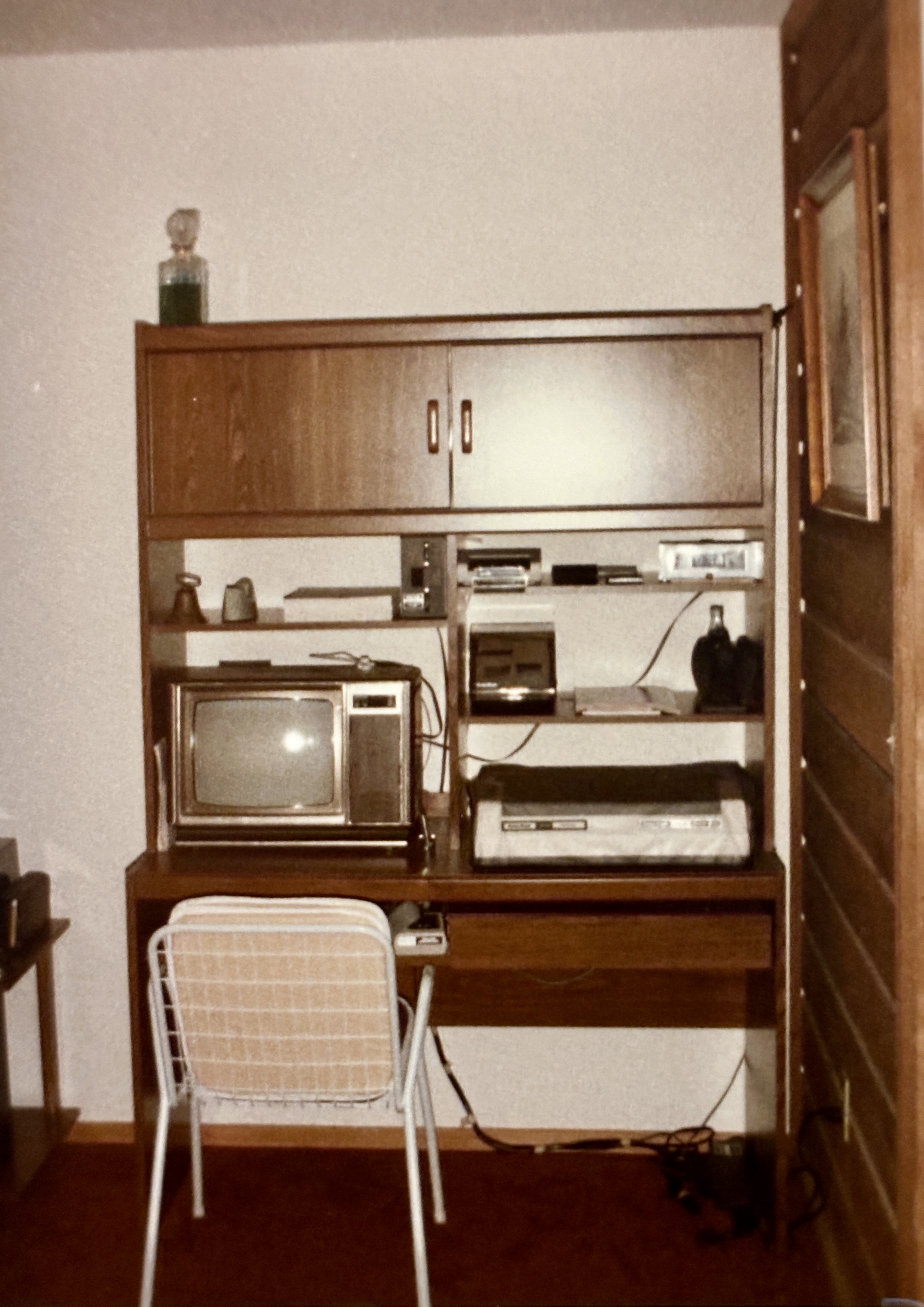
I set up my Color Computer again, this time on a pressboard desk and hutch with my 13″ television doubling as its monitor. The setup included a joystick, floppy disk drive, daisy wheel printer, and a modem to connect to the university’s engineering computer as well as CompuServe. I still remember that my CompuServe username was 71460,2557 even though, like Orange Donuts and Death Puppy, CompuServe disbanded long ago.

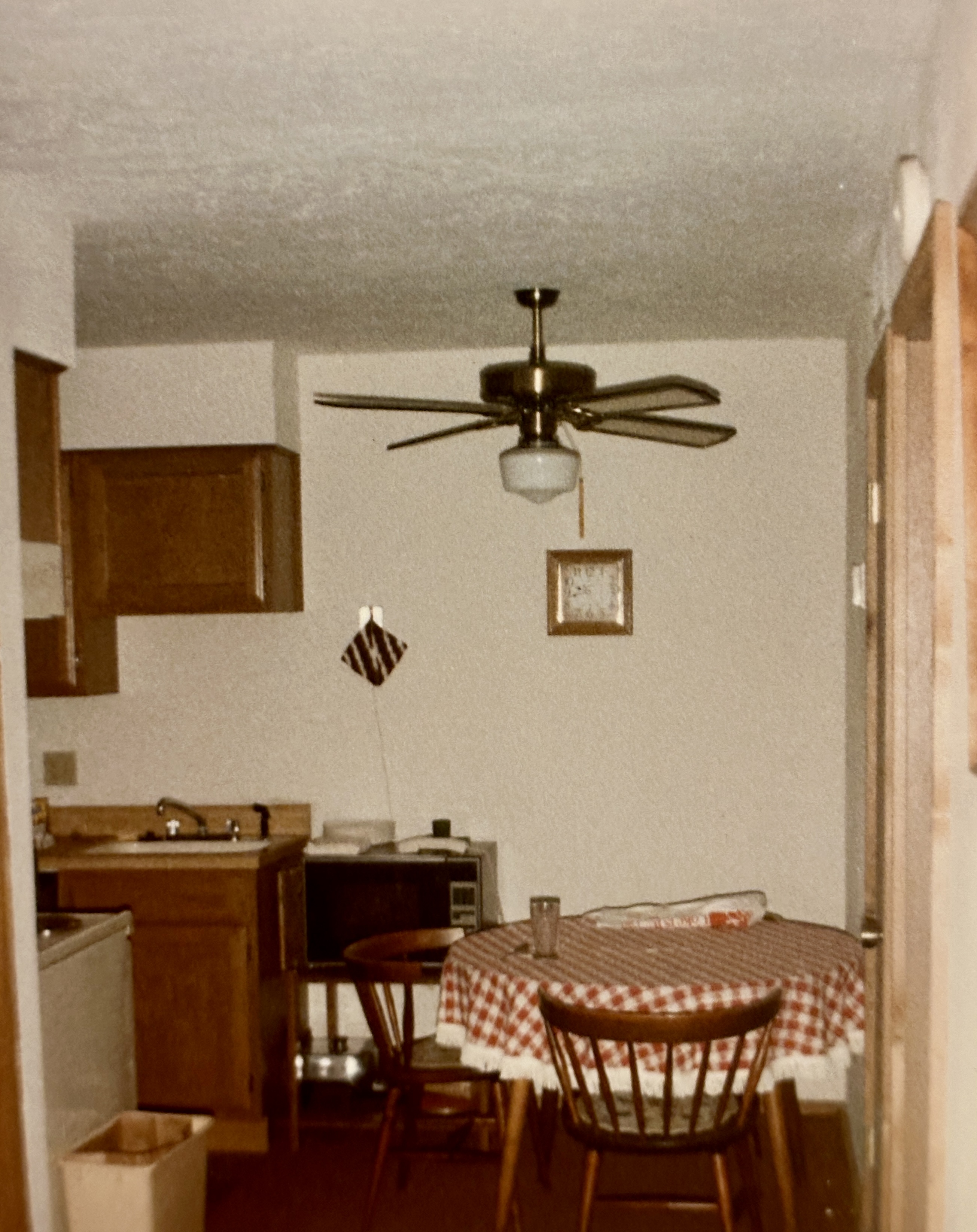
The living room was also adorned with a dreadfully uncomfortable Papasan chair with a loud 1980s floral print cushion and an old love seat. I squeezed a small mid-century modern wooden table and chairs into the tiny dining area, complete with old Pizza-Hut style checkered tablecloth.

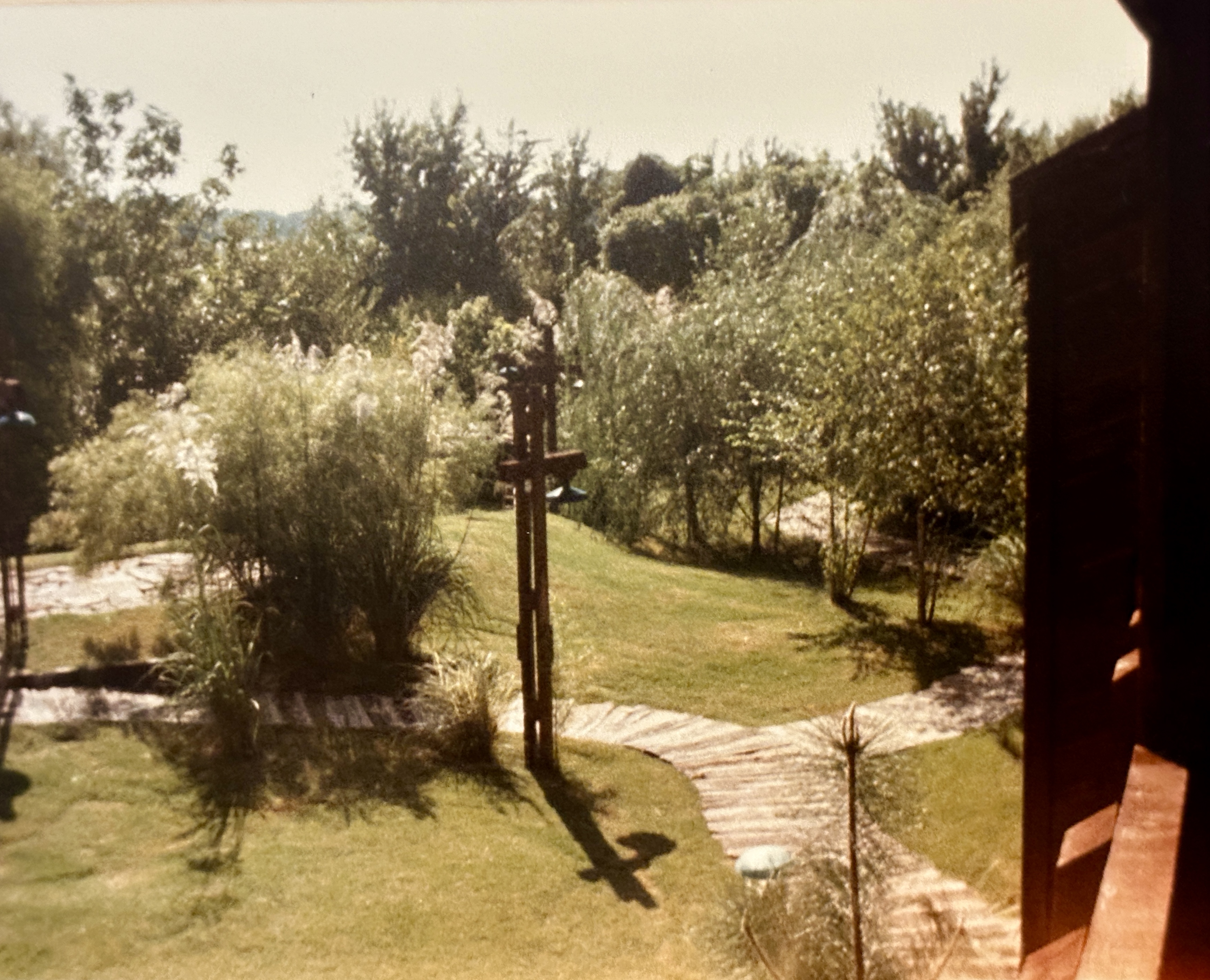
It was nice to escape the small apartment along pathways made out of concrete and railroad ties meandering around plenty of landscaping, with high lights on fancy wooden poles.

The view from my balcony

I was intrigued by the pond and inspired by the nautical surroundings. So I bought an inflatable boat and invited my former roommate to come over and take it out with me on the pond. We plugged its inflator pump into the cigarette lighter of my Toyota Supra, and once it was ready we took the little boat out on the water near the laundry dock.

The pond and laundry at what was The Port in the 1980s but is now The Landing on 9

All went well, with us merrily paddling about the pond, until my roommate saw a snake slithering by in the water. I thought of it as Little Nessie, our water snake, but he thought it looked like a copperhead and insisted that we return to shore. I don’t recall using the boat after that.

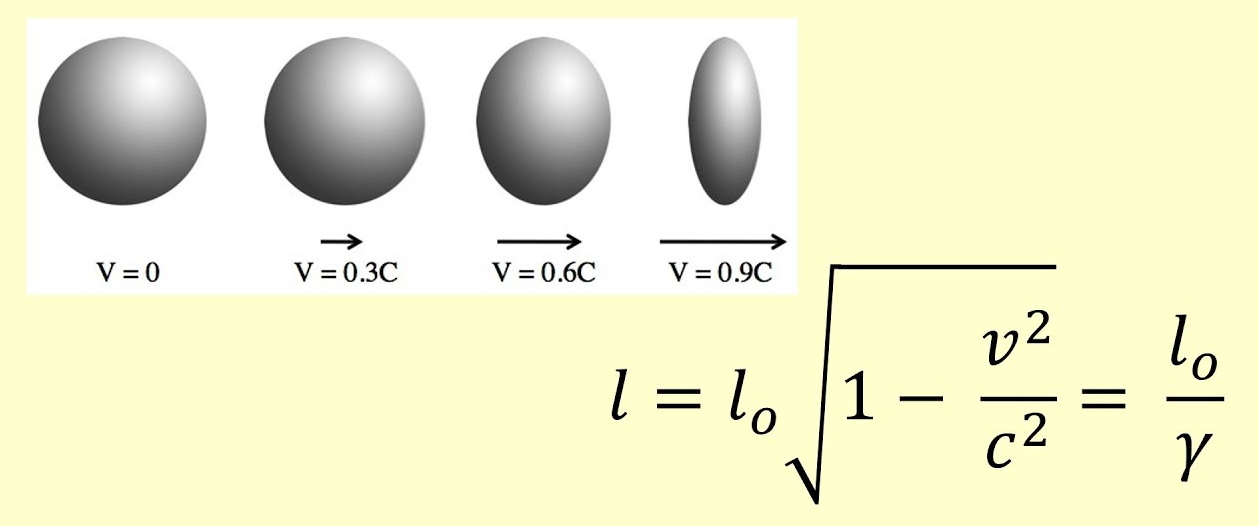
My favorite aspect of The Port was the pathways along its eastern edge in the woods above the creek. I remember once struggling late into the night with a Modern Physics assignment. A problem involved a spacedock with movable doors at each end and a spaceship that was too long to fit inside. I was supposed to do calculations about the ship going fast enough that Lorentz contraction could allow it to temporarily fit inside, and the shift in frames of reference in the problem had me baffled.

An object foreshortens in the direction of motion in a moving frame of reference per the Lorentz contraction

After an hour of struggling through calculations that yielded wrong answers, I got up and went for a walk. I slowly wound my way along the wooden pathways over to the peaceful lighted walkways in the woods. I was already beginning to question my future in Engineering Physics, but then the solution dawned on me. I scurried back along the pathways to my apartment and my calculator.

Early in the next semester, my six-month lease was up. I confidently strode into the office, to be told by the manager that I would be shifting to a $285 month-by-month renewal. I was put out by the $10 per month increase, and retorted that I had been a model tenant and wanted another six-month contract, but reduced by $10 per month to $265. The manager was nonplussed at first, but she then agreed to my demand.

Leaving Port

Life can be fleeting, and I wound up only living at The Port from August 1985 to December 1986. The summer of 1986 was a deflection point for me. Immediately after being named the Outstanding Sophomore in Engineering Physics, I abandoned that major as I was unhappy in most of my sophomore year engineering and physics courses. I switched majors, broke up with my girlfriend of four years, and found a new side job working for the University of Oklahoma Scholars Program.

My second apartment

It was a tumultuous period of reinvention, and I became lonely at the apartment, something I would have not thought possible back in my freshman year in the dorms. So I rented a room at a house owned by a friend from high school and college. Eventually I was ready to be on my own again, and for the rest of my undergraduate years I lived in an apartment across town from The Port. It was cheap and roomy, but its grounds were drab and desolate. I would never again live in a place as charming as The Port.

The Port would soon encounter troubles of its own. It went into foreclosure in 1987 and was sold in 1990 for $1.4 million. It became Port at the Trails and ran down over the decades. In 2006, it was sold for $3.7 million and is now refurbished as the Landing on 9.

Like me, the bones are the same but the finishes are different. The last time I was there was many years ago, and the beautiful old pathways in the woods were long gone. Now I happily walk the Pathfinder Parkway, having successfully weathered a few major course corrections in my journey through space and time. I miss the old walkways at The Port, but as this weekend showed, my mind can revisit them at the turn of a phrase, and as Marcus Aurelius wrote, “Loss is nothing else but change, and change is Nature’s delight.”

Whoosh!

Posted in history, nostalgia, physics, random | 1 Comment