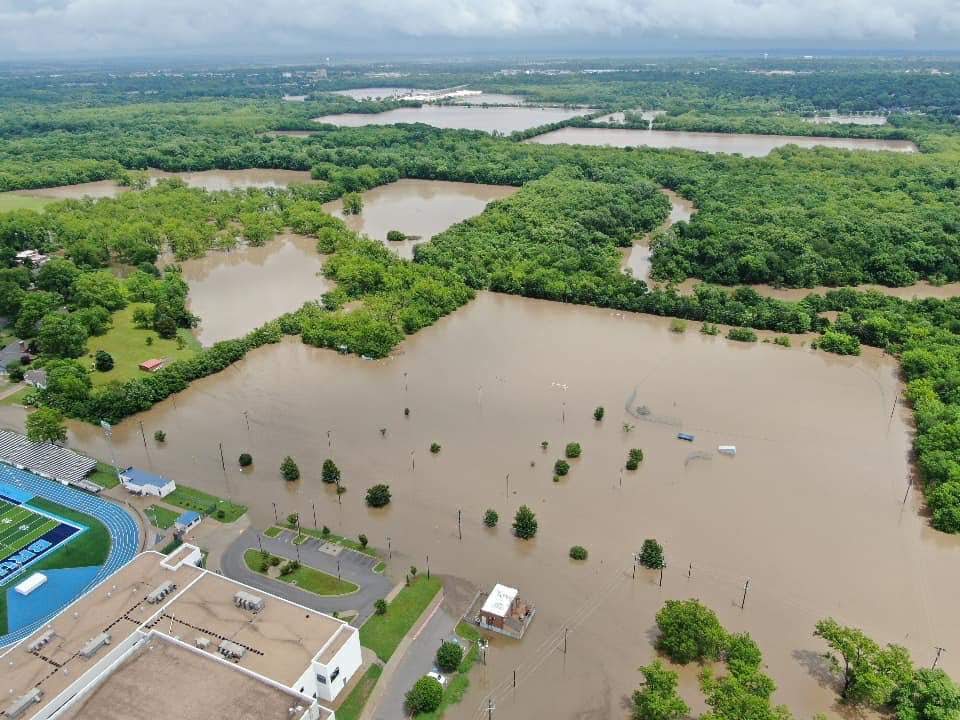
I had been through Taos 28 years earlier, never returning as I had not been impressed when my father and I drove through in a Volkswagen Westfalia Camper back in the day. But when I mention our travels to Santa Fe, people often ask if we also visit the smaller town which is likewise known for its artists. So I thought it would be worthwhile to drive through, almost three decades later, to see what I thought.
There are two primary routes from Santa Fe to Taos. The Low Road parallels the Rio Grande River for part of the journey, while the High Road I opted for is a scenic byway which takes one through a series of tiny Spanish Land Grant and Pueblo Indian villages amidst the Sangre de Christo mountains.
The winding road was a serene 40-mile-per-hour drive with few vehicles. The only drawback was a lack of roadside restrooms, which resulted in a crowd at a pit toilet facility in the forest. We drove on to Rancho de Taos, just south of Taos proper, to find relief.
I wasn’t in the mood to stop at the little villages, opting to cruise onward, although I did pull over at an overlook on NM 518.
Overlook on NM 518 on the High Road to Taos
After the peaceful drive to Taos, the overloaded highways 68 and 64 through it were miserable. It was lunchtime, and the downtown parking areas overflowed. The overcrowded, crawling drive through town put me in a foul mood, unwilling to fight for a parking place to find lunch and then take in the art museum at Fechin House as I’d planned. I wouldn’t call it road rage, but road resentment.
Farmhouse Cafe at Taos
So I drove to the north end of town, where we ate at the Farmhouse Café and Bakery, a farm-to-table operation. The setting was pleasant enough, with pretty flowers and soothing quiet. But it was also one of those annoying hippie places that refuse to serve fountain soft drinks, and our waitress did not even know to offer their fake “Dr. Becker” version of Dr. Pepper to Wendy when she ordered. While neither of us cared for our bland turkey sandwiches, we enjoyed getting a break from the road.
Then we took a thankfully lonely drive west on US 64 to cross the Rio Grande, as my father and I had done in 1991. Wendy was interested in the buried houses we saw on the west side of the river, all with one side dug into the earth and a series of windows on the opposite side to capture the sun. The Greater World Community there is the world’s largest off-the-grid subdivision.
The relaxing drive took us into the Tusas Mountains. We stopped to take in the panoramic view of the Brazos Cliffs over the Chama valley, and below you can compare the photograph I took there in June 1991 on a cheap film camera to my digital shot in June 2019. There was more snow lingering on the ground this time around, and my iPhone X captured the panoramic view quite nicely.
Brazos cliffs in 1991
Brazos cliffs in 2019
The remainder of the trip to Pagosa Springs was quite familiar, and we stayed once again at Pagosa Springs Inn and Suites, where Chester offered a nice new hiking map. We had dinner at Junction Restaurant and walked downtown along the raging San Juan River. I had never seen it so high and turbulent, and it was fun to stop on a pedestrian bridge and view the heavy runoff flow. No one would be tubing down the San Juan during our visit!
The next morning Wendy maintained our Pagosa Springs tradition, walking across the street to Higher Grounds Coffee Company to get us breakfast treats to enjoy on an ironing board in our room, since the hotel’s rooms lack proper tables. We then drove north up the Piedra Road 16 miles to the Piedra River, passing from asphalt road through the ever-expanding Pagosa Springs Village onto the dirt road leading toward the mountains.
They were grading the road, and I almost high-centered the minivan in trying to cross into the parking lot for my favorite trail in the area. I had to back off and park a bit down the road by the river, with us walking back up to the trailhead.
Along the way we noticed a pack in the brush below us and wondered what was going on until we spied ropes leading up to the top of the canyon. Some guys were rock climbing, and we could see a variety of pitons left behind in the bluff by previous climbers on the west side of the trail.
After returning to the minivan and driving back into town, we had a late lunch at Dorothy’s restaurant and relaxed. The next day we would head northeast to take Wolf Creek Pass across the continental divide and then descend eastward to the old coal mining town of Walsenburg to visit a rather unusual art museum.
For 12 days in June 2019, Wendy and I drove a 2,000-mile loop from Oklahoma through Texas, New Mexico, Colorado, and Kansas. We stayed overnight in 8 different towns, never staying more than two nights in a particular place. Despite having the luxury of traveling in Wendy’s comfortable mini-van, I suspect this is the fifth and final such big-loop road trip for us. We both found the pace grueling and agreed that our future vacations will be shorter overall but feature longer stays at particular locations. This last big loop featured an interesting mix of familiar and novel experiences and happy if brief meet-ups with two different sets of friends.
Amarillo
The first part of our trip followed a well-worn route for us from Bartlesville through Oklahoma City to Amarillo and onward to Santa Fe. We had previously made similar journeys in the summers of 2013, 2014, 2015, and 2017. We enjoyed lunch with my parents, which featured burgers from a Five Guys on Northwest Expressway rather than the usual Johnnie’s Charcoal Broiler. 25 years ago, Johnnie’s built a large location there, which they later reworked into a smaller restaurant. We were astonished to drive up and find a Del Taco planted in its place. However, a new Johnnie’s is being built directly to the east, so I’m sure we’ll be dining there in a few months.
Our overnight stay in Amarillo began and ended with a Friday night dinner and Saturday morning breakfast at Calico County, our favorite restaurant there. But I did want some novelty for our fifth visit to Amarillo. Wendy and I had seen the Texas Outdoor Musical in Palo Duro Canyon in 2013 and visited Sisemore’s RV Museum in 2014, Cadillac Ranch in 2014 and 2017, and the Amarillo Museum of Art in 2015. What was there left to see in this dry cowtown? You might suggest The Big Texan with its silly eat-enough-steak-and-get-it-free challenge, but a dinner there decades ago, with a friend who has since passed on, was enough for me.
2nd Amendment Cowboy near Cadillac Ranch
So we made a desperate stop at the 2nd Amendment Cowboy, a Muffler Man statue near some mounted finned Cadillacs, three-quarters of a mile east of Cadillac Ranch. (The Ranch itself was a muddy flooded mess when we drove past it this time.) Odd roadside statues were fresh on my mind because Bartlesville native Mary Beth Babcock recently unveiled one in Tulsa along Route 66: Buck Atom, Space Cowboy. But the wind-borne stench of a nearby feedlot led us to cut short our visit with Buck’s strangely unarmed Texas cousin.
So we found ourselves in a parking lot near a six-story high structure of four stainless steel columns, each of which is a time capsule: the Helium Centennial Time Columns Monument. In 1868, the French astronomer Jules Janssen aimed a spectroscope at the sun’s chromosphere during a total eclipse in British India. He observed a bright yellow line of wavelength 587.49 nanometers created by cascading electrons from an unknown type of atom. Scientists would name it helium based on its solar origin. Later the same element was found mixed in with natural gas from manmade wells on Earth, such as the Cliffside Gas Field of Amarillo which would become the home of the Federal Helium Reserve.
We drove onward to finally angle up to Santa Fe, where our first stop was a late lunch at Tomasita’s so Wendy could enjoy their green chile tamales. Our meal also featured the first paper straws we’d shared as a couple, reflecting increasing environmental concerns about single-use plastics.
Nearby was the Santa Fe Motel & Inn, where we had previously stayed in one-room casitas, including the one with the patio where I proposed to Wendy in 2015. This time I had rented for two nights the Casita Bonita across the street, which included a full kitchen and large patio. She loved the crushed ice dispenser in one of the side-by-side refrigerator’s doors, something we’d see again when visiting some friends in Louisville, Colorado. It was clearly a feature the next refrigerator at Meador Manor had better have.
Across the street from the rose garden is a substation with one wall adorned by a 30′ long and 15′ foot high mosaic of a jaguar and snake. In 1995 it took six months for 21 youth muralists, ages 13-19, to place the 1″ square Venetian glass tiles that form Duality and the Fifth Sun. It seemed fitting that I would see this reference to an Aztec myth about the creation and destruction of the world even as I embarked on my summer reading project: the late Gene Wolfe’s epic The Book of the New Sun.
Duality and the Fifth Sun mosaic
Tammy Garcia’s Andrea
The way art can both attract and repel were evident outside the nearby Blue Rain gallery, where Martin Spei’s Hold Down of a fat, naked, and ogre-like man sitting on a gold box contrasted with Tammy Garcia’s Andrea, which I recognized as being a copy of the one in the Roland Sculpture Garden up on museum hill. I much preferred the latter, which depicts a Pueblo Indian adorned for the butterfly dance.
The next morning we walked downtown for the first of two breakfasts at Tia Sophia’s. Then we headed down Cerillos Road to a former bowling alley that has been converted into an art adventure called Meow Wolf. There is an elaborate back story to the adventure which neither of us bothered to explore, but we did note how the name of the project came from randomly drawing words from a hat.
Meow Wolf art adventure in a former bowling alley
The venue had plenty of visitors on a Sunday morning, enough that we two introverts were eventually overwhelmed. But it was intriguing with things like a glowing life-size mastodon skeleton you could whack to hear musical tones, a neon coral reef you walked, rather than swam, through, a three-dimensional line drawing room, and much more. At one point we sheltered in a balcony nook that featured rows of huge teeth along its entry walls. It was nice to be out of the flow of visitors until a child ran up to Wendy and yelled, “Whoa!” at the teeth, which likely caused both of us to bare our own at him.
Wendy sits in a three-dimensional line drawing
We escaped to enjoy lunch at The Plaza Southside. Then I surprised Wendy with a rose garden we had not visited previously: the Harvey Cornell Rose Park. It is a narrow sliver set aside by a neighborhood’s developers in 1957 when it was at the south edge of Santa Fe, which then had a population of about 30,000. 62 years later, the population has reached almost 85,000, and the city’s southern edge is two miles away and extends at least five miles to the southwest.
We returned to Casita Bonita, where Wendy relaxed on the patio with a robin for company. We walked to the Blue Corn Cafe for dinner, stopping by on our return walk to check on the somewhat neglected but immenserose bushes at the state capitol. Santa Fe’s wonderful food, art, architecture, and roses have made it a favorite stop for us.
Wendy with the roses at the state capitol
Our next stop on our big loop would also be quite familiar as we returned to Pagosa Springs, Colorado. But instead of our usual route up US 84 by Ghost Ranch, we would divert to take the High Road to Taos and then US 64 back west.
My own reaction when watching shows like the venerable This Old House or seeing Chip and Joanna Gaines transform houses in Waco is, “That is harder than it looks.” I have never been tempted to tear down walls in my house, replace gypsum board, or the like. I would prefer to pay others who do such things for a living handle them with confidence and competency. When the tile walls around one of the bathtubs at Meador Manor was collapsing in 2007, I was relieved that the guys from The Quarry in Dewey were willing to install new greenboard on the studs to anchor the new acrylic resin walls. But I had to remove the old tile and decayed gypsum board myself.
I did the demolition
But The Quarry installed the greenboard
The Quarry installed the new shower walls. Notice how the awful wallpaper remained unchanged.
I had to screw up my courage to tear away the lower decayed portions of the failing shower walls and buy a small reciprocating saw to free the upper sections. I managed to chip the edge of the porcelain bathtub in one spot, but overall it went well. I still happily dry off the sleek panels after each shower, thinking to myself, “I will never scrub tile grout again!”
When I purchased the house in 1994, I disliked the original 1981 wallpaper in that bathroom. Yet in 2019 it is still there, since I know my limits: hanging wallpaper is something I will never tackle. I am certain it would turn out a bit crooked or have small bubbles or curls or cutting errors which would drive me crazy. Installing a self-stick border around a window is the most I’ll tackle before calling in professionals.
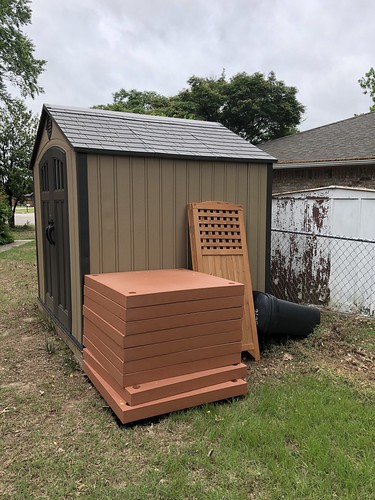
The shed John and Betty Henderson provided and built for us
I’m no carpenter, so I was truly grateful when Betty and John Henderson not only purchased a Lifetime high-density polyethylene shed I had picked out at Costco for a wedding present, but John built a platform floor and assembled the shed while Wendy and I were on our honeymoon in July 2016. Three years later, it is in perfect condition and the happy home for our yard equipment and tools.
When Wendy and I were in the yard a few weeks ago, she remarked how she would like to sit on the north side of the shed, shielded from the neighbors, and enjoy the view of our next-door-neighbor’s backyard plantings and her own roses. I decided a little deck tucked against the shed would be just the thing for that, with a wood screen to give her greater privacy. I wasn’t about to craft anything myself out of wood, however. I figured there must be some sort of small deck kit I could assemble and a prefabricated wood screen I would plunk down.
So I ordered a kit on April 8 and Home Depot said it would arrive by April 21. But then it was back-ordered, and the lift truck didn’t show up with it until May 16. The deliveryman deposited the 460 pound kit on a pallet on our front walkway.
Wendy helped me unpack the kit, and we stacked the polypropylene piers on the patio and stacked the 9 40″ square polypropylene surface pads by the shed. They sat beside a folding wood screen I ordered from Wayfair. Its four 2-feet-wide by 5-feet-high sections would fit nicely on the edge of two surface pads. I positioned the structural piers on the ground beside the shed using a cardboard positioning template in the kit. The ground falls away to the north and west toward our neighbors, so I had to use the 1-inch plastic shims and 3-inch risers to level out the pads I positioned atop the piers and cam-locked into place.
Both of our patio chairs, Wilson & Fisher sling chairs we picked out at Big Lots a few years ago, had been damaged by squirrels or cats ripping through the fabric seat. So I wanted something different for Wendy’s shed deck. I opted to purchase two Devoko wicker chairs and a matching glass-topped table made of synthetic polyethylene rattan. They were delivered during the wild weather week. Wendy said it perfectly illustrated our different personalities that while we were under a tornado watch she was busily checking and preparing our interior closet refuge while I happily sat on the living room floor, laboriously screwing together the new patio furniture.
Now that we had a cute little shed deck, the pressure was on to do something about the concrete patio. It had some big long cracks when I purchased the place in 1994, and over the years I had filled them a couple of times with urethane caulking. But over time the caulking had split, allowing the freeze-thaw cycle to exacerbate the separation and settling of the concrete slab segments on the clay-rich soil. Multiple earthquakes this past decade which were induced by wastewater injection wells hadn’t helped, either.
Wood patio pavers
So the cracks were now up to an inch wide, with grass growing up through some of them. My success with the UDECX kit led me to look into what I might cover the patio with to improve its appearance. Wood patio tiles or pavers, stapled atop interlocking plastic backing grids, were simple enough I could handle them. Having spent plenty on the UDECX kit, I budget-shopped and fixed on fir wood tiles by Yaheetech, purchasing 216 one-foot-square tiles.
They sat in their boxes in the living room while I pondered what to do about the cracks. All but one of the cracks was now far too wide for caulking, which had not held up anyway. It was time for YouTube!
I watched a bunch of different videos of folks repairing various types of cracks in sidewalks and driveways. Our patio had only one long crack that was shallow and narrow enough for concrete crack sealer to work. The rest would need actual concrete patches, but even at age 52 I had never mixed any concrete before. (I know, I know; I can’t drive a stick shift, either.) So I watched videos on that as well, finally deciding that I would buy a 60 pound bag of Quikrete Sand/Topping Mix. At Lowe’s I bought the mix, a bucket, a mixing tub, nitrile gloves, bonding adhesive, a brush, and a couple of trowels. I think one is called a mason’s trowel and the other a square trowel, but to me they were pointy and flat.
Cleaning the cracks
On the Saturday of Memorial Day weekend, I put the garden hose nozzle on its tightest stream and washed out the cracks in the patio, pulling out the old caulking. Almost all of the cracks were filled with dirt and teeming with worms which were rather upset by my rough treatment. I cleaned the cracks out as deep as I could. Sunday was rainy, but on Memorial Day I was able to mow and edge the yard and sweep the patio.
Then I used a heavy rake to mix the sand/topping mix with water in the tub. I painted a crack with the bonding adhesive in hopes it might help the new concrete bond with the old, then used the pointy trowel to fill it with concrete. I then used the flat trowel and brush to smooth out the top. One by one, all the cracks were filled.
Cleaned east-side cracks
Repaired
The bricks of Meador Manor spall wherever water regularly contacts them. Much of the chimney façade has spalled away, revealing the red interiors of the bricks, with the same happening to all of the lowest bricks around the perimeter of the house. The bottom east corner of the chimney had deteriorated to where you could see the mortar down in the brick holes. So, in addition to the sand/topping mix, I had purchased 20 pounds of mortar repair mix. I mixed that up in my bucket and applied it liberally to the lower courses of bricks on the corner of the chimney, plumping the area up. I used the pointy trowel to cut grooves in the mortar to mimic the mortar patterns of the surrounding bricks. Given the spalling surface of the chimney and how our patio bench would obscure the area, I didn’t bother trying to tint the mortar repair concrete.
Spalling chimney bricks and patio cracks
Repaired with mortar repair and sand/topping mix
Then I applied concrete crack sealant to a lone shallow crack and began laying down the wood tiles. I kept them several inches from the edges of the patio so that I would avoid damaging them when edging. It took 18 tiles to cross the length of the patio, and I steadily laid them down. It was hot work, and on one of my cool-down rests in the manor Wendy wet a dish towel and wiped off my face and scalp, draping the cool towel over my head and providing me with Gatorade.
With renewed vigor, I finished tiling the patio and shifted the furniture back in position. Waterproof pillows that had come with the rattan chairs for the shed deck were repurposed to make the older ripped patio chairs usable again. I raised the shade umbrella and admired the rejuvenated patio.
It was fun to create a new seating area in a side yard and spruce up our patio. There are still various home improvement projects to eventually undertake, but this summer will be packed with a 12-day vacation out west, followed by a week-long conference in Philadelphia, plus plenty of Chromebook deployments and distributions along with configuration and interconnections of many online services for students and staff in the school district. I am glad I finished up these projects before June.
So wrote John Singer, a deaf-mute, in a letter he never sent, to his best friend, a fellow deaf-mute who was illiterate, dumb, selfish, and uncaring. This failure to connect and tendency to project is a repeated motif of Carson McCullers’ The Heart is a Lonely Hunter, a disturbing and tragic fugue of a novel with contrapuntal parts played by social misfits and outcasts in a town in the deep South. The novel explores the human struggle to be loved and to express oneself, with themes of man’s struggle against isolation, religion as self-delusion, and heroism. It is striking that this novel, #17 on Modern Library’s 100 Best Novels, was begun when Carson McCullers, née Lula Carson Smith, was only 19 and published in 1940 when she was 23.
Mick Kelly
There are several fascinating characters in the novel, but the one which captured my heart was Mick Kelly, a young teenage girl in an impoverished family. She walks through town at night, sneaking into the yard of a rich couple to hide in the shrubbery and listen to their radio, as her family cannot afford one. One night she experiences an epiphany, one which spoke to my soul:
One program came on after another, and all of them were punk. She didn’t especially care. She smoked and picked a little bunch of grass blades. After a while a new announcer started talking. He mentioned Beethoven. She had read in the library about that musician—his name was pronounced with an a and spelled with double e. He was a German fellow like Mozart. When he was living he spoke in a foreign language and lived in a foreign place—like she wanted to do. The announcer said they were going to play his third symphony. She only halfway listened because she wanted to walk some more and she didn’t care much what they played. Then the music started. Mick raised her head and her fist went up to her throat.
How did it come? For a minute the opening balanced from one side to the other. Like a walk or march. Like God strutting in the night. The outside of her was suddenly froze and only that first part of the music was hot inside her heart. She could not even hear what sounded after, but she sat there waiting and froze, with her fists tight. After a while the music came again, harder and loud. It didn’t have anything to do with God. This was her, Mick Kelly, walking in the daytime and by herself at night. In the hot sun and in the dark with all the plans and feelings. This music was her—the real plain her.
She could not listen good enough to hear it all. The music boiled inside her. Which? To hang on to certain wonderful parts and think them over so that later she would not forget—or should she let go and listen to each part that came without thinking or trying to remember? Golly! The whole world was this music and she could not listen hard enough. Then at last the opening music came again, with all the different instruments bunched together for each note like a hard, tight fist that socked at her heart. And the first part was over.
This music did not take a long time or a short time. It did not have anything to do with time going by at all. She sat with her arms held tight around her legs, biting her salty knee very hard. It might have been five minutes she listened or half the night. The second part was black-colored—a slow march. Not sad, but like the whole world was dead and black and there was no use thinking back how it was before. One of those horn kind of instruments played a sad and silver tune. Then the music rose up angry and with excitement underneath. And finally the black march again.
But maybe the last part of the symphony was the music she loved the best—glad and like the greatest people in the world running and springing up in a hard, free way. Wonderful music like this was the worst hurt there could be. The whole world was this symphony, and there was not enough of her to listen.
It was over, and she sat very stiff with her arms around her knees. Another program came on the radio and she put her fingers in her ears. The music left only this bad hurt in her, and a blankness. She could not remember any of the symphony, not even the last few notes. She tried to remember, but no sound at all came to her. Now that it was over there was only her heart like a rabbit and this terrible hurt.
The radio and the lights in the house were turned off. The night was very dark. Suddenly Mick began hitting her thigh with her fists. She pounded the same muscle with all her strength until the tears came down her face. But she could not feel this hard enough. The rocks under the bush were sharp. She grabbed a handful of them and began scraping them up and down on the same spot until her hand was bloody. Then she fell back to the ground and lay looking up at the night. With the fiery hurt in her leg she felt better. She was limp on the wet grass, and after a while her breath came slow and easy again.
Why hadn’t the explorers known by looking at the sky that the world was round? The sky was curved, like the inside of a huge glass ball, very dark blue with the sprinkles of bright stars. The night was quiet. There was the smell of warm cedars. She was not trying to think of the music at all when it came back to her. The first part happened in her mind just as it had been played. She listened in a quiet, slow way and thought the notes out like a problem in geometry so she would remember. She could see the shape of the sounds very clear and she would not forget them.
That whole passage is so strong, so true, that I am convinced the author was describing her own experience in listening to Beethoven’s Eroica Symphony for the first time. Lula Carson Smith left Columbus, Georgia on a steamship after graduating high school, planning to study piano at Juilliard. But she lost her tuition money on the subway and worked odd jobs until a bout of rheumatic fever forced her return home to recuperate.
When she returned to New York, thank heaven she had changed her mind about studying music and instead enrolled in night classes at Columbia and studied creative writing under Dorothy Scarborough and Sylvia Chatfield Bates. For that bequeathed to humanity the book with that passage.
I too loved music and piano as a child, taking years of lessons. Throughout elementary school I said I wanted to be a piano teacher when I grew up. And then I discovered physics. But I still identify with Mick Kelly’s fascination and frustration with music. There are songs and music that transported me the first time I heard them and still evoke intense emotions every time they return in my life. They vary in their quality and their complexity, in their context, and in genre. And none have lost their power over me.
But maybe the last part of the symphony was the music she loved the best—glad and like the greatest people in the world running and springing up in a hard, free way. Wonderful music like this was the worst hurt there could be. The whole world was this symphony, and there was not enough of her to listen.
For you, Mick, it was the 3rd, and for me the 9th. But across the decades we agree…wonderful music like that is the worst hurt there could be. The whole world is that symphony, and there is not enough of us to listen.
The grin that cracks my face wide open and how I simply must wriggle and thrash my arms when I hear Elmer Bernstein’s The Magnificent Seven.
How Hanson’s boisterously silly MMMBop takes me right back to how it came up on shuffle play on my first iPod, leading me to caper and dance along a slippery snowy trail at Mt. Rainier, in one of the happiest moments of my life.
How whenever I hear Bette Midler sing The Rose, I am destroyed and left in tears.
So it seems fitting that, in the weird ping-pong way of life, it was music that led me to read The Heart is a Lonely Hunter. Every year or two I get a hankering to take slow nibbles at a great but disturbing novel. I was perusing the Modern Library listing when I was struck by the familiarity of that title. You see, David Byrne of Talking Heads fame sang the song The Heart’s a Lonely Hunter on Thievery Corporation‘s 2005 album The Cosmic Game. Years ago I stumbled across the song and enjoyed it, with Byrne’s lyrics striking a chord, if you’ll pardon the expression.
The truth is unspoken, a promise is broken I’m under surveillance, they know what my name is I need some protection, some love and affection There’s one thousand reasons, but one is the number
Welcome to my spaceship It’s beautiful forever Well, she’s right here where you left her And the heart’s a lonely hunter
Save bottles of water and flour and sugar Turn off the AC and hang up the bed sheets Cover the windows, careful where the light goes Yank out the cable and blow out the candles
Welcome to my spaceship You’re beautiful forever She’s right here where you left her And the heart’s a lonely hunter
Uh huh
1-2-3-4
Perfectly molded, almost unfolded Under the counter, well, that is your nature Drip grind or roasted, buttered or toasted The greater the db’s the higher the AC
Psycho acoustics Down in the back seats Stereo nation Amplification The brave and the righteous They’re safe in their houses And one is just a number The heart’s a lonely hunter One is a number Heart is a hunter One is a number The heart is a hunter
Welcome to my spaceship You’re beautiful forever She’s right here where you left her And the heart’s a lonely hunter
Uh huh
Welcome to my spaceship You’re beautiful forever She’s right here where you left her And the heart’s a lonely hunter
Uh huh
William Sharp
Now, I have no idea if Byrne was thinking of the novel, or perhaps just borrowed the phrase. It comes from the poem The Lonely Hunter published in 1896 by Fiona MacLeod, which was revealed upon his death to have been the pen name of the Scottish writer William Sharp:
Green branches, green branches, I see you
beckon; I follow!
Sweet is the place you guard, there in the
rowan-tree hollow.
There he lies in the darkness, under the frail
white flowers,
Heedless at last, in the silence, of these sweet
midsummer hours.
But sweeter, it may be, the moss whereon he
is sleeping now,
And sweeter the fragrant flowers that may
crown his moon-white brow:
And sweeter the shady place deep in an Eden
hollow
Wherein he dreams I am with him—and,
dreaming, whispers, “Follow!”
Green wind from the green-gold branches,
what is the song you bring?
What are all songs for me, now, who no more
care to sing?
Deep in the heart of Summer, sweet is life to
me still,
But my heart is a lonely hunter that hunts on
a lonely hill.
Green is that hill and lonely, set far in a
shadowy place;
White is the hunter’s quarry, a lost-loved hu-
man face:
O hunting heart, shall you find it, with arrow
of failing breath,
Led o’er a green hill lonely by the shadowy
hound of Death?
Green branches, green branches, you sing of
a sorrow olden,
But now it is midsummer weather, earth-
young, sunripe, golden:
Here I stand and I wait, here in the rowan-
tree hollow,
But never a green leaf whispers, “Follow, oh,
Follow, Follow!”
O never a green leaf whispers, where the
green-gold branches swing:
O never a song I hear now, where one was
wont to sing
Here in the heart of Summer, sweet is life to
me still,
But my heart is a lonely hunter that hunts on
a lonely hill.
That poem is heartbreaking, as is the novel, which I came to with zero advance knowledge: I’d never heard of it or any of its characters. But it is a wonderful dark thing with remarkable insights into the human condition. Consider these two sentences:
The people dreamed and fought and slept as much as ever. And by habit they shortened their thoughts so that they would not wander out into the darkness beyond tomorrow.
A passage when a black doctor receives terrible news from his daughter also resonated with me. Have you experienced this?
Portia spoke in a low voice, and she neither paused between words nor did the grief in her face soften. It was like a low song. She spoke and he could not understand. The sounds were distinct in his ear but they had no shape or meaning. It was as though his head were the prow of a boat and the sounds were water that broke on him and then flowed past. He felt he had to look behind to find the words already said.
And then, when the terrible tragic news finally strikes him:
He waited for the black, terrible anger as though for some beast out of the night. But it did not come to him. His bowels seemed weighted with lead, and he walked slowly and lingered against fences and the cold, wet walls of buildings by the way. Descent into the depths until at last there was no further chasm below. He touched the solid bottom of despair and there took ease.
In this he knew a certain strong and holy gladness. The persecuted laugh, and the black slave sings to his outraged soul beneath the whip. A song was in him now—although it was not music but only the feeling of a song. And the sodden heaviness of peace weighted down his limbs so that it was only with the strong, true purpose that he moved. Why did he go onward? Why did he not rest here upon the bottom of utmost humiliation and for a while take his content? But he went onward.
As you can guess, the novel’s ending is rather bleak, but one character does have a brief moment of insight into the human condition:
The silence in the room was deep as the night itself. Biff stood transfixed, lost in his meditations. Then suddenly he felt a quickening in him. His heart turned and he leaned his back against the counter for support. For in a swift radiance of illumination he saw a glimpse of human struggle and of valor. Of the endless fluid passage of humanity through endless time. And of those who labor and of those who—one word—love. His soul expanded. But for a moment only. For in him he felt a warning, a shaft of terror. Between the two worlds he was suspended. He saw that he was looking at his own face in the counter glass before him. Sweat glistened on his temples and his face was contorted. One eye was opened wider than the other. The left eye delved narrowly into the past while the right gazed wide and affrighted into a future of blackness, error, and ruin. And he was suspended between radiance and darkness. Between bitter irony and faith. Sharply he turned away.
What brings meaning to life? Labor…and love. That is a more satisfying, if less funny, answer than 42. Thank you, Lula Carson Smith.
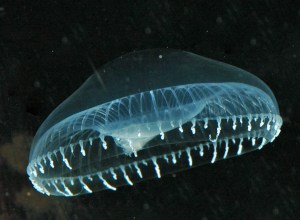
If you have ever pressed a flower in a book or observed a diaphanous jellyfish, you can grasp the difficulty of preserving their fragile beauty for later study. This is the story of a Czech/German glassworker and his son who, from 1863-1936, crafted thousands of beautiful and anatomically accurate glass models of hundreds of species of marine invertebrates and flowering plants.
This slideshow requires JavaScript.
An interest borne out of tragedy
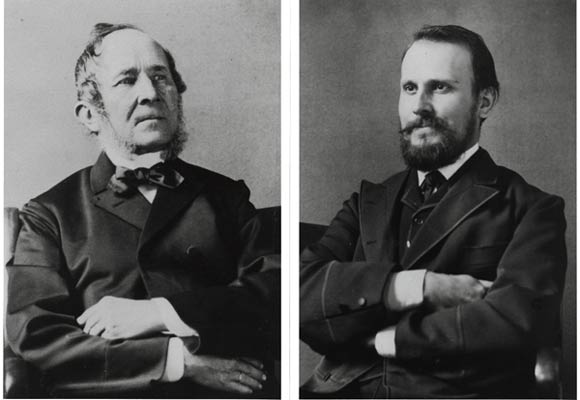
Leopold Blaschka was born into a family of glassworkers arising out of the Izera Mountains on the border between the modern-day Czech Republic and Poland, a region known for processing glass, metals, and gems. As a student, he loved natural history and painting. After being apprenticed as a goldsmith and gemcutter, Leopold joined his family’s business in Aicha, Bohemia, crafting costume jewelry and other fancy glasswork.
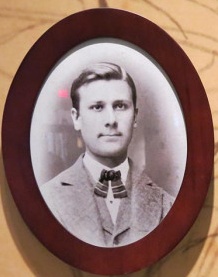
Leopold Blaschka
In 1846 Leopold married Caroline Zimmermann, the daughter of a local mill owner, and they had a son, Josef. But both Caroline and Josef died of cholera in 1850. Heartbroken, Leopold was depressed and in poor health, leading a reclusive existence. A local doctor, who had a large library of natural history books, encouraged Leopold to find solace by collecting, studying, and sketching the plants in the countryside around his home.
Then Leopold’s father died in 1852. Further devastated by this loss, Leopold took time off in 1853 to visit the United States. On the outward journey from Europe, his ship was becalmed for two weeks near the Azores. Leopold spent the time collecting and drawing jellyfish and other marine invertebrates. He had never seen such animals before, except in book illustrations, and was fascinated by their glasslike transparency. He described observing their phosphorescence at night:
It is a beautiful night in May. Hopeful, we look out over the darkness of the sea, which is as smooth as a mirror; there emerges all around in various places a flashlike bundle of light beams, as if it surrounded by thousands of sparks, that form true bundles of fire and other bright spots of light, and the seemingly mirrored stars. There emerges close before us a small spot in a greenish light, which becomes ever larger and larger and finally becomes a bright shining sunlike figure.
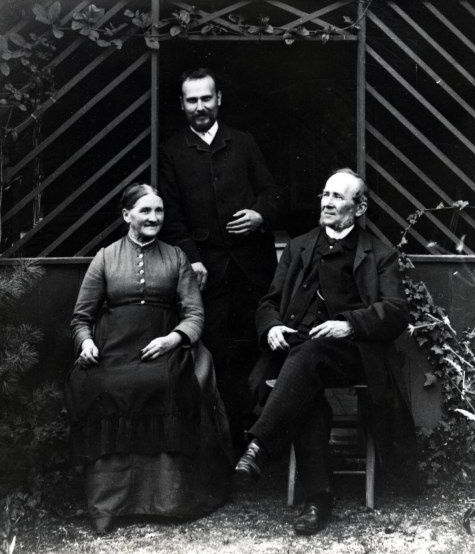
Carolina and Rudolf Blaschka
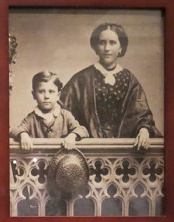
After arriving in New York, he stayed for a few months, supplying goods to wholesale jewelers. Then he returned home to Aicha, where he married Carolina Riegel in 1854, establishing a glass workshop in his father-in-law’s house. He supervised workmen in producing glass eyes, costume ornaments, lab equipment, and other goods. In his spare time, he began crafting glass models of plants as a seemingly profitless hobby, with no idea of where his idle artmaking would eventually lead him and their only child, Rudolf, who was born in 1857.
From orchids to anemones
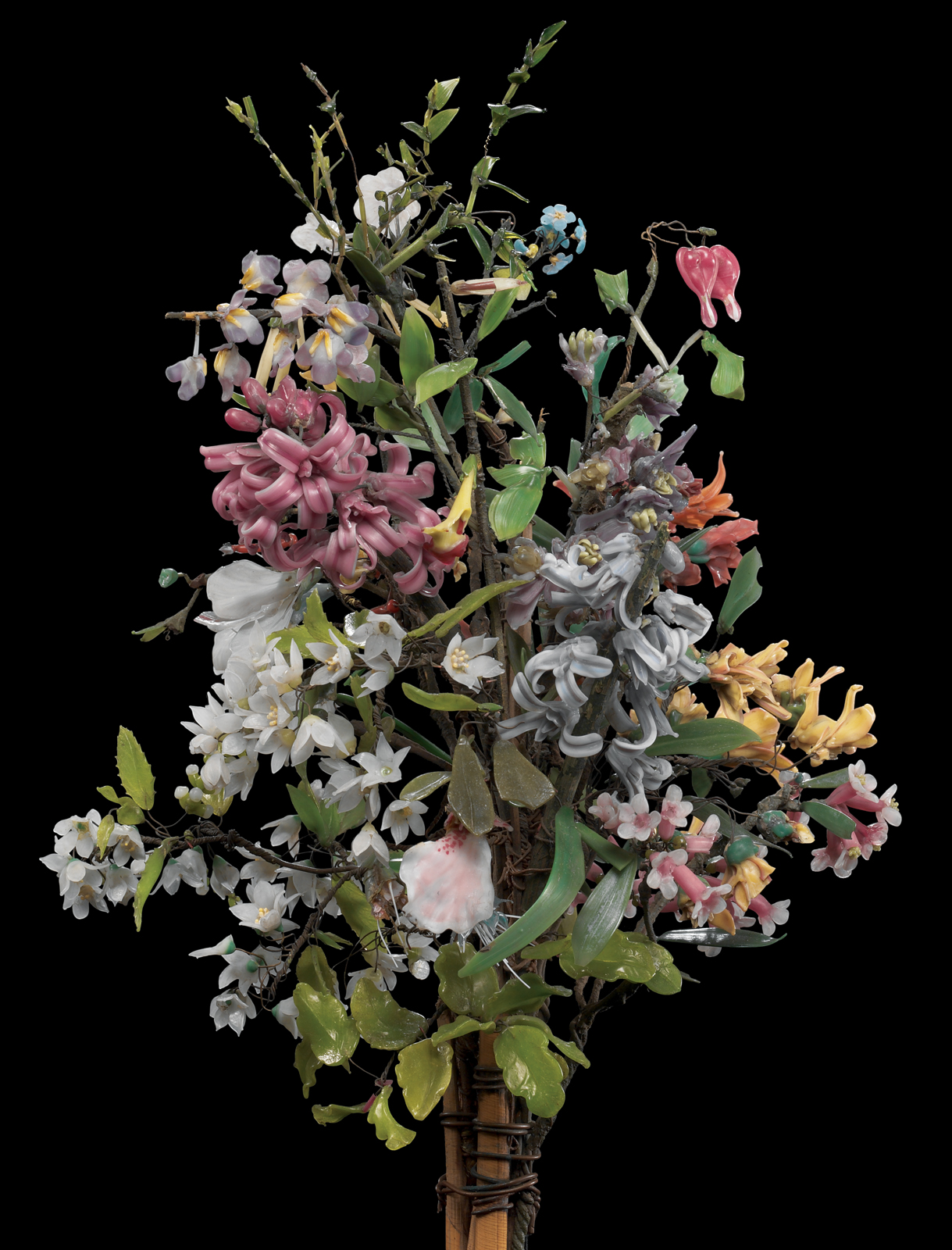
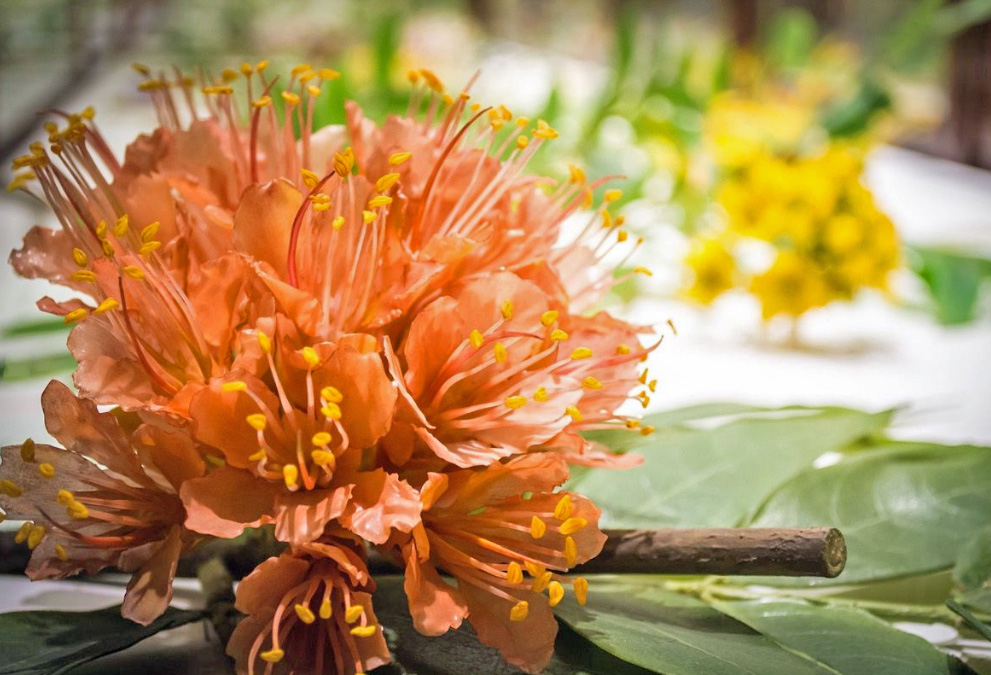
Leopold’s hobby caught the attention of Prince Camille de Rohan, who invited Leopold to his castle. From 1860-1862 he commissioned Leopold to produce about 100 models of nearly fifty species of orchids based on specimens from the Prince’s greenhouses. The Prince then displayed them on two artificial tree trunks in his palace in Prague. The prince also introduced Leopold to Professor Ludwig Reichenbach, the director of Dresden’s Royal Natural History Museum and Botanical Garden, who displayed the models in the garden’s pavilion in 1863. The glass orchids were later lost in a Belgian museum fire, but a bouquet of flowers which Leopold crafted in that era, shown below, survives.
Early flower bouquet by Leopold Blaschka, circa 1860-1865
Leopold moved his family to Dresden. While the glass flowers aroused little commercial interest, an Englishman living in Dresden remarked to Leopold how glass models of sea anemones, which are notoriously perishable, could adorn aquaria. He loaned Leopold a book with illustrations of sea anemones and corals.
Building a business
Remembering his own experience seeing sea invertebrates a decade earlier, Leopold used the illustrations to craft models which were purchased by museum director Reichenbach for display in dry aquaria. By 1871 Leopold had built the making of glass marine animals into a business, producing a mail order catalog that would offer hundreds of different models of anemones, worms, echinoderms, molluscs, and jellyfish. Reichenbach noted in the catalog how the glass models were better than specimens preserved in alcohol, as the glass models retained both their shape and color, while preserved invertebrate specimens inevitably subsided into dull shapeless masses at the bottom of their jars.
Young Rudolf Blaschka
Leopold and Caroline’s son, Rudolf, grew into a teenager who studied with his father and fully joined the family business by 1876 at age 19. They began maintaining living specimens in seawater aquaria, and Rudolf made a field trip to the Adriatic in 1879 to study more invertebrates.
Their work, a combination of both glassblowing and lampwork, steadily shifted from a more showy decorative style toward increased scientific accuracy. They sometimes incorporated the shells of terrestrial, freshwater, and marine gastropods and created glass bodies attached to the shells of bivalve molluscs. A fine speckled layer of pigment, often applied to the inner surface of the glass, conveyed a jelly-like translucence. Thicker skins and textures were crafted from deeper coats of paint or enamel, often mixed with a fine granular material.
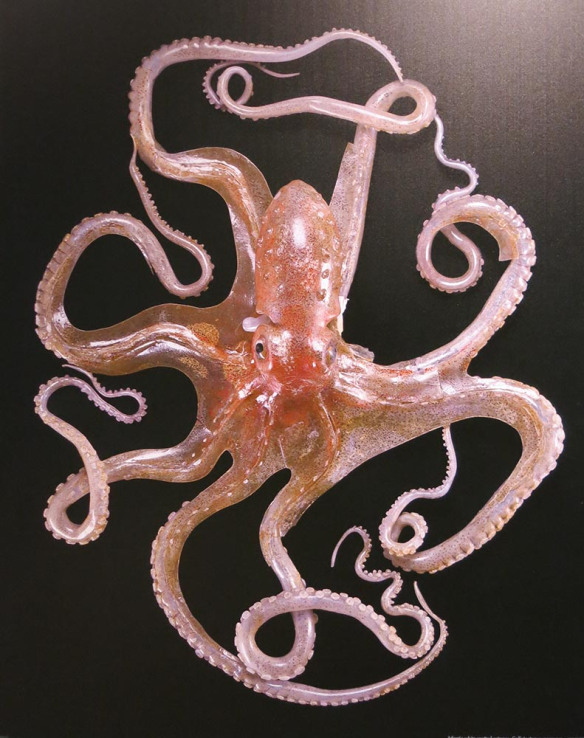
A Blaschka octopus, which is quite beautiful even in its damaged state
They sold specimens to museums around the world, with some universities building up prodigious collections. They sold 784 models to a London museum, about 600 to Cornell University in Ithaca, New York, 530 to a Dublin museum, 350 to Harvard’s famed naturalist Louis Agassiz, and Boston University acquired 311 of them. Harvard still has 185 Blaschka models in its Natural History Museum.
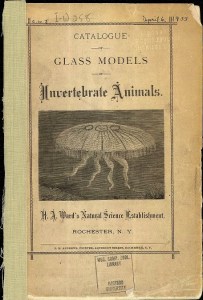
Ward’s 1878 catalog of Blaschka models
Henry Ward, a protégé of Harvard’s Agassiz, became a professor of natural science at the University of Rochester in 1860. After creating a superb teaching collection, he went into business in 1873. Ward’s Natural Science became the North American agent for Leopold Blaschka, issuing a 22-page catalog in 1878 of 630 different Blaschka models, which grew to 700 in Ward’s 1888 catalog.
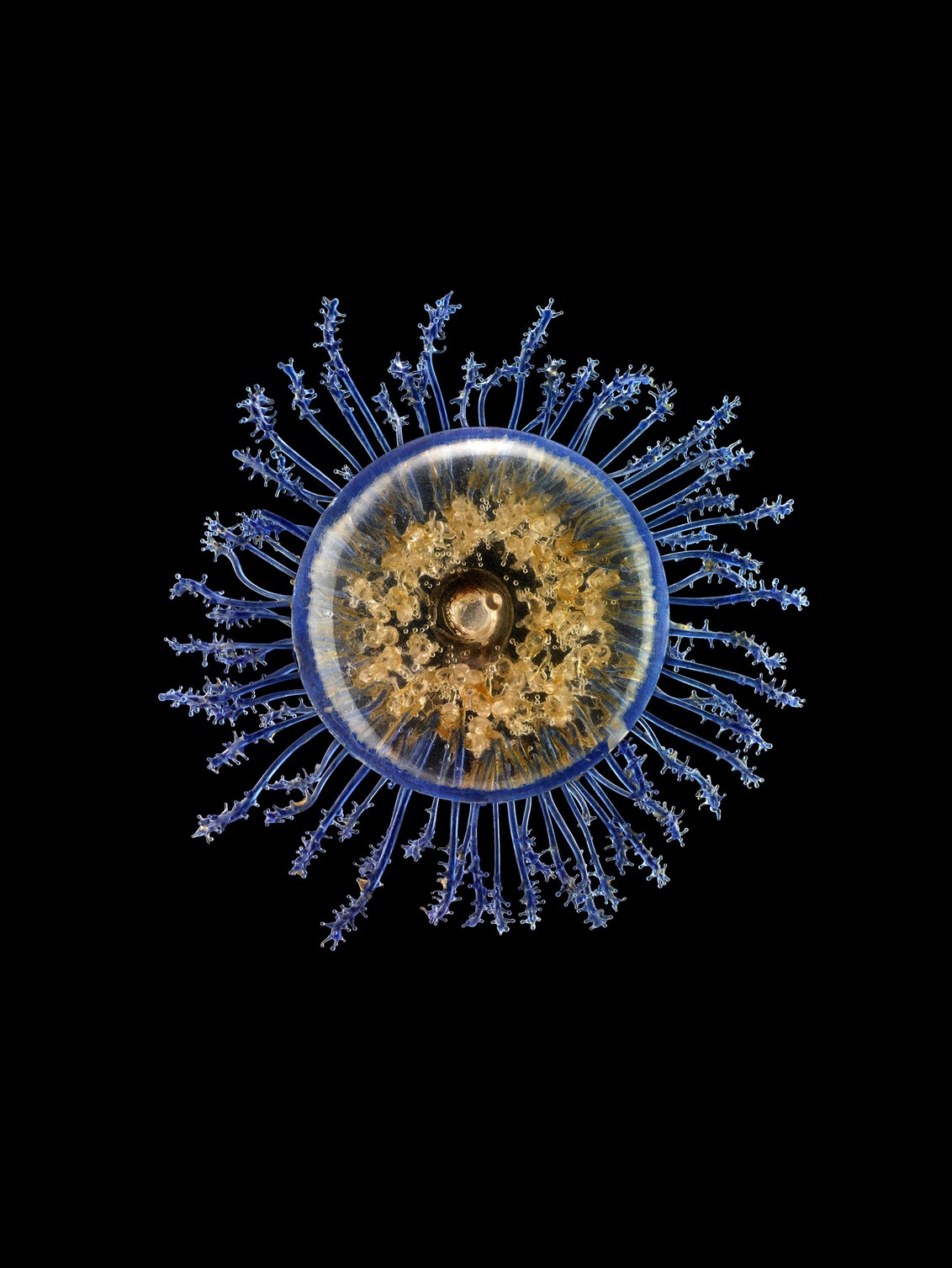
French photographer Guido Mocafico was photographing jellyfish in aquaria. While researching jellyfish online, he kept stumbling across images of the glass models, mistaking them for the real thing. So he decided to travel across Europe, taking photos of Blaschka marine models, using an array of backlights to make the sculptures glow as if lit from within.
Carolina, Rudolf, and Leopold Blaschka at their Dresden greenhouse
In 1886, George Lincoln Goodale, a botany professor at Harvard, traveled to Germany to try to persuade Leopold to abandon making marine models and concentrate again on plants. Goodale had seen the marine models and knew that glass models would solve his problems with flower specimens which lost their dimensionality and eventually their color after pressing.
Leopold was reluctant, given the general lack of appreciation for his earlier plant models and the loss of so many in a museum fire. But Goodale eventually persuaded Leopold to make a few samples. Even though they were badly damaged by U.S. Customs, Goodale appreciated the work and showed them widely, convincing his former student Mary Lee Ware and her mother Elizabeth, who were independently wealthy benefactors of Harvard’s botany department, to underwrite the commissioning of glass flowers from the Blaschkas. The Wares were descendants of the Cabots, a wealthy family of Massachusetts ship merchants since the 1700s.
In 1887 the Blaschkas agreed to spend half of their time on the glass flowers, but found it difficult to split their time between the marine models and the flowers, deciding by 1890 they must devote themselves to one or the other. Harvard signed them to a ten-year exclusive contract for 8,800 marks per year, with arrangements to ship the items directly to Harvard where Mary Lee Ware and museum staff could open them safely in the presence of Customs officials.
Glass flower models in the Blaschka’s studio before being shipped to Harvard in 1891
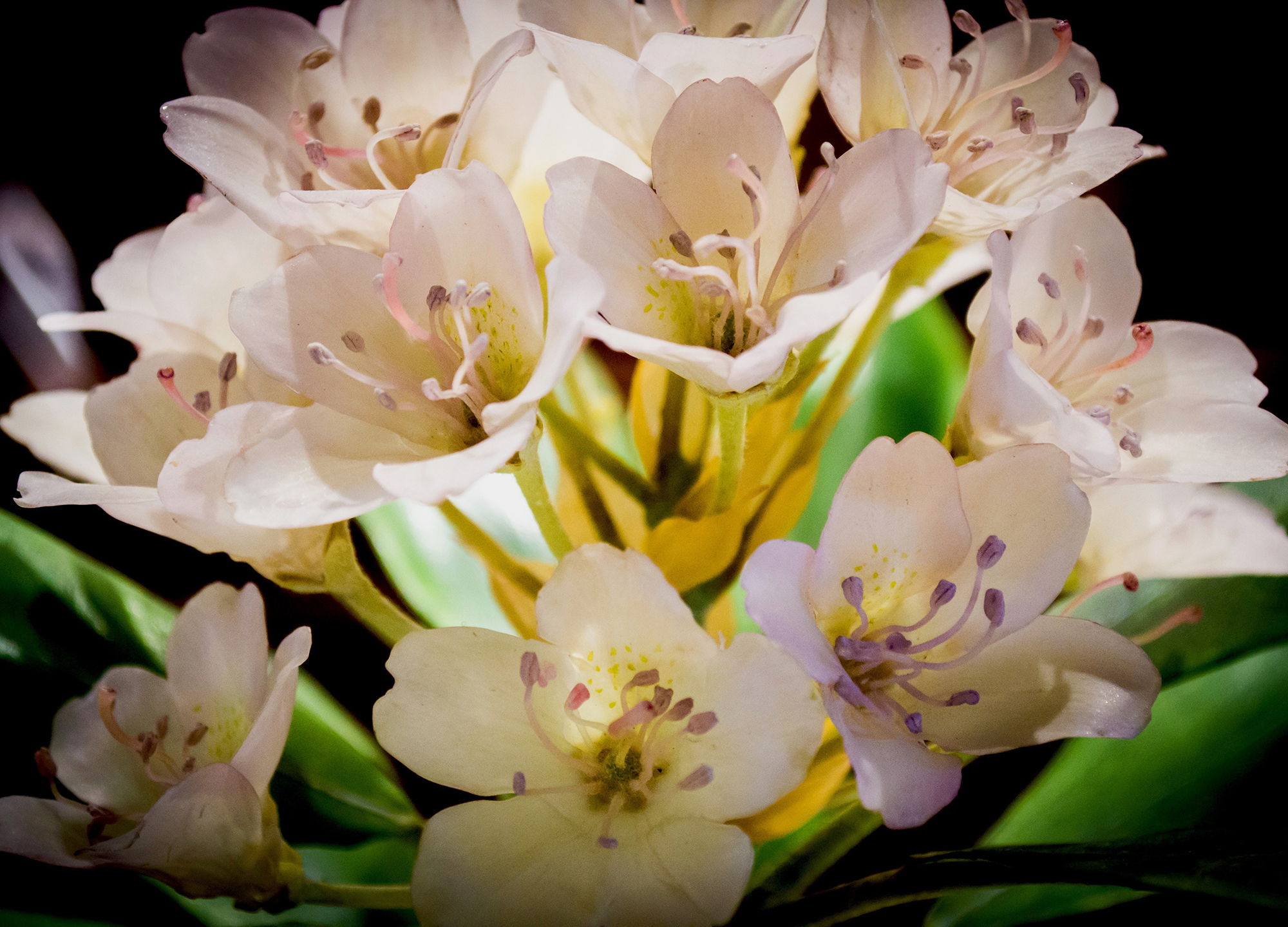
Harvard sent the Blaschkas seeds, plant cuttings, and specimens, and the Blaschkas had their own greenhouse and garden in Dresden. The plant models were made with internal copper wire armatures with glass pieces slid onto them and attached with hide glue or melted glass sprit. The accuracy and skill of their work was amazing.
Rhododendron model by Rudolf Blaschka
In 1894 several of the Blaschka plant models were subjected to microscopic examination by Harvard botanist Walter Deane. He documented their scientific accuracy: one model he examined had 2,500-3,000 individual buds, blooms, and developing fruit, with each flower having its five petals and five alternating stamens, and the back side, even though not visible when on display, he found to be equally complete and accurate.
This slideshow requires JavaScript.
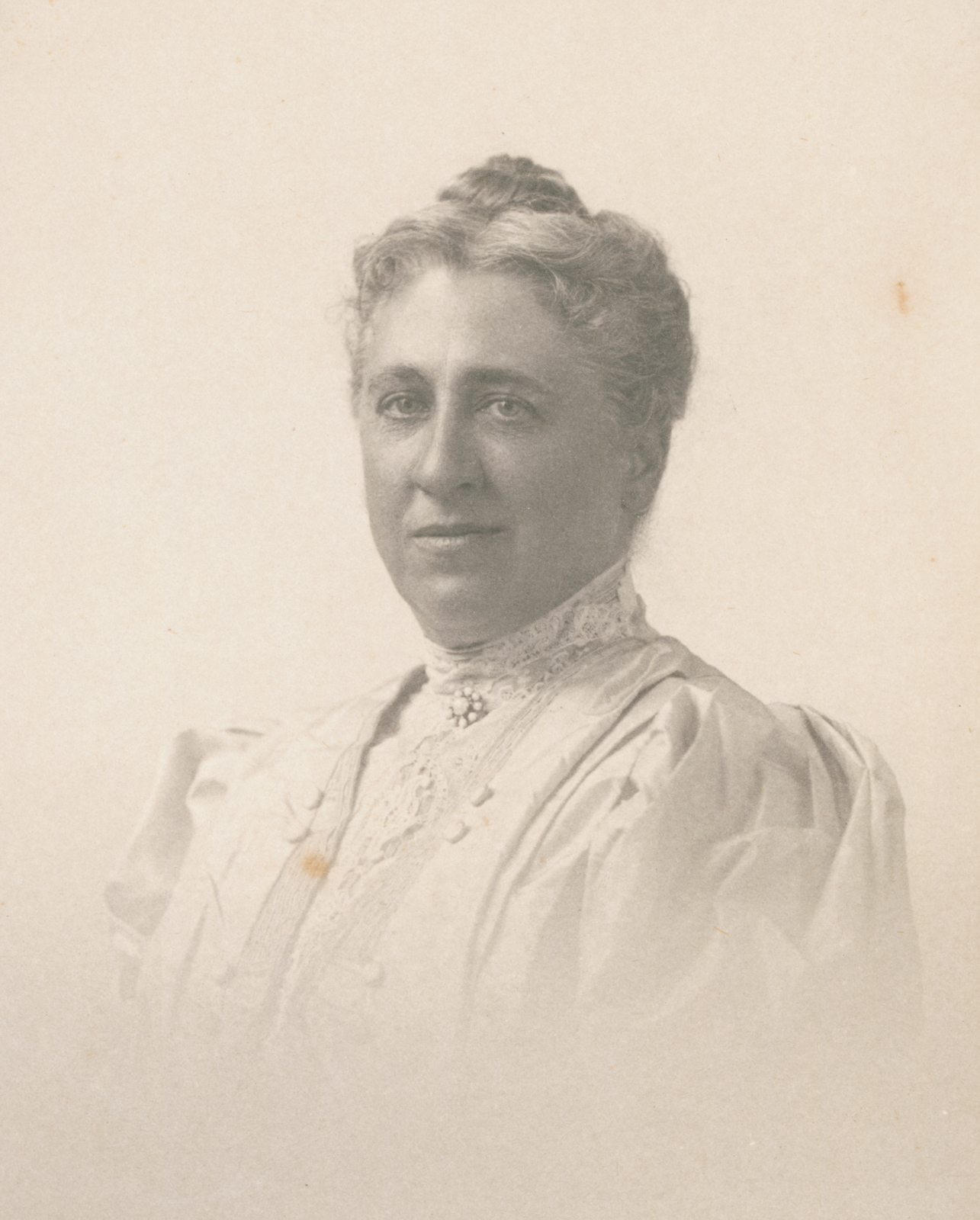
Benefactor Mary Ware in 1907
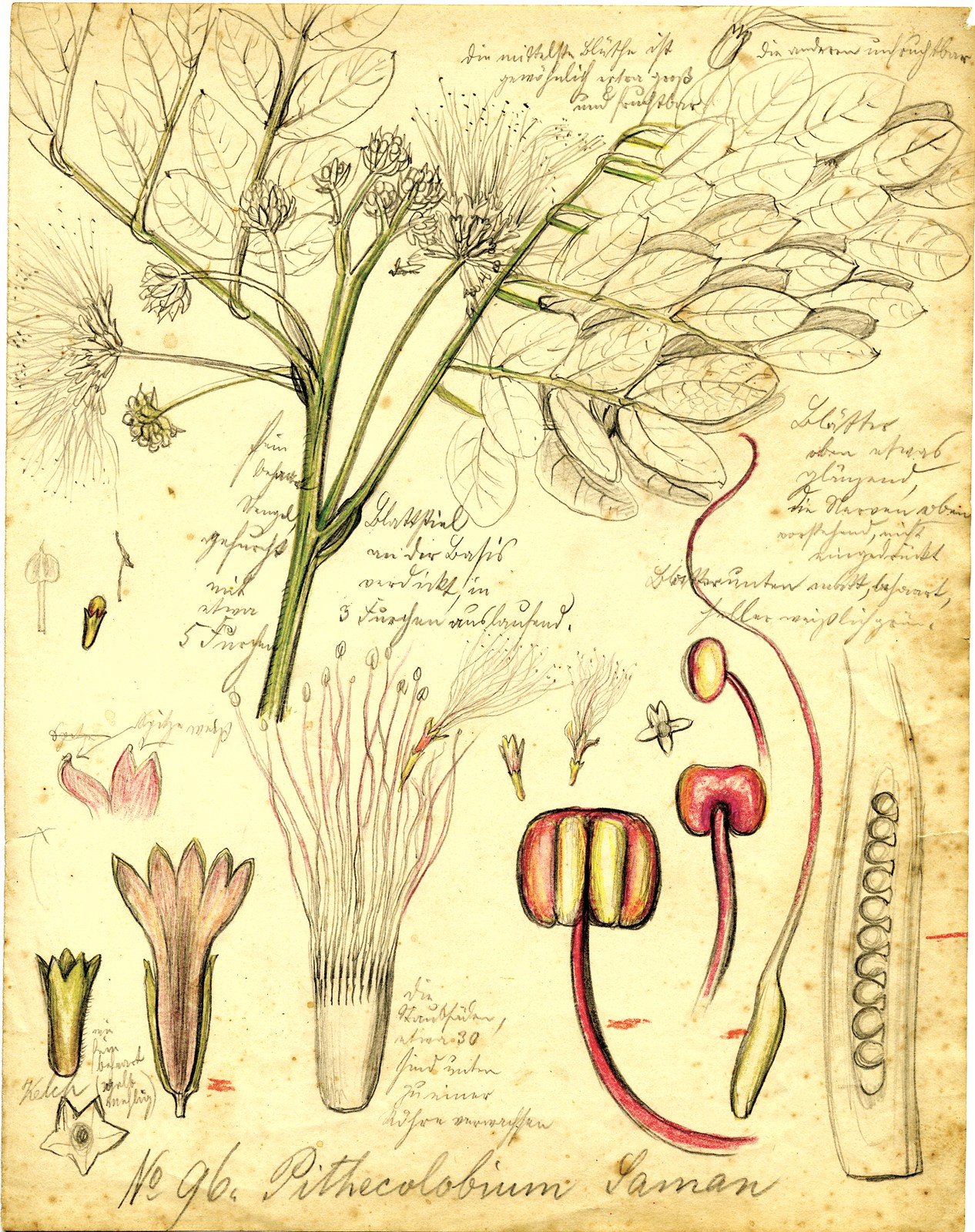
The Blaschkas used a mixture of clear and colored glass, with Rudolf painting many of the works with watercolors and oil-based paints. Mary Ware took an avid interest in the work and personally unpacked each model and made arrangements for Rudolf’s fieldwork. Rudolf traveled to the United States in 1892 and Jamaica in 1895 to study additional plants, making extensive drawings and notes. At that point, the Blaschkas were sending about 120 glass models to Harvard annually. Upon meeting Mary Ware on his 1892 trip, Rudolf described her as “a large blond lady of very lively temperament.”
One of Rudolf’s sketches
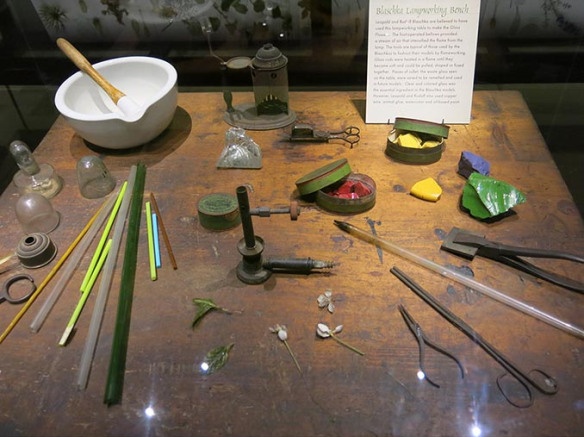
The Blaschkas plant models were crafted by lampwork. Instead of glassblowing with a furnace, they used the flame of a lamp to heat rods of glass which were softened and then pulled, shaped, and fused. Harvard has the lampworking table the Blaschkas used, with its foot-operated bellows providing a stream of air that intensified the lamp flame.
The lampworking table used by the Blaschkas
A letter of Leopold’s remarked, “Many people think that we have some secret apparatus by which we can squeeze glass suddenly into these forms, but it is not so. We have tact. My son Rudolf has more than I have, because he is my son, and tact increases in every generation.”
Leopold and Rudolf Blaschka
Leopold passed away in 1895, but Rudolf continued the work at a slower pace to achieve higher levels of perfection. By the early 20th century he could not buy glass of suitably high quality and started making his own, as well as the enamels which he powdered to use in paint and colored glass. Mary Ware encouraged him, supporting his glassmaking experiments.
A glass flower by the Blaschkas
A lifetime of dedication and support
Rudolf married Frieda Richter in 1911, when he was in his mid-50s. Mary remained a generous benefactor and correspondent. Rudolf’s mother, Carolina, passed in 1923. When Mary Ware visited Rudolf for the third and final time in Dresden in 1928, with six years having passed since the last shipment, she wrote of the 71-year-old craftsman, “I was daunted to see what seemed a little old man, legs that were not strong, very rounded, stooped shoulders, and an exceedingly white face. He must have dropped nearly two inches in height, his hands were somewhat out of shape from rheumatism.” But she was reassured when he showed her his new techniques for enameling the models with his powdered glasses:
His movements are quiet, deft, soft in laying down or taking up where speed or a miscalculated movement might ruin the work of hours. It all leaves you breathless that anyone can and will do such work… Mr. Blaschka’s head and bearing are very expressive, and I wished I could catch a photograph of his profile as he stood for a few moments, a plaque with a model on it held in both hands. His whole expression of absorbed, concentrated study was worth keeping, had it been possible.
A rotten apple that could last forever – one of the final works of Rudolf Blaschka
Rudolf continued making glass flowers for Harvard with a final series on rotting fruits and fungi that were shipped to Harvard in 1936. Mary Ware passed away the next year, leaving over one million dollars in assets. Her will bequeathed $600,000 to charity and education, with the largest single bequest in her will being $300,000 for completion and upkeep of the Glass Flowers and support of Rudolf and Frieda. She had supported the project for five decades.
Rudolf died on May 1, 1939. Unfinished models remained on his lampworking table. The Harvard collection had grown to 4,400 pieces representing more than 830 species of 164 taxonomic families. 780 species were modeled life-size with over 3,000 other models illustrating magnified details. They included a variety of plant parts such as flowers, leaves, fruits, and roots, including some showing pollination by insects.
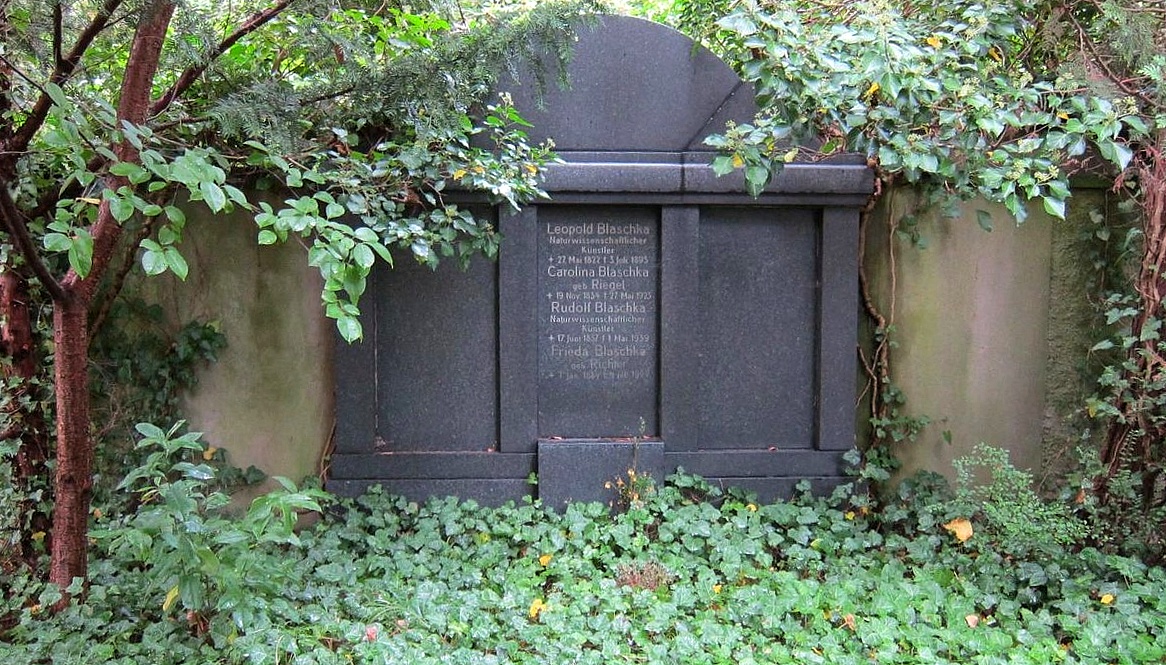
The grave of Leopold, Carolina, Rudolf, and Frieda Blaschka
Frieda died in 1947. She and Rudolf had no children and neither Rudolf nor Leopold had taken on any apprentices. So their amazing skills were not passed on and their family’s glassmaking tradition was brought to an end. Together they had produced about 10,000 glass marine invertebrate models along with the 4,400 plant models at Harvard. Leopold and Carolina, together with Rudolf and Frieda, share a grave in the Hosterwitz cemetery in Dresden.

 On past vacations we had driven north on US 84 from Santa Fe, NM to Pagosa Springs, CO, stopping along the way to hike at the beautiful Ghost Ranch. But by now we had hiked each of the major trails there, and I wanted to take a different route. So I opted to turn off at Española to take the High Road to Taos and then US 64 across the Rio Grande back to rejoin 84 at Los Ojos and proceed to Pagosa.





 The truth is unspoken, a promise is broken
 A passage when a black doctor receives terrible news from his daughter also resonated with me. Have you experienced this?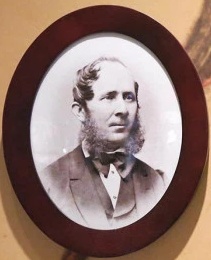








 Meador Manor