Appointment in Samarra

Granger Meador June 2025

My least favorite months have always been July and August, as Joklahoma’s sweltering and oppressively muggy summers drive me off the trails and pathways, except for early morning walks on weekends.

One of my escapes is to read literature. In the summer of 2011, I read Lolita and Under the Volcano. Emma helped me through the summer of 2012. In 2018, I read Pride and Prejudice in the Utah desert. For 2025, I listened to Appointment in Samarra by John O’Hara.

O’Hara’s works were once popular and highly acclaimed. He wrote twelve novels, hundreds of short stories, along with essays, novellas, and plays. His prose was tough and sparse with crackling dialogue. He was explicit in his inclusion and treatment of sex in his stories, in an era when that was somewhat scandalous. His tales were elliptical, presenting slices of life without explicit explanations of what they meant. Respect for him was professional, but not personal.

John O’Hara

Fran Lebowitz’s take on O’Hara: “Every single person I know who knew him, and there are quite a few, loathed him. He was probably such an unlikable person that nobody could judge him that way in his own era. My editor, for instance, knew him and we’re constantly battling, because he thinks I way overrate him and I say that’s because you knew him. So, he was a jerk. Except for pornographers, I think he’s the only writer who writes about sex in a way that it’s possible to read about it. I think John O’Hara’s the real Fitzgerald. O’Hara’s a cause to me. I have every single thing that he wrote.”

In 1966, John Updike’s take was, “He has more genius than talent. Very little censoring went on in his head, but his best stories have the flowing ease and surprisingness of poems.”

O’Hara’s reputation faded over the decades, but I was led to him several different ways. The first came when I recalled the movie title BUtterfield 8 when writing about telephone exchanges, only to discover it was based on O’Hara’s second novel. Then Another Bibliophile Reads mentioned one of his later, larger novels. Finally, while scanning the Modern Library’s list of 100 best novels of the 20th century, I noticed O’Hara’s Appointment in Samarra was ranked #22.

Some critics mocked Modern Library for including O’Hara’s debut novel in its list. As I wrote this post, The Greatest Books only ranked Appointment in Samarra as the 2,314th greatest book of all time. Not at all shabby, but he’s clearly fallen from grace.

For some reason, which I shall not overanalyze, I decided to first read a later O’Hara novel, Hope of Heaven. It was a slice of the life of a Hollywood screenwriter, a topic which brings to my mind Fitzgerald’s unfinished The Last Tycoon, Billy Wilder’s Sunset Boulevard, and David Fincher’s Mank.

Hope of Heaven was O’Hara’s third novel, and it only cost $2 to download to my Kindle. It was interesting for its frank treatment of sex among its characters and featured superb dialogue, but it was definitely elliptical. There was little lyrical prose, heavy symbolism, or explicit messaging. I wouldn’t have guessed it was published in 1938…it seemed more modern, and I was sufficiently intrigued to embark upon listening to Appointment in Samarra, which critics agree was both his first and best novel.

Given that both books are about the final days of wealthy men, in 1922 and 1930 respectively, comparisons are inevitable between my favorite novel, Fitzgerald’s The Great Gatsby of 1925 and Appointment in Samarra. Gatsby is in now in the public domain, while Samarra won’t become free to all until 2030.

The title of O’Hara’s 1934 book comes from an old story retold by W. Somerset Maugham in 1933:

There was a merchant in Baghdad who sent his servant to market to buy provisions and in a little while the servant came back, white and trembling, and said, “Master, just now when I was in the marketplace I was jostled by a woman in the crowd and when I turned I saw it was Death that had jostled me. She looked at me and made a threatening gesture; now, lend me your horse, and I will ride away from this city and avoid my fate. I will go to Samarra and there Death will not find me.”

The merchant lent him his horse, and the servant mounted it, and he dug his spurs in its flanks and as fast as the horse could gallop he went.

Then the merchant went down to the marketplace and he saw Death standing in the crowd and he came to Death and said, “Why did you make a threatening gesture to my servant when you saw him this morning?”

“That was not a threatening gesture,” Death said, “it was only a start of surprise. I was astonished to see him in Baghdad, for I had an appointment with him tonight in Samarra.”

You might think Julian English in Appointment in Samarra is an alternate take on Jay Gatsby in Fitzgerald’s greater novel. However, O’Hara biographer Frank MacShane noted, “Julian doesn’t belong to Fitzgerald’s Jazz Age; he is ten years younger and belongs to what came to be called the hangover generation, the young people who grew up accustomed to the good life without having to earn it. This is the generation that had so little to defend itself with when the depression came in 1929.”

While Fitzgerald’s prose is lyrical and his novel is pregnant with symbolism, O’Hara’s first novel is an adept work of realism. The Library of America noted that while both authors “dramatize the longings and dashed hopes of a lost generation, seduced and betrayed by the glittering temptations of the modern age”, “O’Hara remained always very much grounded in the real world, in ‘society,’ exposing its fine details and unspoken rules.”
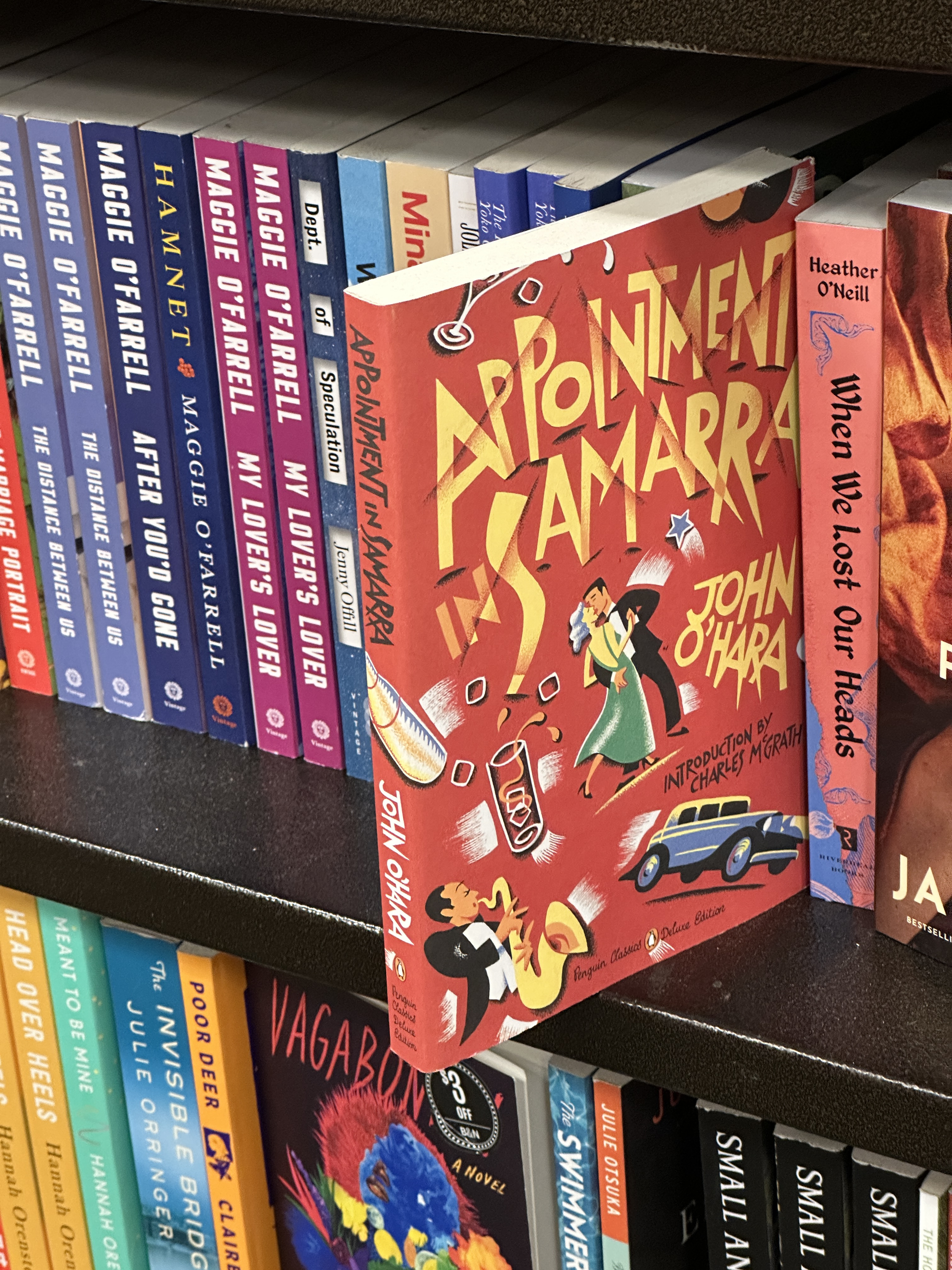
The only O’Hara novel at one of the Tulsa Barnes & Noble bookstores was this one

On successive days, Julian English performs several impulsive acts which are serious enough to damage his reputation, his business, and his relationship with his wife. O’Hara as the omniscient narrator never actually shows us the details of each incident, and I was fascinated with how the second event was related almost entirely through dialogue.

Given the power of his dialogue, I would recommend listening to O’Hara’s novel over reading the text, with the opposite advice for partaking of Fitzgerald.

Philip B. Eppard summarized the reader’s impression of Julian English: “drinking too much, charming with the opposite sex, constantly at odds with his parents, flouting conventional behavior in ways that lead him to be perceived by respectable society as something of a bad seed, and ultimately self-centered and insensitive to others.”

While The Great Gatsby is structured to have us perceive him through the narration of Nick Carraway, Appointment in Samarra is more direct. Julian English is less likable, but we have direct access to his thoughts. However, they remain somewhat shallow and superficial, like Julian’s life and those of most of his acquaintances.

One of the hallmarks of John O’Hara’s realism is that it faithfully reproduces the inconclusiveness of life itself, and this has sometimes been frustrating to critics, reviewers, and readers. The case of Julian English does not and never will have a neat explanation.

I enjoyed listening to this novel, much as I enjoy reading the New Journalism that Tom Wolfe and Joan Didion pioneered in the 1960s and 1970s. I was not at all surprised to find Didion referring to Julian English in one of her essays in Slouching Towards Bethlehem. Like O’Hara, she was a keen observer, and she embraced his elliptical style of describing without explaining. I deeply appreciate Didion’s early essays, but they often end abruptly, with no denouement. O’Hara can be similarly abrupt.

While I appreciate his skill, I don’t plan to read more of his novels. It is said that his short stories were his best work, and he sold hundreds of them to The New Yorker. I’ve bought a hardcover book, The Hat on the Bed, with a couple dozen of them that he wrote decades after his early novels. I’m told to expect character sketches and comments on the social fabric of early to mid-20th century America, with unexpected and dramatic conclusions.

Gibbsville awaits.

Posted in books | Leave a comment

Summer Solstice 2025, Part 4: Santa Fe

How many times have I been to Santa Fe? 2010, 2011, 2012, 2013, 2014, 2015, 2017, 2019 in both summer and winter, and 2023, and now 2025. All but the first three visits were with Wendy, with her affection for it a key factor.

The main attractions for us are the climate, the food, and the art. Santa Fe sits in a pocket of humid continental mild summer climate surrounded by cold semi-arid regions. Its 7,000 foot altitude provides a welcome summertime escape from Bartlesville’s humid subtropical weather at 700 feet of elevation.

Santa Fe is a ten-hour drive from Bartlesville, while our other summer refuge of Pagosa Springs, in a subarctic region of southwest Colorado, is a twelve-hour drive from home and offers great hiking but far fewer culinary and artistic attractions.

My favorite summer vacation destination is the Pacific Northwest, which I visited five times from 1998 to 2009 and was where Wendy and I spent our honeymoon in 2016, returning to the region in 2024 to see the Redwoods. Most of that region has the warm-summer Mediterranean climate that prevails along most of the western seaboard of the USA, and its high latitude offers a welcome respite from the heat of an Oklahoma summer. However, we would have to fly to get there for a summer vacation, which wasn’t in the cards for this year.

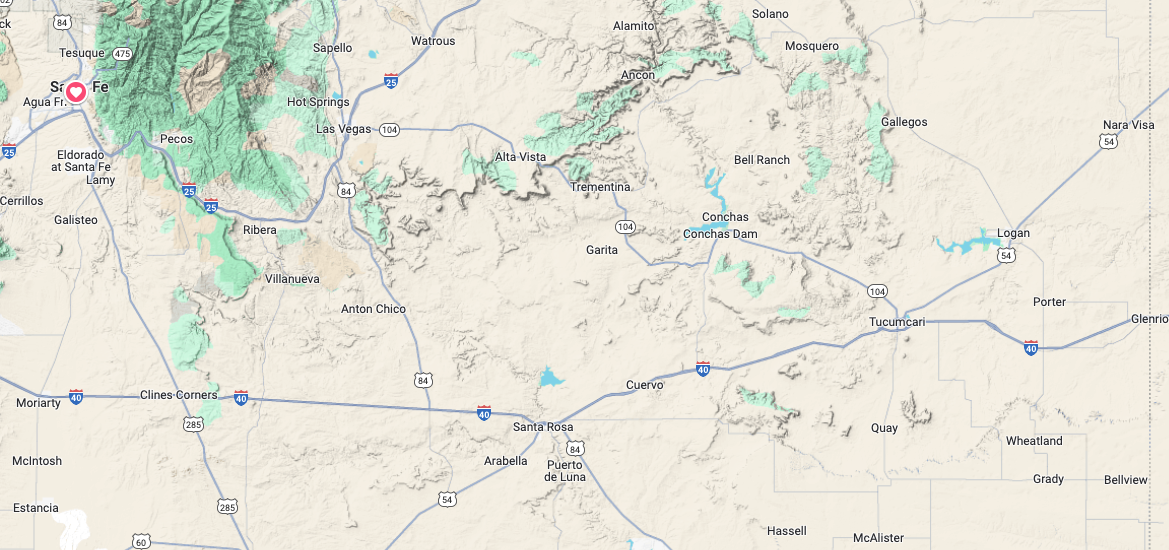
So after one-night stays in OKC and Amarillo, we headed on west along Interstate 40 toward Santa Fe. We made our usual pit stops in Tucumcari and Santa Rosa, and I planned to take our last break at Clines Corners, which has sat at the US 285 turnoff to Santa Fe since 1934.

For years, Clines Corners did the same ludicrous-number-of-highway-billboards gimmick that was long used for Meramac Caverns in Missouri and is used by the Cherokee Trading Post near El Reno, Oklahoma and the Flying C Ranch along the interstate between Santa Rosa and Clines Corners.

However, this year after we passed the Flying C I noticed how many of the former Clines Corners billboards were available for rent, with no takers. I didn’t see a single Clines Corners billboard for miles and began to worry that it had closed. If so, we would be in for an endurance test as there is virtually nothing from there for 40 miles along US 285.

Clines Corners is at the intersection of Interstate 40 and US 285 that leads northwest to Santa Fe

Thankfully, it was still operating and provided us with restrooms and the opportunity to purchase some t-shirts. Roy “Pop” Clines originally had a service station a few miles south, but shifted up the road in 1937 and a political fight in Santa Fe resulted in Route 66 being realigned through his acreage. He served up 15-cent bowls of chile, filled gas tanks, and fixed flats, but sold out at the end of that decade, and ownership of the facility has changed five times since then.

Refreshed by the stop at Clines Corners, we angled up to Santa Fe, where I had arranged for upgraded accommodations.

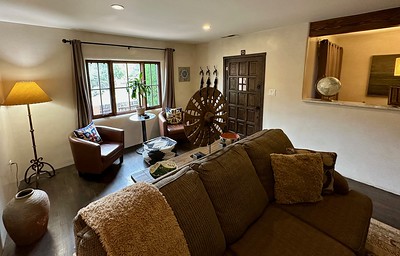
We have stayed at the Luxx boutique hotel near the Santa Fe plaza and tried the Hotel Santa Fe Hacienda & Spa, but our favorite place to stay in the capital of New Mexico is the Santa Fe Motel & Inn. We used to rent a Patio Room, and that was where I proposed marriage to Wendy in 2015. However, after the motel bought and refurbished a couple of old houses across the street, we began renting the little Casita Bonita, which is basically a bedroom, bathroom, and kitchen.

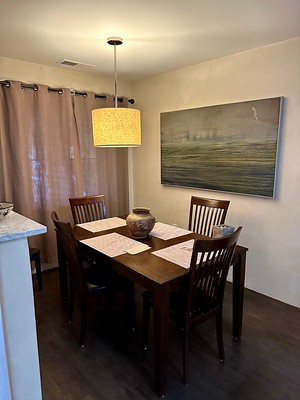
This time, I wanted to try their best accommodation, the two-bedroom two-bath Casita Fina that includes a dining room and kitchen. Since I didn’t begin the booking process until April, I had to hunt around the calendar to find a four-day window to book it. I finally secured it, and we particularly enjoyed our stay in Santa Fe this year because of the comforts of the Casita Fina.

Wendy’s Monday Blue Plate Special

Once we arrived, I promptly ordered via Doordash the Monday and Wednesday specials from Tomasita’s. Wendy opted for the Christmas version of the Monday Tamale Blue Plate, with red chile on the pork tamale and green Hatch chile on the blue corn cheese enchilada to go with the taco, Spanish rice, refried beans, and sopapilla.

My Wednesday Special Blue plate had a chicken enchilada, Spanish rice, refried beans, and sopapilla, but I am a bland rebel and order mine with no chiles. It was, of course, delicious, and I’m known for filching some of Wendy’s side items.

We slept well and rose the next morning for our walk to go shopping at the historic plaza and enjoy some lunch. It’s a 15-minute walk from the Casita to The Plaza, where we shopped for t-shirts and the like at Yippee Ti Yo, the Santa Fe Five & Dime, and the Santa Fe Arcade.

At the Arcade, Wendy bought some Minnetonka moccasins and enjoyed an iced coffee from 35° North. Lunch was, as usual, at The Burrito Company.

Shopping excursion to the plaza

Then we hit Tees & Skis next door, and walked toward the Cathedral. We encountered Woody Galloway, and Wendy loved a print of his photograph of Cerro Pedernal which he took from Taos.

Cerro Pedernal, photographed from Taos by Woody Galloway
Cerro Pedernal photograph by Woody Galloway

Wendy and I have happy memories of hiking all of the trails at Ghost Ranch with Cerro Pedernal on the horizon, so the print was an anniversary gift which currently adorns our dining room at home.

We hit De Colores on our way back to the hotel, where Wendy finally found a properly fitting t-shirt. Then it was time for a siesta, as the temperature was approaching 90 degrees Fahrenheit, although the low humidity made it feel like the mid-80s. That was unusually warm for Santa Fe, but while the actual temperature was just a few degrees higher back in Bartlesville, there it felt like the upper 90s thanks to the humidity.

The next day was thankfully back to normal weather-wise. We ordered breakfast from The Pantry on Cerrillos Road, which would sustain us through two mornings, and we walked back to the Plaza to visit the art museums. I took my usual photograph of the lovely courtyard at the New Mexico Museum of Art, although I did not find the current exhibits appealing.

New Mexico Museum of Art Courtyard
The courtyard of the New Mexico Museum of Art is one of my favorite places

We then ventured over to Cathedral Park to wait until the IAIA Museum of Contemporary Native Arts opened. Happily, a young lady was getting her picture made in her elaborate dress for her Quinceañera. While we waited, the bells rang out loud and long for Sunday mass.

Quinceañera in Cathedral Park
Quinceañera photo shoot at Cathedral Park

The IAIA Museum had some old exhibits, but also some works by Douglas Miles, who is White Mountain Apache, San Carolos Apache, and Akimel O’odham and the founder of Apache Skateboards.

Apache Skateboards Timeline, 2002-2025 by Douglas Miles

There was also a display of suitcases called Entering San Carlos Apache Reservation.

Entering San Carlos Apache Reservation, Douglas Miles
IAIA Museum of Contemporary Native Arts
IAIA Museum courtyard with the Cathedral Basilica of St. Francis of Assisi in the background

We again enjoyed lunch at The Burrito Company. As usual, I admired the forms and massing of La Fonda and other structures. When designing his addition to the historic hotel, John Gaw Meem recessed the upper floors and punctuated the elevations with balconies and towers as part of the Pueblo Revival style.

La Fonda

We made our usual late afternoon walk to the roses at Railyard Park, although most were way out of season.

Santa Fe Railyard Park Roses

The only miss we had, restaurant-wise, was Restoration Pizza at the Railyard. Their air conditioning wasn’t working, and they needed to prop more doors open. Later Wendy did enjoy the New York style pizza we usually get at Pizza Centro at the Santa Fe Design Center, which was a short walk from our Casita.

We both enjoyed our vacation, and all too soon it was time to head back into the heat and humidity of summer in Oklahoma. We look forward to returning to the Casita Fina in the years to come.

Flickr Photo Album

< Summer Solstice 2025, Part 3

Posted in art, photos, travel | 3 Comments

Summer Solstice 2025, Part 3: Amarillo

Amarillo, the Spanish word for yellow, is pronounced “ah-muh-ree-yo” but for the town in the center of the Texas panhandle it is commonly pronounced “am-uh-rill-oh” as immortalized in Neil Sedaka’s Is This the Way to Amarillo and George Strait’s Amarillo By Morning, or most memorably for Wendy and me, in Bob Wills’ When You Leave Amarillo, Turn Out the Lights.

In his last recording of the song, another composition of Cindy Walker, Bob sat on a wheelchair in the center of a Dallas recording studio directing his old Texas Playboys bandmates and some newcomers. His speech had been affected by a stroke, but he had invited the 21-year-old Jody Nix to join the session. He called upon Jody to sing When You Leave Amarillo. Jody said, “The vocal mic was right by him, as I stood there, he was to my immediate left, watching me the whole time. I can see those jet black eyes to this day just gleaming. He put quite a few ah-ha’s and other words in my song and the feeling I had doing that is indescribable, knowing that the King of Western Swing was right there and had asked me to be a part of it.”

At the end of the song, Bob threw in, “Get out the lights.” That night another stroke left Bob comatose, and he never regained consciousness, dying a few months later.

We have long stayed overnight in Amarillo on our pilgrimages between Bartlesville, Oklahoma and Santa Fe, New Mexico. Over the years, we have stayed in various hotels. I mostly like staying at the Drury Inn & Suites on the western edge of town, but whenever its doors open for me to venture outside, I have come to expect the scent of a feedlot.

Fisk Building

So we’ve tried a couple of hotels in downtown Amarillo, despite the added expense and worse parking. In 2023 we stayed in the downtown Embassy Suites. This time we tried another downtown hotel, the Courtyard by Marriott in the old Fisk Medical Arts Building.

The Gothic Revival brick structure was built in 1927-1928 and named for Charles A. Fisk, the president of the Amarillo Bank and Trust. The bank occupied the corner of a building that was designed to be filled by doctors and dentists. After the bank left in 1950, Zales Jewelers took over the building and the bank’s space.

Zales began in 1924 in Wichita Falls, Texas with the immigrants Morris and William Zale (born Zalewski) who opened their first store with Ben Lipshy. Their credit plan of “a penny down and a dollar a week” made jewelry more affordable and led to them having a dozen stores in Oklahoma and Texas by 1941.

Marriott later acquired the building and performed $12.7 million in renovations to re-open it in 2011 as a 107-room hotel. Parking is in an adjacent multi-story garage, and next to where we parked was a 1955 Chevrolet Bel-Air.

1955 Chevrolet Bel Air

Although I’ve never been a fan of the bulbous rounded design of 1950s American cars, I did like its two-tone styling. I also appreciated how it was only 73 inches wide, only about an inch wider than my 2014.5 Toyota Camry. My car weighs about 3,200 pounds and has a 178 horsepower 4-cylinder engine; the 1955 Bel Air had a similar weight and power, although it drove about half as many miles on a gallon of gasoline.

1955 Chevrolet Bel Air

However, Wendy and I take our vacations with her Honda Odyssey minivan, which is longer and wider than either of those vehicles and over 1,000 pounds heavier. Thankfully it has 280 horsepower, so it is spry enough, and it is certainly far more comfortable than my Camry for long-distance travel.

Our 10th-floor room in the Fisk Building offered a nice view to the north.

View from our hotel window in the old Fisk Building

We especially liked how the angled windows of the Plaza Two building reflected the façades of other downtown skyscrapers.

Reflections of skyscrapers in Amarillo

The lights won’t be going out in Amarillo anytime soon. Although it did shrink with the closure of the Amarillo Air Force Base around the time Cindy Walker wrote her song, it rebounded and now has a population of over 200,000. About 1/4 of the nation’s beef supply is processed in the area, which is surrounded by agricultural land with several large dairies in the Texas panhandle.

We weren’t pleased to discover that our expensive room in the Marriott lacked a microwave, but one good thing from our stay downtown in 2023 was discovering Napoli’s Italian restaurant at 7th & Taylor. We dropped in there for dinner on our way back through town at the end of our trip, and also enjoyed a couple of breakfasts and a dinner at another favorite spot in Amarillo, Calico County restaurant.

Our first visit to a Buc-ee's was in Amarillo
Wendy and I visited our first Buc-ee’s in Amarillo

Amarillo provided a new experience for both of us, as we visited its 74,000 square foot Buc-ee’s travel center, which opened in December 2024.

I’ve been hearing about Buc-ee’s for a few years, so it was fun to finally see one and try out some Beaver Nuggets and other offerings. The bathrooms were indeed impeccably clean, as advertised.

Amarillo was the 36th Buc-ee’s location in Texas, and it was interesting to finally see what people have been chattering about. We don’t plan to seek them out, but it was certainly nicer than most of the travel centers we have encountered.

On our return trip through Amarillo, we stayed at a Hilton Home2 Suites, but I wasn’t particularly impressed. We might try the Best Western Plus Medical Center Hotel on our next time through.

Something I did appreciate about the Home2 Suites room were the prints of Maria Morris artworks on its walls. One was of the Lighthouse at Palo Duro Canyon.

Palo Duro Canyon; Maria Morris artwork in our Amarillo hotel room
Texas Longhorn; Maria Morris artwork in our Amarillo hotel room

Another Maria Morris print was of a Texas longhorn. The vibrant colors enlivened our room.

The fourth and final post about our Summer Solstice 2025 vacation will focus on where we stayed for most of it: what was founded in 1610 as La Villa Real de la Santa Fe de San Francisco de Asís and which is now Santa Fe, New Mexico.

Flickr Photo Album

Summer Solstice 2025, Part 4 >

< Summer Solstice 2025, Part 2

Posted in music, photos, travel | Leave a comment

Summer Solstice 2025, Part 2: Erick

After leaving OKC, we rolled along Interstate 40 from OKC to Amarillo, Texas. About a decade ago, we visited a couple of attractions along the way: the Heartland of America Museum in Weatherford in 2015 and the Route 66 Museum in Elk City in 2014. Thus far I’ve resisted Weatherford’s Stafford Air & Space Museum since I’ve seen plenty of similar items at the Cosmosphere in Hutchinson, Kansas and the Smithsonian Air & Space Museum in the District of Columbia.

This time, as we approached the Texas border a two-hour drive west from OKC, we deviated onto one of the I-40 business routes, which are really just original Route 66, to visit little Erick, Oklahoma. It is less than a mile south of the interstate, but it seems farther, given the town’s desolation.

I-40 bypassed Erick, which did it no favors

Erick was doing okay a century ago. The Encyclopedia of Oklahoma History and Culture offers, “By 1909 travelers who stayed at the Hotel Crescent found a bustling community with thirteen general stores, two hardware stores, several cotton gins, blacksmith shops, a livery, a harness shop, and a lumber store. Food commodities could be purchased at five meat markets, several grocery stores, a bakery, and a confectionary. The town supported two banks and two weekly newspapers, the Beckham County Democrat and the Erick Altruist.”

The town peaked with 2,231 souls in 1930 amidst an oil boom, but it has now diminished to less than a thousand and seems much smaller given the few surviving businesses. We turned off Roger Miller Boulevard onto Sheb Wooley Avenue, but we found virtually no commerce or traffic.

Erick, Oklahoma
Little action along Sheb Wooley Avenue in Erick

Those street names might bring back memories for those of mine and earlier generations, as Erick was the hometown of two successful singer-songwriters.

King of the Road

Roger Miller in 1966

Roger Miller grew up on his aunt and uncle’s farm outside Erick, picking cotton and plowing. The farm had no telephone until 1951, and Miller attended a one-room schoolhouse as an introverted child who often daydreamed or composed songs.

He listened to the Grand Old Opry and Light Crust Doughboys on a Fort Worth radio station with his cousin’s husband, Sheb Wooley. Wooley taught Miller his first guitar chords and bought him a fiddle. Wooley, Hank Williams, and Bob Wills inspired Miller to become a singer-songwriter.

At age 17, he stole a guitar out of desperation to write songs, but he turned himself in the next day and enlisted in the army to avoid jail. Always funny, Roger quipped, “My education was Korea, Clash of ’52.”

After leaving the army, Miller traveled to Nashville and met Chet Atkins, who asked to hear him sing. Atkins had to loan Miller a guitar, since he did not own one. Miller was so nervous that he played the guitar in one key and sang in another, prompting Atkins to advise him to come back later after he had more experience.

Miller became a singing bellhop at Nashville’s Andrew Jackson Hotel and was eventually hired to play the fiddle in Minnie Pearl’s band. He then married and became a father, and that prompted him to become a fireman in Amarillo for steadier work while still performing at night. He claimed that there were only two fires during his service, one in a chicken coop and another that he slept through, after which the department “suggested that…[he] seek other employment.”

Miller returned to Nashville and wrote songs for Ernest Tubb, Faron Young, and Jim Reeves, becoming one of the top 1950s songwriters. He went on to perform songs that hit the country charts, including his biggest hit, King of the Road.

Miller was a terribly funny, talented, and undisciplined mess. He married three times, fathered eight children, and abused alcohol and amphetamines. A lifetime cigarette smoker, he died of lung and throat cancer in 1992 at age 56.

During one interview, Roger’s hometown of Erick was mentioned. The interviewer, understandably unaware of its location, asked what it was close to. Roger quipped, “Extinction.”

A Comedic and Dramatic Actor, Singer, Writer, and…Screamer

Sheb Wooley in 1971

However, little Erick not only produced Roger but also the aforementioned Sheb Wooley. He formed a band at age 15 and periodically performed on an Elk City radio station 30 miles to the northeast of Erick.

Sheb was also a working cowboy and accomplished rodeo rider, but when the U.S. entered World War II and Sheb tried to enlist in his early 20s, he was rejected because of his numerous rodeo injuries. He became a welder and worked in the oil industry.

He moved to Fort Worth in 1946 and earned a living as a country-western musician, traveling across the South and Southwest. He moved to Hollywood in 1950, hoping to establish himself as an actor or singer in film or television.

He appeared in many TV westerns, including The Lone Ranger, The Adventures of Kit Carson, The Range Rider, The Cisco Kid, My Friend Flicka, Cheyenne, and The Life and Legend of Wyatt Earp. In 1958, he earned some fame with his rock-and-roll comedy single, The Purple People Eater.

Sheb hit his big break when he was cast as the drover Pete Nolan on Rawhide, writing and directing some of the episodes, and he later became a regular on Hee Haw, writing its theme song. He was the Country Music Association’s Comedian of the Year in 1968, 1992 Songwriter of the Year, and won the Western Heritage Award for nine consecutive years for his work in film and television westerns.

Sheb wrote the Hee Haw Theme Song

Sheb managed to outdo Roger in his number of marriages: five to Roger’s three. He never stopped writing; he recorded his last written song just four days before his death in 2003 at age 82.

The strangest of Sheb’s legacies is the “Wilhelm scream” which he recorded for the film Distant Drums.

Sheb recorded the Wilhelm Scream, which has been used in over 200 films

The stock recording of the distinctive scream became an inside joke in the sound effects world and has been used in over 200 films.

Sandhills Curiosity Shop

A sight to behold in Erick is the Sandhills Curiosity Shop. The oldest brick building in town, it was once the City Meat Market and is now festooned with old advertising signs. It has been described as “a shop where nothing is for sale and its greatest curiosity is its owner, Harley, the Mediocre Musicmaker”. For context, see this 2016 post by author and photographer Rhys Martin or watch Harley in action; he helped inspire the Tow Mater character in the Pixar movie Cars.

Sandhills Curiosity Shop in Erick, Oklahoma

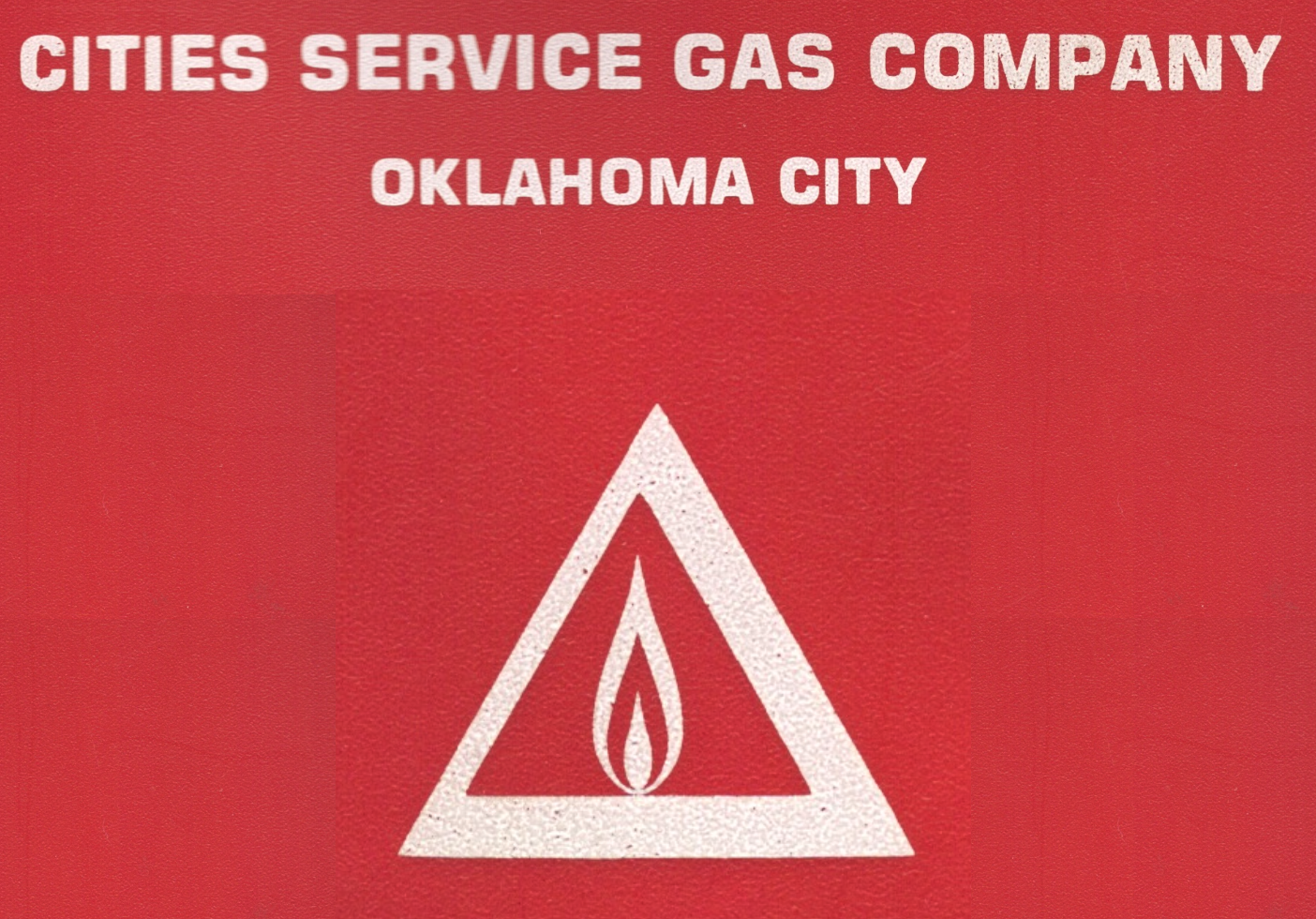
We didn’t try to see if the mercurial Harley was around, just pausing long enough for me to take a photo of one side of the building which featured an old Cities Service sign. My father worked for Cities Service Gas Company and its successors from 1951-1983. That was the corporation’s natural gas division, which had its own variant of the logo, adding a flame to the interior of the triangle.

Mounting Losses

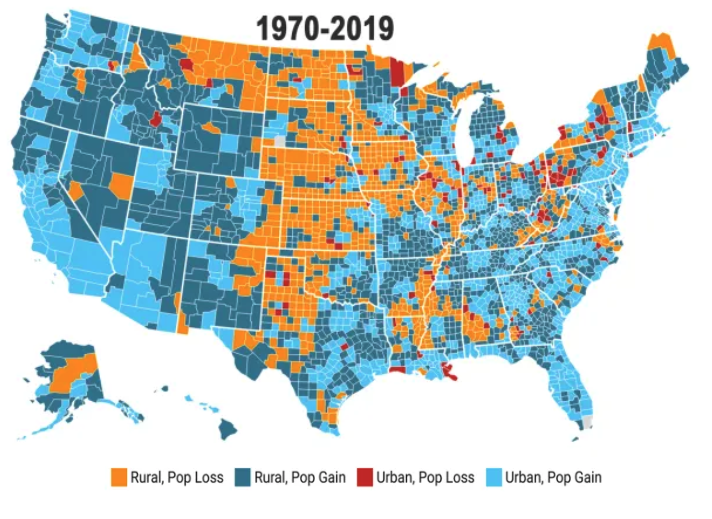
Oklahoma’s rural population has long been declining in the western portion of the state, which is part of the Great Plains. Over the past half-century, many counties in that swath across the central portion of the continental United States have lost over 60% of their former populations.

The Great Plains have emptied out over the past half-century [Source]

In recent years, the population loss has spread across other rural areas as Americans increasingly shift to urban centers.

The rural population loss is now widespread [Source]

The depopulation of the Great Plains is tied to a shift from small-scale subsistence farming to large commercial farms. I now dread traversing western Oklahoma and Kansas, eastern Colorado and New Mexico, and the Texas panhandle when we seek out higher elevations in Santa Fe, New Mexico or southwestern Colorado to escape the heat and humidity of summer in eastern Oklahoma.

One strategy I employed on this trip and a previous one when crossing the Oklahoma or Texas panhandles is to play my favorite Bob Wills album, Together Again… with Tommy Duncan. The mix of pathos and pleasure just fits. It features Dusty Skies, a beautiful song he first released in 1942.
Cindy Walker

Cindy and Oree Walker

The song was written by Cindy Walker, who had top-10 hits spread over five decades. She wrote Dusty Skies in the mid-1930s, as a Texas teenager inspired by newspaper accounts of the dust storms of the American prairies. Her father was a noted hymn writer, and her mother was an accomplished pianist.

Bob Wills and the Texas Playboys eventually recorded over fifty of her songs, including Bubbles in My Beer. Walker also wrote You Don’t Know Me, which was memorably recorded by Ray Charles. Her own recording of it is not as well known.

Her custom was rising at dawn each day to write songs, typing lyrics on a pink manual typewriter which she had hand-painted with flowers. Her widowed mother, Oree, lived with her and would help work out melodies to her daughter’s words.

Years ago, Wendy was touched when I first showed her Bob Wills’ fiddle at Oklahoma City’s National Cowboy and Western Heritage Center.

Bob Wills' Fiddle
Bob Wills’ fiddle is in Oklahoma City

Someday I would like to visit the Country Music Hall of Fame and Museum in Nashville, just so I might get to see Cindy Walker’s typewriter.


Summer Solstice 2025, Part 3 >

< Summer Solstice 2025, Part 1

Posted in history, music, photos, travel, video | Leave a comment

Summer Solstice 2025, Part 1: OKC

We barely left town over the 2024-2025 Winter Break, and while we had planned to get away to Oklahoma City during Spring Break, a dust storm led us to just enjoy lunch at one of the two surviving El Chicos in Tulsa and then return to Bartlesville. So when making reservations on April Fools’ Day for my annual two-week June vacation, I decided we should try to hit OKC again, as we were way overdue for burgers at Johnnie’s Charcoal Broiler.

I knew that we would be anxious to escape the summer heat and humidity by mid-June, and that Wendy did not wish to fly. That meant driving to either northern New Mexico or western Colorado, where high altitudes could provide some climatological relief.

Both April and June turned out to be unusually wet in Bartlesville, so I was glad I ended up choosing our typical summer vacation spot of Santa Fe, New Mexico. Santa Fe’s altitude provides a welcome summertime escape from Bartlesville’s humid subtropical weather (Cfa). For those not keeping track, I had stayed in Santa Fe ten times over the previous fifteen years, with Wendy joining me for the last seven of those trips.

This trip began with a drive down the Turner Turnpike. For decades, I made that pilgrimage multiple times each year to see my parents in Oklahoma City, but in 2022 my father passed and my mother moved to Bartlesville. So my visits to my hometown increased drastically in early 2022 but then were abruptly curtailed.

Back in 2017-2018, the turnpike was widened to three lanes between Sapulpa and Bristow. Thankfully, the Access Oklahoma project will widen the remaining 68 miles of the turnpike. The project might conclude in 2036 and is projected to cost $2.5 billion. I welcome it, having endured decades of ever-increasing truck traffic over the Turner’s route through the hilly crosstimbers. The road is currently being widened southwest of Bristow, and a new bridge is going up at Wellston.

Johnnie Haynes
Johnnie Haynes and sons making his hickory sauce

One way I dealt with the severed connection to my hometown was a plethora of posts in 2022 and 2023 about Windsor Hills, Putnam City, and Tex-Mex food, pizza, and burgers I enjoyed in my youth. After our failed attempt to visit OKC in the spring, I ordered some of Johnnie’s hickory sauce for Wendy, and it was a fait accompli that we would return to Britton Road so Wendy could order a #1 with Johnnie’s sauce while I opted for my usual burger with just cheese and mayonnaise. We were both loyal to the late Johnnie Haynes’ preference, ordering our burgers with shredded, not sliced, cheese.

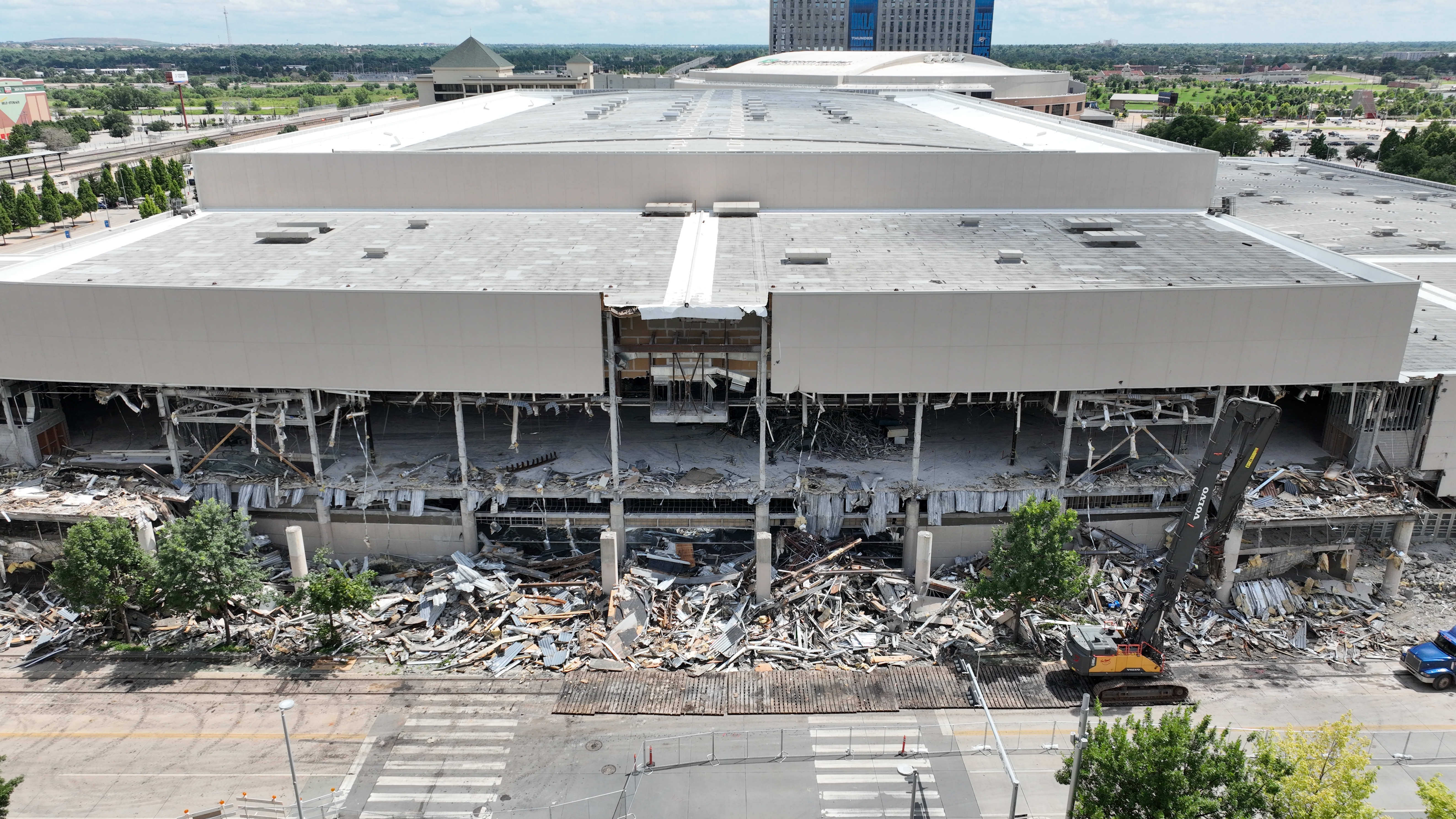
The former Myriad is being demolished

Although we ventured downtown for its art museums, I resisted going by the former Allen Morgan Street Memorial Myriad Convention Center, which is being demolished and was featured in my January 2025 post on OKC Urban Renewal. I preferred not to witness the destruction of the place where I attended a couple of proms, graduated from high school, and participated in various conferences over the decades.

We exited Interstate 40 to follow Oklahoma City Boulevard westward, which in my youth was the original route of the elevated crosstown expressway. We caught passing glimpses of the large new Omni hotel, the new convention center, and Scissortail Park before turning north on Walker Avenue and then east on Colcord to park in the Arts Garage by City Hall.

Oklahoma City Museum of Art

While I was growing up, the city’s art museum was in a building on the state fairgrounds and concentrated on 20th-century American painting and photography. There was a second museum, the Oklahoma Museum of Conservative Art, that exhibited European representational works, but it was up in snooty Nichols Hills, and I don’t recall ever visiting it.

The current and vastly improved museum opened in 2002, and it has always featured glass creations of Dale Chihuly. We took a quick stroll through that gallery but focused our attentions elsewhere.

There was an exhibit of Ansel Adams’ photography, but that has never appealed to Wendy, and I’ve seen enough exhibits of his work, including a large show at Gilcrease in 2008, to satisfy my interest. We paid far more attention to a Postwar Abstraction exhibit.

Wendy liked the color field Willem de Looper created without brushes by flooding his canvas with layer after layer of thinned acrylic paint. It reminded me of some of the paint pours she created before shifting to her current interest in rerooting the hair of Barbie dolls. She accessorizes and donates many of them to children at one of our underprivileged schools.

Untitled by Willem de Looper

We both liked Cool Staccato, a large color bar painting by Gene Davis, and I convinced Wendy to pose in front of it.

Wendy with Cool Staccato by Gene Davis
Wendy in front of Cool Staccato by Gene Davis

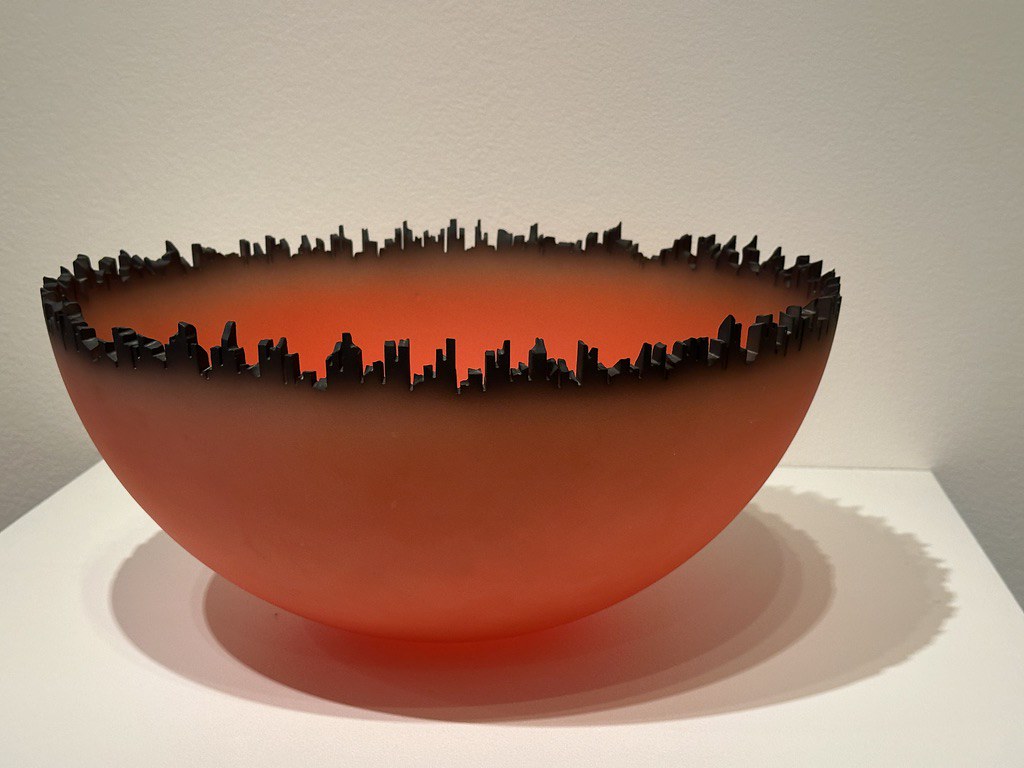
A couple of glass pieces, not by Chihuly, caught my eye: Steve Tobin’s Neon Wall Piece and Cityscape by Jay Musler. The latter was a sphere of blown Pyrex glass that had been cut in half with a notched skyline created around the rim by high-pressure sandblasting, followed by airbrushing with oil paint.

I like anything by Thomas Moran, and Oklahoma City has long had one of his Grand Canal paintings.

Grand Canal, Venice by Thomas Moran

I also like View of the Basin of San Marco by Ippolito for its lovely sky.

View of the Bacino di San Marco, Venice by Ippolito Caffi
View of the Bacino di San Marco, Venice by Ippolito
Port of Cassis (Marseille) by Charles Camoin

Wendy liked Port of Cassis (Marseille) by Charles Camoin.

Oklahoma Contemporary

We next drove over to the west side of the railroad tracks at 12th Street to visit the Oklahoma Contemporary Arts Center. It opened in 2020, and we had never visited it before.

We noticed a t-shirt with Folding Light by Matt Goad, and we liked that enough for me to order a print for Wendy since the only print at the museum had been damaged.

Folding Light by Matt Goad
Folding Light by Matt Goad, an impression of the Oklahoma Contemporary museum
Edgar Heap of Birds

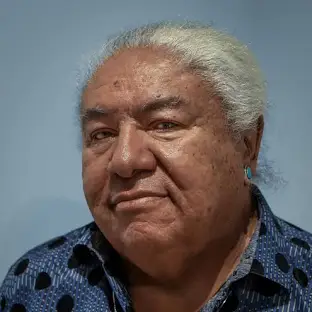
The entire museum was being used to display works by Hock E Aye Vi Edgar Heap of Birds, a multi-disciplinary artist who is Southern Cheyenne. He was born in Wichita, Kansas.

His works include public art messages, acrylic paintings, prints, and monumental porcelain enamel on steel outdoor sculpture.

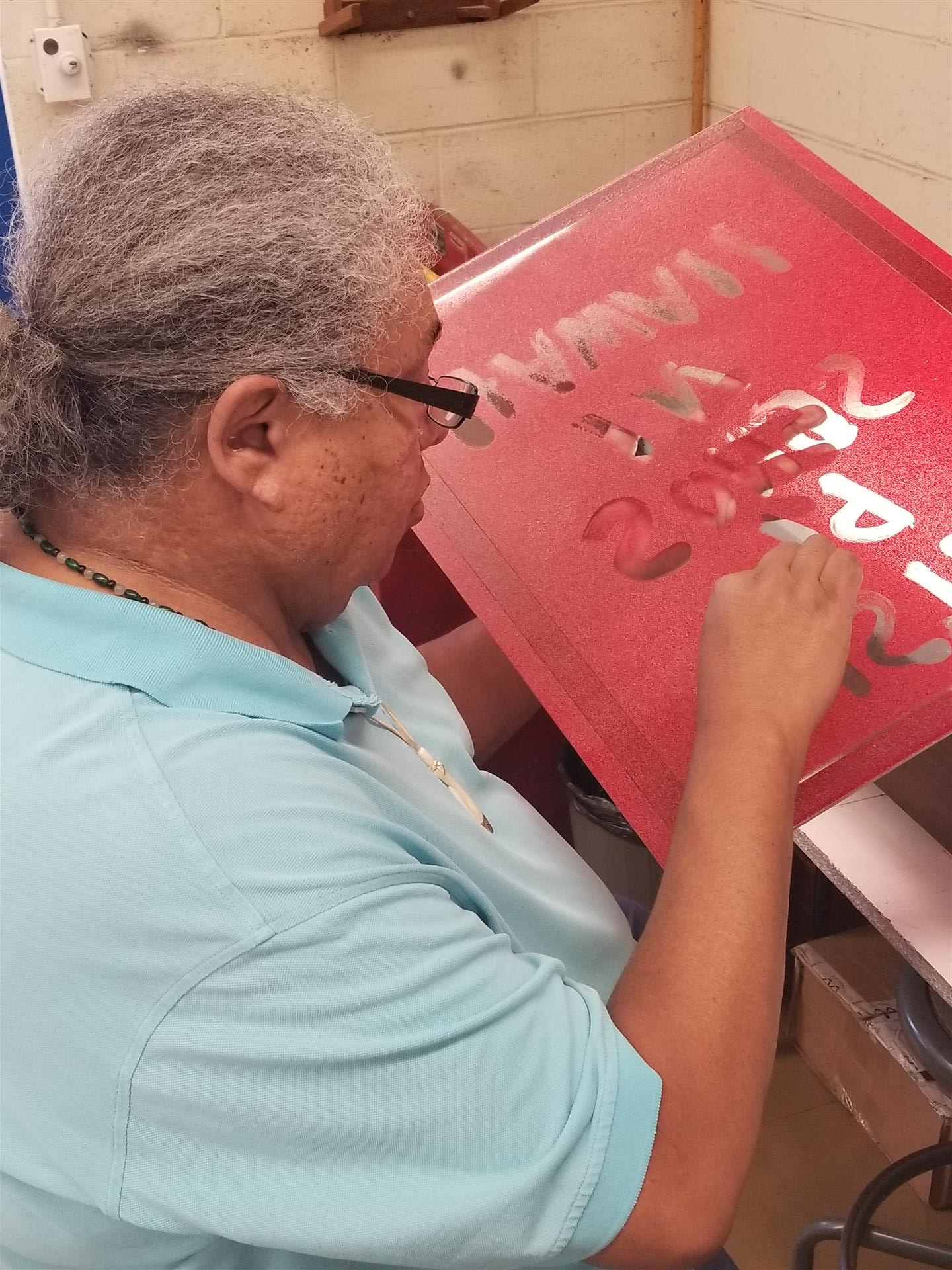
Several of the installations were groupings of monoprints with brief lines of text. A red grouping spoke of the troubled history of the First Peoples and European conquests. One of the panels, Do Not Dance for Pay, is a repeated element in his artwork. It is a critique of the expectation that indigenous artists should primarily create art for commercial purposes or to entertain non-indigenous audiences, rather than expressing their own culture and addressing social and political issues.

Work by Hock E Aye Vi Edgar Heap of Birds
Edgar Heap of Birds working on a monoprint

A set of typeset posters also spoke to exploitation of Indian culture.

Work by Hock E Aye Vi Edgar Heap of Birds

A large brown display spoke to immigration and border policies.

Work by Hock E Aye Vi Edgar Heap of Birds

A set of blue prints had a mix of messages.

Work by Hock E Aye Vi Edgar Heap of Birds

The museum included a print of Prairie Fire by Francis Blackbear Bosin, who was both a teacher and a major influence on Heap of Birds’ artistic practice with his Flatstyle painting.

Prairie Fire by Francis Blackbear Bosin

There was a print from the Highway 77 Series by Kiona Wooten Millirons, with her naked form layered in among rocks. An Oklahoma City artist, her more recent works have explored her journey through the aftermath of her sister’s death and the trial of her sister’s murderer.

Highway 77 Series by Kiona Wooten Millirons

We enjoyed exploring the studio spaces along a hallway in the museum, which were in use for summer art camp. Happily the creators of the bold linear designs along the corridor walls were credited.

Oklahoma Contemporary hallway art

Wendy and I make a point of visiting both the Nelson Atkins Museum of Art and the Kemper Museum of Contemporary Art whenever we visit Kansas City, and the New Mexico Museum of Art and the IAIA Museum of Contemporary Native Arts when we stay in Santa Fe. Now we can similarly visit the Oklahoma City Museum of Art and the Oklahoma Contemporary whenever we visit OKC. Our NARM cards from our Woolaroc memberships grant us free access to all of those institutions. (They also work at Philbrook and Gilcrease in Tulsa, but Gilcrease won’t re-open in its new facility until the fall of 2026.)

Hotel

Wendy and I used to stay at the DoubleTree by Hilton north of the airport, but later shifted to an Embassy Suites off Northwest Expressway. I decided to try the older Embassy Suites north of the airport on this trip; I remember when it was constructed in 1983.

The hotel was okay, having been renovated in 2012, but it was showing its age. I think we might shift back to the one on Northwest Expressway in the future. We didn’t bother with the hotel breakfast, instead driving to the Jimmy’s Egg on Highway 66 just west of Portland Avenue, which was one of my father’s three favorite breakfast places along the Mother Road near my parents’ home from 1978 to 2022. The others were a Dunkin’ Donuts east of Meridian Avenue and Jim’s Diner at Council Road.

Mall Memories

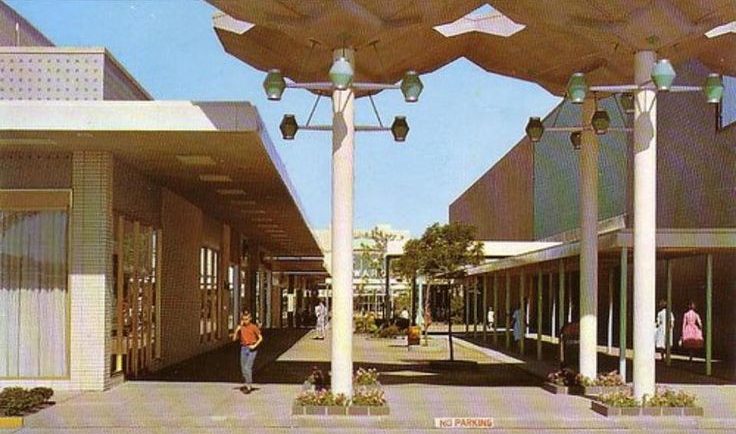
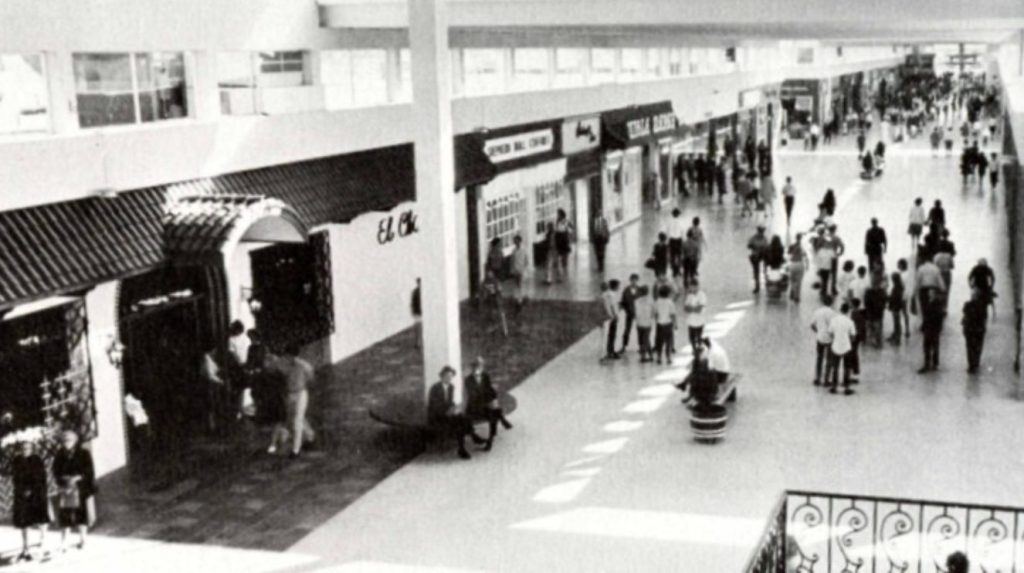
The only other stop we made in OKC was an evening visit to Penn Square Mall. It was built in 1960 as open-air shops in various styles. I preferred the enclosed Shepherd Mall, especially in summer and winter, which was the city’s first enclosed mall in 1964. Penn Square was enclosed in 1982, enabling it to outlast Shepherd, which lost its last anchor store in 2003 and became an office complex.

OKC once had several thriving malls: Shepherd from 1964 to the 2000s, Penn Square since its enclosure in 1982, Crossroads from 1974 to the 2000s, and Quail Springs since it opened in 1980. There was also Northpark since 1972, although in my youth I found it dark and dreary, and French Market Mall, which we seldom visited although I did get up early once for a Black Friday opening sale at an Office Depot there, in its unenclosed section, to purchase my first flatscreen monitor.

My impression is that today the only malls in OKC that still have anchor stores are Penn Square and Quail Springs. It appears that Shoppes at Northpark is still populated, but lacks the classic department store anchors to draw in customers. Tulsa has seen a similar diminishment, with Woodland Hills still going strong while Eastland, Promenade, Southroads, and the Kensington Galleria malls are kaput.

It was nice to walk around a J.C. Penney’s and a Macy’s again and stride through a mall with plenty of customers instead of walking through an eerie liminal space such as the zombie Arrowhead Mall in Muskogee.

Bartlesville’s Washington Park Mall was built by Sears in 1984, and is about the same size as the Muskogee mall. It lost its anchor Sears and J.C. Penney stores years ago. Dillard’s owns its building at that mall’s eastern end, but it has been converted into a Dillard’s Clearance Center. Here is a look at Bartlesville’s mall in 2025, which is trying to revive with small local businesses:

The next morning, after our breakfast at Jimmy’s Egg, we rolled westward along Interstate 40 to Amarillo, but with a slight detour to Erick. That means the next post will concentrate not on visual art, but on music.

Flickr Photo Album

Summer Solstice 2025, Part 2 >

Posted in art, history, photos, travel, video | Leave a comment