Winesburg, Ohio

Book Review

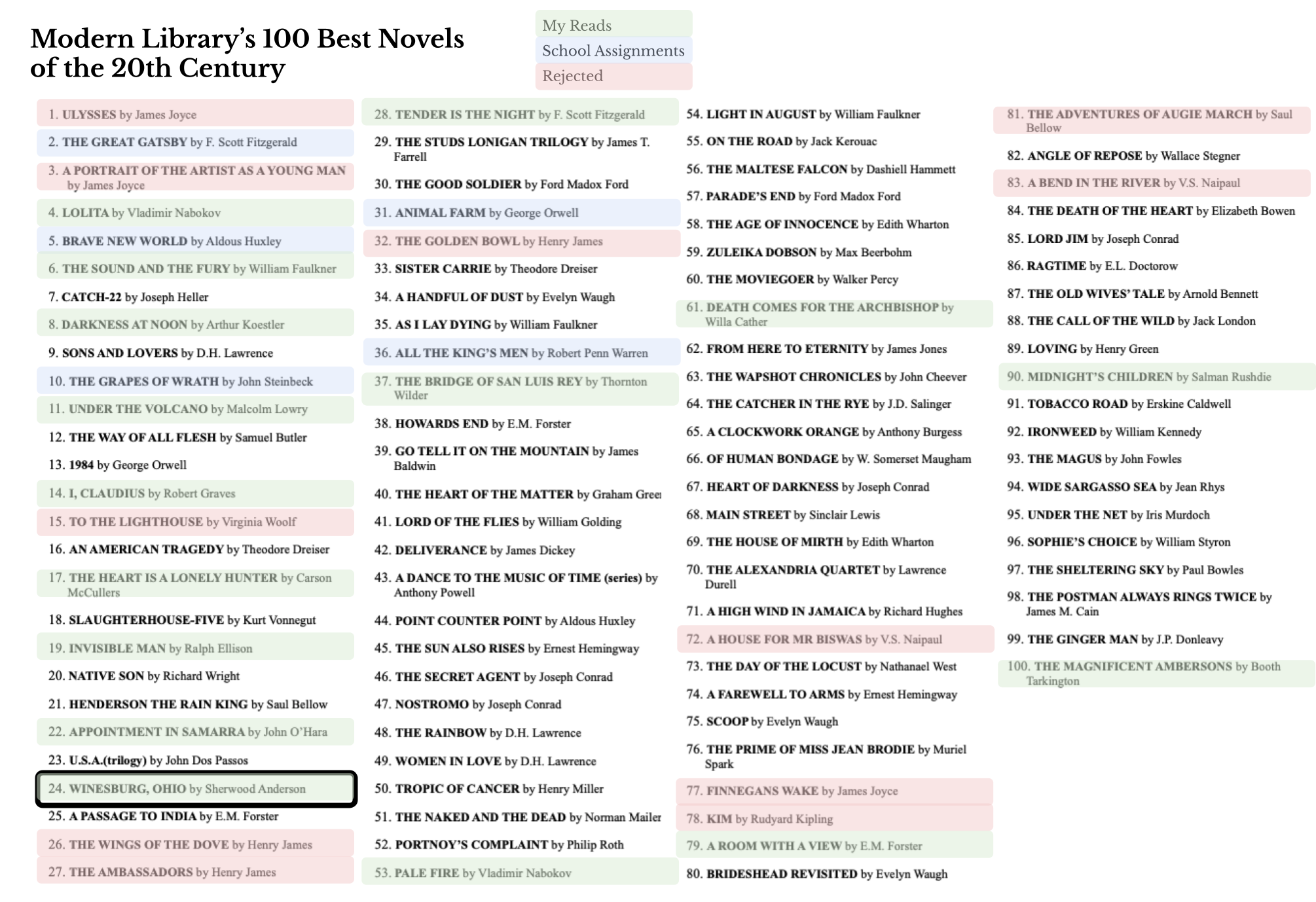
Have you ever heard of Sherwood Anderson? I had not, until I noticed his book Winesburg, Ohio listed at #24 on Modern Library’s self-serving 100 Best Novels of the 20th Century.

The Greatest Books of All Time meta-analysis ranked it as 304th, although a year earlier it had been 279th. My reading of it in May 2026 made it the 21st of the Modern Library 100 that I had read.
I had just finished six genre fiction books, four mysteries and two classic science fiction fix-ups, and I was ready for something more literary. I downloaded an EPUB3 of it from Standard Ebooks and used Send to Kindle. Despite their claims of more rigorous proofing, I spotted three typographical errors in that version. You can also read it at Project Gutenberg.

Happily, given my fragmented attention span in the last weeks of my occupancy of a work office, Anderson’s 1919 book was a short story cycle. It was, in a way, an early fix-up in that ten of its twenty-two stories had been previously published, in slightly different versions, in various literary magazines between 1916 and 1918.

The stories are set in the titular town at the turn of the 19th century into the 20th, which was loosely based on Clyde, Ohio, where Anderson had lived from 1884 to 1896, when he was roughly ages eight to twenty. His father, a former Union soldier and harness-maker, had moved the family there after his drinking led to financial difficulties in Caledonia, Ohio.

Anderson’s father could barely support the family as an occasional sign-painter and paperhanger, and his mother took in washing. Sherwood earned the nickname “Jobby” for his efforts to find various odd jobs to help out, leaving school at age fourteen after nine months in high school. He spent the rest of his time in Clyde as a “newsboy, errand boy, waterboy, cow-driver, stable groom, and perhaps printer’s devil, not to mention assistant to Irwin Anderson [his father], Sign Painter”.

Anderson later went to night school, did a short stint in the army and went to Cuba for the Spanish-American War, but fighting had ceased four months prior to his company’s arrival there. At age twenty-three, he enrolled in a preparatory school on the campus of Wittenburg University. While he was working at a boardinghouse, a high school teacher introduced him to fine literature. Anderson was one of eight students chosen to give a commencement speech, impressing an advertising manager enough to give him a job in the firm.
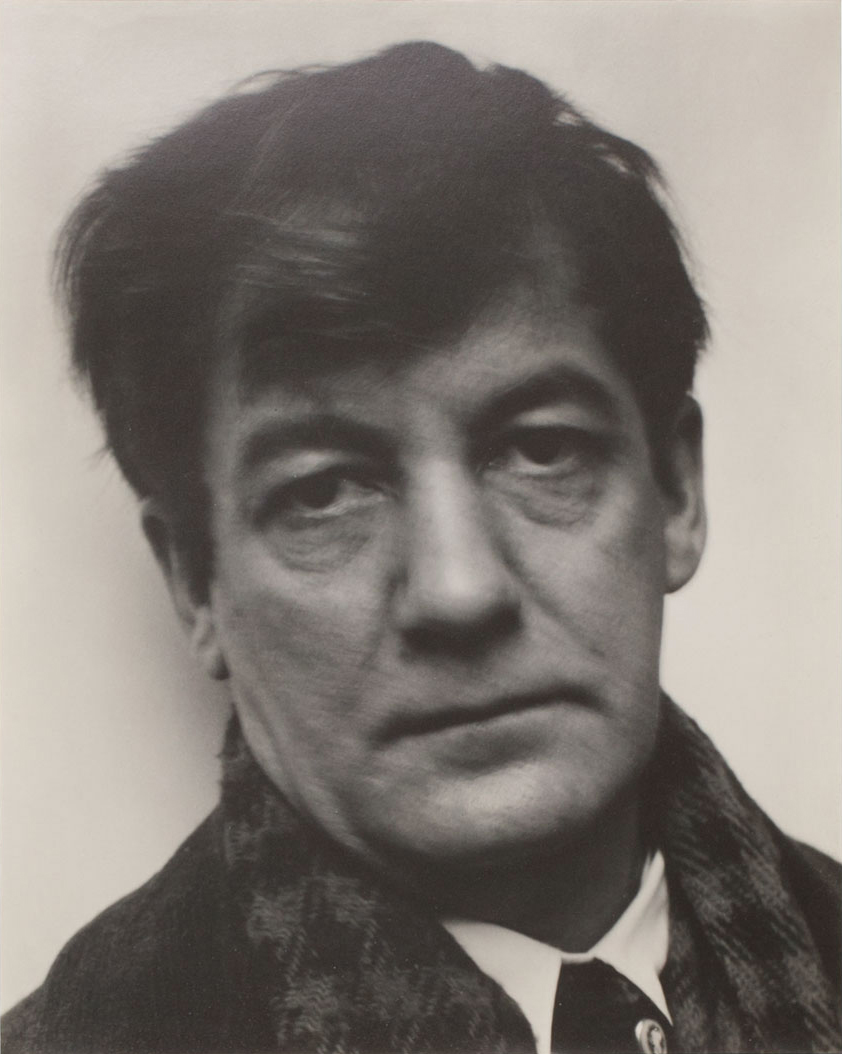
Anderson in 1923

Anderson worked at the advertising firm for six years, married, and became a sales manager for a mail-order firm. A batch of defective incubators was his undoing, with Anderson suffering a nervous breakdown from months of answering hundreds of complaint letters.

The Andersons moved to another town in Ohio, where he had several successful businesses, but Anderson had a second nervous breakdown in 1912 and abandoned his wife and their three children. Thankfully, she came from a prosperous family, but his behavior reminded me of how the architect and egotist Frank Lloyd Wright treated his own family in 1909. Anderson moved to Chicago, was divorced in 1916, and he would marry three more times, with each marriage enduring about eight years.

He wrote a couple of inferior novels before producing Winesburg, Ohio. That story cycle, written when he was in his early 40s, is generally recognized as his best work. While he produced a handful of additional highly regarded short stories and a few novels of varying success in the 1920s, his work after the start of the Great Depression is generally regarded less favorably, although it still produced quotable passages.

In 1941, at age 64, he swallowed a toothpick at a New York cocktail party before embarking on a cruise to South America. The toothpick caused internal damage that led to peritonitis, and he died in Panama.
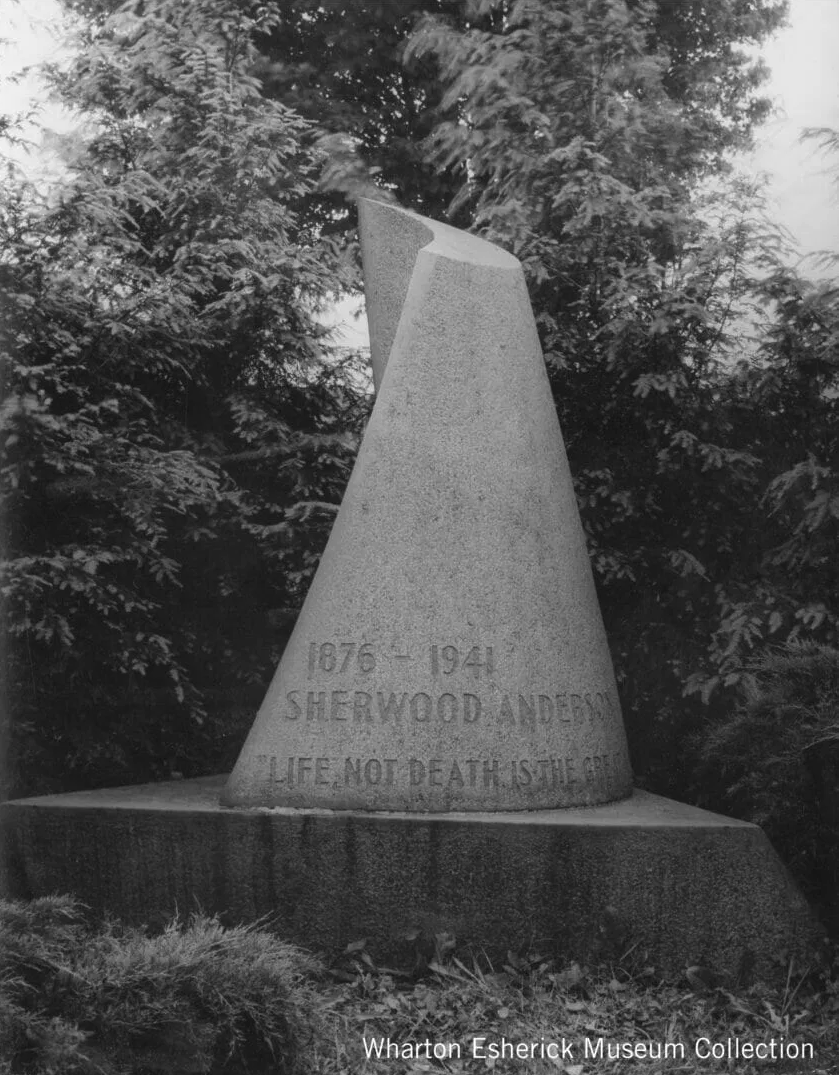
Anderson’s body was buried on the slope of a grassy hilltop in Virginia, near the border with Tennessee and North Carolina. His tombstone, a modernist creation by one of his friends, the sculptor Wharton Esherick, bears the epitaph Anderson had composed for it: “Life, Not Death, Is the Great Adventure”.

His greatest work included suggestive sexual overtones, but one source declaims, “…it is not an American classic because it introduced hitherto taboo subjects and experimented with new forms of structure in novel and tale. It is a classic because it is a deeply moving book about the loneliness and frustration of ordinary people…because it portrays the difficulty of communicating with one another yet clings to the tenuous hope that love and understanding can bridge the moat that isolates each of us…”
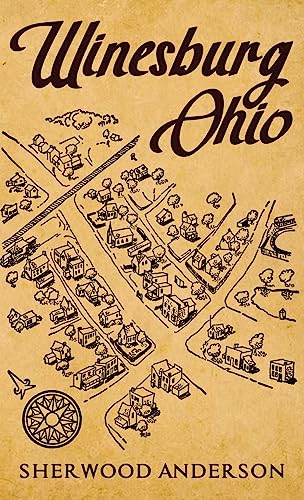

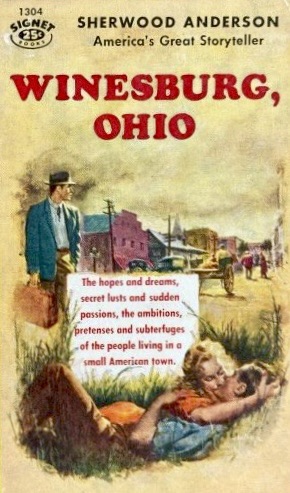
Decades ago, I devoured Ray Bradbury’s stories about Green Town, Illinois—a fictionalized version of his own childhood in Waukegan. Bradbury infused many of his stories about the Green Town of the 1920s with intense nostalgia, lyrical prose, and the blending of magical wonder with the bittersweet realities of life, as experienced through 12-year-old Douglas Spalding.

That contrasts greatly with Anderson, who imbued his fictional Winesburg of the 1890s with profound isolation, frustration, and repressed desires of small-town life. Anderson featured “grotesque” characters—lonely individuals defined by singular, obsessive truths—who struggled to communicate, all tied together by the central observer, young reporter George Willard, who matures through the cycle from an adolescent boy to a young man.

Bradbury was the more gifted writer, but his romanticized style can become cloying. Anderson was far gloomier and more adult, including sexuality that was most unusual in 1919.

I enjoyed the themes of most of his tales, even though they were almost all downers. He did provide a bit of relief with the humor in the story A Man of Ideas, with its lively and even lovable, if exhausting, verbose protagonist. I also liked the linkages between The Strength of God and The Teacher, with the strong contrast of a Peeping Tom pastor’s interpretation of a night’s events with that of the frustrated teacher he spied upon.

Anderson effectively sketched recognizable oddities of personality, several of which I have encountered over the decades. I also related to the adolescent confusion of young George, which revived memories from my teenage years. I was struck by the desperation of Alice Hindman in Adventure, who runs naked out into the street one night, only for her wild act to end without anyone else ever knowing about it, and her tragic embrace of a future that holds nothing but more loneliness.

Ball State professor Bill Sutton claimed that Anderson observed people in Chicago and transplanted them to his fictional town, and the book has been characterized as an exposé of the hypocrisy, frustration, and inhibition behind a typical small town’s façade of gentility. However, it is more a book about, as Irving Howe wrote, “extreme states of being, the collapse of men and women who have lost their psychic bearings and now hover, at best tolerated, at the edge of the little community in which they live.”

Howe’s analysis includes:
It was in the freedom of the city, in its readiness to put up with deviant styles of life, that Anderson found the strength to settle accounts with⁠—but also to release his affection for⁠—the world of small-town America. The dream of an unconditional personal freedom, that hazy American version of utopia, would remain central throughout Anderson’s life and work. It was an inspiration; it was a delusion.

…

Anderson evokes a depressed landscape in which lost souls wander about; they make their flitting appearances mostly in the darkness of night, these stumps and shades of humanity. This vision has its truth, and at its best it is a terrible if narrow truth⁠—but it is itself also grotesque, with the tone of the authorial voice and the mode of composition forming muted signals of the book’s content. Figures like Dr. Parcival, Kate Swift, and Wash Williams are not, nor are they meant to be, “fully-rounded” characters such as we can expect in realistic fiction; they are the shards of life, glimpsed for a moment, the debris of suffering and defeat. In each story one of them emerges, shyly or with a false assertiveness, trying to reach out to companionship and love, driven almost mad by the search for human connection. In the economy of Winesburg these grotesques matter less in their own right than as agents or symptoms of that “indefinable hunger” for meaning which is Anderson’s preoccupation.

I suppose Anderson in his way set the stage for the infamous Peyton Place of 1956, a novel by Grace Metalious which was filled with secrets, sex, and hypocrisy in a small New England town. Peyton Place, which I read in 2023, has a stronger sense of plot and is noisy, sensational, and accusatory, while the more symbolic Winesburg, Ohio is quiet, moody, and empathetic.

Anderson’s abandonment of his wife and children makes an appearance in The Untold Lie. A young troublesome farmworker has impregnated a woman and asks a fellow field worker, who is a henpecked husband with a half-dozen scrawny children, if he should follow in his footsteps and marry his lover. The older man turns and walks away, providing no answer. Later, sent to town to get groceries, he runs to intercept the young worker, intending to tell him to not settle down. However, the young worker has already decided to get married, and the older man never proffers his advice, which he then discounts as an untold lie. Knowing Anderson’s behavior, his ambiguous treatment of the topic is interesting.

I was grateful that Anderson gave his young reporter, George, a character arc. He is not merely a sounding board for the various misfits, but has romantic relationships throughout his adolescence that begin as shallow and purely sexual, progress to confusing, and culminate in one which has the potential of becoming something deeper and more mature.

The final stories have some beautiful moments. In Death, a doctor speaks to George’s mother:

“Love is like a wind stirring the grass beneath trees on a black night,” he had said. “You must not try to make love definite. It is the divine accident of life. If you try to be definite and sure about it and to live beneath the trees, where soft night winds blow, the long hot day of disappointment comes swiftly and the gritty dust from passing wagons gathers upon lips inflamed and made tender by kisses.”

And the penultimate story, Sophistication, has this marvelous evocation:

There is something memorable in the experience to be had by going into a fair ground that stands at the edge of a Middle Western town on a night after the annual fair has been held. The sensation is one never to be forgotten. On all sides are ghosts, not of the dead, but of living people. Here, during the day just passed, have come the people pouring in from the town and the country around. Farmers with their wives and children and all the people from the hundreds of little frame houses have gathered within these board walls. Young girls have laughed and men with beards have talked of the affairs of their lives. The place has been filled to overflowing with life. It has itched and squirmed with life and now it is night and the life has all gone away. The silence is almost terrifying. One conceals oneself standing silently beside the trunk of a tree and what there is of a reflective tendency in his nature is intensified. One shudders at the thought of the meaninglessness of life while at the same instant, and if the people of the town are his people, one loves life so intensely that tears come into the eyes.

The sombre and muted beauty of the final stories, after the “terrible if narrow truths” in Anderson’s previous “shards of life”, struck home. My eyes stung as I read of George Willard’s Departure from his home town, with him not thinking of big or dramatic things, like his mother’s death, his leaving home, or his uncertain future. Instead, George thought of little things, those little moments that formed “a background on which to paint the dreams of his manhood.”


I’m quite glad to have read Winesburg, Ohio. It is widely regarded as Anderson’s pinnacle, but F. Scott Fitzgerald is known to have rated Anderson’s Many Marriages of 1923 as his best novel. It has been summarized thusly: “A psychological novel exploring a middle-aged Midwestern washing machine manufacturer’s rebellion against conventional marriage, sexual repression, and societal expectations.”

I’m more likely to eventually take that up than Anderson’s only bestseller, Dark Laughter of 1925, which has been described as being “about a man who abandons his life for a simpler one, only to find new complexities in a romance with his employer’s wife, contrasted with the ‘dark laughter’ of Black servants who observe the white characters’ struggles”. That book was influenced by James Joyce’s Ulysses and uses a stream-of-consciousness style which usually aggravates me, and Hemingway penned a parody of it, mocking the pretensions of Anderson’s style and characters.

I certainly need time to digest Winesburg, Ohio before taking on anything deep. So my next Kindle read will be something that first caught my eye in an Ace Double when I was a teenager, but which I never actually read. Lester del Rey’s The Sky is Falling, which first appeared as a short story in 1954 and as a novella in 1963, has itself fallen into the public domain, and is said to have a fast pace, no explicit content, and an inventive and lighthearted style. Time for a wade in the shallows.

Posted in books | 3 Comments

Leavetaking

I cleared out my office this week, a few days after a retirement reception at which I enjoyed reconnecting with colleagues, former students, and friends of education. I have always felt appreciated in Bartlesville, and I am grateful to call it my adopted home.

I still have a few weeks of official employment left, which beyond answering emails will include some time in the Technology Services department and the high school outfitting Chromebook carts, but, for the first time in 37 years, I no longer have an assigned classroom or office.

Clearing out of the Education Service Center had both similarities to and differences from clearing out of Bartlesville High School in 2017 after teaching physics there for 28 years. Back then, I was leaving behind a laboratory we had opened in 2003 and for which I was involved in every detail of its design, construction, and furnishing.
The lab I left behind had every cabinet stuffed with physics equipment accumulated over decades, and I was lucky to have two different Teachers of the Year (TOYs) inherit the program and carry it forward, and the current TOY is planning for her own eventual retirement by preparing one of my former students to carry on the long tradition of phun physics at BHS.

My physics lab in 2017
My physics lab in June 2017 after I had moved out of it

Nine years later, I have left behind an office built a quarter century before I came to town, filled with cabinets and furnishings I had no role in selecting, save for an air purifier I added during the pandemic plus my purchase of a used Aeron chair to replace the hideous desk chair I found upon my arrival. Over the past few weeks, the Aeron had been shedding bits of plastic, as if it sensed that the end was near.

Office in 2017 and 2026
My district office in 2017 and in 2026 after clearing out
(as a tech guy, I notice that the iPhone 17 Pro takes better panoramas than the old iPhone X did)

The file cabinets barely visible at the far left are now mostly filled with vintage physical media I collected from across the building and digitized for an online archive. The wooden cabinets below the counter on the opposite site once held boxes of cables, tools, and equipment which have migrated down the hall to Technology Services, as the office’s new occupant will have different administrative roles.

Back in 2017, I left behind my entire physics curriculum for later instructors to use or discard as they saw fit. This time I am leaving behind many spreadsheets and instruction documents, along with a log of my daily actions since June 2024. I linked all of those documents to Google’s artificial intelligence via Notebook LM to create a GrangerBot, which might ease the transition as my former administrative roles are dispersed among a handful of central office folk.

Office shelves
My office shelves before and after clearing out

Actuarial analysis says that I have about a 50% chance of living to age 88. Were I to last that long, I would have spent a quarter of my life before becoming an independent adult, one-third of it teaching, one-tenth of it as an administrator, and the final third of my lifespan in retirement.

All I am guaranteed, of course, are the years I have already enjoyed. I charted my six different jobs over the past decades on top of annual portraits to provide me with some perspective on their relative durations.

Working Life

I have worked in education-related jobs for over 40 years, and the conclusion of my 37 years with Bartlesville Public Schools prompted a profile in Bartlesville Monthly Magazine, which prodded me to look back at my work life here.

Coming to Town

Rigging up a physics demo long ago

I came to Bartlesville at age 23, lured here by one of the very few full-time high school physics teaching positions in the state. I had turned down other science teaching opportunities in Sapulpa, Ponca City, and Moore, holding out for one in physics, and fortune smiled on me.

The only reason little Bartlesville had five sections of physics was because it was then the headquarters for Phillips Petroleum, a Fortune 500 company. Moving from the OKC metro where I had always lived to a town over 20 times smaller in population, and 35 times smaller in area, was an adjustment.

I didn’t know anyone in town, although a few of my father’s cousins lived in the area. I remember going to the movies here with someone back in 1989, and curious students peppering me with questions about us the next school day. After that, I often drove to Tulsa to regain some big-city anonymity in my entertainments.

In 2002, Conoco and Phillips merged and the corporate headquarters shifted to the Houston area. The consequent demographic changes meant that teaching physics full-time in Bartlesville was not possible after 2005. An ongoing departmental chairmanship sufficed to fill out my work schedule until 2016, when it became apparent that it was finally time for me to leave the classroom.

Leaving the Classroom

As I was ending my 27th year of teaching physics, Chuck McCauley, who had risen through the administrative ranks from a vice-principalship at the high school in 2001 to the district superintendency in 2016, asked me to join his leadership team. He wanted me to spearhead a 1:1 Chromebooks initiative in grades 6-12 and take the lead on district technology and communications.

One final big project was converting spaces at our high school and middle schools into state-of-the-art STEM labs

I had earned a master’s degree in Educational Leadership back in 1999, but I had never applied for an administrative position, feeling I was far better suited for teaching and leading the science department than being a school site administrator. I had instead channeled my administrative skills into the science department, various bond issue projects, leading a $1.7 million Phillips 66 grant to develop STEM courses and facilities across grades 6-12, and serving on about four dozen committees over the years, along with leading the certified staff contract bargaining team. I’d also used my technology and communications know-how to create the high school website since 2004 and the district website since 2012.

When Chuck posed his question, acknowledging that in the past I had always demurred from pursuing administrative positions, I instinctively knew that it was time to leave. In the 1990s, the school offered 5-7 sections of physics, but with demographic changes it seemed inevitable that eventually I would be burdened with a third laboratory science preparation, on top of Inquiry and AP Physics. Also, Wendy and I had married in 2016, and an administrative salary would improve our long-term financial security.

Administrative Challenges

Distributing Chromebooks at one of the elementary schools

I spent a transition year teaching three physics classes in the morning, with the afternoons spent leading district communications and developing a multi-year technology expansion plan. When I left the high school for the Education Service Center, my immediate focus was on Chromebooks and the Canvas Learning Management System, but soon a state education financial crisis developed.

I played my part in addressing that in 2018, by which time I was in my early 50s and qualified for full teacher retirement after 29 years of service. However, a salary cap on my earnings from 1989 to 1995 would have impacted my pension, and it took another four years of service to “wear away” that cap.

19 of the 87 Chromebook carts we deployed in 2020

In 2020, Covid-19 struck, and I chaired the district’s response for several years, which included expanding to 1:1 Chromebooks across all grade levels. I remember us preparing 87 carts with 2,175 Chromebooks that fall.

By 2023, the pandemic had eased, and I could have retired with my full pension. However, I was still over two years from being able to tap into my personal retirement savings accounts without an early withdrawal penalty, five years from being able to claim Social Security, and eight years from qualifying for Medicare. So I stayed on.

Taking My Leave

Old media I digitized

A year later, Chuck confirmed to me that he would be retiring as superintendent in June 2026. Being four years younger than I am, he planned to continue working after that, just not in public education. I immediately responded that I too would retire in June 2026, but I’d be retiring from work, period. I knew that would be the time to leave, as I had accomplished my missions, and a new superintendent could repurpose my administrative position. One of my last projects was creating an immense digital archive of old media that had survived the ravages of time at the central office.

Here’s a visual summary of my career at BPSD:

Now I’m past the 59.5 years of age required to withdraw from retirement savings without penalties. I invested 20% of my career gross salary into those savings, so with my pension I can safely retire. Wendy is nine years younger than I am, with a less generous pension, so she won’t qualify for even reduced early retirement for some years, and she plans to keep leading the Chromebook repair class at the high school.

Forty years ago I answered a calling I keenly felt to serve in my home state’s public schools. Three years later, I arrived in Bartlesville. Now that call has been fully answered; I am content.

Posted in history, random | 3 Comments

Anna Katharine Green

Book Review

One of the first female authors of detective fiction was America’s Anna Katharine Green. She is now nearly forgotten, but I loaded some of her works onto my Kindle and read her first novel, which was a big hit almost 150 years ago.

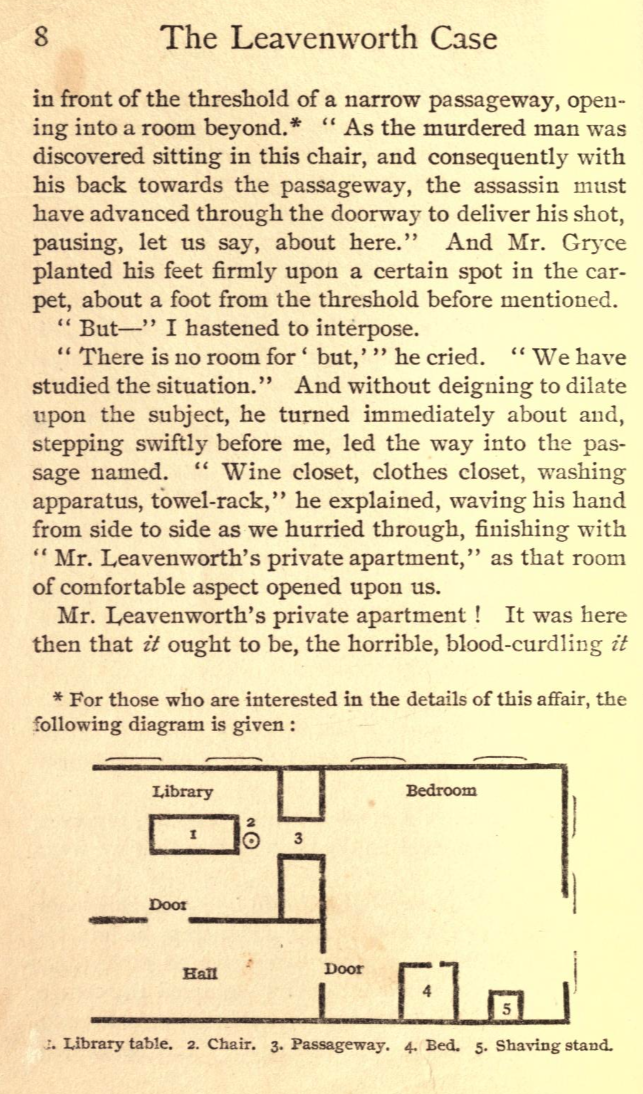
Anna Katharine Green’s 37 books were published between 1878 and 1923, so they are all now out of copyright. I discovered that Standard Ebooks had four of them, while Project Gutenberg had 41 of her works, including some story collections. In comparing the sources, the Project Gutenberg version of her first novel included some floorplans and other illustrations that Standard Ebooks had omitted. So I read PG4047-IMAGES-3, which is the 4,047th eBook at Project Gutenberg, and is much better known as The Leavenworth Case: A Lawyer’s Story.

The Leavenworth Case

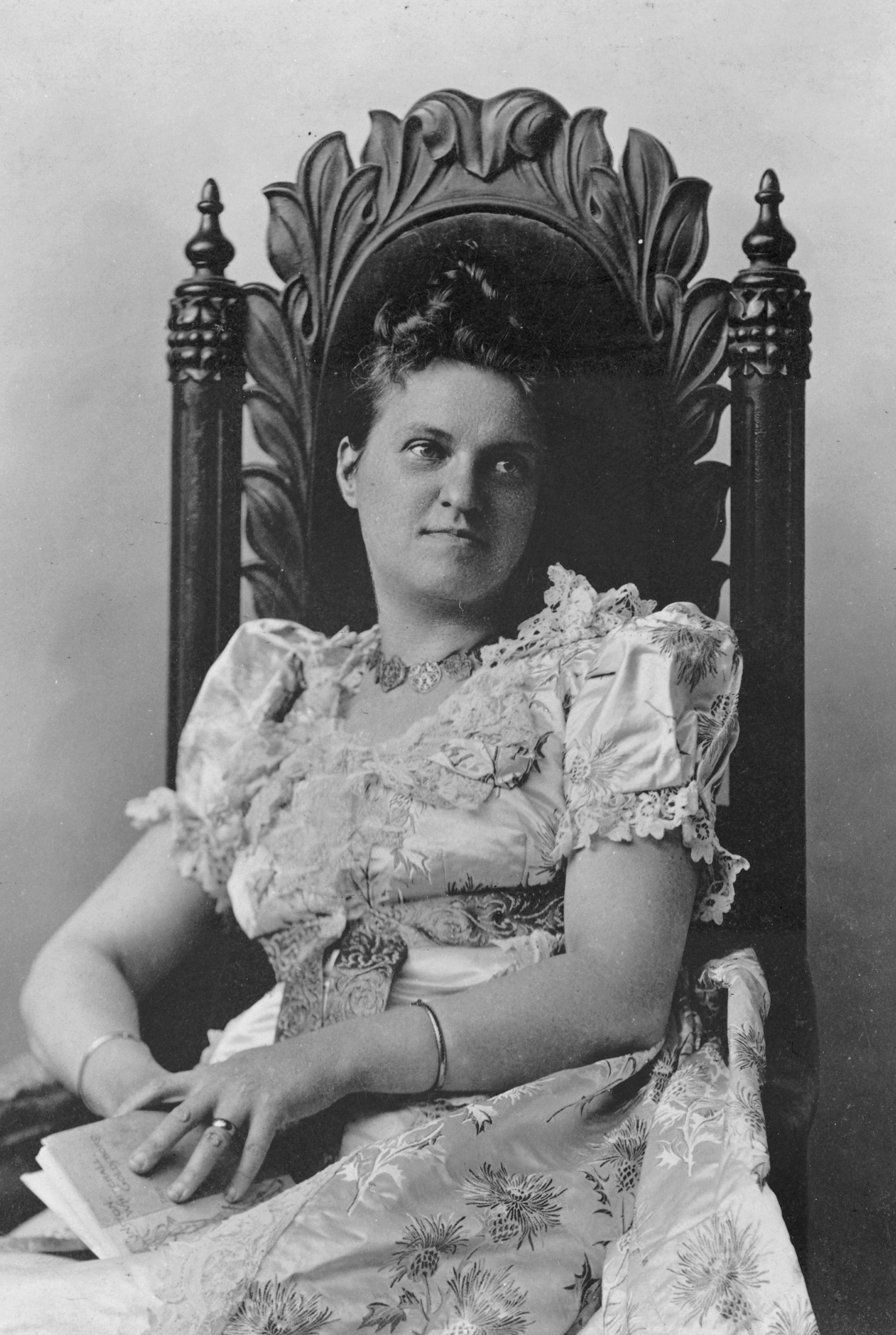
Anna Katherine Green circa 1901

Green’s first novel was published in 1878 when the diminutive, plain, and sheltered woman was 32 years old. It became a hit, with George P. Putnam’s Sons selling hundreds of thousands of copies, and the book being pirated by no less than three other publishers.

Green created what became well-worn tropes in mystery fiction, including the nosy spinster Amelia Butterworth, who inspired Christie’s later Miss Marple. Green also created a teenage detective, Violet Strange, echoed in Nancy Drew et al., along with various plot devices. Her work had faded a couple of generations later in the Golden Age of detective fiction from 1920 to 1940, but her influence was both apparent and acknowledged. Sadly, Green is now nearly forgotten, and I read mysteries for decades before coming across any mention of her work.

T.S. Eliot was evidently an avid consumer of mystery fiction, but he disparaged The Leavenworth Case as “simply popping over with sentiment” in a manner that did not afflict Doyle’s later Sherlock Holmes tales, which did not debut until after Green had published it and three additional novels featuring detective Gryce.

I began the book immediately after finishing Louise Penny’s A Fatal Grace, the second of her Chief Inspector Gamache series. I had been struck by the modernity of that tale, with its sometimes over-sharpened wit and opinionated sensibilities, contrasting with the older tales I was used to from Edith Pargeter (usually writing as Ellis Peters), Agatha Christie, and Mary Roberts Rinehart. I have found Rinehart, the oldest of those authors, to also be the fustiest, so I wondered how dated The Leavenworth Case would read, nearly 150 years after its debut.

I greatly enjoyed the book’s introduction of detective Ebenezer Gryce of the New York Metropolitan Police Force, who would appear in a dozen more of her novels by 1917:

I shuddered⁠—“the murderer must have been in the house all night.”

Mr. Gryce smiled darkly at the doorknob.

“It has a dreadful look!” I exclaimed.

Mr. Gryce immediately frowned at the doorknob.

And here let me say that Mr. Gryce, the detective, was not the thin, wiry individual with the piercing eye you are doubtless expecting to see. On the contrary, Mr. Gryce was a portly, comfortable personage with an eye that never pierced, that did not even rest on you. If it rested anywhere, it was always on some insignificant object in the vicinity, some vase, inkstand, book, or button. These things he would seem to take into his confidence, make the repositories of his conclusions; but as for you⁠—you might as well be the steeple on Trinity Church, for all connection you ever appeared to have with him or his thoughts. At present, then, Mr. Gryce was, as I have already suggested, on intimate terms with the doorknob.

“A dreadful look,” I repeated.

His eye shifted to the button on my sleeve.

“Come,” he said, “the coast is clear at last.”

I immediately had a feeling I would like Ebenezer Gryce. His given name of course elicits memories of Scrooge from Dickens’ 1843 A Christmas Carol, and that led me to wonder how common it once was as a first name. One source claimed that in 1840 it was the 68th most popular name, but I was sad to see 11 fictional Ebenezers in the Wikipedia page on it as a given name, but not Green’s creation. So I added him to make a dozen. I’ll admit that corruption of the Hebrew אֶבֶן הָעֵזֶר from 1 Samuel sounds dreadful to my ear, but perhaps that is mainly due to the association with Scrooge.

This debut novel is the only one of Green’s works to have a meta-ranking at The Greatest Books, coming in at 5,193 versus 191 for Christie’s And Then There Were None with eight additional Christie works ranking above Green. As for Edith Pargeter, better known by her pen name of Ellis Peters, her A Morbid Taste for Bones, the first of the Brother Cadfael books, ranks at 4,220 while her non-mystery By Firelight novel ranked at 4,986.

The novel has twists and turns, deftly using circumstantial evidence to throw suspicion on one character, then another, and another. The revelation of the actual murderer was a surprise, with a lengthy explanation and confession.

The age of the work was most apparent in the class-conscious behavior of most of the characters. It was indeed melodramatic, but multiple well-drawn characters and the fun idiosyncrasies of detective Gryce kept me engaged. I enjoyed the book, and I plan for my next Green book to be the eighth Gryce novel, That Affair Next Door, so I can experience the character of Amelia Butterworth.


Mystery author Patricia Meredith has compiled interesting information on Green, and I enjoyed her presentation about “The Mother of the Detective Novel” for the Spokane Public Library.

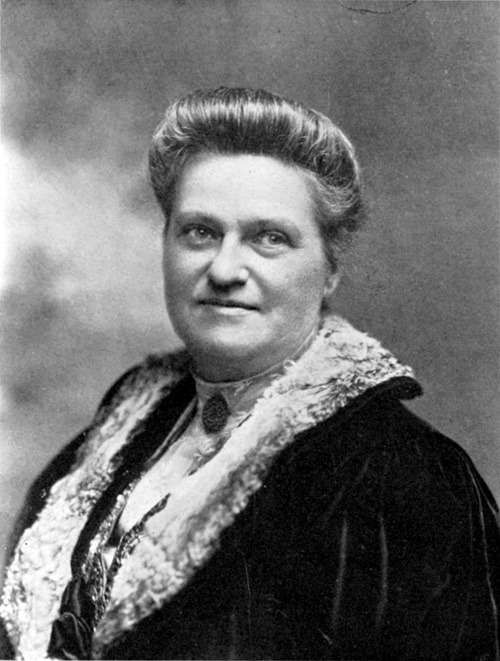
Green in 1907

Meredith’s timeline of Green’s life led me to purchase from AbeBooks a used hardback of Patricia Maida’s biography of her, Mother of Detective Fiction. I have tucked it away as a reading possibility if I end up liking more of her works.

Posted in books, video | Leave a comment

Comparing eBooks

Book Review

From now until 2073, any books published over 95 years earlier are public domain under U.S. copyright law. So in 2026, anything published in 1930 or earlier can be freely distributed. I’ve taken advantage of three different services to freely access such works, and I’ll share a bit of history on each of them.

To illustrate how their products differ, I include examples from each service of portions of The Leavenworth Case from 1878, the first mystery novel by Anna Katharine Green, who was the Mother of the Detective Novel. That will illustrate, pun intended, their different handling of relevant additions to the text in its original 1878 print edition. I eventually read and reviewed the work.

Project Gutenberg

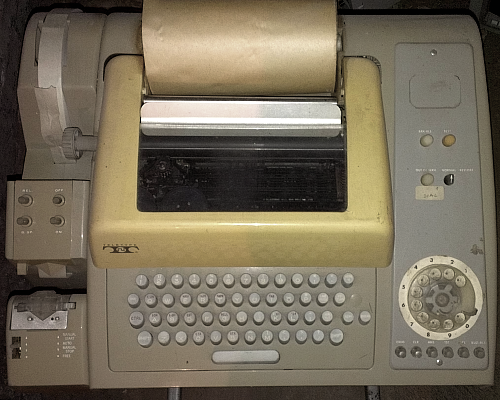
A Model 33 teletype from the UIUC lab where Hart typed the first eBook

Back on July 4, 1971, Michael Hart of Urbana, Illinois was given a free printed copy of the U.S. Declaration of Independence. He had access to a Xerox Sigma V mainframe at the Materials Research Lab at the University of Illinois at Urbana-Champaign (UIUC), and he was inspired to sit at a teletype station and manually type in the Declaration’s text for transmission via electronic mail to the people he knew about via the Internet’s predecessor, ARPAnet.

That simple act led to 20 years of evangelizing the concept of electronic books, with Hart compiling 100 titles by 1991, including historical documents, reference and literary works, and more. Hart founded Project Gutenberg, which by 2026 had grown to over 75,000 free eBooks, mostly of works that had fallen out of copyright.

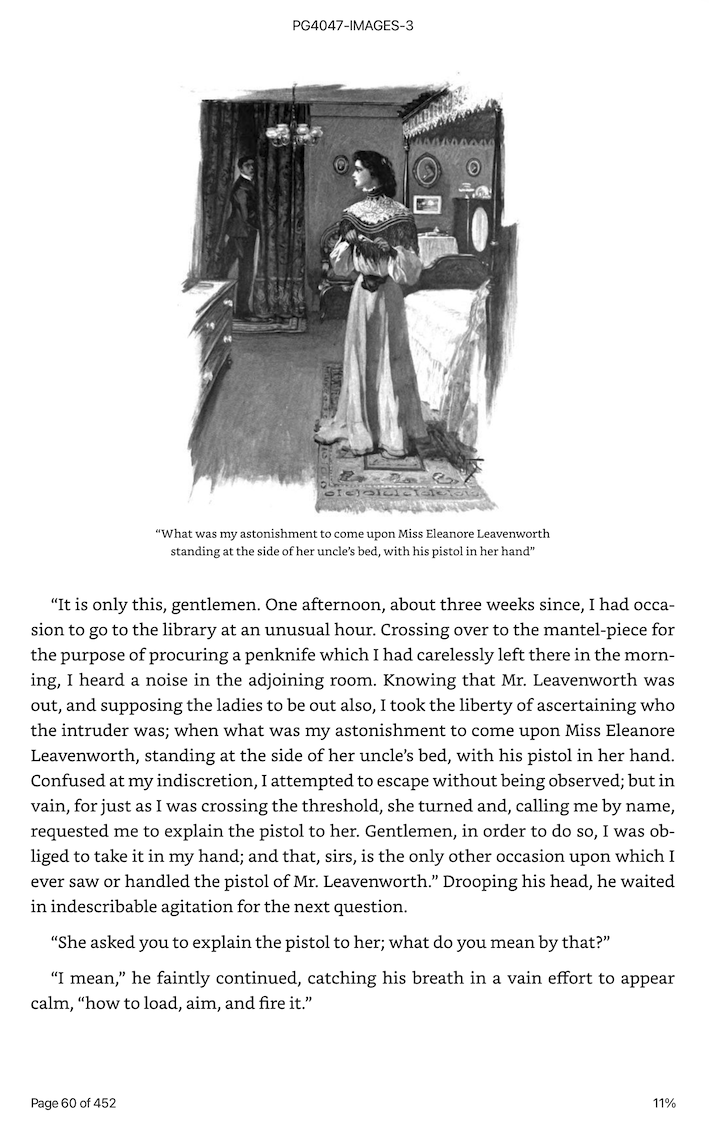
From Project Gutenberg’s eBook of The Leavenworth Case

Thousands of volunteers digitized and proofread the eBooks, with digital files in various formats. While one can go to their website and read books there in a web browser, they also offer files in the EPUB3 format, and one can use Amazon’s online Send to Kindle service to have it convert that and add the resulting book to your eBook library, making it readable on dedicated Kindle devices as well as free Kindle apps on smartphones, tablets, and personal computers.

I’ve shown how a Kindle Windows app rendered Project Gutenberg’s eBook of The Leavenworth Case, which was released in 2003 and most recently updated in 2022. It took a minute or two for the EPUB3 file to enter my Kindle library via the Send to Kindle service.

Michael Hart was a friend and inspiration to Brewster Kahle, who founded the Internet Archive in 1996, which began as a preservation of web pages but evolved into a huge collection of digitized material.

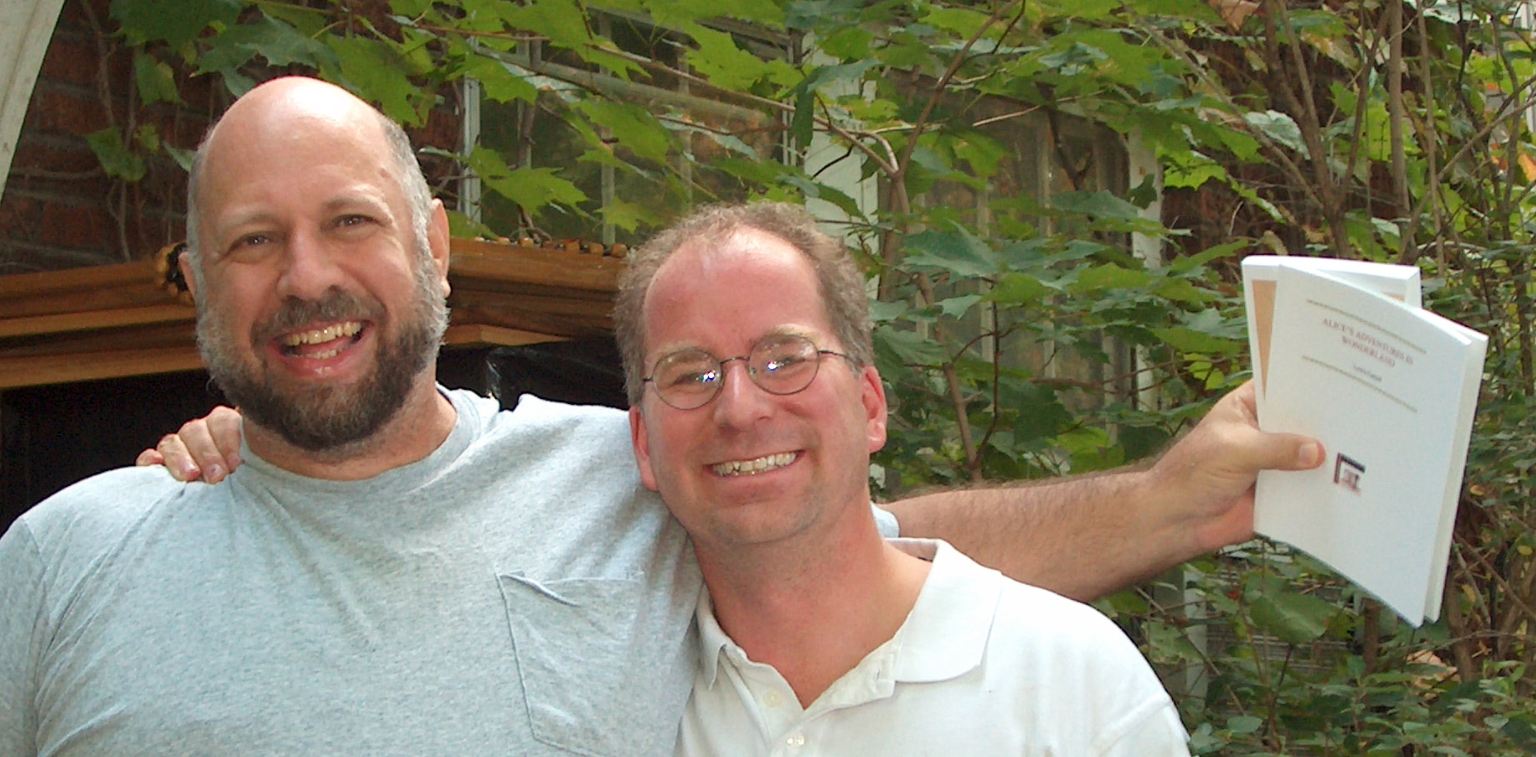
Michael Hart (1947-2011) and Brewster Kahle (1960-), fellow public domain evangelists

The Internet Archive

The Internet Archive provides free access to collections of digitized media including websites, software applications, music, audiovisual, and print materials. Its emphasis for public domain books is on scanning versus manual typing and proofreading into eBooks. It acquires most of its materials from donations, and materials not in the public domain are sometimes lent to patrons worldwide one at a time. However, a negotiated judgment in 2023 barred the Internet Archive from digitally lending copyrighted books for which electronic copies are on sale.

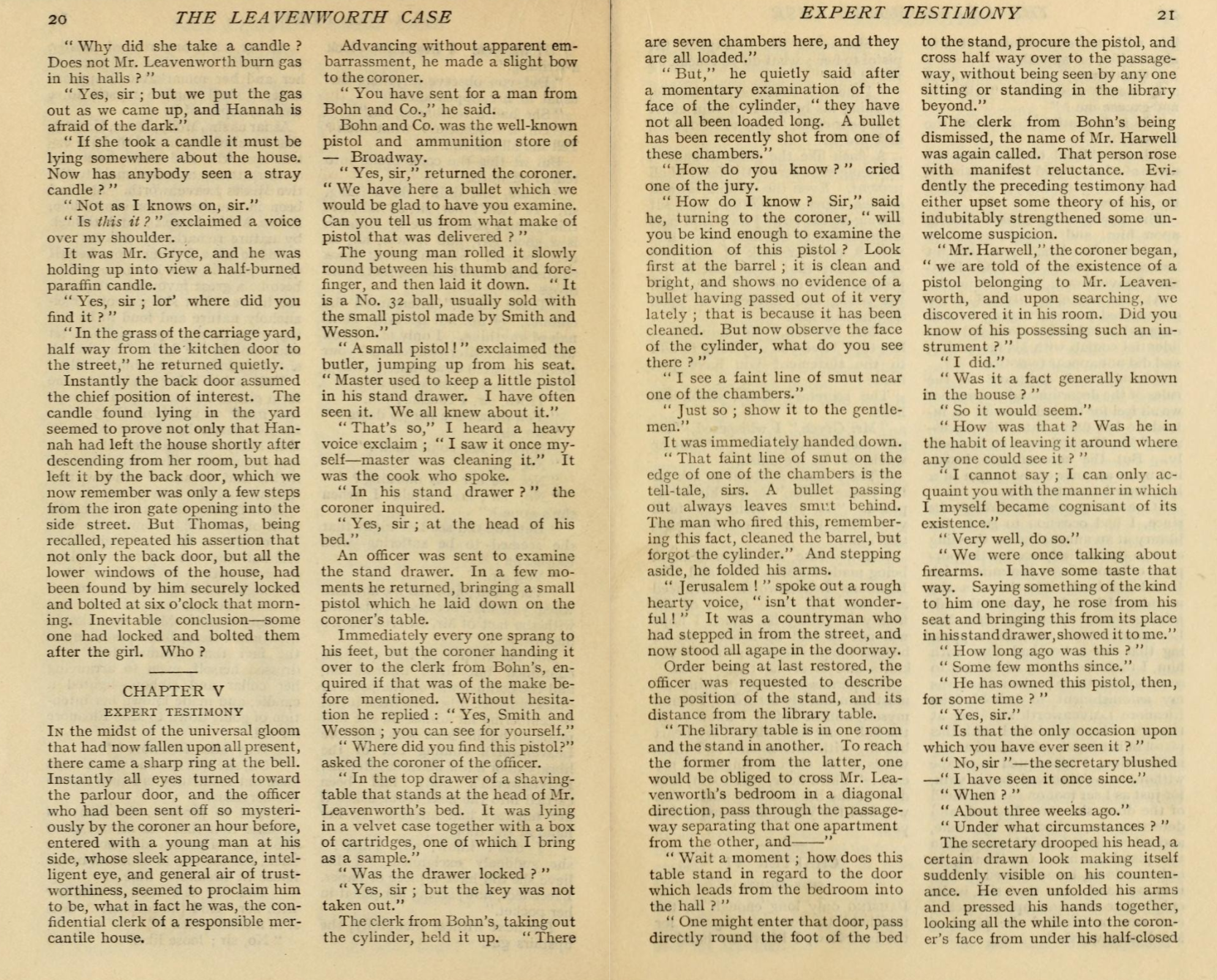
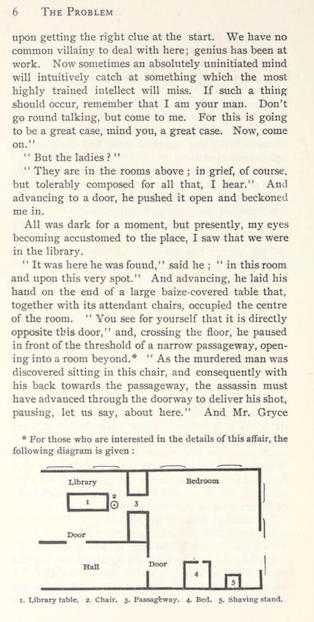
Its Open Library has the full texts of approximately 1.6 million public domain books, out of more than 5 million in the main texts collection. Below is a scan of 1902 London reprint of The Leavenworth Case, which was scanned in 2008 with funding from Microsoft. The Internet Archive does not offer an eBook version of that work, but it does have multiple different scans from various publishers across the years.

One of The Leavenworth Case scans in The Internet Archive’s Open Library; there are several to pick from

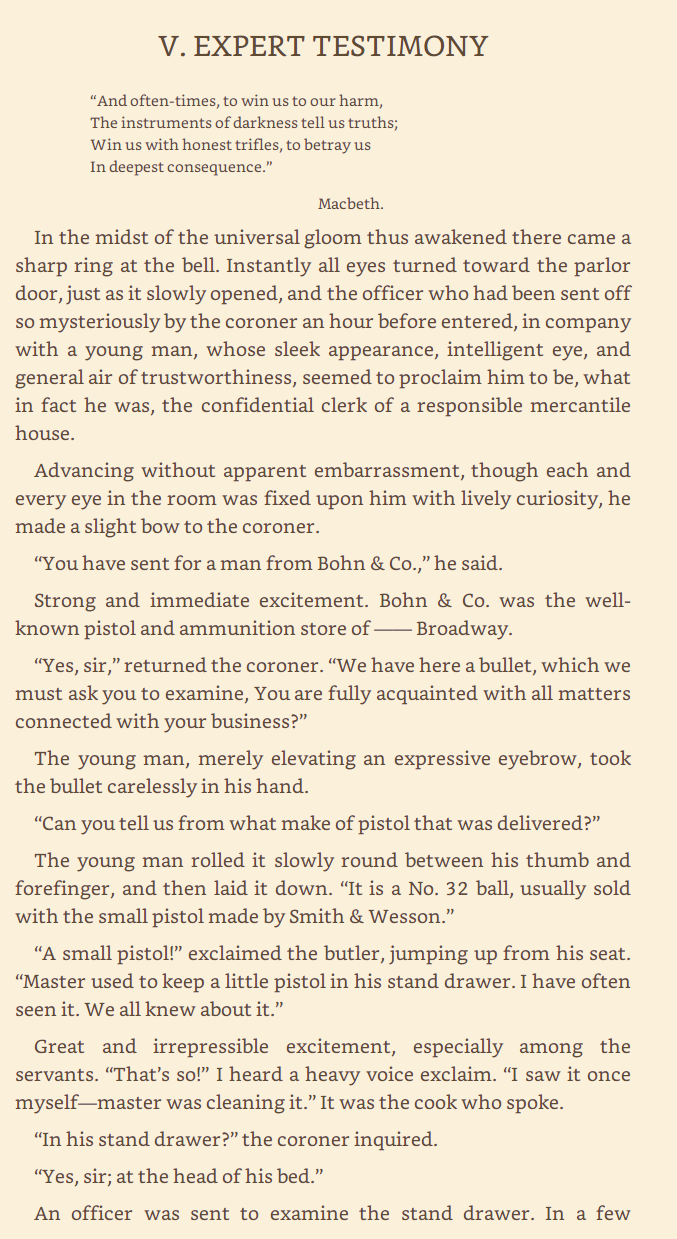
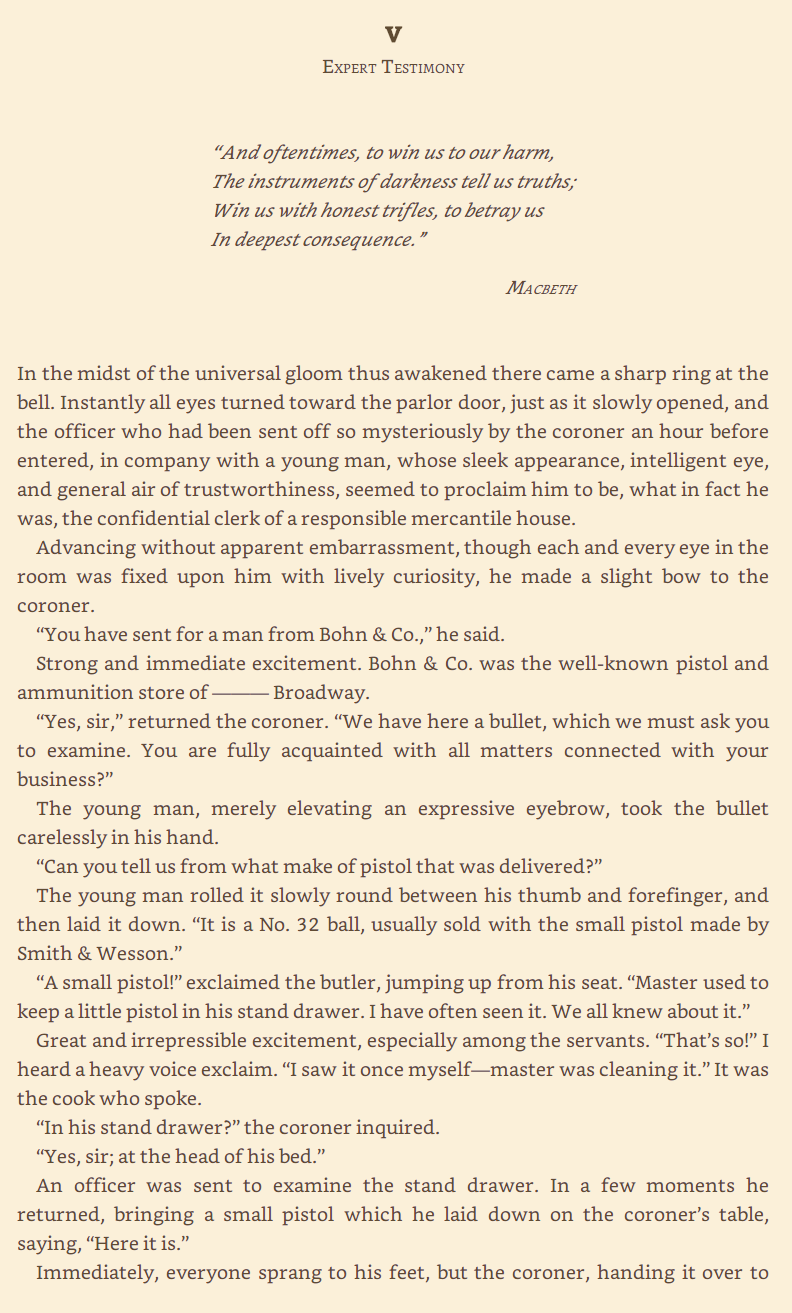
If you examine the scan I show here and compare it to the eBook, you’ll notice that the London reprint lacks the excerpt from Macbeth which Green opened Chapter V with in the original book. Old hardcopy reprints often suffer from such omissions.

Standard Ebooks

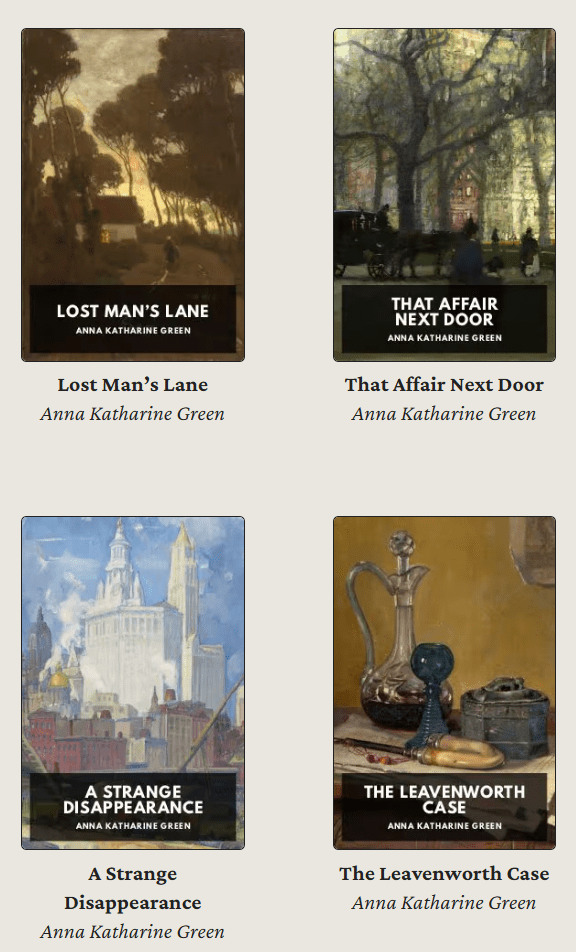
Green’s novels at Standard Ebooks, illustrating their consistent elegant styling

Greg of Another Bibliophile Reads recommends the releases of Standard Ebooks over those from Project Gutenberg, as they are supposed to be more carefully curated and formatted.

Alex Cabal is their Editor-in-Chief, and the service is a volunteer-driven effort that focuses on consistent design and typography. It boasts the use of careful typesetting, cover images, and title pages following a consistent style guide. It began in 2015, and by April 2026 they had about 1,400 titles.

Their preference is that one manually load their AZW3 files and optional cover thumbnails onto a dedicated Kindle device using a USB cable. I did just that with my Mac Mini, having to find a compatible cable, download and use a Send to Kindle application for MacOS I found at amazon.com/connectmykindle, loading the AZW3 files into my Kindle Paperwhite’s documents folder and the associated cover thumbnails into its system/thumbnails folder.

The converted EPUB3 version of The Leavenworth Case from Standard Ebooks

The end result was nice, but I found that downloading the EPUB3 version of The Leavenworth Case from them for use with Amazon’s online Send to Kindle service also worked fine. The few graphics were not as nice that way, but the text looked good, and more importantly to me, it was then available across all of my Kindle apps as well as the Paperwhite, with everything kept in sync with Amazon’s Whispersync service.

Various Shortcomings

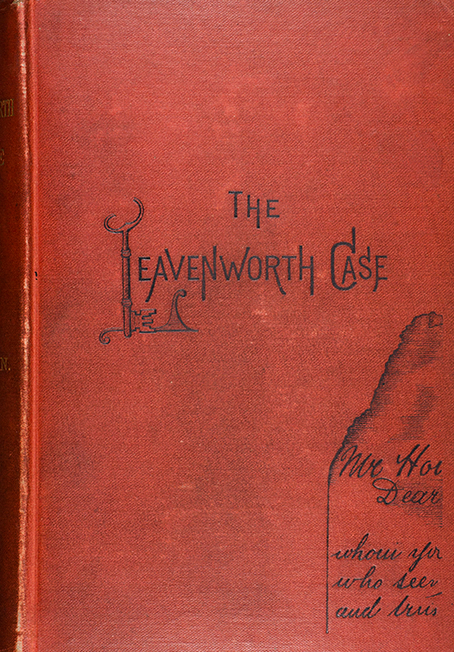
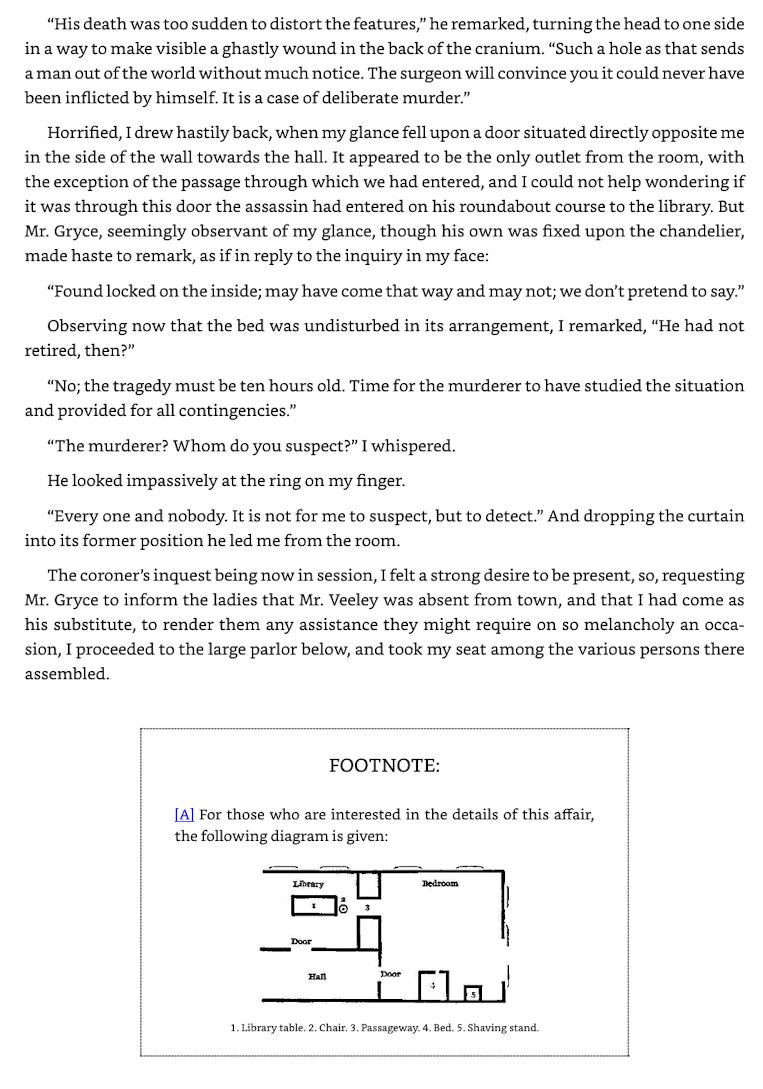
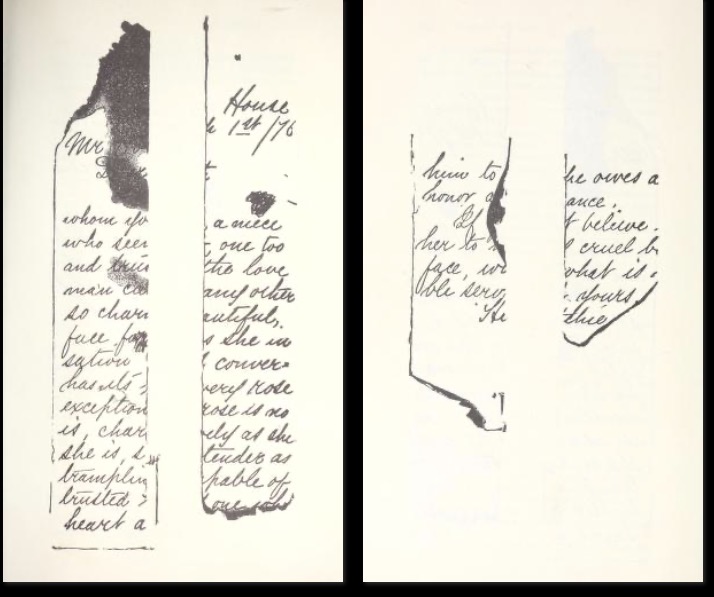
The different versions of the book differ in some other more significant ways, however. In its original edition, there were a couple of floorplans and an illustration of strips torn from a letter. The latter was interesting enough to earn a spot on the cover of the first edition, and the contents of that letter, with blanks for the missing portion, was included in the text of the book.

Floorplans are particularly helpful in some mystery tales, and several, but not all, of the scans of different editions at The Internet Archive did include them. However, the Standard Ebook version, which is supposed to reflect more careful preparation, omitted that entirely in both the AZW3 and EPUB3 versions. The Project Gutenberg EPUB3 version did include the floorplans, labeling them as footnotes.

At least one scan at the Internet Archive preserved the illustration of the scraps of letter.

Scraps of letter
Remnants of a letter that appeared in the original print edition and this later one

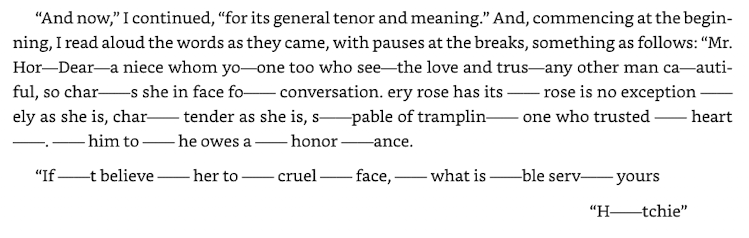
However, the Project Gutenberg edition let me down in that case, omitting that illustration while including others, and its reproduction of the text version, with its many dashes, was as unimpressive as it had been in the print versions.

Gutenberg formatting
How Project Gutenberg formatted the letter with missing portions

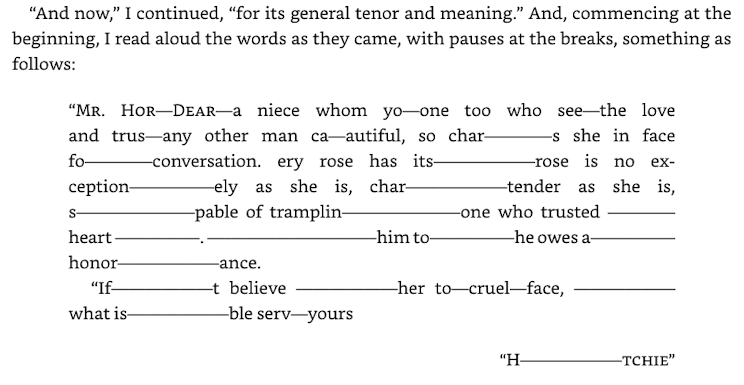
The Standard Ebooks edition had similar shortcomings, but it did have better typesetting.

Standard Ebooks formatting
How Standard Ebooks formatted the letter with missing portions

The typeset versions are far less evocative than the original illustration, so in this case the Internet Archive scans would win hands down, save that there are multiple scans of the book and it isn’t all that easy to distinguish them. Plus you can’t read those scans on a Kindle, but instead must use a web browser with the many limitations that brings.

Project Gutenberg illustration

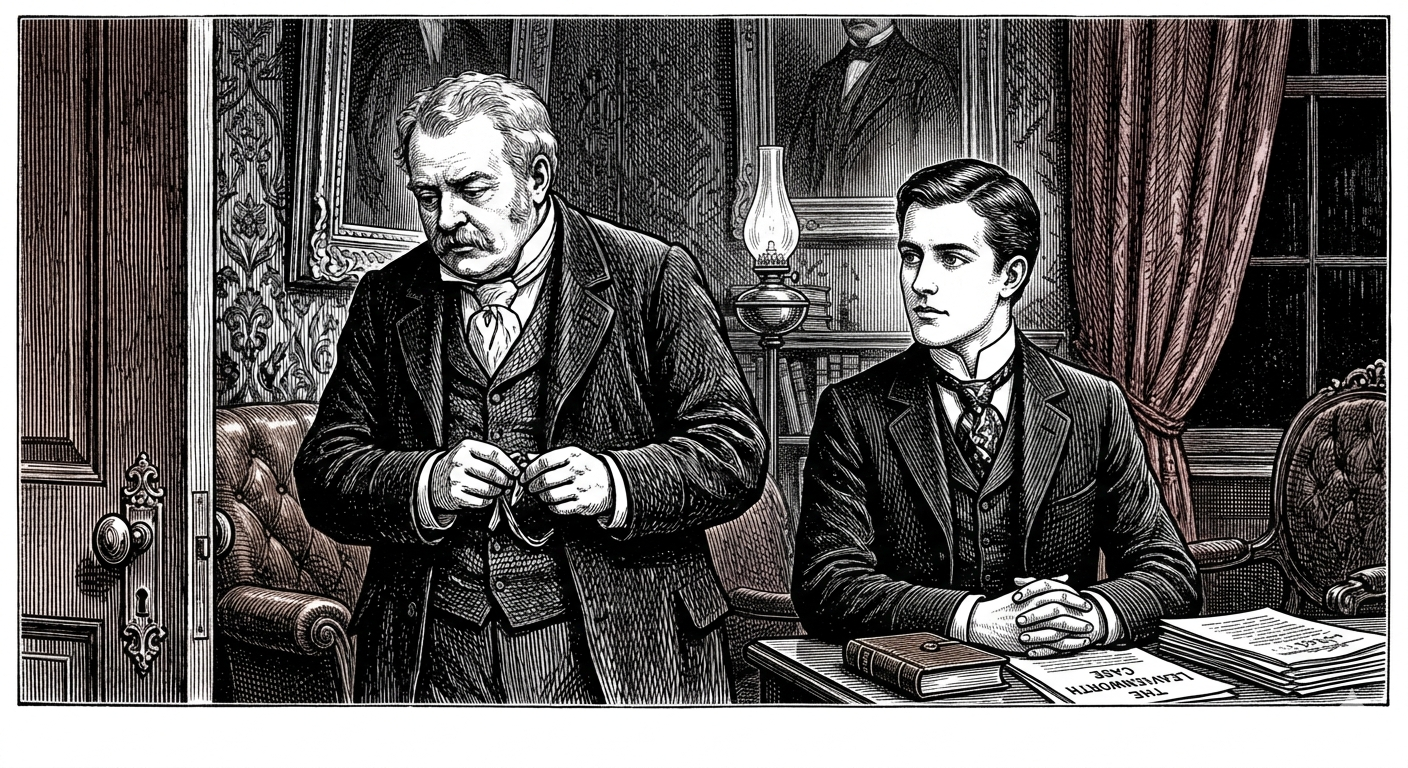
Another interesting difference was that the only version I came across with illustrations of scenes was the Project Gutenberg one. I liked having eight illustrations scattered through the text, even if they weren’t particularly well done, but what a shame that they bothered to include illustrations while omitting showing the torn letter.

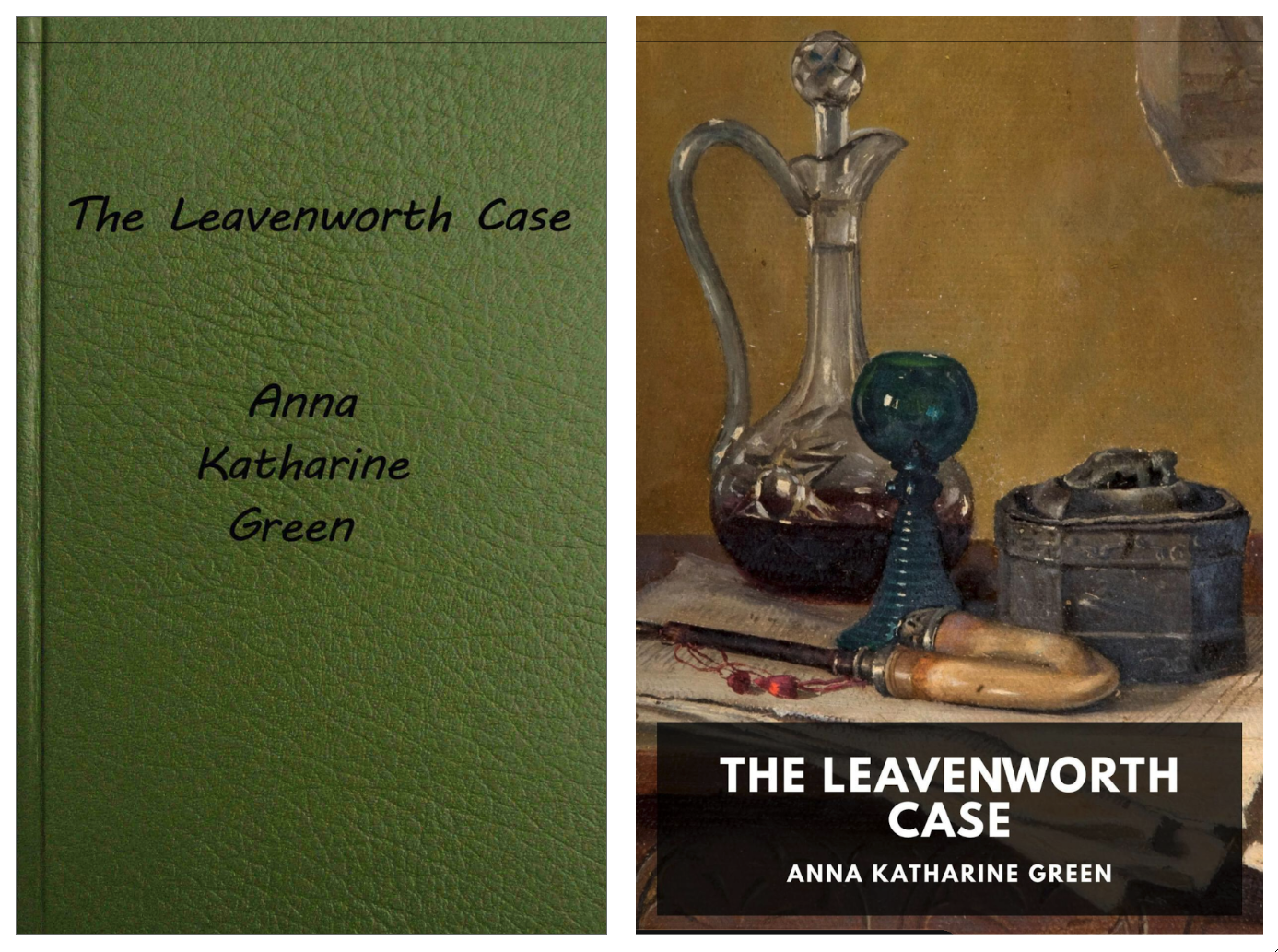
A downside to the Project Gutenberg edition is also visible here. In the Kindle app, its title is not The Leatherwood Case, but instead the cryptic PG4047-IMAGES-3. I realize that means it is Project Gutenberg’s 4,047th eBook and has images, but that is of darn little use to the end reader, and I did not find a way to rename it in the app. The solution is to rename the EPUB3 file before using Send to Kindle.

Also, the cover of the Project Gutenberg edition is downright ugly with a plain green background (green for Green?) and a hideous font, while the Standard Ebook one is tasteful, albeit uninspired.

The covers of the Project Gutenberg and Standard Ebooks versions

Paid Options

Many public domain works have cheap paid versions for Kindles available at Amazon. There was a $2 Start Classics version falsely claimed to be a Penguin Classics book, but it had no floorplans. A $1 version from Xist Classics had the same issue, while a $1 Panetela Press Presents version also omitted the floorplans and, far worse, admitted it has been “lightly edited for the modern reader”…ugh, no thanks.

Cost does not correlate with quality in these cases, as there was a $5 edition with no floorplans and, unlike the others, omitting the quotations that should begin each chapter. A $3 version had 35 Anna Katharine Green novels, bizarrely arranged in alphabetical, rather than chronological, order.

A $3.58 version (go figure) claimed to have “original Illustrationsand Annotated” [sic]. With that sort of poor handling of the title, one’s confidence wavers, but lo and behold, it did have floorplans! I found another $2 version that had both illustrations and floorplans.

The Verdict

So which of the various versions did I end up reading? I certainly wasn’t going to pay for any of the ones I saw on Amazon, and I didn’t try to read a scanned version at The Internet Archive, as I want an eBook that is synchronized across my Kindle apps and Kindle Paperwhite device. That left Project Gutenberg, which had superior embedded illustrations but slightly inferior typesetting, vying with Standard Ebooks. The illustrations won the day, and I read the Project Gutenberg version.

Going forward, when there is Standard Ebooks version, I will compare that to what Project Gutenberg has on offer. If the Gutenberg version doesn’t have an edge on graphics, then I’ll go with Standard Ebooks, sending its EPUB3 version through Send to Kindle rather than manually loading its AZW3 version on my Kindle Paperwhite.

Posted in books, technology | Leave a comment

A James Blish Fix-Up

Book Review

After reading A.E. van Vogt’s fix-up novel Mission to the Stars, I was still in the mood for some classic science fiction, but I hoped for something of higher literary quality. Matt of Bookpilled has described James Blish as one of the most erudite science fiction authors, so I looked for any award-winning works by him.

Two Types of Awards

The two big science fiction awards are the Hugos and Nebulas. Since the 1950s, the World Science Fiction Society has given out Hugo Awards each year in various categories for the best works in the genre published in the previous year. There are now Hugos in over a dozen categories, with the best novel, novella, and short stories being the most prominent. Since they are awarded based on popular votes by fans, they reflect the popularity of various works.

Hugo and Nebula Awards
The two major science fiction awards are the Hugos and the Nebulas
Science Fiction Hall of Fame

They are named after the Golden Age publisher and editor Hugo Gernsback. Although he was certainly one of the fathers of the genre, he was also a shady businessman who did not treat authors well. So it is not surprising that the Science Fiction and Fantasy Writers Association (SFWA) chose, in 1966, to establish their own Nebula awards, which are peer-based authorial awards that emphasize literary quality.

There is considerable overlap where some works win both the Hugo and the Nebula in their category. For example, over the past 59 years, 26 novels have won both the Hugo and the Nebula, starting with Frank Herbert’s Dune and extending to notable works like Ursula K. Le Guin’s The Left Hand of Darkness, Larry Niven’s Ringworld, and William Gibson’s Neuromancer.

Of course there were many works published before those awards began, and back when I was in high school I read The Science Fiction Hall of Fame, Volume One, 1929-1964, a 1970 anthology of 26 classic science fiction short stories selected by the SFWA to honor works predating the Nebulas.

Young James Blish

One of those stories was “Surface Tension” by James Blish, which originally appeared in the August 1952 edition of Galaxy Science Fiction, although I frankly don’t remember that tale of a crew of human colonists who crash-land on a planet and genetically engineer a race of microscopic aquatic humanoids to colonize a landmass covered in shallow puddles of water. Its selection reflects that fellow authors did respect some of his work.

Blish and Star Trek

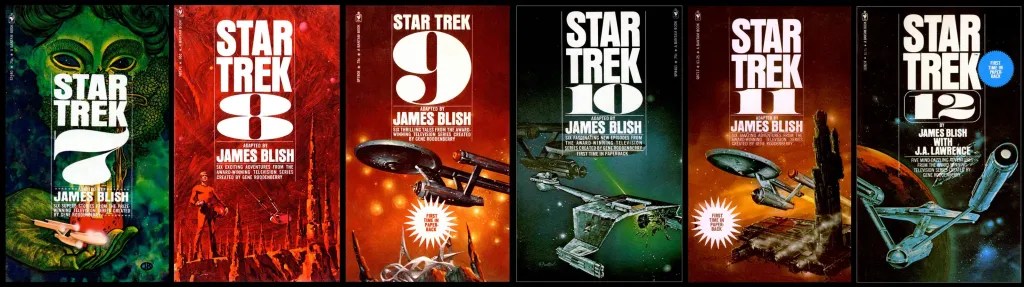
However, Blish is best known for work which pleased him the least: a dozen books that novelized most of the episodes of the original series of the Star Trek television show. I have owned 11 of those collections for decades, but I quickly gave up on them once I realized they were based on draft teleplays and thus often have significant differences from the broadcast episodes. Blish did the first ones without ever having seen an episode, and that hampered the tonal alignment of the early volumes with the actual show.

The only one which I recall reading was the adaptation of Spock’s Brain in Star Trek 8, and I was pleasantly surprised how that silly episode read much better on the page, as a humorous sendup of pulp science fiction, than the off-putting episode itself played. If the direction for the actors had them playing their roles more broadly, to bring out the humor in it, that might have salvaged the premiere episode of the show’s compromised third season, but the reality was that the Bright Knight Batman series of 1966-1968 handled camp far better.

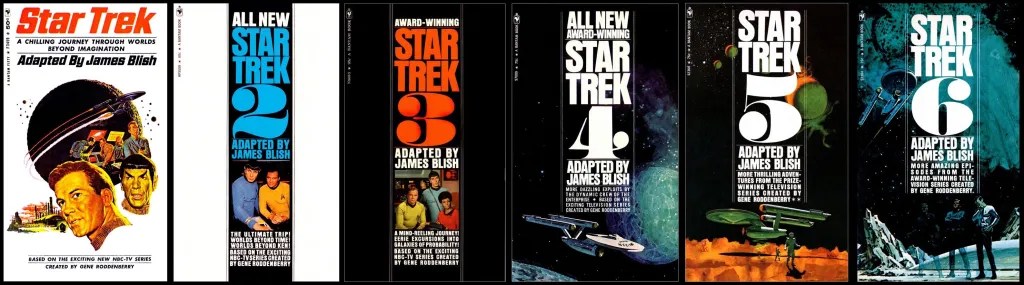
Star Trek 1-6
James Blish adapted Star Trek draft teleplays in his first six collections

Blish had studied microbiology at Rutgers, and he authored short stories throughout the genre’s Golden Age. Along with Asimov, Pohl, Wollheim, Kornbluth, Knight, and Merril, he was one of the Futurians, an influential group of science fiction fans, writers, and editors. He married fellow Futurian Virginia Kidd in 1947.

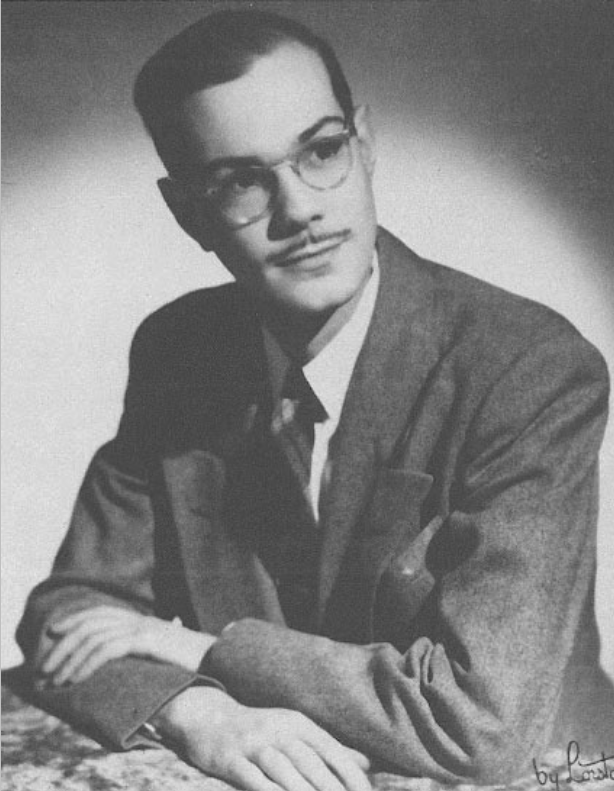
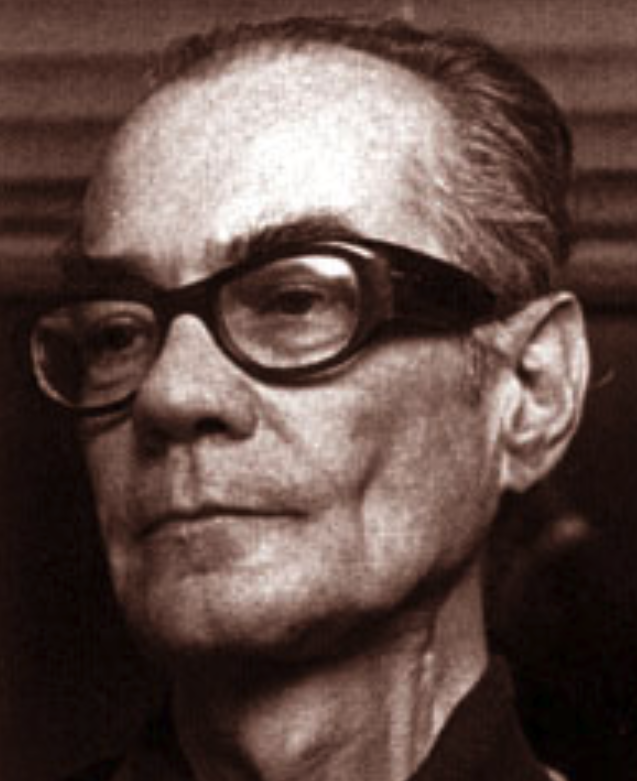
James Blish when he was older
Smoking probably killed Blish a decade early or more

Blish adapted to the decline of science fiction pulp magazines by pivoting to novels, fix-ups, and literary criticism. To make ends meet, he worked for the Tobacco Institute as a writer and critic from 1962 to 1968. He and Kidd divorced in 1963, and the next year he married artist J.A. Lawrence and moved to England.

While he generally despised tie-ins, the Star Trek adaptations, at $2,000 per volume, provided Blish financial stability. However, Blish’s willingness to write for the tobacco lobby not only dovetailed with his smoking, but also with him developing lung cancer in his early 50s. As his health declined, his second wife, along with her mother, assisted with the adaptations after Star Trek 6. So I’m not sure how much Blish’s background as a Golden Age writer assisted with bringing out the pulp fiction send-up that was Spock’s Brain in Star Trek 8.

Star Trek 7-12
Later Star Trek episode adaptations were sometimes handled by his wife, J.A. Lawrence

Blish did, however, write the first independent adult novel based on the television show. 1970’s Spock Must Die! earned him a $3,000 advance. I read it decades ago, and I disliked it, finding it did not meld well (pun intended) with the series, which by then had been cancelled. Blish was so done with Star Trek by 1974 that he did not write any of Star Trek 10. Fellow Futurian and Bantam editor Fred Pohl was unaware of Lawrence’s contributions until sometime in 1973, and Star Trek 12 of 1977, published after Blish’s death in 1975 at age 54, was co-credited with her.

J. Scott Phillips did a nice overview of the great cover art for Blish’s Star Trek adaptations, and he also reflected on Blish’s standalone Star Trek novel.

After Such Knowledge

Although nominated a few times, Blish never won a Nebula, but A Case of Conscience won a Hugo for best novel. It was an expansion of a novella which later won a Retro-Hugo.

Blish identified as an agnostic, but he was still profoundly interested in theology. That motivated him to write multiple novellas and one full-length novel with religious themes, which were later packaged as After Such Knowledge, consisting of the A Case of Conscience in novel form, the sequential novellas of Black Easter and The Day After Judgment, and the historical novel Doctor Mirabilis.

The inherent friction between the scientific method and religious faith have led to several interesting works. Notable examples include Walter Miller’s A Canticle for Leibowitz and Frank Herbert’s Dune. When I was young, I read Arthur C. Clarke’s classic novel Childhood’s End, in which alien contact brings about a peaceful utopia and a consequent collapse of human religions. That made sense to Clarke, an outspoken atheist, but I was unable to suspend my disbelief and accept, despite my alignment with many of Clarke’s philosophies, that religions would collapse in the face of logic, contrary physical evidence, or an idyllic existence. Since religions rely on unprovable, supernatural, and often scientifically contradictory claims and have proved adaptable across centuries, I expect some of them to continue to exist, even as their scope waxes and wanes. Several old religions have lost all of their believers, but about three out of four people worldwide identify with a religious group.

Some years ago, I enjoyed the mix of science fiction and religion in Dan Simmons’ Hyperion Cantos novels, with their cruciform parasites which become essential to interstellar travel. The Catholic Church becomes a dominant force in that series, and it certainly figured in Blish’s After Such Knowledge works.

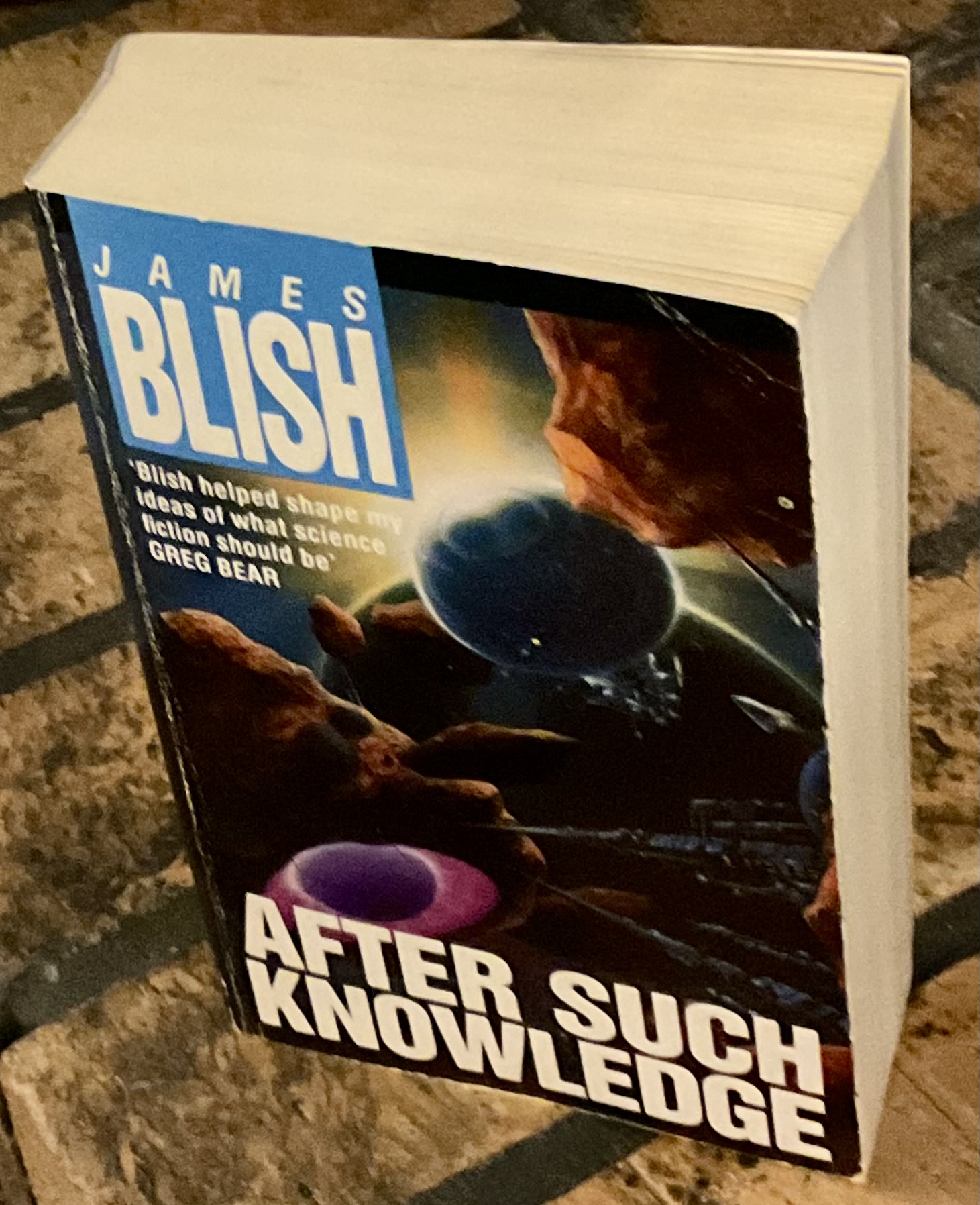
I purchased a used mass market paperback of After Such Knowledge, but it was too thick, even with small text, for my comfortable use. I’ve been spoiled by Kindles, and while I could readily purchase Kindle editions of Black Easter, The Day After Judgment, and the novel-length expansion of A Case of Conscience, I could only find a PDF of Doctor Mirabilis from a questionable source.

So I gritted my teeth and began reading Doctor Mirabilis in the mass market paperback. It dropped me into Oxford, England in 1231 in the company of Roger Bacon, and I read the first of its sixteen chapters and then abandoned the work.

I wasn’t in the mood to be embedded in medieval England in a historical novel with no science fiction elements. Yes, I loved Umberto Eco’s The Name of the Rose, set in a fictional Italian monastery in 1327, but that was a historical murder mystery with a protagonist who was a mix of Sherlock Holmes and the Franciscan friar and philosopher William of Ockham. I also enjoyed the many Brother Cadfael novels by Ellis Peters, with a mystery-solving monk. However, what Blish was offering was the life of a real-world Franciscan friar who was caught up in political intrigue and battled the Franciscan Order for freedom to study, possibly leading to temporary imprisonment. Er, no thanks, and I’m not surprised that work has no Kindle edition.

I didn’t abandon the entire effort, however, as Matt of Bookpilled had greatly enjoyed the other three works, and A Case of Conscience had won a Hugo. So I took that up next in its Kindle edition.

A Case of Conscience

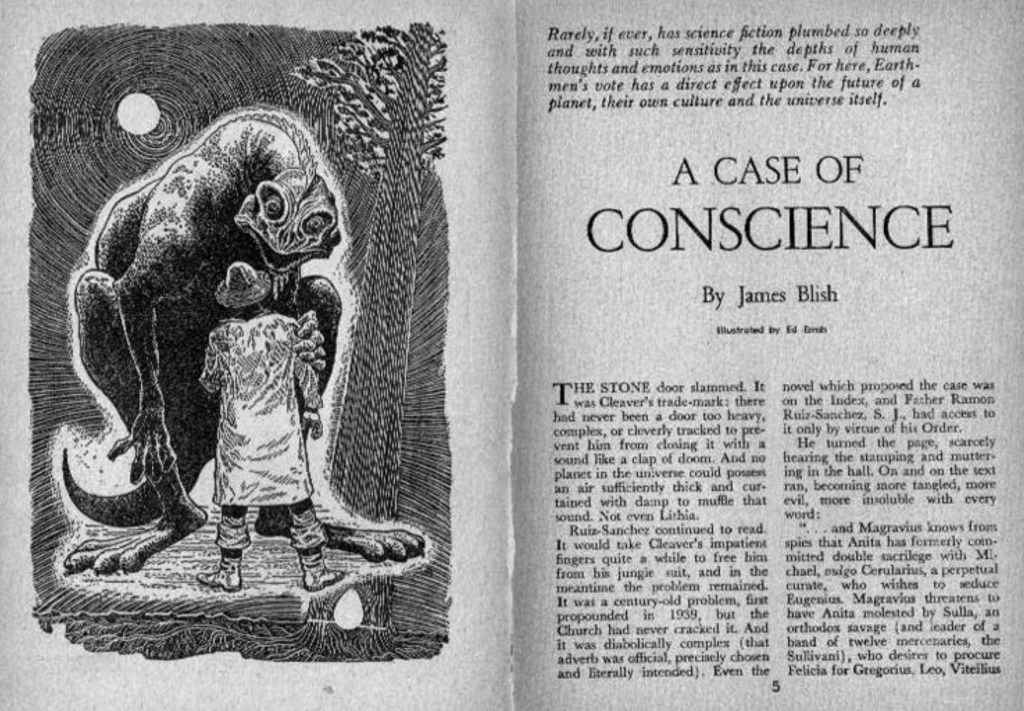
Book One of the novel was the original A Case of Conscience novella that first appeared in the September 1953 issue of If magazine and received a Retro-Hugo in 2004.

A Case of Conscience original novella in If magazine
The original novella appeared in the September 1953 issue of If

It started strong, with a Jesuit biologist helping treat a physicist during their first contact stay on a world populated by tall intelligent reptiles. I immediately noticed striking similarities between Blish’s reptile Lithians and Becky Chambers’ Aandrisk reptiles in her Wayfarer series published 60 years later. At first, the novella drew me in with its world-building, but all too soon it devolved into a talk-fest.

Four human characters spent page after page debating their verdict on opening the planet to human contact. The Jesuit could not help but filter his recommendation through his faith, with differences from current Catholic faith explained as reflecting fictional future doctrines. The Jesuit recommends a quarantine, as he concludes the planet is a trap created by Satan to cast doubt on Earthly religious faith. I admired how the story confronted the real-world issues that geocentric religions would face if intelligent aliens made contact, but I found the long discussion among the scientists a bit stultifying, and their verbal dialogue did not seem realistic. Most importantly, I could not suspend my disbelief to accept a race of beings who live without crime, conflict, ignorance, or want.

The Fix-Up

Blish later added a novella-length addition to create the novel version of A Case of Conscience, which won the Hugo back in 1959. Book Two dealt with an immature Lithian who was sent back to Earth with the human contact team. Multiple reviewers thought Book Two was weaker than Book One, but I found the opening chapters of it quite interesting. First you are in the mind of the young Lithian, and then you are taken through a sybaritic party which reminded me of an amplification of the crazy party in Midnight Cowboy. Its intensity struck me, as an introvert, as a segue into social horror, with a considerable amount of sardonic humor.

Blish built out, back in the 1950s, a very different future Earth of 2050 than what I expect as someone living in 2026. His projection of a “Shelter Race”, in which nations invested heavily in underground cities as a defense against thermonuclear war, reflected the fallout shelter craze of his era. It made me want to listen to Donald Fagen’s New Frontier.

The novel ended with the young alien making use of commercial telecasts to incite social unrest. Heinlein’s bizarre Stranger in a Strange Land came to mind, and not in a good way. I did not find Book Two of Blish’s novel any more believable, and it suffered mightily from providing paltry explanations of the alien’s personality and motivations.

As with so many classic science fiction stories, characterization in general was sorely lacking, especially for the few female characters. While the novel had some interesting ideas, the execution was poor, and I’m dreadfully tired of dystopias, as I’m living in the prolonged childhood of one here in Joklahoma.

I would much rather read classic and more optimistic tales of Known Space by Larry Niven or David Brin’s Uplift Saga. That desire already led me to start Becky Chambers’ Wayfarer series, Google Gemini has recommended Lois McMaster Bujold’s Vorkosigan Saga, and I know that I should try reading an Andy Weir novel.

A Case of Conscience was rated the 11,698th Greatest Book of All Time, with Black Easter coming in higher at 3,281th and The Day After Judgement at 3,531st. The only other Blish book ranked in that meta-rating system was Cities in Flight at 15,574th. The higher ratings for the other two works in the After Such Knowledge collection did not convince me to read them, however, as they are more in the realm of fantasy, horror, and the occult than science fiction, and if I were going to read horror, I already have on my Kindle The Possession of Alba Díaz by Isabel Cañas, and for fantasy I might try Roger Zelazny’s Lord of Light, which won the Hugo and was nominated for the Nebula, since he wrote that to be interpreted as either science fiction or fantasy.

I doubt I’ll read any more of Blish, and he left me needing the comfort of an author who could deftly sketch characters and craft a believable mise-en-scène, so I jumped into Wildfire at Midnight, Mary Stewart’s second short tale of romance suspense.

Posted in books, video | Leave a comment